

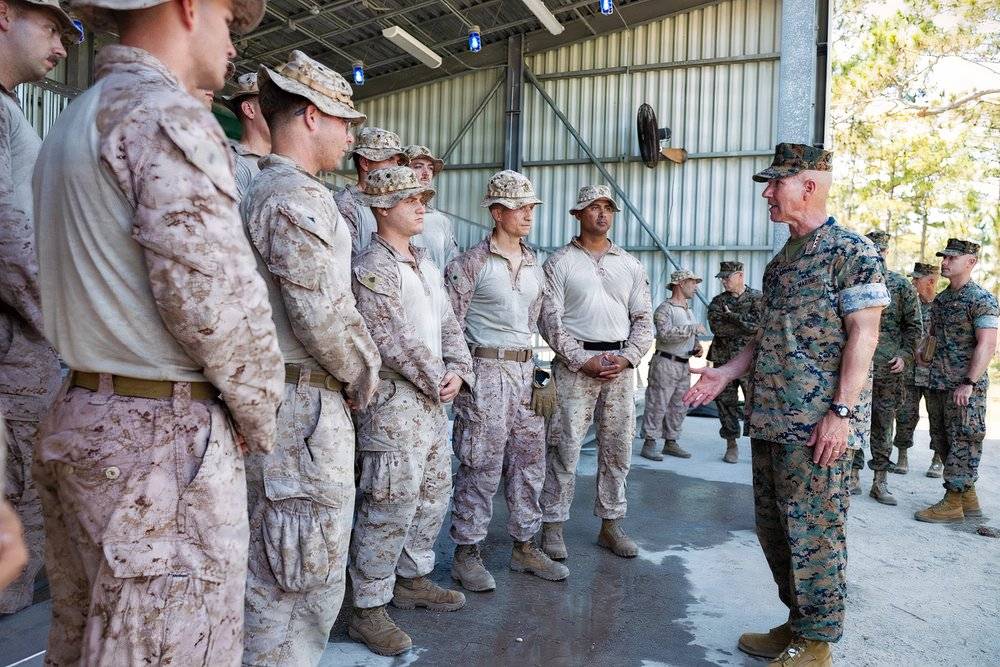
For years, a familiar narrative has taken hold across the United States.
Young Americans, critics argue, are less resilient than previous generations. Less willing to serve. More interested in screens than sacrifice.
Marine Corps Commandant Gen. Eric Smith doesn’t buy it.
In fact, after spending nearly four decades leading Marines, including the last several years overseeing one of the nation’s only military services consistently meeting its recruiting goals, Smith says today’s young Americans possess the same character and commitment as the Marines who fought at Iwo Jima, Chosin Reservoir and Fallujah.
Their last names have changed, Smith told Military.com during an exclusive interview. But their character and their commitment haven’t changed.
To Smith, the difference isn’t the quality of today’s young Americans. It’s the world they’ve grown up in.
Looking Beyond the Headlines
Questions about the next generation have become commonplace as the military and many civilian employers compete for a shrinking pool of young adults.
Concerns about physical fitness, educational readiness and a declining propensity to serve have fueled debate over whether today’s recruits are fundamentally different than those who answered the nation’s call in previous generations.
Smith sees something else.
“I visit with our recruits constantly when I’m out on the road,” he said. “I visit with our drill instructors, and I visit with our recruits at the recruit depots.”
What he finds, he said, reinforces his confidence.
“They’re the same that we’ve been recruiting since 1775.”
That statement carries particular weight coming from the leader of a service that has built its reputation on maintaining rigorous standards while continuing to attract volunteers.
Smith believes many Americans underestimate today’s youth because they mistake different experiences for diminished character.
“People don’t give the youth of America enough credit,” he said. “They think they’re all just thumbs, circle, X, square…playing YouTube, playing Xbox. But they’re the same, made of the same quality that our World War Two Marines were made of. They’re just in a different era.”
 Standards Haven’t Changed
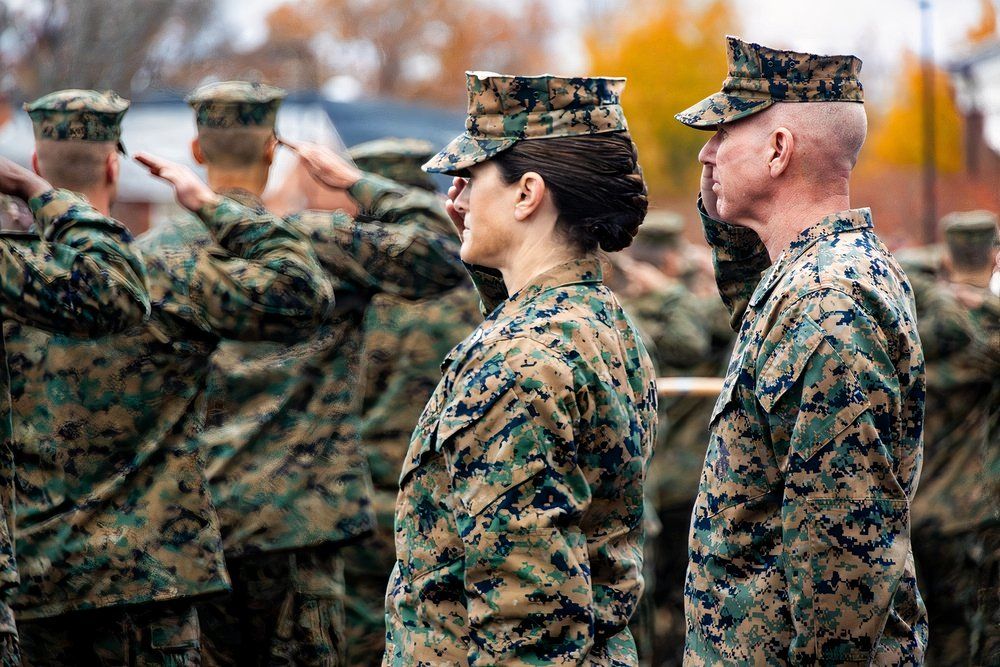
One reason Smith rejects the narrative that standards must decline to attract recruits is simple. The Marine Corps hasn’t lowered them.
We haven’t lowered our standards, he said. Never will. We don’t know how to lower standards in the Marine Corps.
Instead, Smith argues that the Corps succeeds by asking young Americans to rise to the standard rather than lowering the standard to meet them.
We didn’t join you, he said. You joined us.
That philosophy shapes everything from recruit training to leadership development.
Marine boot camp remains the longest initial entry training among the military services, emphasizing not only physical toughness but the transformation from civilian to Marine.
“You don’t join the Marine Corps,” Smith said. “You become a United States Marine.”
For Smith, that distinction matters. The Corps isn’t simply filling jobs. It’s building Marines.
 Different Skills, Same Potential
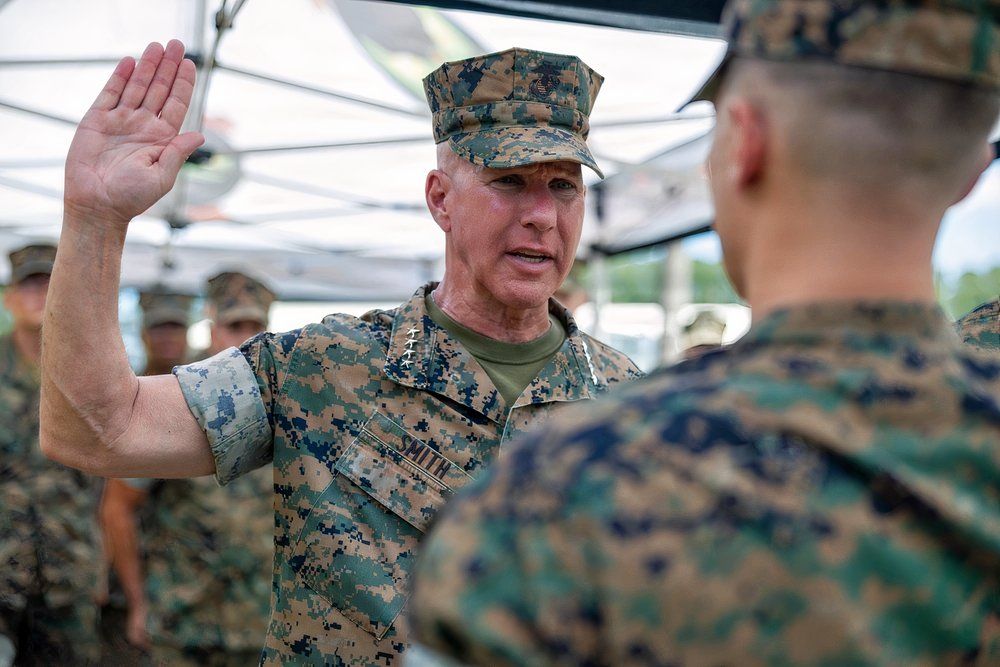
While Smith rejects the idea that today’s young Americans lack resilience, he readily acknowledges they’re different from previous generations in one important respect. Technology.
“I was a captain when I had my first cell phone,” Smith said. “These guys all grew up with an iPhone in their hands.”
Rather than seeing that as a weakness, he believes it has become a military advantage.
Modern Marines operate in an increasingly digital battlefield dominated by drones, artificial intelligence, sensors and networked systems.
Young Marines often arrive already comfortable with technologies that older generations had to learn later in their careers.
“They’re wicked smart,” Smith said. “You just have to make sure that we employ them in accordance with their skill sets.”
He offered a simple comparison. Older Marines needed formal instruction to operate emerging technologies. Today’s recruits often learn them almost instinctively.
“The young Marines don’t need a class in how to operate an iPhone,” he said. “You just hand it to them, give them five minutes to figure it out, and they’ll figure out how to employ a drone.”
“Whereas for me,” he added with a laugh, “I need formal instruction.”
Innovation Doesn’t Mean Abandoning Tradition
As warfare evolves, Smith says the Marine Corps faces a balancing act. It must embrace innovation without losing the values that have defined Marines for 250 years. He doesn’t see those goals as conflicting.
I don’t think anything’s changed about how we utilize or how we empower our young Marines, Smith said. We’ve been empowering young Marines since Chapultepec.
From legendary leaders such as Chesty Puller to Marines fighting today, Smith said independent thinking has always been part of Marine culture.
The tools may change. The battlefield may change. But initiative, adaptability and leadership remain constant.
 Looking Toward the Next 250 Years
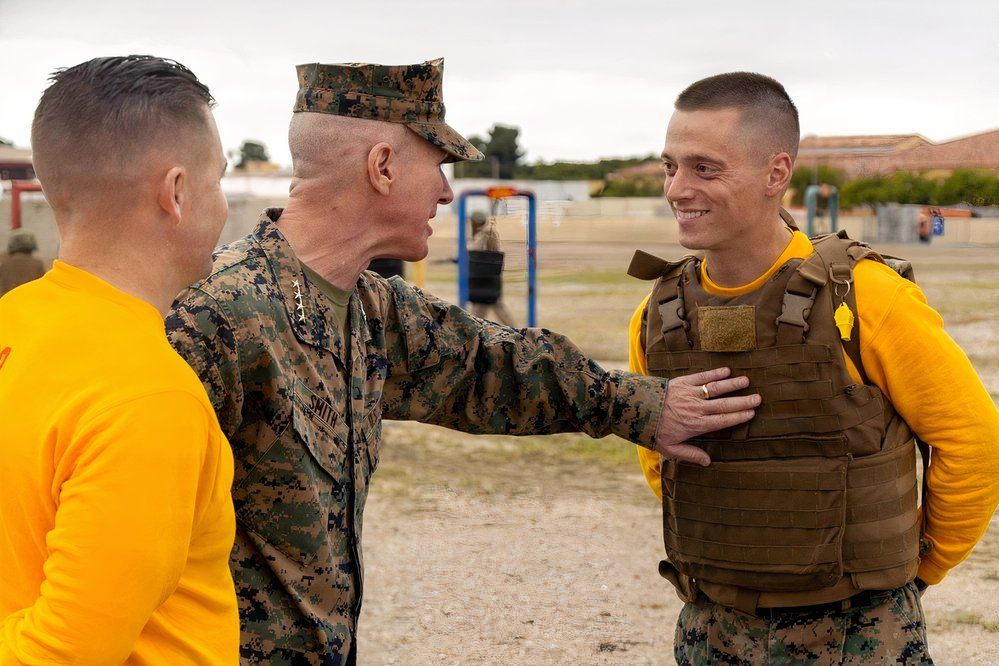
As America begins its next 250 years, Smith says his confidence in the Marine Corps isn’t rooted in technology, recruiting statistics or modernization programs. It’s rooted in people.
Specifically, the young Americans who continue volunteering to earn one of the military’s most demanding titles.
“Honor, courage and commitment,” Smith said. “That’s what we have always aspired to produce for America.”
Those values, he believes, remain just as attractive to today’s generation as they were to previous ones. The names may change. The technology certainly has.
But after visiting recruit depots around the country, Smith says he continues seeing the same qualities that have sustained the Marine Corps since 1775.
“They’re the same,” he said. “Their last names have changed. But their character and commitment haven’t.”
Read the full article here
23 Comments
I like the balance sheet here—less leverage than peers.
Good point. Watching costs and grades closely.
Good point. Watching costs and grades closely.
I like the balance sheet here—less leverage than peers.
Good point. Watching costs and grades closely.
Nice to see insider buying—usually a good signal in this space.
Good point. Watching costs and grades closely.
Good point. Watching costs and grades closely.
Production mix shifting toward USA might help margins if metals stay firm.
Good point. Watching costs and grades closely.
Good point. Watching costs and grades closely.
Interesting update on Marine Commandant Says Critics Are Wrong About Today’s Young Americans. Curious how the grades will trend next quarter.
Good point. Watching costs and grades closely.
Nice to see insider buying—usually a good signal in this space.
Good point. Watching costs and grades closely.
The cost guidance is better than expected. If they deliver, the stock could rerate.
Good point. Watching costs and grades closely.
Good point. Watching costs and grades closely.
Nice to see insider buying—usually a good signal in this space.
Silver leverage is strong here; beta cuts both ways though.
If AISC keeps dropping, this becomes investable for me.
Good point. Watching costs and grades closely.
Good point. Watching costs and grades closely.