

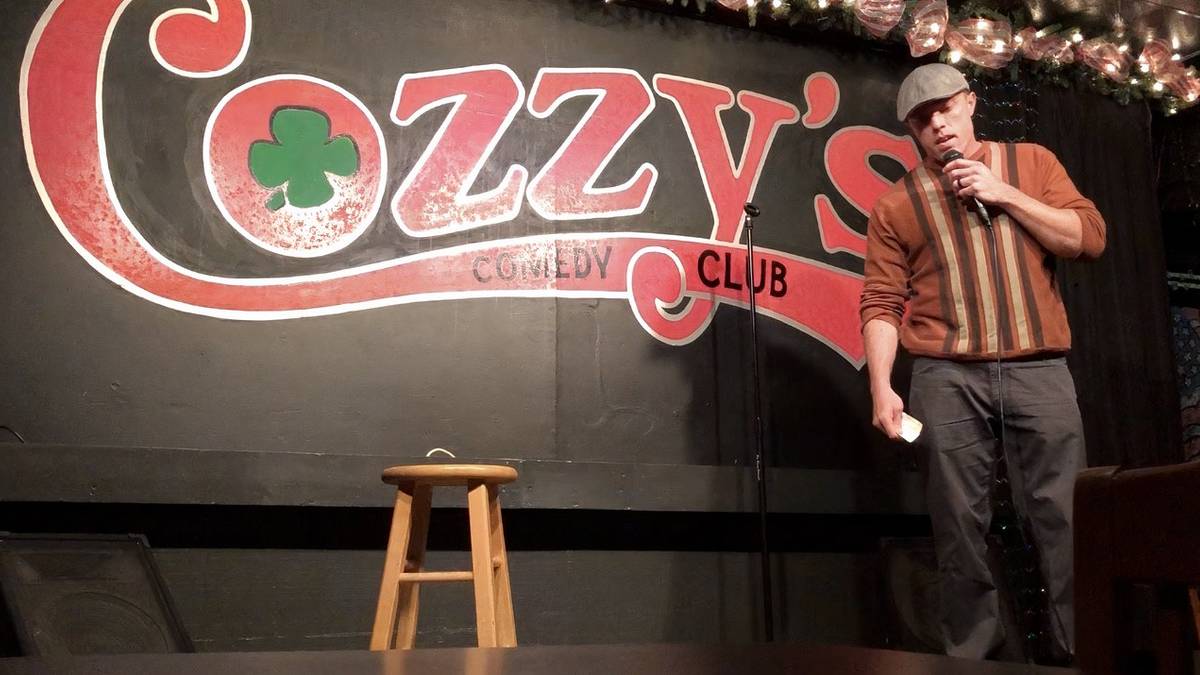
Jergen “CoachCam” Campbell was tired of seeing friends he served with die by suicide. So, he decided to do something about it.
Make people laugh.
More importantly, open, honest, raw, emotional and thoughtful dialogue around the mental health issues some veterans face. Campbell, a Marine Corps veteran who served for 23 years, calls it “heart work,” building connection, belonging and resilience through storytelling, conversation, writing, comedy and artistic expression.
In Jergen’s podcast “Real Resilience Talk,” the veteran turned stand-up comedian talks to veterans, current service members, first responders, artists, fellow comedians, authors, mental health advocates and everyday people about resilience, purpose, belonging and overcoming adversity.
“The goal of the show is simple: help people understand that they may feel alone, but they don’t have to stay alone,” Campbell told Military.com. “And we inform them of helpful resources and tangible ways to ‘stay left of bang.’”
Staying left of bang means trying to stay ahead of downward spirals that people often slip into, causing emotional, physical and mental stress. It’s also about making life worth living.
“We don’t know what we don’t know. No one is born a bowler, or a fisherman, or a knitter, or a comedian. Some of us have interests and maybe even talent, but until we’re exposed to something like a healthy outlet and shown ‘how’ to do it, we do not ever know that it can be an outlet for us to channel our energies, our pain and our joy,” Campbell said. “(It’s about) exposing people to healthy outlets to channel things I think is vital to saving lives and making lives worth living.”
Campbell also shares his insights in his books “All Things Considered, 33 Gems of Resilience” and “Thank You Warriors: Gems of Leadership, Resilience, and Empathy.”
Art Saves Lives
Campbell believes expression, in whatever shape and form, is an essential tool to survive life’s obstacles.
“If we don’t express ‘it’ (whatever the pain may be), it eats us from the inside out, impacts how we are as parents, as service members and as humans. If we don’t deal with our mess, it deals with us,” Campbell said. “With the arts you can let it out, express it; you own it instead of ‘it’ owning you.”
From writing poetry to freestyle rap battles, Campbell has always tapped into his artistic side to make people laugh and think.
“But I never formally pursued it until my older brother died in 2014. He was a huge fan of stand-up comedy, and I always had an interest in it,” Campbell said. “But I was like, ‘How do I do that?’ He inspired me to start because at his eulogy, I said, ‘We have to allow him to live through us’…so when I saw a stand-up class, I signed up.”
He eventually enrolled in comedy boot camps and free art classes through the program Armed Services Arts Partnership and Mission Belonging. Now he’s performing on stage during open-mic nights.
“Comedy and the arts have helped me process so much in my life. I am no longer suicidal. It’s all a process, and I’m still working it all out,” Campbell said. “No day is perfect, and I’m not either, but staying alive is worth it.”
Marine Corps Gave Purpose, Direction
Growing up a troubled youth, Campbell joined the Marine Corps to “potentially risk dying for something rather than continuing to live for nothing.”
Raised with nine siblings, mostly half-brothers and sisters, Campbell’s family struggled through financial hardships.
“I was always a troubled kid and lived with a lack of overall security growing up,” he said. “My hope was that the armed services would give me structure, purpose and belonging. It delivered 100% on that!”
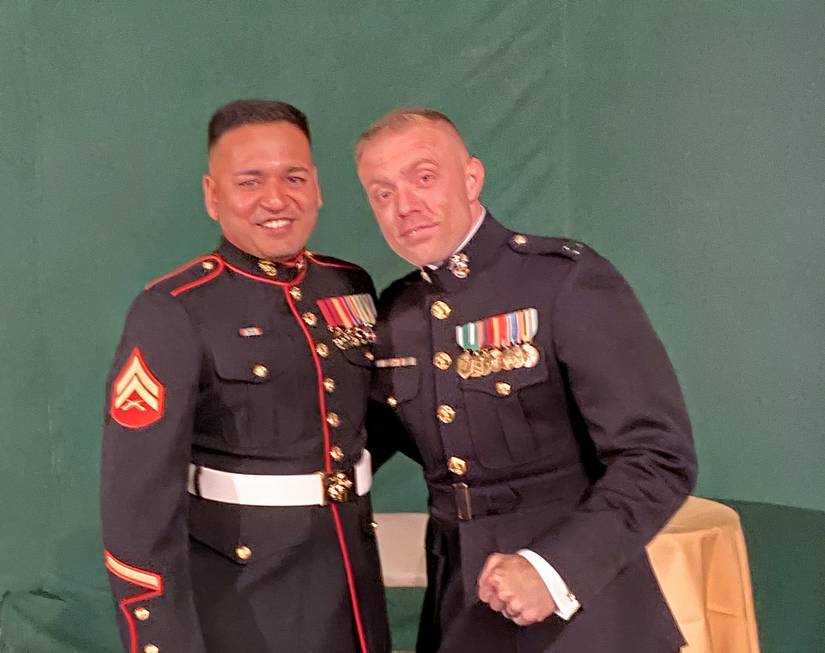
In the Marine Corps, Campbell became a “mustang,” an enlisted service member who becomes commissioned as an officer. He retired as a captain earlier this year.
“A brother of mine, Angel Robes, a Marine and a veteran of the New York City Fire Department, once said when we were together in Iraq in 2004, ‘Blood makes you related, but love makes you family.’’’ Campbell said. “That is the Marine Corps I know and love. Not every day is perfect, but there are great humans; you just gotta find your tribe.”
Throughout his military career, Campbell struggled with sobriety, often trying to medicate prior traumas with alcohol and simply “sucking it up.” He thought about suicide on multiple occasions and even attempted it while intoxicated.
He knew he needed help but was afraid to seek it out.
“I had my own ignorant biases about it all. I was afraid I’d just be medicated, sedated, lose my career, or be looked down upon, be weak, etc., all the B.S. things that stop us from seeking help,” Campbell said.
But a letter from Gen. Robert Neller, commandant of the Marine Corps, titled “Mental Wellness,” changed Campbell’s outlook and lifted him out of his funk. He said he’s been sober for seven years. He also stayed on his mental health medications, sought therapy and embraced the arts.
Find Your Tribe
Transitioning out of the Marine Corps earlier this year presented its share of unknowns, but for Campbell, it was relatively smooth because he found his tribe, a group of comedians from Northern Virginia, along with support from his family and other veterans.
His oldest child followed him into the Marines.
“I never felt disconnected. I’ve learned through therapy how to process grief in healthy ways. It still sucks, but I have tools,” Campbell said. “I now know I can love something, miss something and not want to return to something all at the same time. And that’s okay.”
Campbell’s not isolating himself from others and he’s not drinking. He’s also used a VA program for post-9/11 veterans that helps him get through daily challenges and find new connections.
“I’d be lost without those programs and my community,” he said. “The counselors and case managers have been a lifesaver for me.”
If more people talked about mental health honestly, it would save more lives from suicide, Campbell believes.
“We stand a better chance of preventing downward spirals before they become tragedies,” he said. “I hope to be a hope dealer. If someone finishes an episode believing they’re not broken, that they’re not alone, and that tomorrow is worth fighting for, then the podcast has done exactly what I hoped it would do.”
Read the full article here
28 Comments
The cost guidance is better than expected. If they deliver, the stock could rerate.
Good point. Watching costs and grades closely.
Exploration results look promising, but permitting will be the key risk.
Exploration results look promising, but permitting will be the key risk.
Good point. Watching costs and grades closely.
Production mix shifting toward USA might help margins if metals stay firm.
If AISC keeps dropping, this becomes investable for me.
I like the balance sheet here—less leverage than peers.
Good point. Watching costs and grades closely.
Nice to see insider buying—usually a good signal in this space.
Good point. Watching costs and grades closely.
Good point. Watching costs and grades closely.
Silver leverage is strong here; beta cuts both ways though.
Good point. Watching costs and grades closely.
Good point. Watching costs and grades closely.
Nice to see insider buying—usually a good signal in this space.
Good point. Watching costs and grades closely.
Good point. Watching costs and grades closely.
If AISC keeps dropping, this becomes investable for me.
Good point. Watching costs and grades closely.
Good point. Watching costs and grades closely.
Uranium names keep pushing higher—supply still tight into 2026.
Good point. Watching costs and grades closely.
Good point. Watching costs and grades closely.
Production mix shifting toward USA might help margins if metals stay firm.
Good point. Watching costs and grades closely.
Exploration results look promising, but permitting will be the key risk.
Good point. Watching costs and grades closely.