

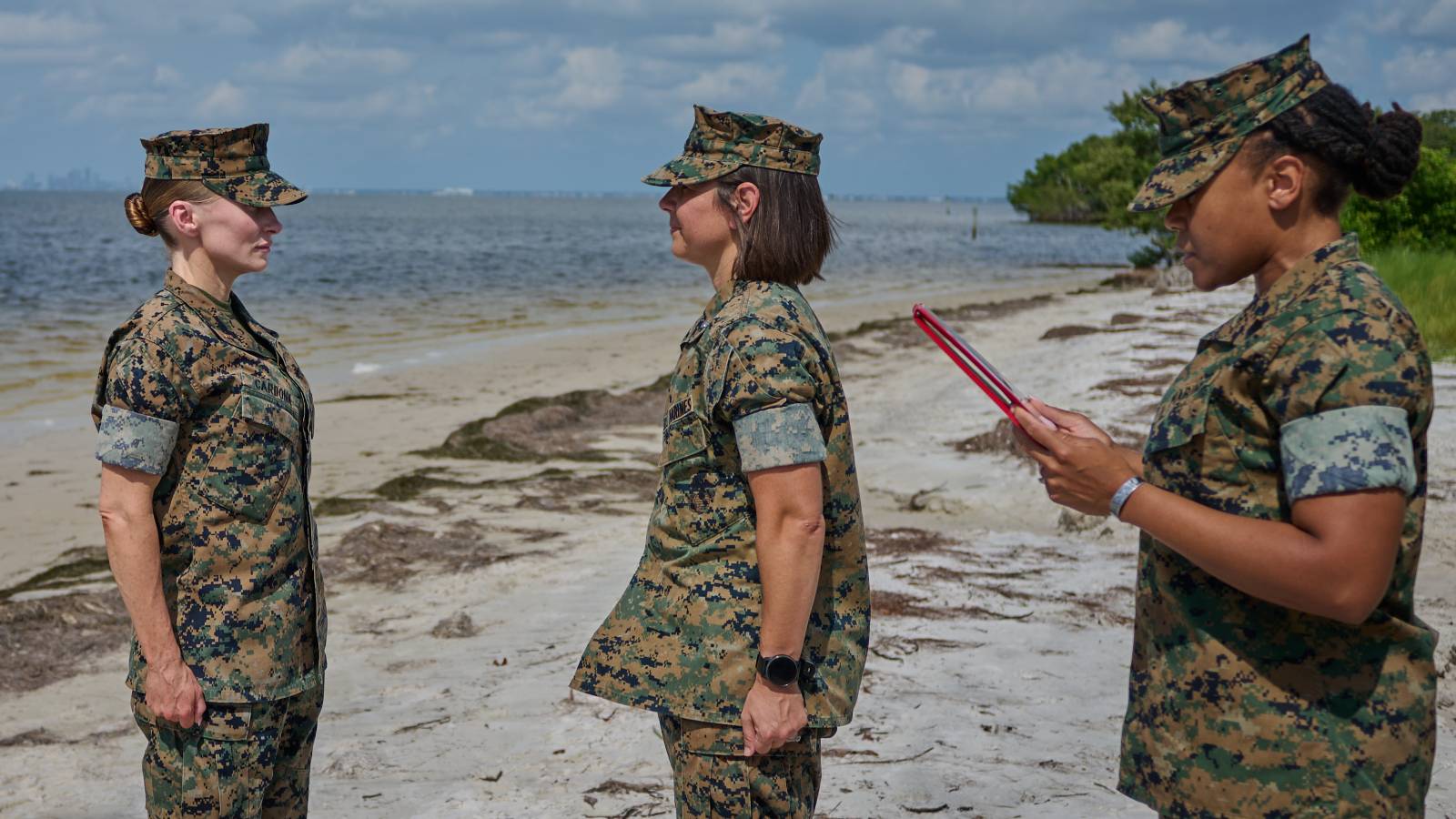
A Marine Corps warrant officer is a technical specialist commissioned from the enlisted ranks to keep working a single, often highly technical, military occupational specialty at a higher level of authority and pay, rather than moving into the broader command track a lieutenant or captain follows. Warrant officers provide what the Marine Corps describes as leadership and training within their specific MOS, serving as the standing technical experts whom commanders rely on in that field.
Where the Rank Originated
Congress created the Marine Corps’ first warrant officer grade, Marine Gunner, under the Naval Appropriations Act of 1916, signed Aug. 29, 1916. Marine Corps leadership pushed for the rank to retain experienced noncommissioned officers skilled in operating the heavy weapons, submarine mines and searchlights of the era’s advanced base forces, arguing that warrant officers were “just as badly needed in the Marine Corps as they are in the Navy,” according to the Marine Corps Association’s published history of the rank.
A board chaired by then-Lt. Col. John A. Lejeune selected the first 54 candidates from 117 applicants, and the first 20 Marine Gunners were appointed in 1917, each wearing the bursting-bomb insignia the Navy had used for gunnery warrant officers since 1883.
The Marine Gunner title has a choppier history than the rank structure built around it. It was abolished in 1943, restored in 1956, discontinued again in 1959, revived in 1964 for combat-arms specialties, dissolved again in 1974, and brought back in 1989 for warrant officers serving as infantry weapons officers, which is where it remains today, according to the Marine Corps Association.
Related: Marine Corps Ranks: A Complete Guide to Enlisted and Officer Ranks
Rank Structure and Entry Requirements
The Marine Corps warrant officer ladder runs from Warrant Officer 1 through Chief Warrant Officer 5. To apply for the standard enlisted-to-warrant-officer selection board, a Marine must hold at least the rank of sergeant and have a minimum of eight years of active naval service as of the board’s convening date, along with a qualifying score on the Electronics Repair composite, the ACT or the SAT, according to an official Marine Corps administrative message announcing the fiscal year 2027 board. Both the rank and service-time minimums became non-waivable requirements effective May 1, 2026, under a separate Marine Corps message updating the program.
Candidates selected for commissioning attend the Warrant Officer Basic Course before being appointed; as of a 2026 program update, selectees can no longer defer that course the way they previously could, and appointment now takes effect the first day of the month in which a Marine graduates, rather than through a separate administrative process.
Jobs They Serve In
The fiscal year 2027 selection board listed 42 eligible military occupational specialties, spanning fields including communications and electronics maintenance, logistics and supply, intelligence, aviation ordnance, data systems, and criminal investigation, according to the Marine Corps’ official announcement.
A Marine is commissioned as a warrant officer within the same MOS built over an enlisted career, and the Marine Corps describes the resulting role as a technical advisor providing expertise to the commands and units working in that field.
Related: The Air Force Brought Back Warrant Officers After 45 Years. Here’s How It’s Going
The Marine Gunner: A Specialty Within the Rank
Marine Gunner remains the Marine Corps’ most distinct warrant officer specialty, reserved today for crew-served infantry weapons officers and denoted by the same bursting-bomb insignia worn by the original 1917 appointees instead of the rank insignia other Marine warrant officers wear.
Candidates must already hold the rank of gunnery sergeant or above with at least one year in that grade, and the Marine Corps Association describes the specialty as requiring prior service as an infantryman, open only to Marines with an infantry primary MOS. Selected Marine Gunners advise commanders at every level on the tactical employment of infantry weapons and optics and run unit marksmanship and weapons training programs, according to an official Marine Corps selection board announcement.
Read More: Enlisted Marine Corps Ranks: From Private to Sergeant Major of the Marine Corps
Rank by Rank
Warrant Officer 1 (WO1)
Warrant Officer 1 is the entry grade for a Marine selected by the enlisted-to-warrant-officer board, reached after completing the Warrant Officer Basic Course. Candidates must hold at least the rank of sergeant with a minimum of eight years of active naval service, according to an official Marine Corps selection board message.
Chief Warrant Officer 2 (CWO2)

Chief Warrant Officer 2 is the grade at which a Marine warrant officer becomes a commissioned officer, generally serving as a technical advisor providing expertise to commands and organizations in their MOS, according to the Marine Corps’ official rank descriptions.
Chief Warrant Officer 3 (CWO3)

Chief Warrant Officer 3 represents further promotion within the same MOS a Marine was commissioned into. The Marine Corps’ official rank page does not publish a separate duty description distinguishing CWO3 from CWO2 or CWO4 beyond seniority and time in grade.
Chief Warrant Officer 4 (CWO4)

The senior mid-grade, Chief Warrant Officer 4 is reached the same way as CWO3, through continued time in grade and performance within the Marine’s technical field.
Chief Warrant Officer 5 (CWO5)

The Marine Corps’ most senior warrant officer grade, Chief Warrant Officer 5 is reserved for its most experienced technical specialists. As with CWO3 and CWO4, the Marine Corps does not publish a duty description specific to CWO5 separate from the broader warrant officer role.
Related: Marine Corps Officer Ranks: From Second Lieutenant to General
Why the Rank Still Matters
More than a century after Congress created the Marine Gunner grade to keep experienced weapons specialists from leaving the Corps for better opportunities elsewhere, the broader warrant officer program solves the same basic problem: A sergeant who has spent eight or more years mastering communications, logistics, intelligence or infantry weapons doesn’t stop being valuable to that specialty once they’re ready for more authority and better pay.
Commissioning them as warrant officers, rather than routing them into a generalist command track, is how the Marine Corps keeps that expertise working the job it was built for.
Interested in Joining the Military?
We can put you in touch with recruiters from the different military branches. Learn about the benefits of serving your country, paying for school, military career paths, and more: sign up now and hear from a recruiter near you.
Read the full article here
24 Comments
The cost guidance is better than expected. If they deliver, the stock could rerate.
Good point. Watching costs and grades closely.
Production mix shifting toward USA might help margins if metals stay firm.
Good point. Watching costs and grades closely.
I like the balance sheet here—less leverage than peers.
Good point. Watching costs and grades closely.
Good point. Watching costs and grades closely.
If AISC keeps dropping, this becomes investable for me.
Nice to see insider buying—usually a good signal in this space.
Good point. Watching costs and grades closely.
Good point. Watching costs and grades closely.
Nice to see insider buying—usually a good signal in this space.
Good point. Watching costs and grades closely.
Good point. Watching costs and grades closely.
Production mix shifting toward USA might help margins if metals stay firm.
Good point. Watching costs and grades closely.
The cost guidance is better than expected. If they deliver, the stock could rerate.
Good point. Watching costs and grades closely.
Good point. Watching costs and grades closely.
Exploration results look promising, but permitting will be the key risk.
Nice to see insider buying—usually a good signal in this space.
Good point. Watching costs and grades closely.
I like the balance sheet here—less leverage than peers.
Good point. Watching costs and grades closely.