
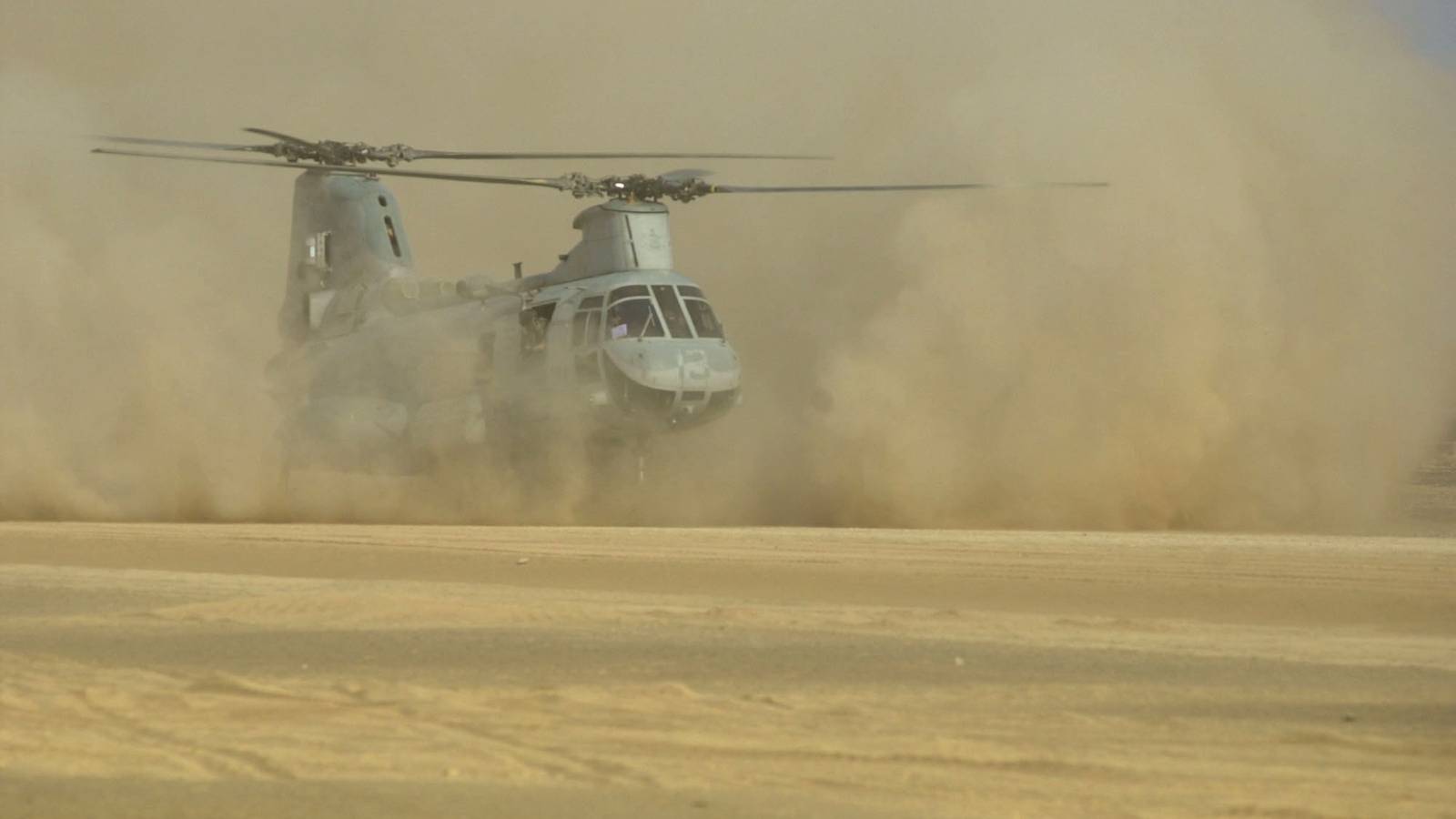
On the hangar deck of the USS Peleliu, Marines test-fired their rifles through the elevator well into the North Arabian Sea. Then they shouldered packs that often topped 100 pounds and walked them up to the helicopters waiting on the flight deck.
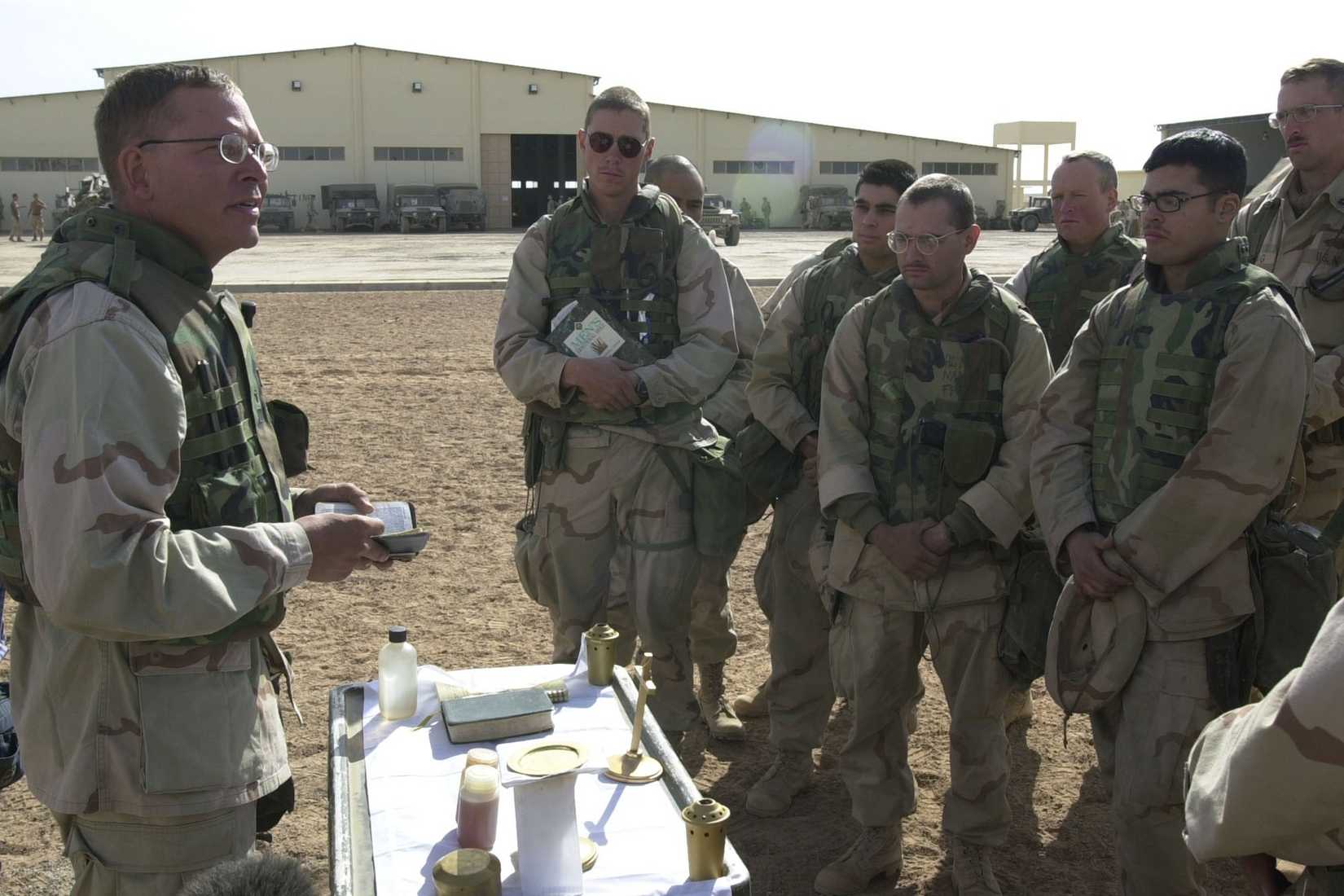
A Navy chaplain, Lieutenant Commander Donald P. Troast, moved down the line as they boarded. According to the Marine Corps’ official history of the operation, he touched some of them on the shoulder and “asked God to bless every one of them,” regardless of religion.
It was late afternoon on Nov. 25, 2001. Before midnight, those Marines would be standing on a dirt runway in southern Afghanistan, roughly 400 miles from the ship they had just left.
Twenty-five years later, the seizure of what became Forward Operating Base Rhino remains what the Marine Corps History Division calls the farthest-ranging amphibious assault in Navy and Marine Corps history. It put the first conventional U.S. ground force into Afghanistan, two and a half months after Sept. 11.
And for Marines now training to fight from ships and small islands across long distances, the details of that night help shed a light on the future of how the service intends to fight.
A Landlocked War and a Sea-Based Force
In the weeks after the attacks, plenty of people in Washington assumed the Marines would sit this one out. Afghanistan has no coastline. The nearest friendly water was off Pakistan, hundreds of miles from anything worth seizing.
“From the outset, some experts doubted that the U.S. Marine Corps would play a major role in Afghanistan given the landlocked nature of the battlefield,” the Marine Corps History Division wrote in its anthology of the Corps’ Afghanistan operations.
The answer came from Naval Expeditionary Task Force 58, an improvised command built around two amphibious ready groups and led by then-Brigadier General James N. Mattis.
Its core was the 15th Marine Expeditionary Unit aboard the Peleliu, commanded by Colonel Thomas D. Waldhauser, and the 26th Marine Expeditionary Unit aboard the USS Bataan.
Pairing two MEUs under a one-star general was unusual enough. Using them to strike that far inland had never been done. Marine planners at the time thought in terms of operating about 200 nautical miles from the ship, according to “U.S. Marines in Afghanistan, 2001-2002: From the Sea,” the History Division monograph by Colonel Nathan S. Lowrey that remains the definitive account. Rhino sat nearly twice that far.
Mattis later described walking into the office of then-Lieutenant General T. Michael Moseley, who ran the coalition air war, with a map showing ships at sea and “a big arrow going to Afghanistan.”
“He took one look at it and thought, ‘Three to four hundred nautical miles,’ and immediately he registered the danger,” Mattis recalled in an interview quoted in the monograph. Moseley promised to “turn every airframe in the air over your head” if the Marines got into trouble.
On the strength of that promise, Mattis made a call he described as a first in more than 30 years of service. “I left my artillery behind for the first time in an assault wave,” he said. The space went to more infantry.
The Airstrip the Rangers Found First
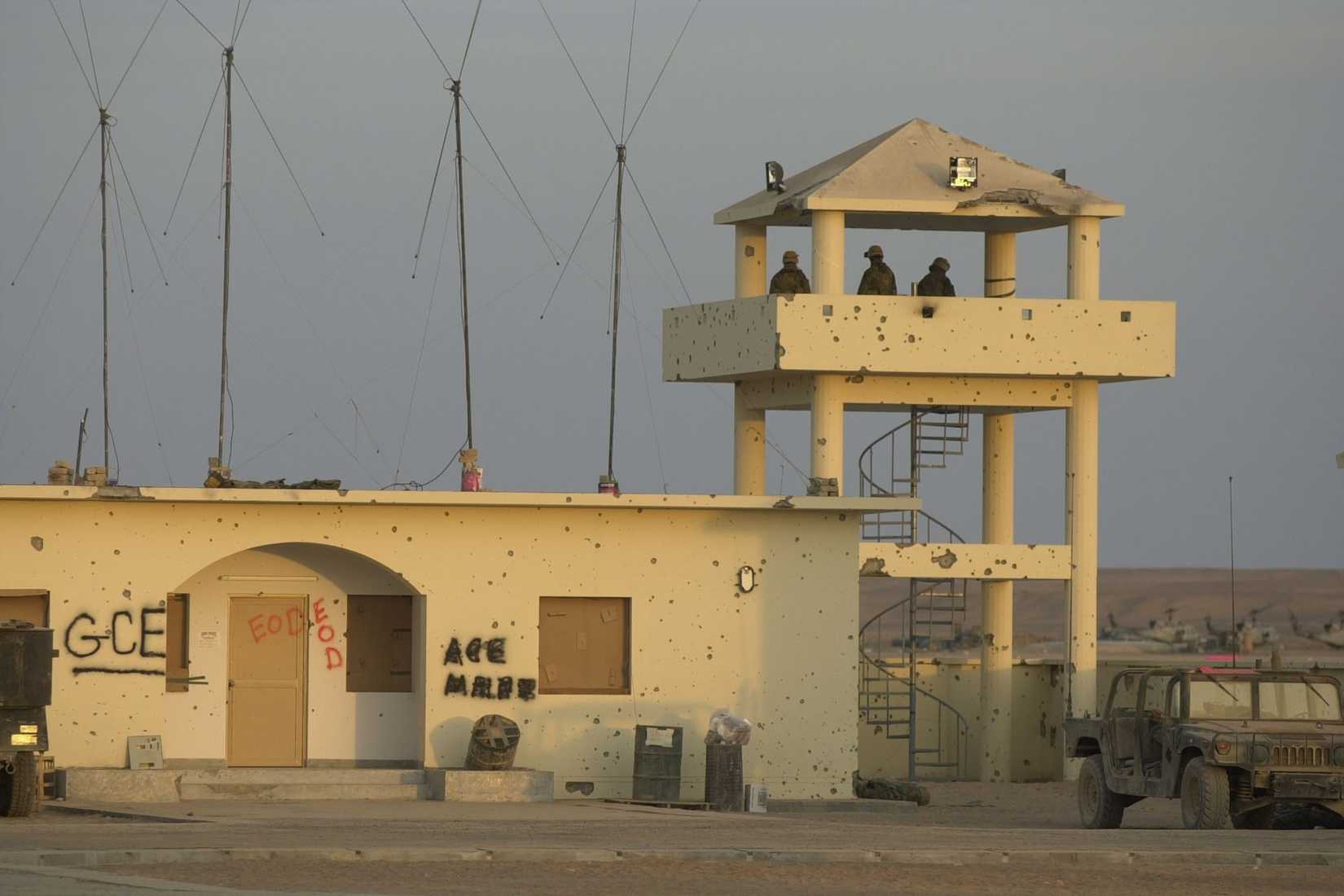
Rhino was not unknown ground. On the night of Oct. 19, 2001, about 200 soldiers from the 3rd Battalion, 75th Ranger Regiment, had parachuted onto the same desert strip from four MC-130 transports, raided it and left.
The site had begun as a hunting camp built for United Arab Emirates royals, with a walled compound, guard towers and a 6,400-foot dirt runway, according to the History Division. U.S. intelligence agencies had watched it since the late 1990s, when Osama bin Laden was reported to be living nearby.
General Tommy Franks, who led U.S. Central Command, later wrote that the Ranger raid was meant to secure the field “as a lodgment for U.S. Marines, our first conventional forces in Afghanistan.” The Marines were coming to stay where the Rangers had only visited.
For four days before the assault, Navy SEALs from Task Force K-Bar watched the objective from the ground and sent reports back to the Peleliu.
Six Helicopters, Two Tankers and a Lot of Dust
The first aircraft lifted off the Peleliu around 4:15 p.m. local time. Four AH-1W Super Cobras and three UH-1N Hueys from Marine Medium Helicopter Squadron 163 went first, refueling at a remote Pakistani airfield called Shamsi before heading for the border.
Captain Jay M. Holtermann led the assault force: three CH-53E Super Stallions carrying Captain James Fallon and Marines of Company C, Battalion Landing Team 1st Battalion, 1st Marines. Three more CH-53Es from Marine Medium Helicopter Squadron 365 touched down on the Peleliu after sunset, picked up the rest of the company and launched around 5:45 p.m.
Holtermann later put the distance at 371.5 nautical miles, about 428 statute miles, from the ship off Pasni, Pakistan, to a strip 85 nautical miles southwest of Kandahar. In an account published by the Marine Corps Association, he called it “the longest amphibious airfield seizure in the history of the United States Marine Corps.”
No CH-53E could make that trip without help. Each wave had 45 minutes to find a KC-130 from Marine Aerial Refueler Transport Squadron 352 on a 57-mile refueling track just south of the Afghan border. One tanker had a balky hose, and the crews found the drogue basket rode at a different height when the helicopters were heavy with fuel and Marines. Planners had built in enough margin that the two helicopters that could not take a full load still reached Rhino.
Inside Afghanistan, the escorts ran ahead in staggered waves to clear the last 92 miles. As the terrain flattened into desert, pilots climbed from 75 to 200 feet to keep enough visual contrast under the moon. Overhead, a Navy P-3 Orion relayed radio traffic and sent live images back to the ship.
Two miles out, the escort flight leader passed the code word “Winter.” The runway was clear.
Then the brownout hit. Rotor wash threw up towering clouds of fine dust, and several pilots had to go around more than once before they could put down beside the infrared strobes the SEALs had placed on the dirt. Even so, the assault force landed 30 seconds after its planned time, according to the History Division.
The first wave brought 66 Marines and sailors and two interim fast-attack vehicles armed with heavy machine guns and Javelin anti-tank missiles. Fallon’s Marines immediately humped out to high ground 1,600 and 1,900 meters north of the runway carrying loads above 130 pounds, to block any Taliban counterattack before the second wave arrived.
“It was a fairly busy 30, 40 minutes until the second wave hit the deck,” Fallon said later.
403 Marines By Morning
Once an Air Force special tactics team declared the strip safe for KC-130s, the buildup moved fast. The first Hercules from Shamsi landed about 90 minutes after the assault began and offloaded Company A. By the end of the night, Marine KC-130s had flown eight sorties into Rhino, landing every 20 to 30 minutes, and Task Force 58 had 403 troops on the ground.
The battalion commander, Lieutenant Colonel Christopher Bourne, later said that once the long-range insert was done, he believed the riskiest part was behind him. What worried him most was the distance, the refueling and the sheer complexity of getting there without a mishap.
Aboard the Peleliu, Waldhauser watched the feeds in the landing force operations center. “It was really awesome, one of those days where things go well and you just have to savor it,” he later recalled.
At dawn, a platoon from Company C raised an American flag on a makeshift pole. Staff Sergeant Norris, a Brooklyn native, told a 15th MEU combat correspondent it was “for our great country, the United States, and the great city of New York.”
Within days, Central Command ordered the flag down. Junior Marines kept asking Mattis why, according to the History Division. Officials were reportedly worried Afghans would see conquerors rather than liberators.
Mattis had his own run-in with that worry. Talking to reporters after the landing, he said, “The Marines have landed and we now own a piece of Afghanistan.” The line played on the old saying about Marines landing with the situation well in hand. It also rattled senior leaders who did not want a large conventional footprint, and Central Command capped the force at Rhino at 1,000.
Task Force 58 answered that 1,078 were already on the deck. The cap went to 1,100 on Nov. 29 and 1,400 on Dec. 1. Hamid Karzai, soon to lead Afghanistan, later told Mattis he had read the “piece of Afghanistan” quote and “told my people, ‘We won, the Marines own southern Afghanistan.'”
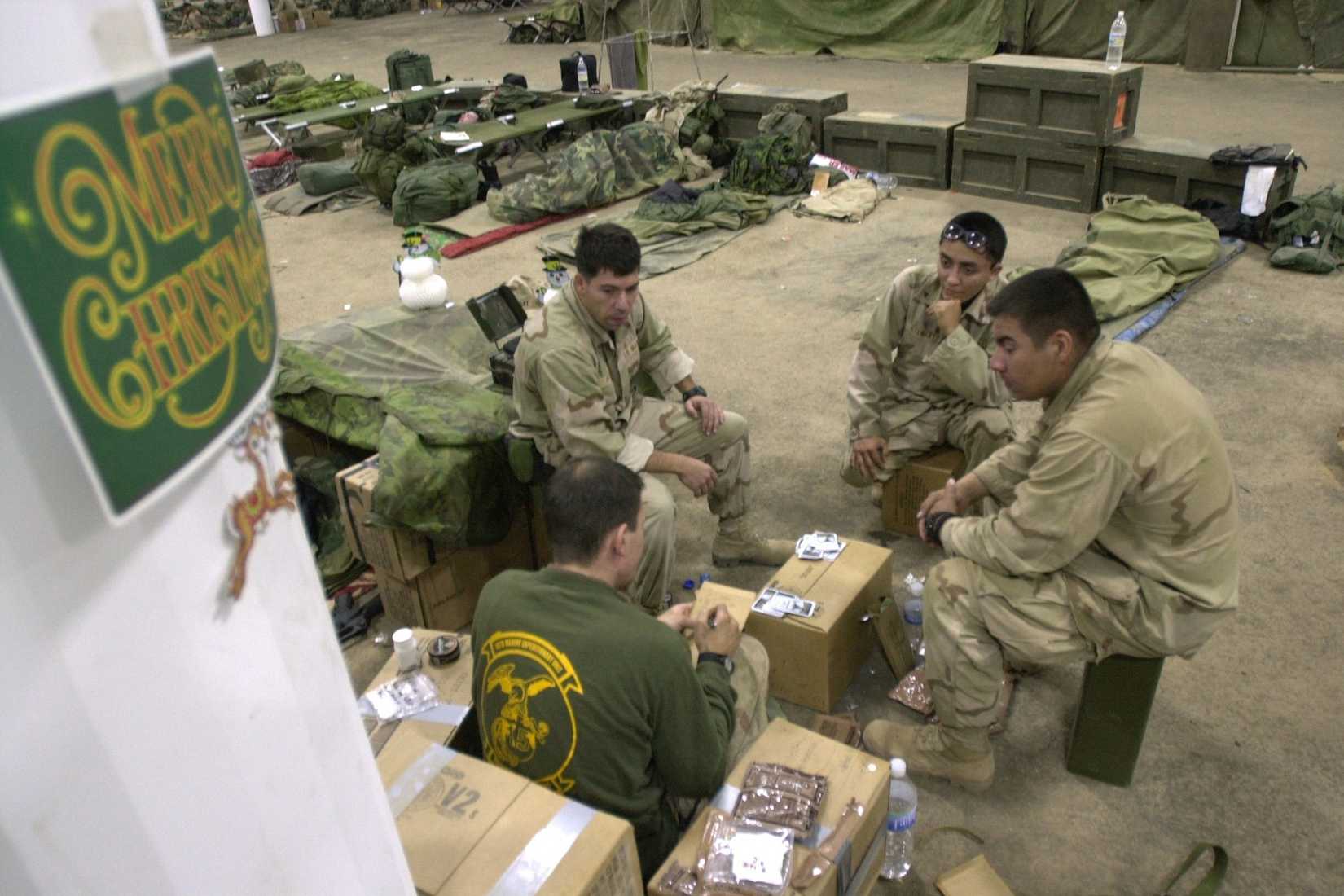
What Rhino Bought, and What It Cost
From Rhino, Marine light armored and helicopter forces pushed out to cut Highway 1 and squeeze Taliban and al-Qaida fighters fleeing Kandahar. By mid-December, Task Force 58 had moved north to occupy Kandahar International Airport, which would become one of the largest coalition bases of the war.
The campaign had a price. On Jan. 9, 2002, a KC-130 from the same refueling squadron crashed in Pakistan, killing seven Marines. Mass was said for them at Kandahar on Jan. 20.
Many names from that night went on to bigger jobs. Mattis became a four-star general and, later, Secretary of Defense. Waldhauser retired as a four-star general after leading U.S. Africa Command. Then-First Lieutenant Nathaniel Fick, a weapons platoon commander in BLT 1/1, wrote about Rhino in his memoir “One Bullet Away.”
Why Rhino Still Matters to the Marine Corps
Today’s Marine Corps is organized around ideas that would sound familiar to the planners on Peleliu: small units dispersed far from big bases, sustained by aviation and sealift, operating at ranges that strain every aircraft and fuel bladder in the inventory.
Rhino is one of the few real-world tests of that logic at scale. It worked because of things that rarely make headlines: tanker hoses, fuel math, a P-3 crew relaying radio calls and a general willing to trade artillery for riflemen on the strength of an airman’s promise.
It also showed the limits. The Marines could get 400 miles inland in a night. Whether they could stay was decided in Tampa and Washington, by force caps and flag orders as much as by the enemy.
For Marines reading this in the Pacific, Rhino offers a useful question to put to any plan that relies on distance: if the tanker hose fails, if the dust is worse than forecast, if the force cap comes down at midnight, does the plan still work? On Nov. 25, 2001, it did.
Read the full article here
21 Comments
Interesting update on Marines’ Historic 400-Mile Assault in Afghanistan. Curious how the grades will trend next quarter.
Good point. Watching costs and grades closely.
Production mix shifting toward USA might help margins if metals stay firm.
If AISC keeps dropping, this becomes investable for me.
Good point. Watching costs and grades closely.
Production mix shifting toward USA might help margins if metals stay firm.
The cost guidance is better than expected. If they deliver, the stock could rerate.
Production mix shifting toward USA might help margins if metals stay firm.
Good point. Watching costs and grades closely.
Good point. Watching costs and grades closely.
Interesting update on Marines’ Historic 400-Mile Assault in Afghanistan. Curious how the grades will trend next quarter.
Good point. Watching costs and grades closely.
The cost guidance is better than expected. If they deliver, the stock could rerate.
Good point. Watching costs and grades closely.
Good point. Watching costs and grades closely.
Silver leverage is strong here; beta cuts both ways though.
Good point. Watching costs and grades closely.
Good point. Watching costs and grades closely.
Interesting update on Marines’ Historic 400-Mile Assault in Afghanistan. Curious how the grades will trend next quarter.
Good point. Watching costs and grades closely.
Good point. Watching costs and grades closely.