

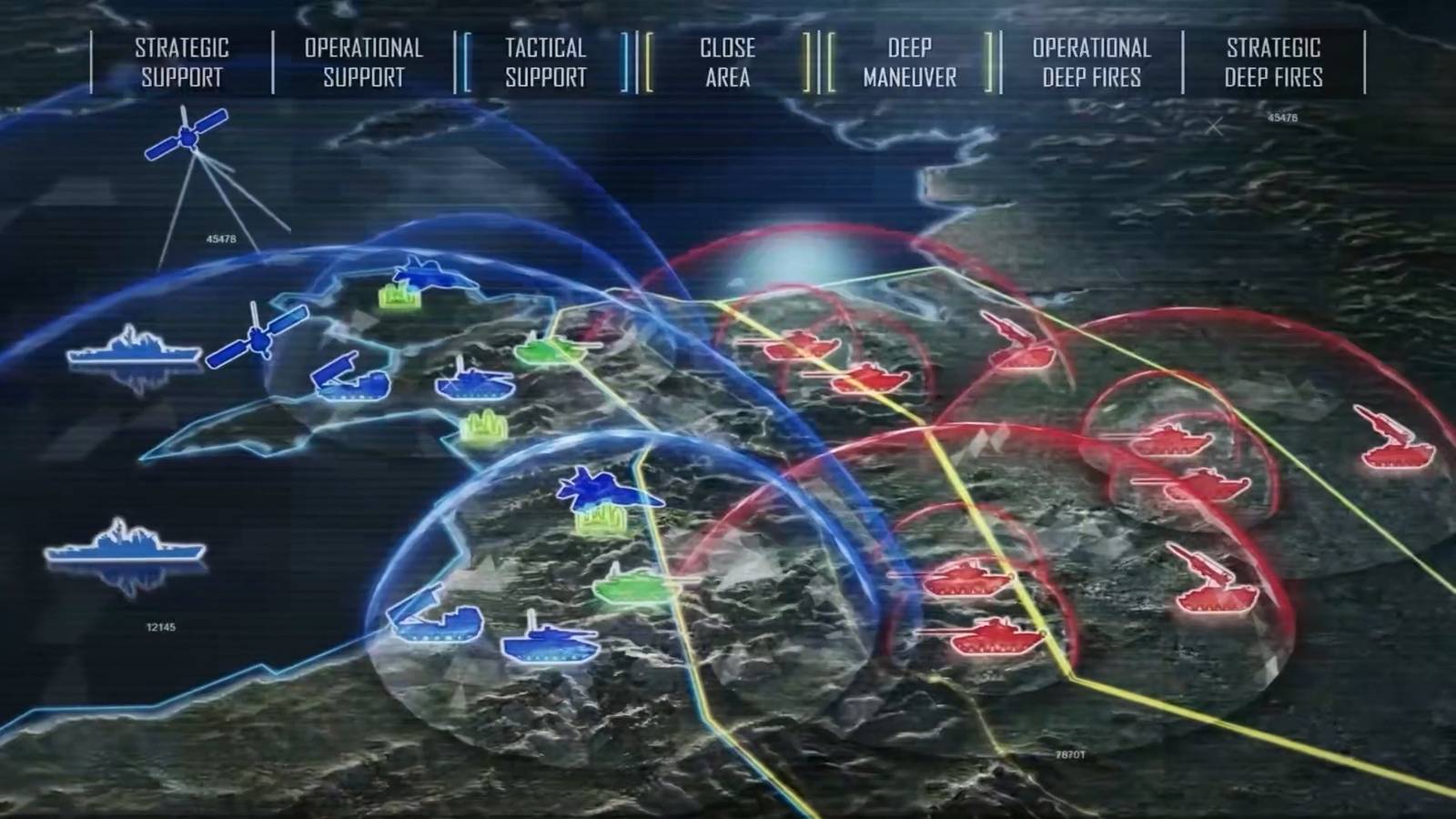
A military analyst sees something suspicious: A black pickup truck visits a house in a civilian neighborhood, and intelligence suggests a hostile group uses similar vehicles. Maybe weapons are being produced inside.
So the analyst asks artificial intelligence to find evidence supporting that theory, exactly the kind of question Andrew Moore, the first AI adviser to U.S. Central Command, warns against.
Within seconds, the AI could search billions of pieces of information and return what appears to be an overwhelming case, perhaps 15,000 pieces of evidence pointing toward the same conclusion.
And the house could still be the wrong one.
When AI Does Exactly What You Ask
That scenario is one Andrew Moore, founder and CEO of Lovelace AI, former head of Google Cloud AI and the first artificial intelligence adviser to U.S. Central Command, believes military personnel need to encounter in training as AI moves deeper into operational decision-making.
“That’s the kind of thing I’m really worried about,” Moore told Military.com in an interview.
The problem isn’t necessarily that the AI fabricated information. It may have done exactly what the human asked it to do.If you ask an AI team to find you information to support one hypothesis, it’s going to do a really good job, Moore said.The system could sift through billions of pieces of information, ignoring what is irrelevant or contradicts the hypothesis while surfacing everything that appears to support it.
“Within a few seconds, it will have come up with what looked like 15,000 pieces of evidence to support it,” Moore said. “But there was this huge statistical bias because it was told to only find supportive evidence.”
The hypothetical illustrates a problem becoming increasingly relevant as the Pentagon accelerates its adoption of AI.
The Defense Department’s 2026 AI strategy calls for an “Agent Network” designed to expand the use of AI agents for battle management and decision support, ranging from campaign planning to “kill chain execution.” The strategy also calls for rapid experimentation with AI-enabled warfighting capabilities.
The goal is speed and better decisions. But Moore’s warning is that getting an answer faster doesn’t necessarily make the underlying conclusion correct.
Moore doesn’t believe that means the military should slow down.
I think we are moving about right,” he said. “In fact, I think maybe we could move a little bit faster.
But AI needs rigorous testing just like other military technology, he said, comparing its introduction to fielding a new helicopter.
“If for some reason it looks to an untrained observer like it needs less testing than other bits of technology, that will be a mistake,” Moore said.

Choosing a Fashion Color Isn’t Choosing a Target
Moore spent years working on commercial artificial intelligence before moving into national security. He served as dean of Carnegie Mellon University’s School of Computer Science and later led Google Cloud AI before becoming CENTCOM’s first adviser on artificial intelligence, robotics and autonomous systems.
That experience convinced him that AI developed for everyday commercial applications cannot simply be dropped into high-stakes military decisions without additional safeguards.
He offered an intentionally mundane comparison: AI helping a designer choose colors for a fall fashion spread. If the system gets something wrong, the consequences are limited. Targeting is different.
“You can’t just say this stuff works really well for doing a layout of a fall fashion spread in a magazine. Therefore, it will work very well for targeting,” Moore said.
Military intelligence processes already require information to be scrutinized before it contributes to potentially lethal decisions. Commanders expect critical intelligence to be corroborated, when appropriate, through independent sources.
AI shouldn’t eliminate that standard simply because it can produce an answer faster.
A commander has the right to expect corroboration from multiple independent sources, Moore said.
The challenge, he said, is that large language models are not naturally good at supplying that traceable chain of evidence. Moore argues that military AI needs to allow analysts to work backward from a conclusion and examine the information supporting it.
He doesn’t expect a commander to personally spend 45 minutes checking every piece of evidence. Instead, the people and systems producing intelligence for the commander need the ability to do that work before the final product reaches the decision-maker.
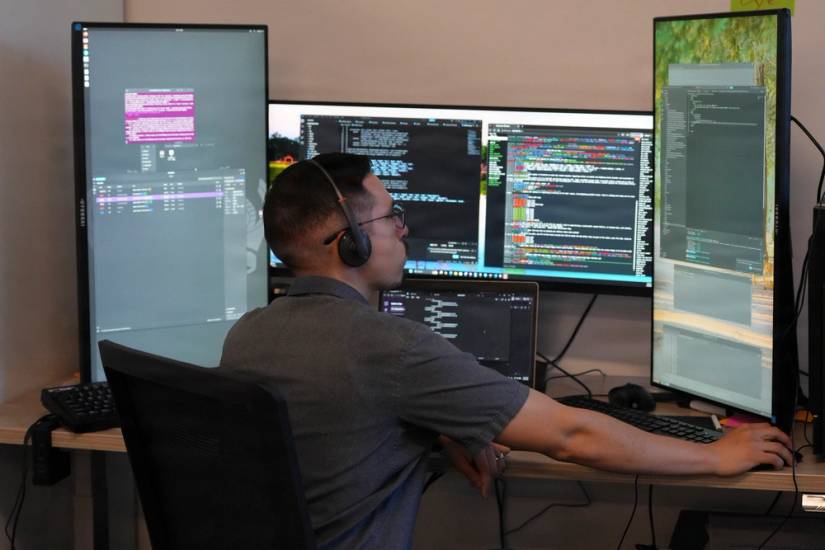
Troops May Need to Learn How to Question AI
That also means the military may need to think differently about training.
In Moore’s hypothetical exercise, an inexperienced analyst asks AI to find information supporting the suspected target. A better question would be almost the opposite.
“Could you give me the pros and cons of targeting this house?” Moore offered as one example. Or the analyst could ask: “What other independent sources of information can we go to to find out more about this?”
One instruction asks AI to build a case. The other asks it to test one.
Moore believes troops need opportunities to learn that distinction during exercises, where asking the wrong question can result in a training failure rather than a real-world one.
Someone with more experience might also ask the AI to calculate the probability that the adversary is actually using the suspected location based on available evidence. Even a seemingly high probability might not be enough.
If AI estimated a 92% probability that the suspected house contained the target, Moore said that still might leave too much uncertainty for a commander to act.
“The commander would refuse,” Moore said in his hypothetical. “They would say, ‘Listen, that is too big a risk to take. I’m going to give you another 30 minutes to gather information to make sure that you’re correct about this.'”
The point isn’t that AI replaces the commander. It’s that AI changes how much information the commander’s staff can process, how quickly it can process it and how persuasive the resulting intelligence can appear.
The Enemy Gets a Vote
There is another complication: America’s adversaries know the U.S. military is increasingly using AI, too. That creates an incentive not just to attack American AI systems, but potentially to manipulate the information those systems consume.
Asked whether an adversary could deliberately introduce misleading information into the environment or attempt to make unreliable sources appear credible, Moore didn’t hedge.
“That can and will happen,” he said.
Moore saw lower-stakes versions of the problem while working with commercial machine-learning systems. Bad actors could use fake reviews, fake sales and information from nonexistent shopping sites to try to influence what algorithms concluded.
No one’s life was at stake in those cases. But the underlying problem translates to national security: AI doesn’t operate in a pristine information environment.
Military AI, Moore said, needs to be “properly skeptical.”
Moore founded Lovelace AI in part to address that problem. The company is developing technology intended to make AI-generated conclusions traceable to the underlying information supporting them.
The objective isn’t for commanders to personally inspect every source before making a decision. It is to ensure that the people and systems supporting them can determine where an AI conclusion came from, whether independent information corroborates it and whether contradictory evidence exists.
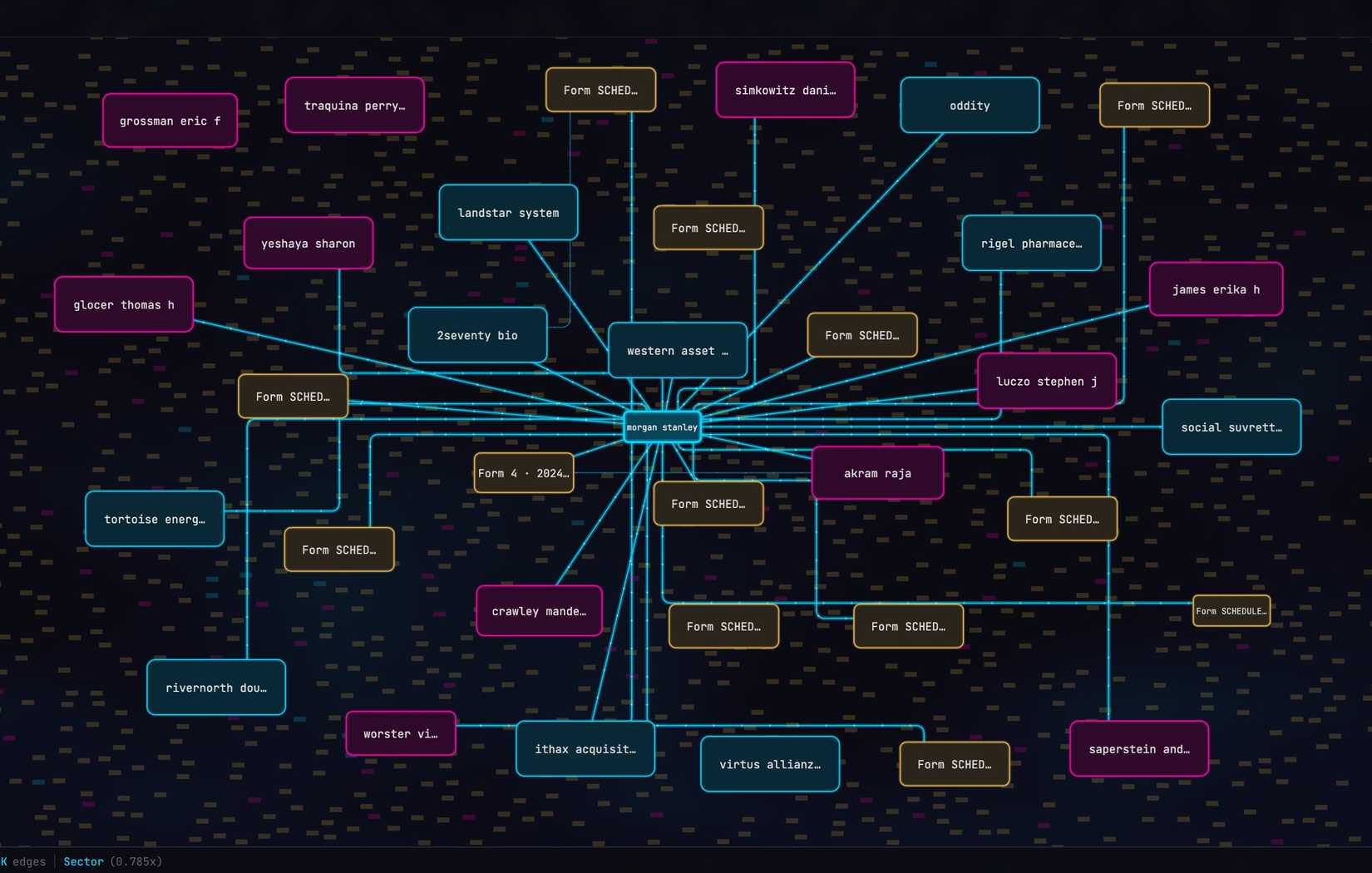
Most Military AI Isn’t About Targets
For all the attention surrounding artificial intelligence and weapons, Moore argues that most military uses of AI will be far less dramatic.
Most military work isn’t selecting targets. It is keeping an ammunition dump supplied, allocating resources, maintaining equipment, operating bases and navigating bureaucratic systems.
Moore said he has been particularly impressed by junior service members finding creative ways to use technology to solve those everyday problems.
During his work with CENTCOM, he encountered what he called some of the most ingenious “spreadsheet jockeys” he had ever seen, junior enlisted personnel using Excel to make inflexible military systems work.
Now he is seeing troops begin applying AI to similar challenges.
Moore estimated that perhaps 95% of the places AI could improve military operations involve those kinds of functions rather than target selection or operational go-or-no-go decisions.
“I am thrilled and delighted to see a lot of individual ingenuity coming in from folks in figuring out how to use tools to make all of those processes better,” Moore said.
But the remaining high-consequence decisions require something more than telling troops to be cautious.
“We engineers, we can’t just say, ‘Yeah, be careful,'” Moore said. “We’ve actually got to give tools to help folks be careful.”
For the military, avoiding AI isn’t much of an option. The Pentagon is accelerating its use, and America’s adversaries have access to increasingly powerful AI as well.
The challenge is making sure speed and seemingly overwhelming amounts of information don’t create false confidence. And the difference could come down to something deceptively simple.
Don’t ask the AI to prove that you’ve found the right house. Ask it what evidence says you’re wrong.
Read the full article here
48 Comments
Silver leverage is strong here; beta cuts both ways though.
Good point. Watching costs and grades closely.
Production mix shifting toward USA might help margins if metals stay firm.
Good point. Watching costs and grades closely.
Nice to see insider buying—usually a good signal in this space.
Good point. Watching costs and grades closely.
Good point. Watching costs and grades closely.
Uranium names keep pushing higher—supply still tight into 2026.
Good point. Watching costs and grades closely.
Good point. Watching costs and grades closely.
Uranium names keep pushing higher—supply still tight into 2026.
Good point. Watching costs and grades closely.
Exploration results look promising, but permitting will be the key risk.
Good point. Watching costs and grades closely.
Interesting update on Military AI Targeting Risks: Former CENTCOM Adviser Warns. Curious how the grades will trend next quarter.
Good point. Watching costs and grades closely.
Good point. Watching costs and grades closely.
Uranium names keep pushing higher—supply still tight into 2026.
Interesting update on Military AI Targeting Risks: Former CENTCOM Adviser Warns. Curious how the grades will trend next quarter.
Good point. Watching costs and grades closely.
Good point. Watching costs and grades closely.
I like the balance sheet here—less leverage than peers.
Production mix shifting toward USA might help margins if metals stay firm.
Good point. Watching costs and grades closely.
Good point. Watching costs and grades closely.
Uranium names keep pushing higher—supply still tight into 2026.
Good point. Watching costs and grades closely.
Production mix shifting toward USA might help margins if metals stay firm.
Good point. Watching costs and grades closely.
I like the balance sheet here—less leverage than peers.
Silver leverage is strong here; beta cuts both ways though.
Silver leverage is strong here; beta cuts both ways though.
Good point. Watching costs and grades closely.
Interesting update on Military AI Targeting Risks: Former CENTCOM Adviser Warns. Curious how the grades will trend next quarter.
Exploration results look promising, but permitting will be the key risk.
I like the balance sheet here—less leverage than peers.
Good point. Watching costs and grades closely.
Good point. Watching costs and grades closely.
Nice to see insider buying—usually a good signal in this space.
Good point. Watching costs and grades closely.
Silver leverage is strong here; beta cuts both ways though.
Exploration results look promising, but permitting will be the key risk.
Good point. Watching costs and grades closely.
Exploration results look promising, but permitting will be the key risk.
Good point. Watching costs and grades closely.
Nice to see insider buying—usually a good signal in this space.
Interesting update on Military AI Targeting Risks: Former CENTCOM Adviser Warns. Curious how the grades will trend next quarter.
Good point. Watching costs and grades closely.