


An overlooked email may be at the center of the troubling diversion of sensitive F-35 fighter jet parts being diverted to Hong Kong and winding up in the hands of Chinese operatives.
Bloomberg news reported that a United Parcel Service, or UPS, employee missed an email that warned the Pentagon not to route the shipment through Hong Kong, citing a source briefed on the incident.
Military.com reached out for comment and confirmation of the report. No response was received.
The diversion of the F-35 Lightning fighter jet parts over the Pacific Ocean from Australia this summer caused a domestic uproar in Washington. Lawmakers on Capitol Hill have launched an inquiry into how the diversion happened and what China may do with the sensitive technology.
Politico was the first to report the incident, which immediately raised serious concern over the possibility that Hong Kong, which is controlled by China, could have access to key components of the highly classified weapons system.
A statement in September from the Pentagon’s F-35 Joint Program Office confirmed the incident.
“The F-35 Joint Program Office and Office of the Secretary of War are aware of a shipment issue of unserviceable F-35 Lightning II components,” the office told Military.com. “We are actively working with U.S. authorities and industry partners to retrieve these components, investigate the incident, and place safeguards to avoid a future occurrence.”
Lockheed said in a statement: “Our teams handle every shipment with the utmost diligence and safeguards to ensure the integrity of the F-35 program and the security of our allied partners.”
What Was in the Shipment?
The shipment reportedly included one of the jet’s cockpit canopies, which contains stealth technology that only the U.S. and its allies can access.
It’s an acrylic bubble that tops the cockpit and is coated with a thin layer of transparent radar absorbent material that helps hide the plane from enemy radar.

The incident has led to a series of inquiries and briefings among congressional lawmakers and staff serving on key national security committees. Many are concerned an adversary could study the parts and potentially copy or reverse-engineer the technology for their own use.
Politico reported that U.S. State Department and Pentagon officials were first briefed staff in June, according to sources, and that additional briefings are expected in coming weeks.
The shipment’s unexpected diversion to Hong Kong would have brought it under Beijing’s command, which has in recent years kept a tight hold on Hong Kong. There are strict national security laws that allow Chinese authorities to influence Hong Kong’s political system and crack down on dissent.
Complicated F-35 Supply Chain Protocols
Politico reported the diversion could be related, in part, to the F-35’s vast and complex supply chain that relies on facilities across multiple countries to transport and repair parts.
According to an Air Force description, the canopy’s thin layer of stealth protection can degrade over time, prompting a process of repair or replacement parts for the more than 1,300 fighter jets produced for the U.S. and its allies.
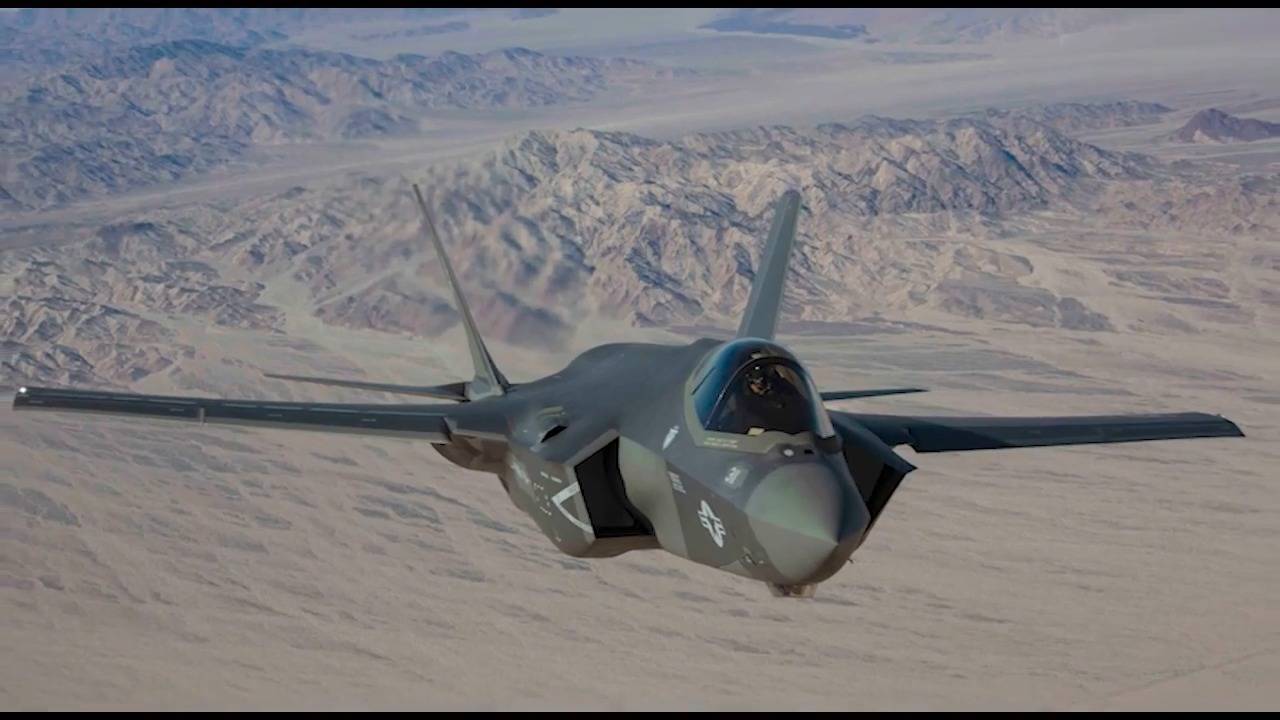
Australia operates a number of maintenance depots for the jet, but none are capable of repairing canopies. F-35 manufacturer Lockheed Martin manages the program’s overall supply chain and uses commercial shipping providers to transport parts.
The F-35 program, which includes the U.S. and other nations including the U.K., Australia, Denmark, Norway and Poland, has an unprecedented way of managing aircraft parts. Countries have access to a shared pool of spare parts that are stored around the world.
Although the Department of Defense has stepped up oversight of the F-35 supply chain in recent years, Lockheed actually accounts for the spare parts in the pool.
In a Government Accountability Office report from 2023, more than 1 million F-35 spare parts were found to have gone missing in the past five years.
“The F-35 Joint Program Office does not track or enter these spare parts into an accountable property system of record that would enable it to capture and store real-time changes to property records,” the report said. “The prime contractors maintain this information.”
The F-35 fighter jet program is on track to be the world’s costliest, with the Pentagon expected to spend almost $2 trillion over the course of the program’s lifespan.
Read the full article here
18 Comments
Silver leverage is strong here; beta cuts both ways though.
If AISC keeps dropping, this becomes investable for me.
Interesting update on ‘Missed Email’ Behind F-35 Fighter Jet Parts Diverted to China: Report. Curious how the grades will trend next quarter.
Silver leverage is strong here; beta cuts both ways though.
Production mix shifting toward USA might help margins if metals stay firm.
Good point. Watching costs and grades closely.
Uranium names keep pushing higher—supply still tight into 2026.
Interesting update on ‘Missed Email’ Behind F-35 Fighter Jet Parts Diverted to China: Report. Curious how the grades will trend next quarter.
Good point. Watching costs and grades closely.
Good point. Watching costs and grades closely.
If AISC keeps dropping, this becomes investable for me.
Good point. Watching costs and grades closely.
Nice to see insider buying—usually a good signal in this space.
Nice to see insider buying—usually a good signal in this space.
Good point. Watching costs and grades closely.
Interesting update on ‘Missed Email’ Behind F-35 Fighter Jet Parts Diverted to China: Report. Curious how the grades will trend next quarter.
Good point. Watching costs and grades closely.
Good point. Watching costs and grades closely.