

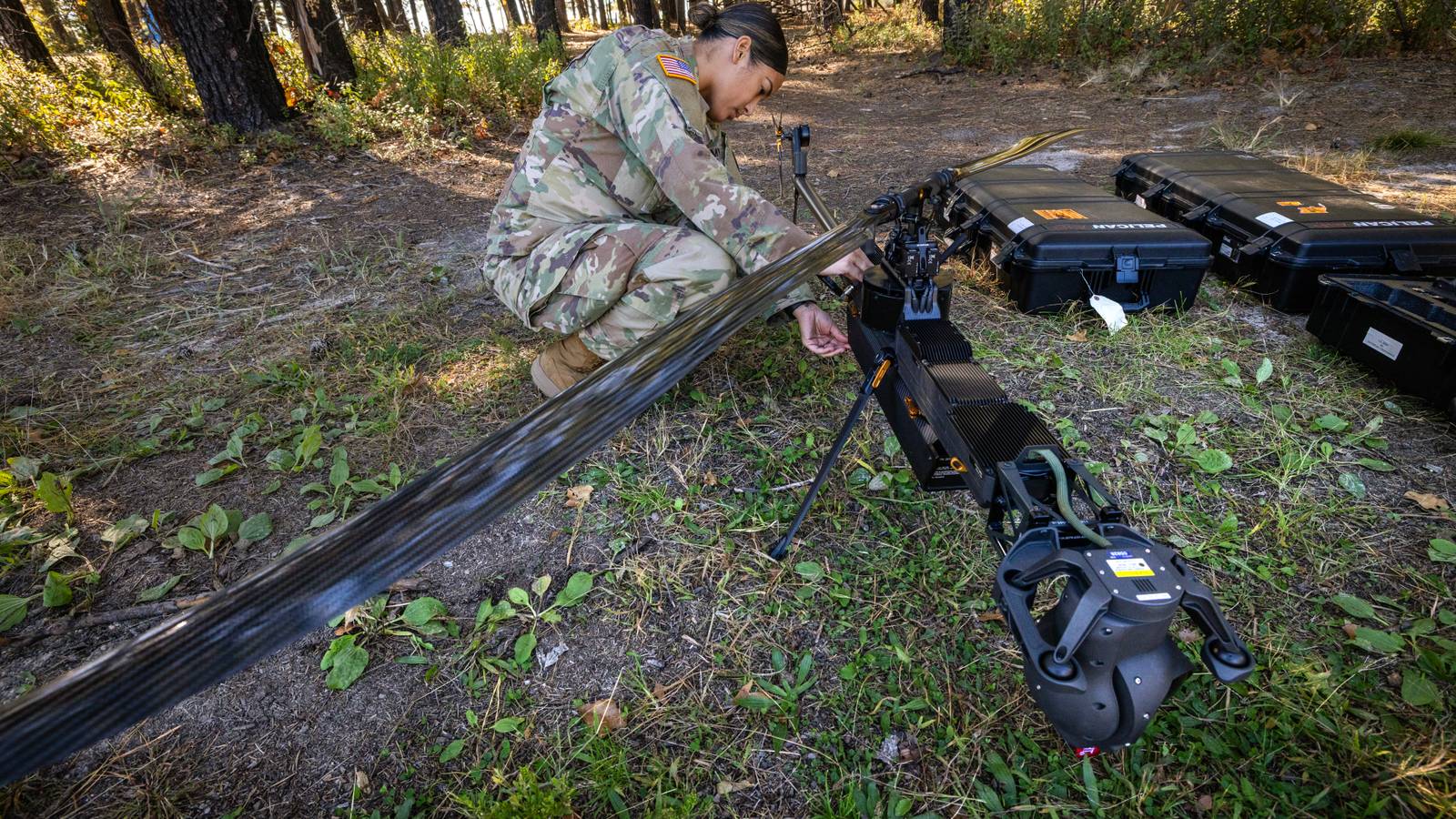
Drones pose a significant threat to U.S. forces and frequently cause head injuries, according to a study led by the Naval Health Research Center.
Published in the peer-reviewed journal Military Medicine Oct. 16, the study found that out of 367 U.S. military personnel wounded in drone attacks during 2023 and 2024, about 48.5% sustained a traumatic brain injury.
The findings mark a shift from earlier conflicts dominated by lower-body blast wounds and prompted researchers to call for a reevaluation of service members’ personal protective equipment.
What Are Drones, and Why Are They Controversial?
Drones are aircraft operated without an onboard human pilot, controlled remotely or autonomously via software.
The Trump administration views them as inexpensive and scalable, making them a key counter to mass manufacturing by adversaries such as China and Russia, according to the Pentagon’s Drone Dominance directive. They also reduce casualties by keeping service members out of direct harm’s way.
Yet enemy drones have also proven deadly to U.S. troops. On March 1, six U.S. Army Reserve soldiers were killed and dozens were wounded when an Iranian one-way attack drone struck a tactical operations center at Port Shuaiba in Kuwait on the second day of the ongoing conflict.
Since that strike, multiple soldiers who were injured have accused the military health care system of failing to adequately support them during their recovery.
What Did the Study Reveal?
The study, co-authored by researchers from Leidos Inc., Naval Medical Center San Diego, the Uniformed Services University of the Health Sciences and Axiom Resource Management Inc., examined wounding patterns among service members injured in drone attacks in the U.S. Central Command area of operations in 2023 and 2024.
Researchers identified wounded service members through the Expeditionary Medical Encounter Database and classified their injuries using standard medical diagnosis and injury-severity codes.

Of the 710 total injuries recorded, 92.3% were classified as minor, while across all injuries, 81% affected the head and neck region and 13.5% involved the extremities.
Among the 53 injuries rated moderate or higher in severity, 43.4% were to the head, 18.9% were to the thorax and 15.1% were to the upper extremities.
“U.S. forces injured during drone attacks most frequently sustained head injuries, marking a significant shift in wounding patterns from previous conflicts characterized by lower extremity trauma,” the authors wrote.
“Further research on wounding patterns and a re-evaluation of personal protective equipment are essential as drone warfare continues to evolve,” they added.
Meanwhile, the Pentagon continues to expand domestic drone production. On Nov. 2, the Defense Department’s Office of Strategic Capital announced a conditional loan commitment of up to $450 million to California-based drone developer and manufacturer Neros — the Naval Health Research Center authors warned that the rapid spread of drone warfare makes upgrading helmets and protective gear urgent for deployed troops.
Read the full article here
31 Comments
Nice to see insider buying—usually a good signal in this space.
Production mix shifting toward USA might help margins if metals stay firm.
Good point. Watching costs and grades closely.
Good point. Watching costs and grades closely.
Interesting update on Nearly Half of Troops Wounded by Drones Suffered Brain Injuries, Study Finds. Curious how the grades will trend next quarter.
Good point. Watching costs and grades closely.
Good point. Watching costs and grades closely.
Nice to see insider buying—usually a good signal in this space.
The cost guidance is better than expected. If they deliver, the stock could rerate.
Good point. Watching costs and grades closely.
If AISC keeps dropping, this becomes investable for me.
If AISC keeps dropping, this becomes investable for me.
Good point. Watching costs and grades closely.
Interesting update on Nearly Half of Troops Wounded by Drones Suffered Brain Injuries, Study Finds. Curious how the grades will trend next quarter.
Good point. Watching costs and grades closely.
Good point. Watching costs and grades closely.
Nice to see insider buying—usually a good signal in this space.
Silver leverage is strong here; beta cuts both ways though.
Silver leverage is strong here; beta cuts both ways though.
Good point. Watching costs and grades closely.
Production mix shifting toward USA might help margins if metals stay firm.
Interesting update on Nearly Half of Troops Wounded by Drones Suffered Brain Injuries, Study Finds. Curious how the grades will trend next quarter.
Interesting update on Nearly Half of Troops Wounded by Drones Suffered Brain Injuries, Study Finds. Curious how the grades will trend next quarter.
Good point. Watching costs and grades closely.
Interesting update on Nearly Half of Troops Wounded by Drones Suffered Brain Injuries, Study Finds. Curious how the grades will trend next quarter.
If AISC keeps dropping, this becomes investable for me.
Production mix shifting toward USA might help margins if metals stay firm.
Good point. Watching costs and grades closely.
Production mix shifting toward USA might help margins if metals stay firm.
Good point. Watching costs and grades closely.
Good point. Watching costs and grades closely.