

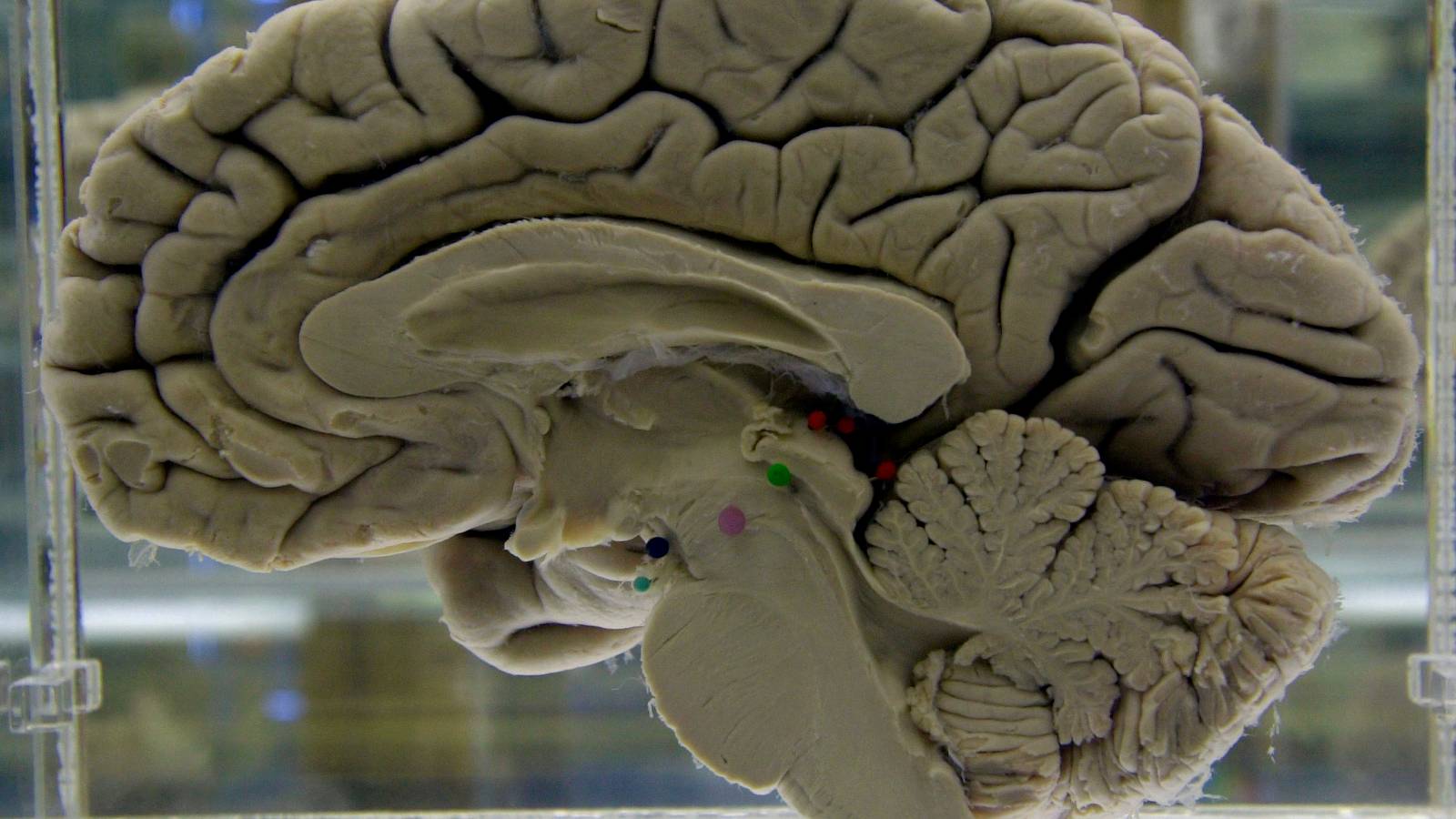
The Pentagon has awarded $6.8 million to UMass Chan Medical School so it can study traumatic brain injury in an effort the university says could help thousands of veterans and service members.
Traumatic brain injury, or TBI, can occur after a sudden blow to the head, explosive blasts or vibrations and pressure from repeatedly firing weapons during training or combat, as well as falls and motor vehicle accidents, according to the university. It causes a range of physical and mental symptoms including headaches, nausea, dizziness and vomiting, as well as cognitive difficulties and emotional instability.
Since 2000, more than 485,000 military service members have experienced TBIs, according to Defense Health Agency Traumatic Brain Injury Center of Excellence surveillance data cited by the university. UMass Chan officials noted that brain injuries appear to affect men and women differently, with female veterans facing a greater risk for depression and dementia.
The Study’s Aims
In a statement Thursday, the university announced that the Department of Defense would award the money over a period of four years “to help prevent or mitigate long-term damage” that TBI causes to military service members.
Led by Daryl Bosco, professor and associate vice chair of research for the Department of Neurology, the study will identify genes that lead to TBI-induced neurodegeneration.
Researchers will look for genes in men and women that help neurons recover from TBIs and hope that in doing so they will find biochemistry techniques that doctors could use to protect neurons after a TBI.
These findings could support potential new therapies to treat TBI and its long-term impacts, according to the university.
“We’re looking for genes that protect neurons from traumatic brain injury using a genetic screen. Understanding how and why neurons are protected will potentially reveal druggable targets for TBI,” Bosco said in the statement.
“The challenge, aside from there being no FDA-approved drugs for TBI, is that there is a paucity of data about the condition,” she added. “We don’t know the genes or biochemical mechanisms responsible for why some people go on to experience neurodegeneration and others don’t. This research will help us understand how TBI affects the brain and potentially identify therapeutic targets that can protect neurons.”
“Understanding how and why neurons are protected will potentially reveal druggable targets for TBI.”
— Daryl Bosco, UMass Chan Medical School
Other researchers working on the new UMass Chan Medical School project include Andrew A. Pieper, professor of psychiatry and neuroscience at Case Western Reserve University, and UMass Chan faculty Oliver King, assistant professor of neurology; Jonathan K. Watts, professor of RNA therapeutics; and Jessica Spinelli, associate professor of molecular medicine and a scholar of the Howard Hughes Medical Institute.
Other Research Breakthroughs
The UMass Chan award follows other recent efforts to test new treatments for brain injuries among service members and veterans.
In a Nov. 9 statement, The University of South Florida said it is treating veterans with hyperbaric oxygen therapy, a medical treatment in which patients breathe pure oxygen inside a pressurized chamber at twice normal air pressure, to determine whether it will help promote brain healing and reduce inflammation for those with a TBI.
The Trump administration is also pushing for psychedelic therapy to treat conditions such as PTSD, which the Department of Veterans Affairs notes frequently occurs alongside TBIs among combat veterans.
President Donald Trump issued an executive order April 18, 2026, calling on the U.S. Food and Drug Administration to establish a pathway for eligible patients with serious mental illnesses to access investigational psychedelic drugs, including ibogaine compounds.
Read the full article here
49 Comments
Interesting update on New $6.8M Pentagon-Backed Study Targets Brain Damage in Veterans, Troops. Curious how the grades will trend next quarter.
The cost guidance is better than expected. If they deliver, the stock could rerate.
Good point. Watching costs and grades closely.
Exploration results look promising, but permitting will be the key risk.
Good point. Watching costs and grades closely.
Good point. Watching costs and grades closely.
Exploration results look promising, but permitting will be the key risk.
Exploration results look promising, but permitting will be the key risk.
Good point. Watching costs and grades closely.
Good point. Watching costs and grades closely.
Silver leverage is strong here; beta cuts both ways though.
Good point. Watching costs and grades closely.
I like the balance sheet here—less leverage than peers.
Nice to see insider buying—usually a good signal in this space.
Good point. Watching costs and grades closely.
Nice to see insider buying—usually a good signal in this space.
Production mix shifting toward USA might help margins if metals stay firm.
Good point. Watching costs and grades closely.
Good point. Watching costs and grades closely.
The cost guidance is better than expected. If they deliver, the stock could rerate.
Silver leverage is strong here; beta cuts both ways though.
Good point. Watching costs and grades closely.
Good point. Watching costs and grades closely.
The cost guidance is better than expected. If they deliver, the stock could rerate.
Good point. Watching costs and grades closely.
Good point. Watching costs and grades closely.
If AISC keeps dropping, this becomes investable for me.
Good point. Watching costs and grades closely.
Good point. Watching costs and grades closely.
Nice to see insider buying—usually a good signal in this space.
If AISC keeps dropping, this becomes investable for me.
Good point. Watching costs and grades closely.
Production mix shifting toward USA might help margins if metals stay firm.
Good point. Watching costs and grades closely.
Nice to see insider buying—usually a good signal in this space.
Good point. Watching costs and grades closely.
Good point. Watching costs and grades closely.
Production mix shifting toward USA might help margins if metals stay firm.
Good point. Watching costs and grades closely.
Good point. Watching costs and grades closely.
If AISC keeps dropping, this becomes investable for me.
Good point. Watching costs and grades closely.
Good point. Watching costs and grades closely.
I like the balance sheet here—less leverage than peers.
Good point. Watching costs and grades closely.
Good point. Watching costs and grades closely.
Uranium names keep pushing higher—supply still tight into 2026.
Good point. Watching costs and grades closely.
I like the balance sheet here—less leverage than peers.