

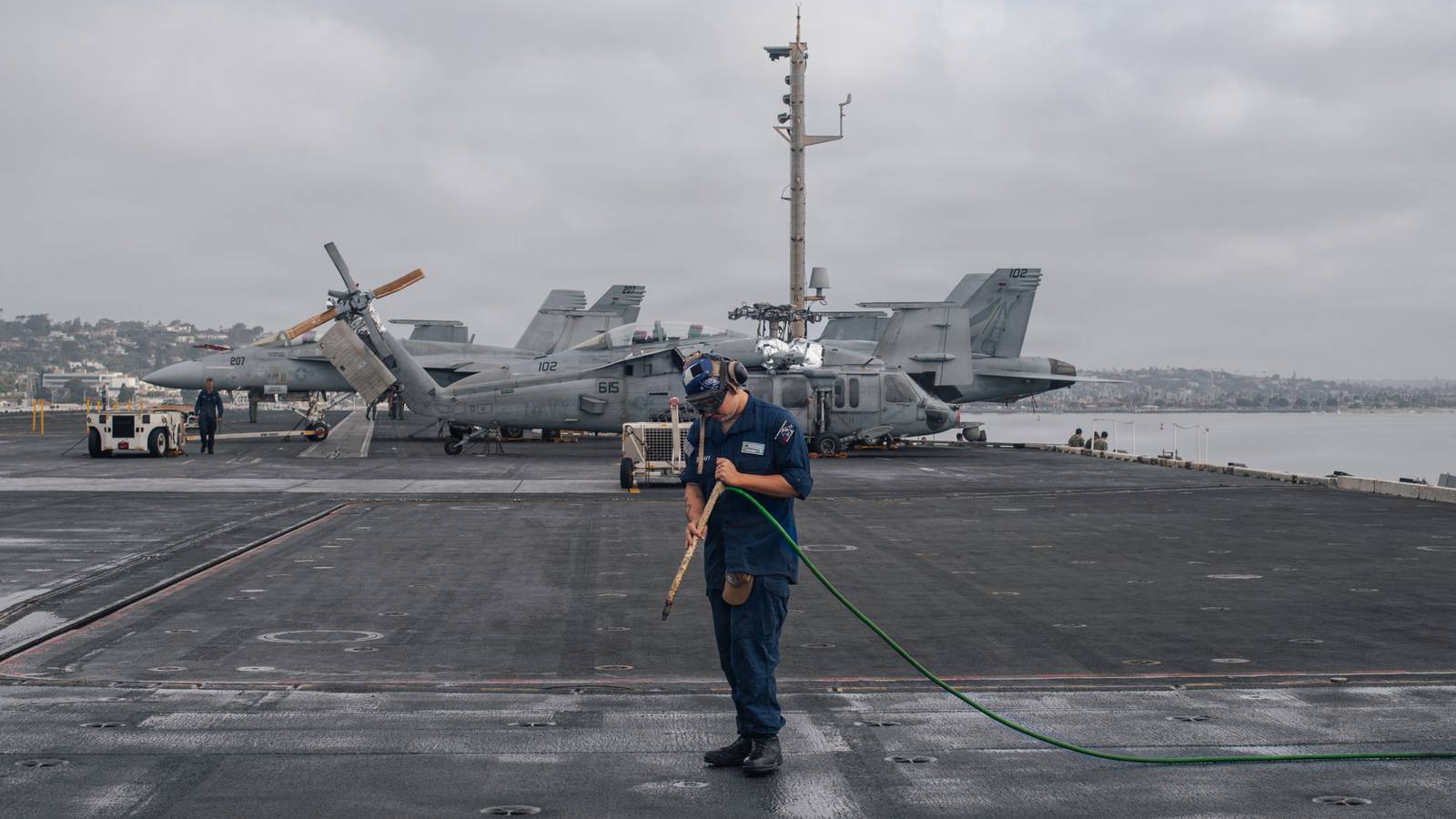
The Navy will reportedly soon deploy another carrier to the Middle East as the United States’ war with Iran continues.
The USS Theodore Roosevelt (CVN-71), the United States Navy’s fourth Nimitz-class super carrier currently stationed at Naval Base San Diego, Calif., will be deployed for more than seven months to meet the needs of the ongoing military operation, according to multiple reports. It’s also reported that the warship is expected to replace another naval carrier, the USS George Washington.
The nuclear-powered Theodore Roosevelt has reportedly been preparing for this deployment throughout this month, days and weeks after leading Rim of the Pacific 2026 international military exercises off the Hawaiian coast.
“[Sailors] will go do really hard things for me without really batting an eye because they like that part of it. But we do have to be able, when possible, to stick to schedules and be very honest, like we are with Roosevelt,” Master Chief Petty Officer of the Navy John Perryman told reporters on Wednesday, according to USNI News. “They know they’re going to be there longer than seven months. Their [commanding officer] is giving them eight months to plan on.”
Military.com reached out to the Navy for comment.
Concerns About Length of Deployment
It comes at a time of heightened scrutiny surrounding the length of naval ship’s deployments.
A series of reports in mid-August claimed that sailors aboard the 5,000-man USS Abraham Lincoln, which has been in combat with Iran for more than five months and has spent more than 250 days in a row without making land, have made multiple attempts to jump overboard and are experiencing other issues with their mental health.
Naval families have claimed there are safety concerns, food shortages, water contamination, and disruption in the mail system on the ship.
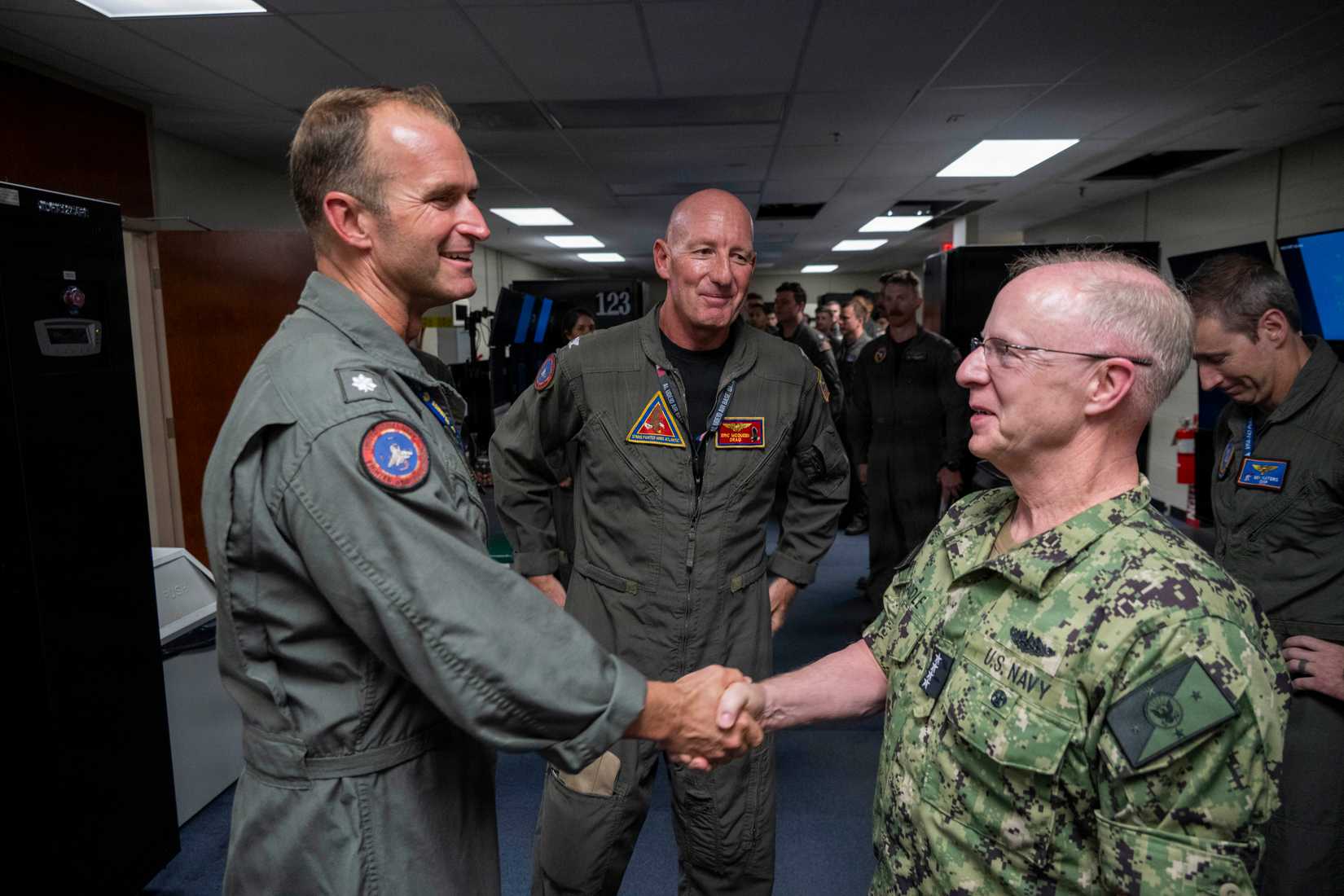
Multiple reports, citing anonymous officials on Tuesday, said that the vessel will make a brief stop in Thailand in September to allow rest and recovery. The USS George Washington is heading to the Middle East to replace it, according to sources cited by the Associated Press and CNN, who indicated that officials had previously planned the swap.
“We should be able to project with a little bit more fidelity how long the carrier and the strike group is going to stay on station. We do these extensions in little chunks, and the families don’t see any endpoint so they can plan their own lives. That creates a lot of stress for sailors,” said Chief of Naval Operations Adm. Daryl Caudle said Aug. 26.
He added that the Navy was streamlining processes and supply chains to replenish at sea so that the Navy would not experience “some of the challenges that we saw early on with Abraham Lincoln.”
Amid the naval shipping changes, U.S. Treasury Secretary Scott Bessent earlier this week announced an “economic D-Day” against Iran, aiming to further put Iran in an isolationist position on the global stage which could force them to make concessions.
Read the full article here
19 Comments
If AISC keeps dropping, this becomes investable for me.
If AISC keeps dropping, this becomes investable for me.
Good point. Watching costs and grades closely.
Silver leverage is strong here; beta cuts both ways though.
Good point. Watching costs and grades closely.
Good point. Watching costs and grades closely.
Exploration results look promising, but permitting will be the key risk.
The cost guidance is better than expected. If they deliver, the stock could rerate.
Production mix shifting toward USA might help margins if metals stay firm.
If AISC keeps dropping, this becomes investable for me.
Good point. Watching costs and grades closely.
I like the balance sheet here—less leverage than peers.
The cost guidance is better than expected. If they deliver, the stock could rerate.
Good point. Watching costs and grades closely.
Good point. Watching costs and grades closely.
Production mix shifting toward USA might help margins if metals stay firm.
I like the balance sheet here—less leverage than peers.
Good point. Watching costs and grades closely.
Good point. Watching costs and grades closely.