

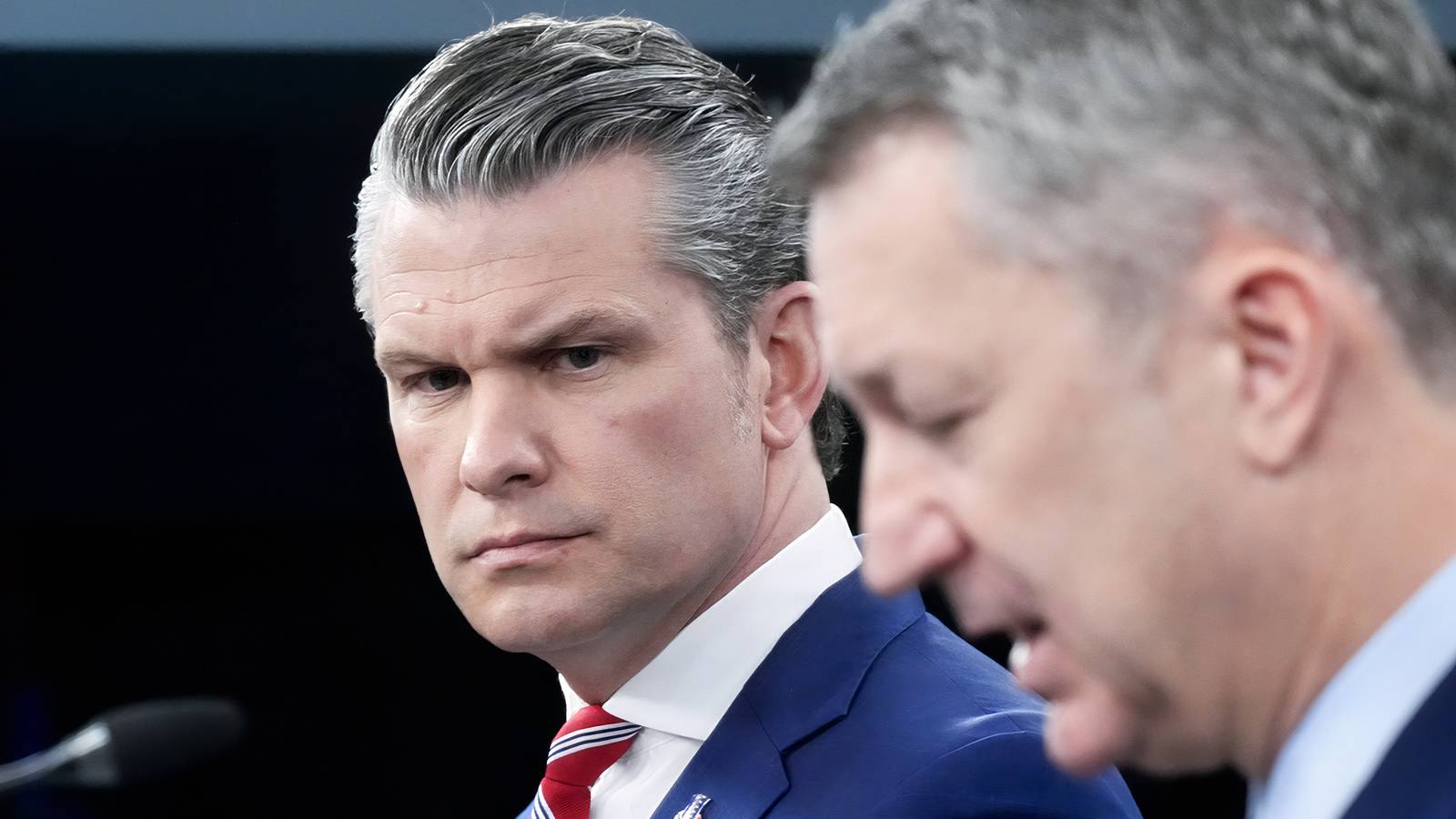
U.S. defense officials said Tuesday that U.S. forces have now actively escorted vessels through the Strait of Hormuz and are coordinating the movement of hundreds more ships after Iranian attacks trapped more than 1,500 vessels, and tens of thousands of mariners, in one of the world’s most critical energy corridors.
“Project Freedom,” ordered Sunday by President Donald Trump and executed by U.S. Central Command, began May 4 and is aimed at restoring the flow of global commerce in a region transporting roughly one-fifth of the world’s oil supply. It involves roughly 15,000 U.S. service members supporting the mission, giving commanders the ability to detect, track and neutralize threats in real time across air and sea domains.
“Project Freedom is defensive in nature, focused in scope, and temporary in duration,” Defense Secretary Pete Hegseth said Tuesday during a Pentagon briefing outlining the operation’s early execution.
“We’re not looking for a fight. But Iran also cannot be allowed to block innocent countries and their goods from an international waterway,” he added.
Iran Attacks Force US Response
U.S. officials said Iran has sharply escalated its campaign against commercial shipping in recent weeks, firing on vessels, seizing ships, and attempting to impose what American officials described as an illegal tolling system across the narrow maritime chokepoint.
“Iran is the clear aggressor,” Hegseth said. “Harassing civilian vessels, threatening mariners from every nation and weaponizing a critical choke point.”
Senior military officials speaking at the same briefing said the campaign has expanded beyond shipping lanes, with Iran targeting regional infrastructure and neighboring countries, underscoring what they described as a broader pressure strategy.
According to CENTCOM, Iranian forces have fired on commercial ships at least nine times, seized two container vessels, and carried out more than 10 attacks on U.S. forces in the region—actions officials said are deliberately calibrated to stay below the threshold of triggering full-scale combat operations.
The impact has been immediate and widespread: Roughly 22,500 mariners aboard more than 1,550 commercial vessels remain effectively trapped in the Arabian Gulf, unable to safely transit one of the world’s most vital shipping lanes.
Officials described the situation as a “global chokepoint crisis,” warning that Iran’s actions are effectively constraining a critical artery of international trade.
U.S. officials have separately denied Iranian claims that a U.S. military vessel was struck during the latest tensions, underscoring the contested information environment surrounding the operation.
Escorting Vessels Through Hormuz
To counter the threat, U.S. forces have established a heavily defended maritime security zone along the southern portion of the Strait of Hormuz, effectively creating a protected corridor for commercial vessels to move through one of the world’s most contested waterways.
The operation is anchored by U.S. Navy guided-missile destroyers escorting ships through the strait, backed by a layered air and surveillance network that includes more than 100 fighter jets, drones and reconnaissance aircraft providing 24/7 watch.
Two U.S.-flagged commercial vessels have already successfully transited the strait under escort, offering an early proof of concept for the operation, with officials saying hundreds more ships are preparing to follow as confidence in the security corridor grows.
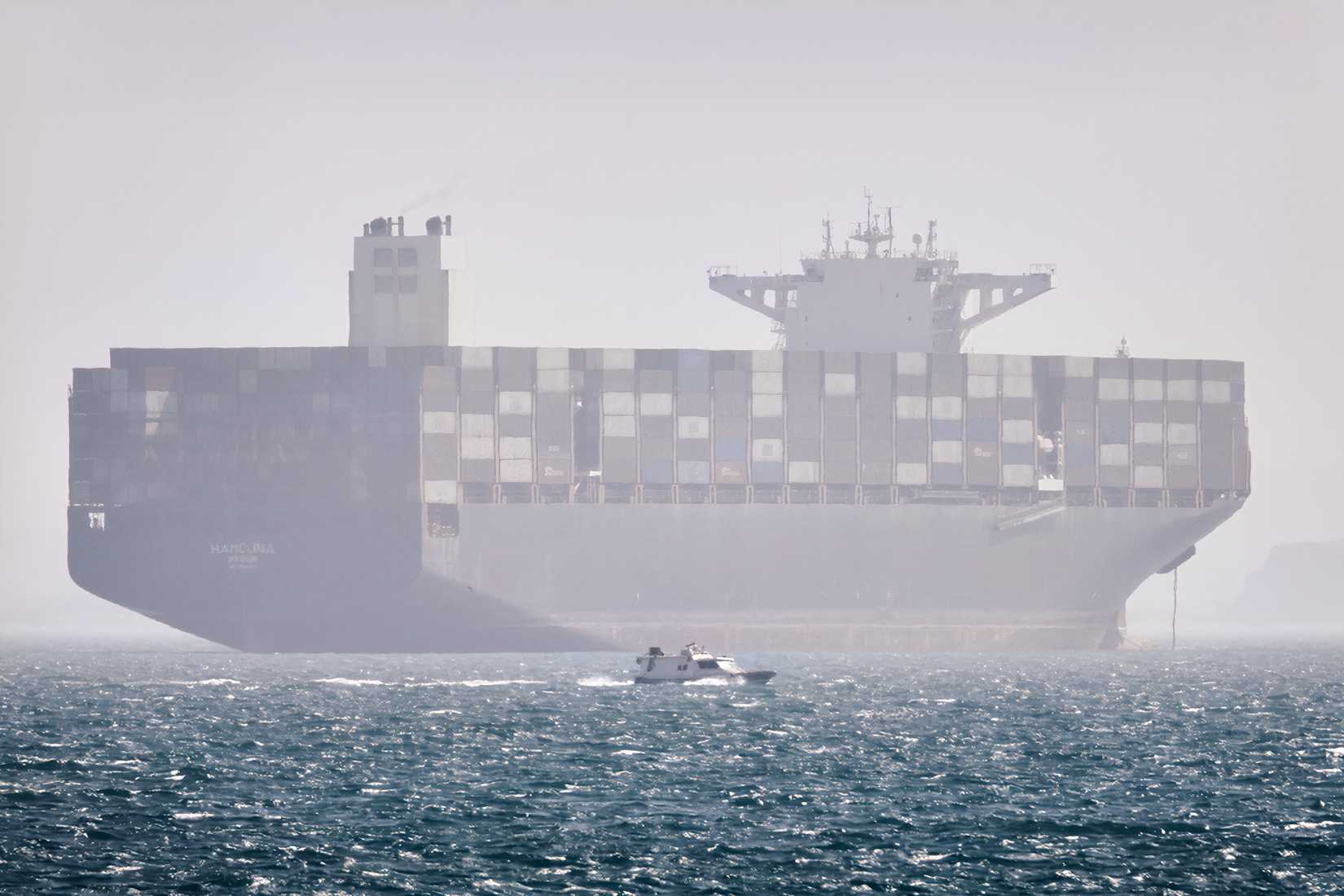
Hundreds of additional ships are now being sequenced for transit, according to officials, with U.S. forces actively coordinating with shipping companies and insurers to move vessels out of the region—an expansion beyond the initial proof-of-concept transits reported earlier this week.
“We have established a powerful red, white and blue dome over the strait,” Hegseth said.
U.S. forces have already intercepted multiple threats targeting commercial shipping lanes, including fast attack boats, one-way drones and cruise missiles.
Officials called on allies including South Korea, Japan, Australia and European nations to contribute to securing the waterway, arguing those economies have a greater dependency on Gulf energy flows.
“The world needs this waterway a lot more than we do,” Hegseth said.
Ceasefire ‘Not Over’
Despite the surge in military activity, U.S. officials said the operation remains separate from active combat and does not signal a collapse of the ceasefire with Iran.
“The ceasefire is not over,” Hegseth said, adding that early confrontations were expected as U.S. forces began escorting ships through contested waters.
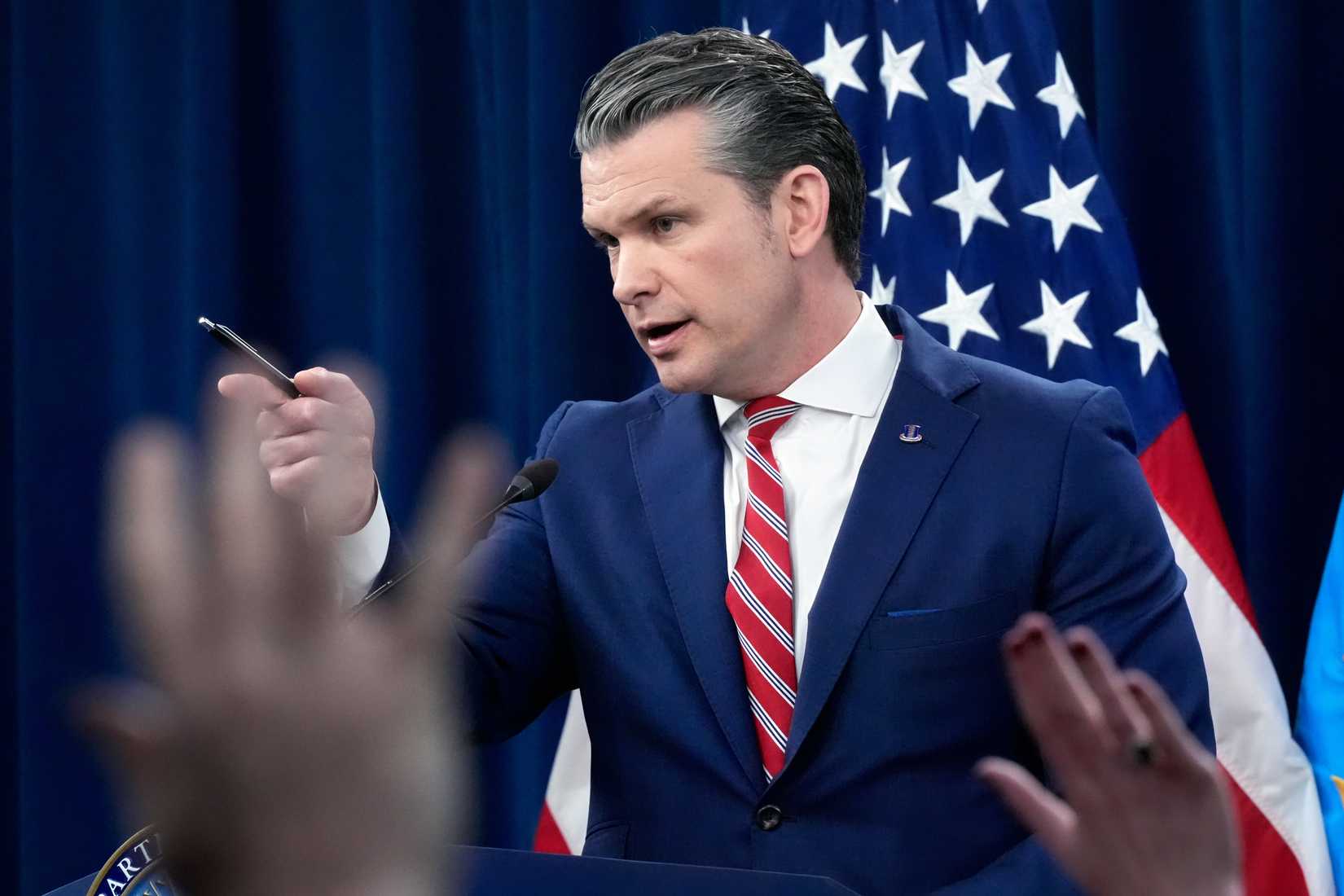
Hegseth said the operation is “separate and distinct” from ongoing combat operations, emphasizing that the U.S. expected initial friction but remains focused on maintaining freedom of navigation without triggering a broader war.
Chairman of the Joint Chiefs Dan Caine described Iran’s recent actions as deliberate attacks designed to test U.S. resolve and disrupt shipping without crossing the threshold that would trigger a broader military response.
“It feels like Iran is grasping at straws,” Caine said.
Read the full article here
29 Comments
The cost guidance is better than expected. If they deliver, the stock could rerate.
Good point. Watching costs and grades closely.
Good point. Watching costs and grades closely.
Uranium names keep pushing higher—supply still tight into 2026.
Production mix shifting toward USA might help margins if metals stay firm.
I like the balance sheet here—less leverage than peers.
Good point. Watching costs and grades closely.
Good point. Watching costs and grades closely.
Uranium names keep pushing higher—supply still tight into 2026.
Good point. Watching costs and grades closely.
If AISC keeps dropping, this becomes investable for me.
Production mix shifting toward USA might help margins if metals stay firm.
Good point. Watching costs and grades closely.
I like the balance sheet here—less leverage than peers.
Good point. Watching costs and grades closely.
Good point. Watching costs and grades closely.
The cost guidance is better than expected. If they deliver, the stock could rerate.
The cost guidance is better than expected. If they deliver, the stock could rerate.
Good point. Watching costs and grades closely.
Good point. Watching costs and grades closely.
If AISC keeps dropping, this becomes investable for me.
The cost guidance is better than expected. If they deliver, the stock could rerate.
Good point. Watching costs and grades closely.
Interesting update on Pentagon Officials Give ‘Project Freedom’ Update in Strait of Hormuz. Curious how the grades will trend next quarter.
Good point. Watching costs and grades closely.
Good point. Watching costs and grades closely.
I like the balance sheet here—less leverage than peers.
Good point. Watching costs and grades closely.
Good point. Watching costs and grades closely.