
A young Marine recruit was moving through the woods at Parris Island when his instructors announced that the leaders of his squad had been killed.
It was a simulated ambush during the Crucible, the grueling 54-hour exercise that caps Marine Corps recruit training. The group was exhausted, gunfire was going off around them, and someone needed to take charge. The instructors chose an unlikely candidate: a slight, bespectacled 18-year-old who had been hanging toward the back.
“You’re the leader,” they told him.
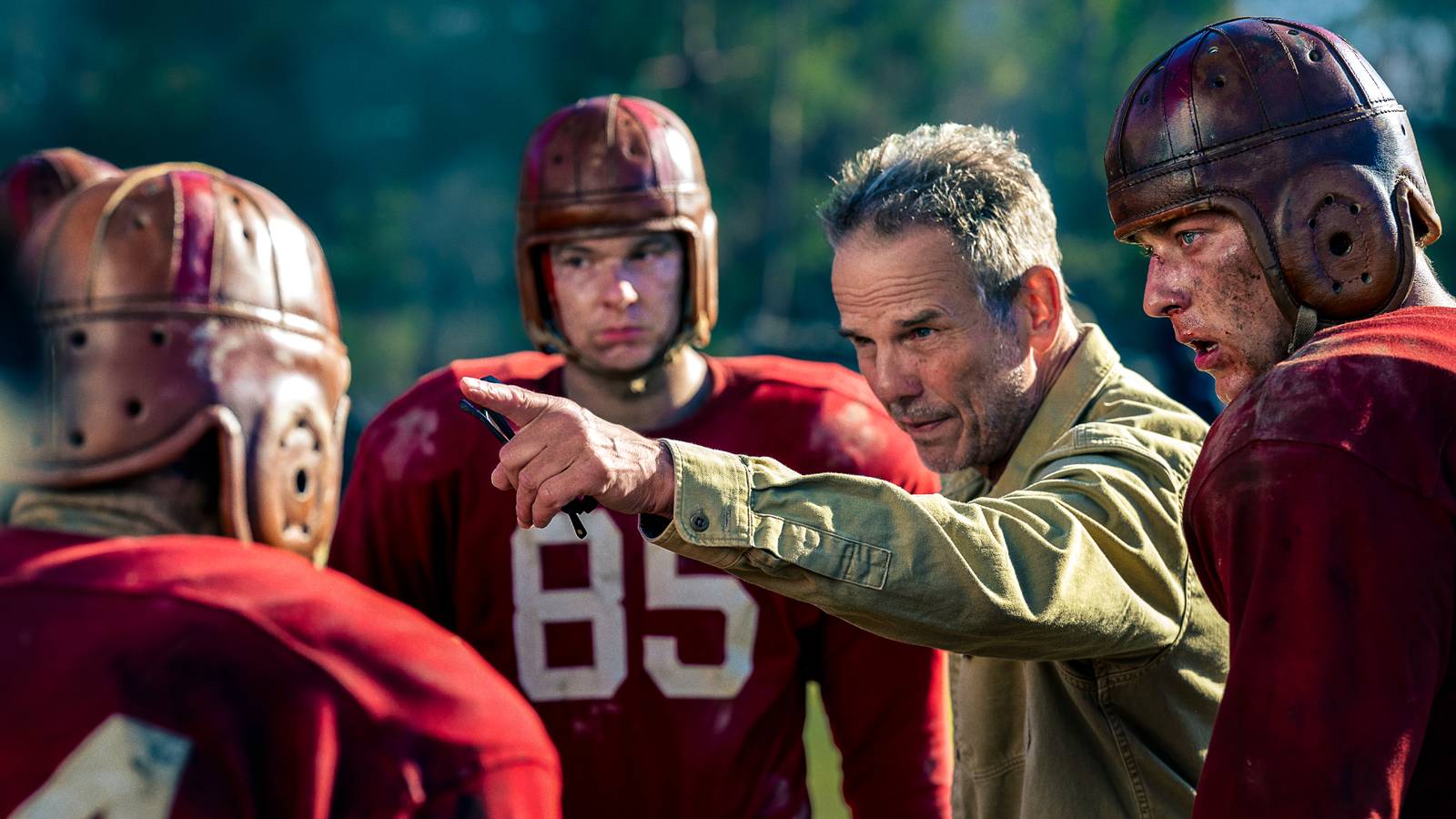
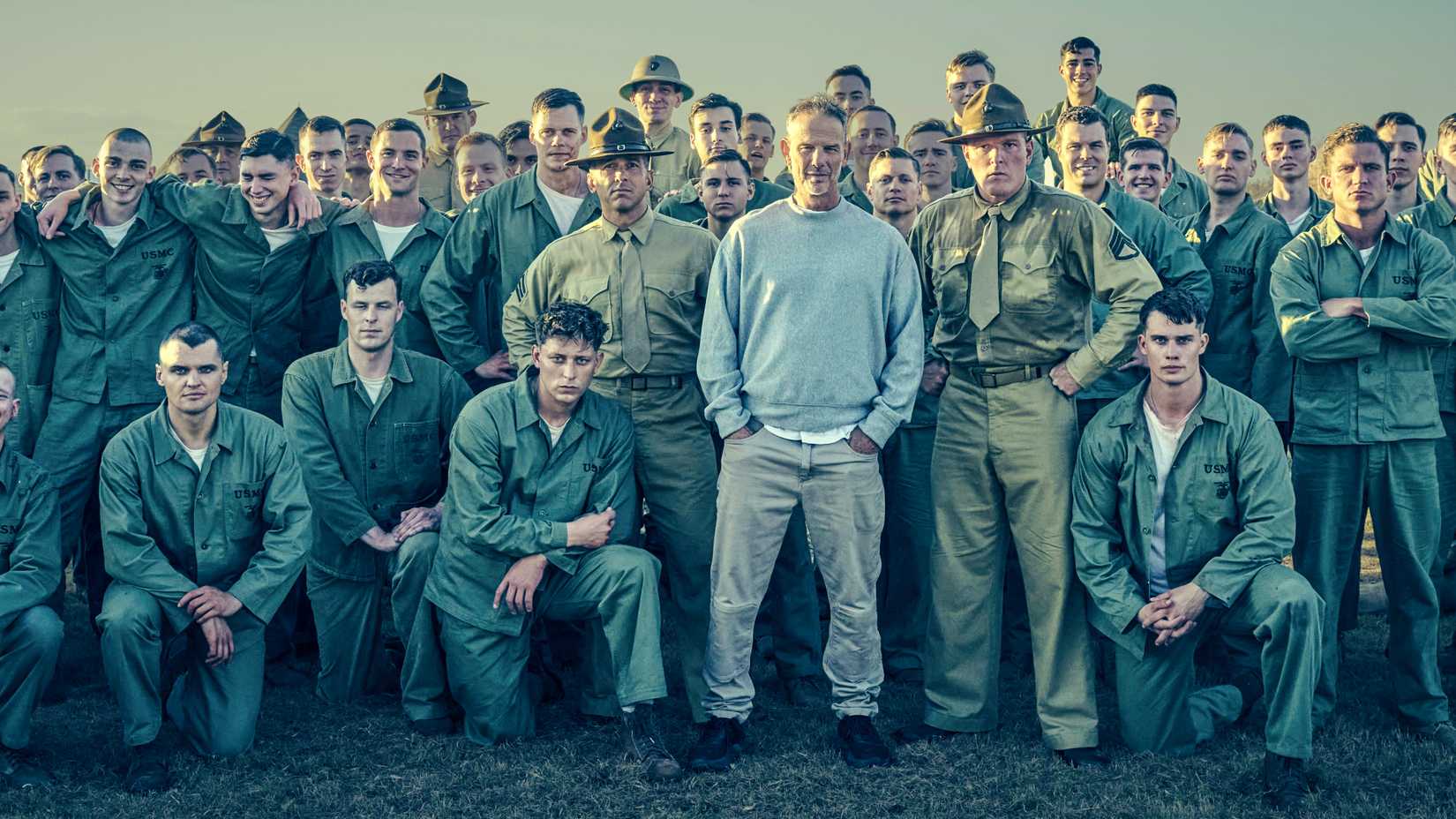
Director Peter Berg witnessed the exercise while researching his upcoming World War II film The Mosquito Bowl, and the experience stuck with him.
“I remember thinking that this kid’s life was changing,” Berg told Military.com during an interview alongside actors Ray Nicholson and Tom Francis. “I was looking at a peak moment in this young man’s life.”
For Berg, whose previous military films include Lone Survivor, watching a young recruit suddenly assume responsibility for his fellow Marines gave him a firsthand understanding of military leadership that he’d previously known mostly through conversations and research.
“If he goes down, you step up,” Berg said, describing the lesson. “You take care of him, and you get everybody out of it.”
Berg’s connection to the Marine Corps runs through his family. His father served during the Korean War and is buried at Arlington National Cemetery. In production notes provided by Netflix, the director described The Mosquito Bowl as partly “one for Dad.”
Berg spent two weeks at Parris Island, observing recruits and drill instructors while writing a substantial portion of the screenplay. That time helped him understand how military training changes young people, something he wanted to bring to his adaptation of Pulitzer Prize-winning author Buzz Bissinger’s nonfiction book, The Mosquito Bowl: A Game of Life and Death in World War II.
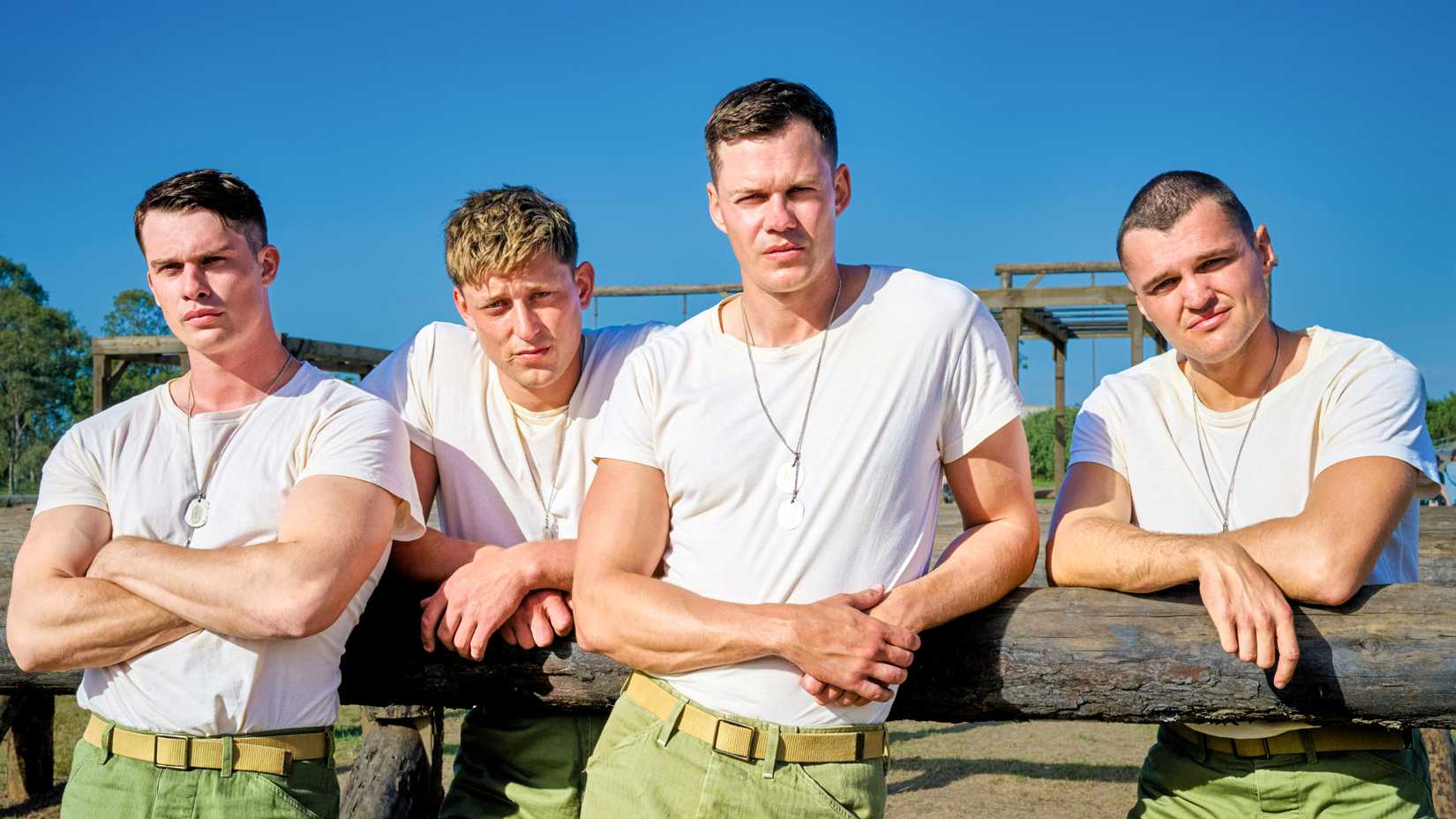
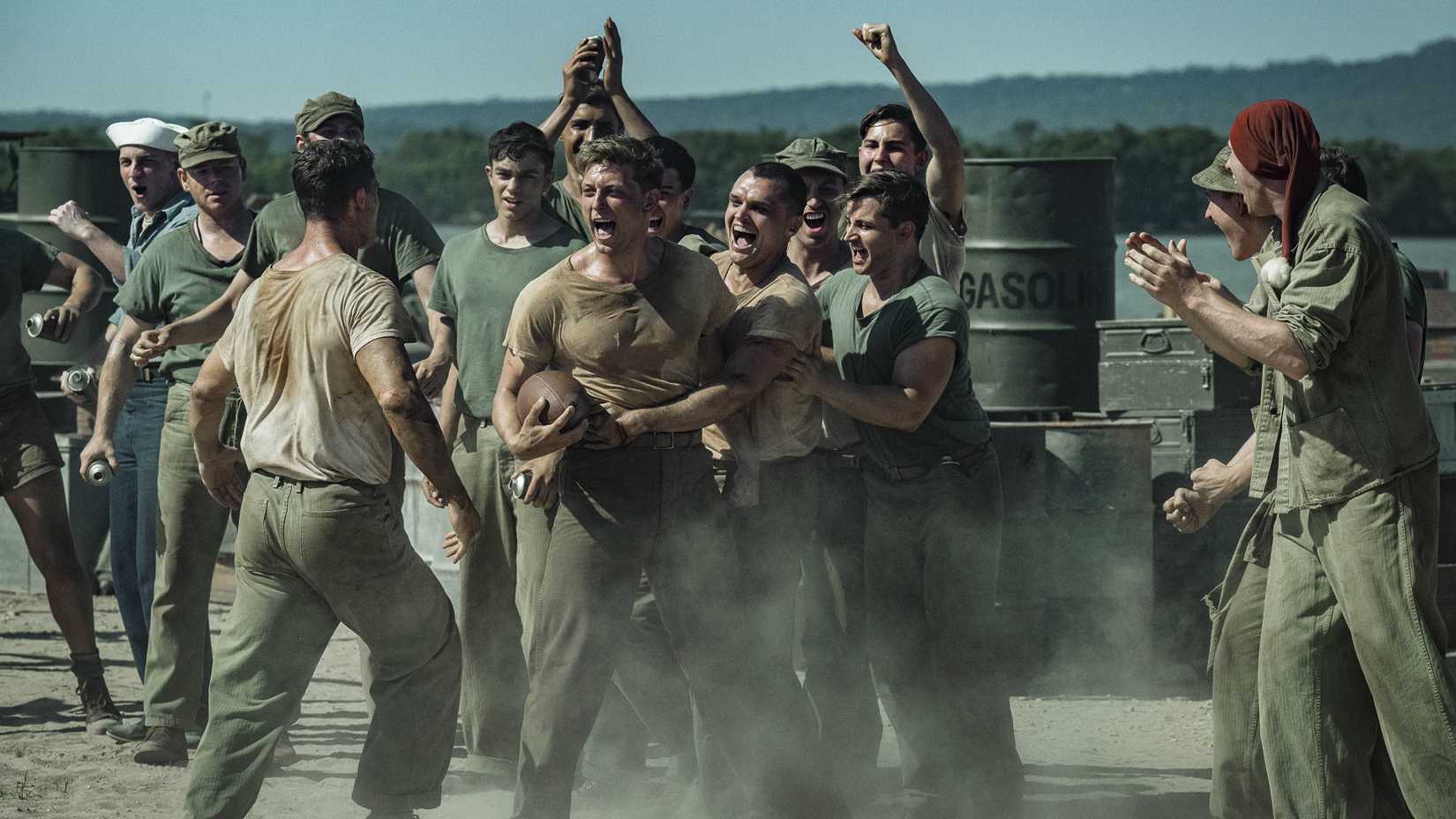
The film follows four former college football stars who joined the Marines during World War II. Their stories converge around a remarkable Christmas Eve 1944 football game on Guadalcanal between members of the 4th and 29th Marine Regiments, both assigned to the 6th Marine Division.
The men were preparing for the invasion of Okinawa, one of the Pacific War’s bloodiest battles. According to Bissinger’s historical account published by the Marine Corps Association, 15 of the 65 Marines who played in that game would die at Okinawa.
Bringing their experiences to the screen required considerable preparation. The production employed retired Marine Sgt. Maj. James Dever and Marine veteran Steve Price as technical advisers, while cast members underwent more than two weeks of military training, according to Netflix’s production notes.
For Nicholson, who portrays Purdue University football star Tony Butkovich, the research took an unexpectedly personal turn.
Purdue supplied restored footage of Butkovich’s remarkable 1943 season, when he rushed for 833 yards and scored 16 touchdowns in just seven games. Nicholson received the footage on the anniversary of the Marine’s death.
“I just watched this man run in the dark,” Nicholson recalled, describing the experience of watching the old footage alone. The coincidence left him feeling unusually connected to the man he was portraying.
Nicholson also read Bissinger’s book, Marine veteran E.B. Sledge’s With the Old Breed, and Dave Grossman’s On Killing. But as he considered Butkovich’s military service, one idea became central to his performance.
“My overall objective for Tony Butkovich was I want to be a friend worth dying for,” Nicholson said.
Tom Francis, who portrays University of Wisconsin football standout Dave Schreiner, found his connection to the real Marine through surviving personal letters.
Schreiner’s family preserved correspondence and other documents at the Wisconsin Historical Society, material Bissinger consulted while researching his book. Francis said reading Schreiner’s letters, including notes the athlete wrote to himself, revealed a man who constantly scrutinized his own performance.
“He scrutinized himself, and didn’t let himself off the hook in any way, shape or form,” Francis said.
That perfectionism followed Francis onto the set. On his first day of filming, he peppered co-star Bill Skarsgård with questions about the process until Skarsgård placed a hand on his shoulder.
“You’re overthinking Schreiner,” he told him.
Francis said the advice helped him stop analyzing every decision and trust himself in the role.
Berg faced a different challenge: deciding how much of the historical record could realistically fit into a feature film without losing the experiences of the Marines whose lives inspired it.
Bissinger’s book follows roughly a dozen major figures across several years of war. Berg narrowed the focus to four central characters and condensed some of the timelines.
He said those decisions ultimately came back to whether the film preserved the men’s real experiences and fates.
Berg wondered: “Are you holding on to the fundamental truths of the story? Are these characters written in a way that’s accurate?”
When an alteration felt questionable, Berg consulted Bissinger, who sometimes pushed back against the director’s ideas.
“Sometimes he says, ‘No, that feels like it’s a bridge too far. Don’t do it,'” Berg said. “And I listen to him.”
The Mosquito Bowl opens in select theaters Oct. 30 before arriving on Netflix Nov. 25.
Read the full article here
39 Comments
I like the balance sheet here—less leverage than peers.
Good point. Watching costs and grades closely.
If AISC keeps dropping, this becomes investable for me.
Good point. Watching costs and grades closely.
Interesting update on Peter Berg Reveals How Real Marines Helped Shape His World War II Film ‘The Mosquito Bowl’. Curious how the grades will trend next quarter.
Good point. Watching costs and grades closely.
Uranium names keep pushing higher—supply still tight into 2026.
I like the balance sheet here—less leverage than peers.
Good point. Watching costs and grades closely.
Good point. Watching costs and grades closely.
Silver leverage is strong here; beta cuts both ways though.
Uranium names keep pushing higher—supply still tight into 2026.
I like the balance sheet here—less leverage than peers.
Interesting update on Peter Berg Reveals How Real Marines Helped Shape His World War II Film ‘The Mosquito Bowl’. Curious how the grades will trend next quarter.
I like the balance sheet here—less leverage than peers.
Good point. Watching costs and grades closely.
Good point. Watching costs and grades closely.
Silver leverage is strong here; beta cuts both ways though.
Interesting update on Peter Berg Reveals How Real Marines Helped Shape His World War II Film ‘The Mosquito Bowl’. Curious how the grades will trend next quarter.
Good point. Watching costs and grades closely.
Exploration results look promising, but permitting will be the key risk.
Good point. Watching costs and grades closely.
Uranium names keep pushing higher—supply still tight into 2026.
Silver leverage is strong here; beta cuts both ways though.
Good point. Watching costs and grades closely.
Good point. Watching costs and grades closely.
Interesting update on Peter Berg Reveals How Real Marines Helped Shape His World War II Film ‘The Mosquito Bowl’. Curious how the grades will trend next quarter.
Good point. Watching costs and grades closely.
Good point. Watching costs and grades closely.
Silver leverage is strong here; beta cuts both ways though.
Good point. Watching costs and grades closely.
Good point. Watching costs and grades closely.
Nice to see insider buying—usually a good signal in this space.
Uranium names keep pushing higher—supply still tight into 2026.
Good point. Watching costs and grades closely.
Good point. Watching costs and grades closely.
Silver leverage is strong here; beta cuts both ways though.
Nice to see insider buying—usually a good signal in this space.
If AISC keeps dropping, this becomes investable for me.