


A recent test at Idaho National Laboratory (INL) marks the first time an advanced microreactor design has achieved fueled criticality under the Department of Energy’s (DOE) Reactor Pilot Program. A step that moves one of the technologies discussed for hardening military bases against grid outages closer to reality.
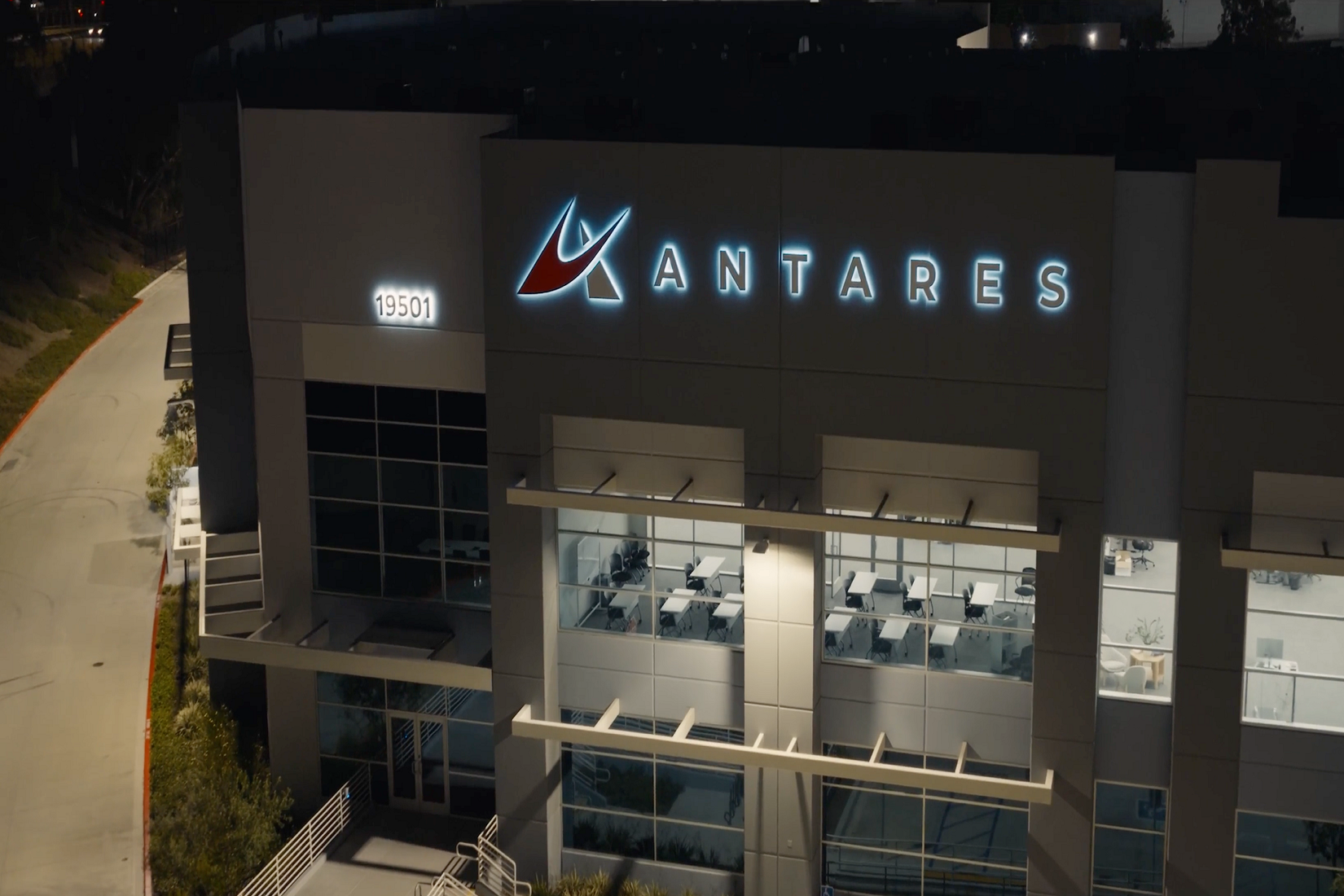
Antares Nuclear’s Mark-0 reactor reached zero-power fueled criticality on June 4. The demonstration gives the Army and Air Force early validation of a design already selected for their microreactor initiatives. It also supplies data that supports the company’s timeline for electricity production in 2027.
As recently reported by Military.com, Military bases face a mandate to operate independently for roughly two weeks during grid disruptions, but diesel reserves alone often fall short. The June 4 test gives one of the first concrete data points on a microreactor design already inside military programs.
Because Antares has been selected for the Air Force’s Advanced Nuclear Power for Installations initiative at Joint Base San Antonio (JBSA) and is competing for the Army’s Janus Program, this test provides early validation that directly feeds into those efforts.
The June 4 Criticality Test
The Mark-0 is a sodium heat-pipe-cooled microreactor that uses high-assay low-enriched uranium fuel in TRISO form. On June 4, technicians at INL’s Reactor and Critical Experiment facility brought the reactor to zero-power fueled criticality around 12:30 p.m. MDT.
Zero-power criticality testing confirms that the nuclear core can sustain a controlled chain reaction at very low power levels. It validates the reactor’s basic nuclear behavior, instrumentation, and control systems before any higher-power testing begins.
Antares had committed to reaching this milestone by the July 4 target date set under the DOE’s Reactor Pilot Program.
The test marks the first time an advanced reactor has achieved fueled criticality under the Reactor Pilot Program. DOE officials said the results validate the safety and operational performance of the design.
Data from the test will support follow-on work aimed at electricity production in 2027.
Air Force ANPI Plans at Joint Base San Antonio
In April, the Department of the Air Force (DAF) and the Defense Innovation Unit selected Antares to develop a microreactor option for Joint Base San Antonio under the Advanced Nuclear Power for Installations initiative.
The June 4 criticality test provides early technical validation for a design the Air Force has already chosen to pursue at JBSA, with a goal of having an advanced reactor operating at a DAF installation by 2030.
JBSA and Air Force materials describe the proposed system as factory-built and deliverable by truck. It would occupy only a few acres and generate less than 50 megawatts. The design would allow the base to sustain critical missions without a connection to the commercial grid.
Unlike large commercial nuclear plants with cooling towers, the microreactor would have a low profile and minimal visible footprint inside the installation. Base fact sheets stress that it would remain largely unnoticeable from outside the fence line while ensuring 24/7 mission continuity during grid disruptions.
Army Janus Program
The Army’s Janus Program aims to deploy advanced nuclear microreactors for installation energy resilience. While Antares is still competing for a role in the program, the service coordinated with the Energy Department on fuel fabrication and safety reviews for the June 4 test, giving the Army early data on one of the designs under consideration.
Jeff Waksman, principal deputy assistant secretary of the Army for installations, energy and environment, said the criticality result moves the effort forward. “The criticality test of Antares Nuclear’s Mark-0 reactor is an important step toward meeting the president’s goals for nuclear power resiliency for the U.S. Army,” he said.
Army officials added that the next requirement is generating electrons to improve reliability at military sites.
The partnership also helps mature permitting and regulatory frameworks inside the Army Reactor Regulatory Office. Current planning calls for a demonstration reactor at a military installation by 2028. The test data from the DOE pilot directly informs that timeline.

What Microreactors Offer Installations
Microreactors are sized for specific military needs rather than grid-scale power. Many designs can operate for years on a single fuel load, require limited onsite staffing once running, and tolerate extreme weather. These traits reduce logistics demands compared with diesel generators or reliance on vulnerable commercial lines.
At installations, the systems could keep priority facilities online during outages that have previously forced mission pauses. Command posts, communications, maintenance hangars, and security infrastructure would have a dedicated source that does not depend on outside repairs or fuel convoys.
The current Mark-0 effort is focused on proving the technology for fixed installation applications.
Antares has discussed its microreactor family, including 100-kilowatt to 1-megawatt units, for defense-critical assets. The immediate focus remains proving the core technology through the DOE pilot and translating results into authorized military deployments.
Timeline and Remaining Steps
Antares will apply the test data to commercial licensing activities and preparations for follow-on reactors. The company has already signed a long-term agreement for High-Assay Low-Enriched Uranium (HALEU) fuel supply to support future builds.
Military and DOE teams continue aligning safety and permitting processes so pilot results can move into authorized installation use. The Air Force will conduct siting and environmental reviews for the JBSA proposal under the National Environmental Policy Act.
No reactor from this specific effort is scheduled to generate electricity for military installations before 2027. Operational demonstrations remain targeted for the 2028–2030 period depending on the service program. The June 4 result removes one technical uncertainty and gives planners clearer data for those schedules.
Read the full article here
44 Comments
Exploration results look promising, but permitting will be the key risk.
Good point. Watching costs and grades closely.
Good point. Watching costs and grades closely.
Interesting update on Portable Nuclear Reactors Move Closer to Powering Military Bases During Outages. Curious how the grades will trend next quarter.
Good point. Watching costs and grades closely.
Production mix shifting toward USA might help margins if metals stay firm.
Good point. Watching costs and grades closely.
Uranium names keep pushing higher—supply still tight into 2026.
Good point. Watching costs and grades closely.
Interesting update on Portable Nuclear Reactors Move Closer to Powering Military Bases During Outages. Curious how the grades will trend next quarter.
Good point. Watching costs and grades closely.
Uranium names keep pushing higher—supply still tight into 2026.
If AISC keeps dropping, this becomes investable for me.
Good point. Watching costs and grades closely.
Good point. Watching costs and grades closely.
I like the balance sheet here—less leverage than peers.
Good point. Watching costs and grades closely.
If AISC keeps dropping, this becomes investable for me.
Good point. Watching costs and grades closely.
Good point. Watching costs and grades closely.
If AISC keeps dropping, this becomes investable for me.
Silver leverage is strong here; beta cuts both ways though.
Good point. Watching costs and grades closely.
Good point. Watching costs and grades closely.
Silver leverage is strong here; beta cuts both ways though.
Good point. Watching costs and grades closely.
Good point. Watching costs and grades closely.
Production mix shifting toward USA might help margins if metals stay firm.
Good point. Watching costs and grades closely.
Good point. Watching costs and grades closely.
Exploration results look promising, but permitting will be the key risk.
Good point. Watching costs and grades closely.
Good point. Watching costs and grades closely.
If AISC keeps dropping, this becomes investable for me.
If AISC keeps dropping, this becomes investable for me.
Good point. Watching costs and grades closely.
Uranium names keep pushing higher—supply still tight into 2026.
Good point. Watching costs and grades closely.
Exploration results look promising, but permitting will be the key risk.
Production mix shifting toward USA might help margins if metals stay firm.
Good point. Watching costs and grades closely.
The cost guidance is better than expected. If they deliver, the stock could rerate.
If AISC keeps dropping, this becomes investable for me.
Good point. Watching costs and grades closely.