

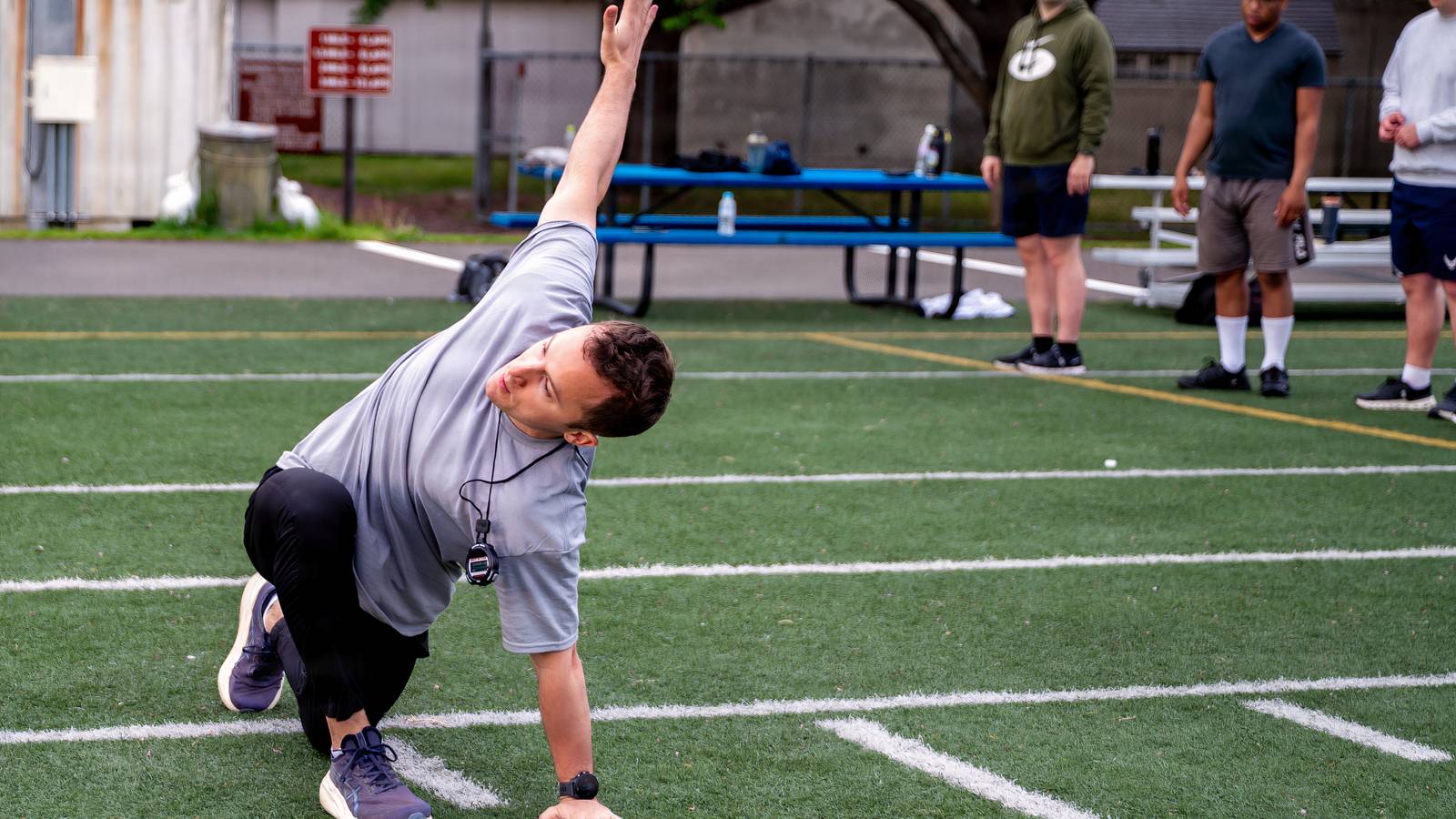
One of the biggest paradoxes in fitness is that while nearly everyone recognizes the importance of mobility and flexibility exercises, these are often the first components to be eliminated from a workout. Whether used as a warmup, cooldown or complete workout devoted to mobility, nobody enters the gym excitedly thinking, “I can’t wait to crush this stretch today.”
Maybe you prefer the pump from lifting weights or the high from running, but a mobility workout offers another kind of gratification, albeit delayed.
Face it. Most people think stretching is a waste of time: something you add to a workout versus a component that should be core to your fitness routine. Stretching improves range of motion (mobility) and is also thought to help with injury prevention, warmup and recovery, though the evidence for these benefits is inconsistent.
Therefore, attitudes toward stretching exercises (both static and dynamic), mobility drills and other flexibility-enhancing movements are largely split among athletes, men and women, and longevity seekers.
While improving flexibility and mobility is useful, it is often considered unnecessary, except possibly in sports with specific demands for flexibility. Other approaches, such as strength training and foam rolling, may provide similar benefits for flexibility and mobility. At the same time, stretching may offer additional advantages beyond flexibility, including possible gains in strength and muscle growth, which need further research.
Flexibility and mobility are often misunderstood in fitness, and they’re among the most neglected components. While science does not prove that flexibility and mobility prevent injuries or reduce soreness, many cannot argue with feeling better after stretching and after moving through full ranges of motion during exercise. In studies, static stretching prior to and during stretching training can temporarily lower strength and power. However, strength training through a full range of motion can improve flexibility just as effectively. Current recommendations suggest using stretching more selectively, based on specific mobility needs, and pairing it with an active warmup. Neglecting both is not an option.
Mobility vs. Flexibility
It is easy to confuse mobility and flexibility. They are similar and different.
Flexibility
When you sit on the floor and spread your legs into a split with the help of gravity, the floor or a partner, you show how flexible you are. Your muscles are temporarily stretching and lengthening. Flexibility refers to the ability to move a joint through its complete range of motion. Flexibility is a highly adaptable fitness component, and you can benefit from it at any point in your life, even if you get a late start with it. Flexible muscles and mobile joints are vital for maintaining pain-free, independent movement.
Mobility
If you stand up and lift one leg high into a split kick without using your arms to pull or any other external force, you are demonstrating mobility. This takes not just muscle length but also joint stability, motor control and strength of the opposing muscle groups. Mobility, the ability to actively move a joint through its full, functional range of motion, is often overlooked as well. Many individuals prioritize cardiovascular endurance or strength training but tend to neglect flexibility and joint control. Neglecting these vital components can lead to a limited range of motion, muscle imbalances and reduced power and speed in some athletic movements.
There is no arguing that as we age, we lose flexibility and mobility, just as we lose muscle and bone density if we are not training them. Losing any is harmful to the aging body. The impact of neglecting mobility, flexibility and strength training as we age include:
Increased injury risk. Stiff joints force your body to compensate, which places undue stress on the lower back, hips, knees and shoulders. Any reduction in joint mobility and muscular flexibility/strength increases the risk of injury.
Reduced performance. Poor mobility restricts your form, preventing you from achieving a deep squat or reaching overhead without over-arching your back. In the water, poor mobility prevents you from streamlining, pulling, kicking and gliding efficiently.
Loss of independence. As we age, range of motion is one of the first things to decline, making daily tasks increasingly difficult as balance, walking and doing social things are limited.
How to Improve Flexibility, Mobility and Strength
You do not need an hour of stretching and lifting to fix or prevent this later in life. Small, consistent additions to your routine make a massive difference each day, such as:
Exercise segments. Take 5 to 10 minutes, spread throughout every day, several times a day, to move your joints in slow circles or to practice deep squats to open your hips. A few pushups will also help maintain the strength to lift yourself off the floor effectively.
Part of warmups and cooldowns. Prioritize 5-10 minutes of active stretching (dynamic stretching such as arm circles, leg swings and thoracic rotations) before your workouts. Then incorporate static stretching and balance drills after the workout.
Mobility day. You cannot go wrong with a day dedicated to both flexibility and mobility. We use this midweek as an active recovery day from typical heavy lifting or high-mileage running. Consider it a workout that lets you focus on these often-neglected components of fitness. Let how you feel afterward determine whether they are effective for you.
Consistent movement. Simply walking for at least 5,000 steps a day helps maintain natural, low-level joint mobility. Mobility is freedom! Research on flexibility and mobility shows they are essential for living independently, preventing falls and promoting longevity. Keeping joints mobile helps maintain a good quality of life by enabling people to perform daily physical and social activities and reducing the risk of death associated with a sedentary lifestyle as they age.
The Reality Check
Skipping mobility is a debt you eventually must pay. You don’t realize you need it until your hips, knees, ankles and shoulders are preventing you from moving properly. Depth of the squat suffers, your shoulder pinches during a press, or you throw your back out picking up a pen. Stretching and mobility work do not need to be part of “good or bad” debates, but they can still play an important role in a well-rounded fitness routine. Check out the Military.com Fitness Section for more on flexibility, mobility, strength training, optimal performance, and longevity training.
Want to Learn More About Military Life?
Whether you’re thinking of joining the military, looking for fitness and basic training tips, or keeping up with military life and benefits, Military.com has you covered. Subscribe to Military.com to have military news, updates and resources delivered directly to your inbox.
Read the full article here
28 Comments
Nice to see insider buying—usually a good signal in this space.
Good point. Watching costs and grades closely.
Interesting update on Quick Ways to Improve Flexibility, Mobility and Strength. Curious how the grades will trend next quarter.
I like the balance sheet here—less leverage than peers.
If AISC keeps dropping, this becomes investable for me.
The cost guidance is better than expected. If they deliver, the stock could rerate.
Good point. Watching costs and grades closely.
The cost guidance is better than expected. If they deliver, the stock could rerate.
Good point. Watching costs and grades closely.
Good point. Watching costs and grades closely.
Interesting update on Quick Ways to Improve Flexibility, Mobility and Strength. Curious how the grades will trend next quarter.
Good point. Watching costs and grades closely.
If AISC keeps dropping, this becomes investable for me.
Good point. Watching costs and grades closely.
Good point. Watching costs and grades closely.
I like the balance sheet here—less leverage than peers.
Good point. Watching costs and grades closely.
Uranium names keep pushing higher—supply still tight into 2026.
Good point. Watching costs and grades closely.
Uranium names keep pushing higher—supply still tight into 2026.
Good point. Watching costs and grades closely.
Good point. Watching costs and grades closely.
Nice to see insider buying—usually a good signal in this space.
Exploration results look promising, but permitting will be the key risk.
Good point. Watching costs and grades closely.
Uranium names keep pushing higher—supply still tight into 2026.
Production mix shifting toward USA might help margins if metals stay firm.
Good point. Watching costs and grades closely.