


Artificial intelligence may dominate headlines, but retired Army Lt. Gen. Ross Coffman believes another technological shift could have equally significant consequences for national security: the arrival of practical quantum computing.
Coffman, president of Forward Edge-AI, told Military.com in an interview how artificial intelligence is changing military operations, and why cybersecurity threats are becoming more sophisticated. Also, he explained why governments and private industry are beginning to prepare for a future in which quantum computers could undermine many of today’s encryption systems.
Forward Edge-AI develops technologies focused on artificial intelligence, cybersecurity and national security applications. Among its offerings is Isidore Quantum, a post-quantum cryptography platform designed to help organizations secure communications against future quantum-computing threats.
Coffman said the company’s work sits at the intersection of AI, cybersecurity and national defense.
“We’re in a very dangerous place in the cyber world right now,” Coffman said. “With artificial intelligence being used in cyber attacks without a human in the loop, that means it doesn’t sleep. It goes 24/7, 365, looking for vulnerabilities.”
AI is Already Changing the Cyber Battlefield
While public discussions about artificial intelligence often focus on futuristic scenarios, Coffman said AI is already reshaping both military operations and cybersecurity.
He pointed to the emergence of AI-enabled cyber activity capable of probing networks and searching for vulnerabilities with minimal human involvement. Unlike traditional cyber operations, AI-powered tools can operate continuously and at machine speed, increasing the scale and pace of attacks.
Coffman argued that cyber capabilities have become an increasingly important tool for adversaries seeking to challenge the United States without matching its conventional military power. He noted that cyber activity often follows geopolitical tensions, making digital infrastructure an increasingly important part of national security planning.
At the same time, he emphasized that technology alone is not the biggest vulnerability. Phishing attacks and other forms of social engineering remain among the most common entry points for cyber intrusions, he added.
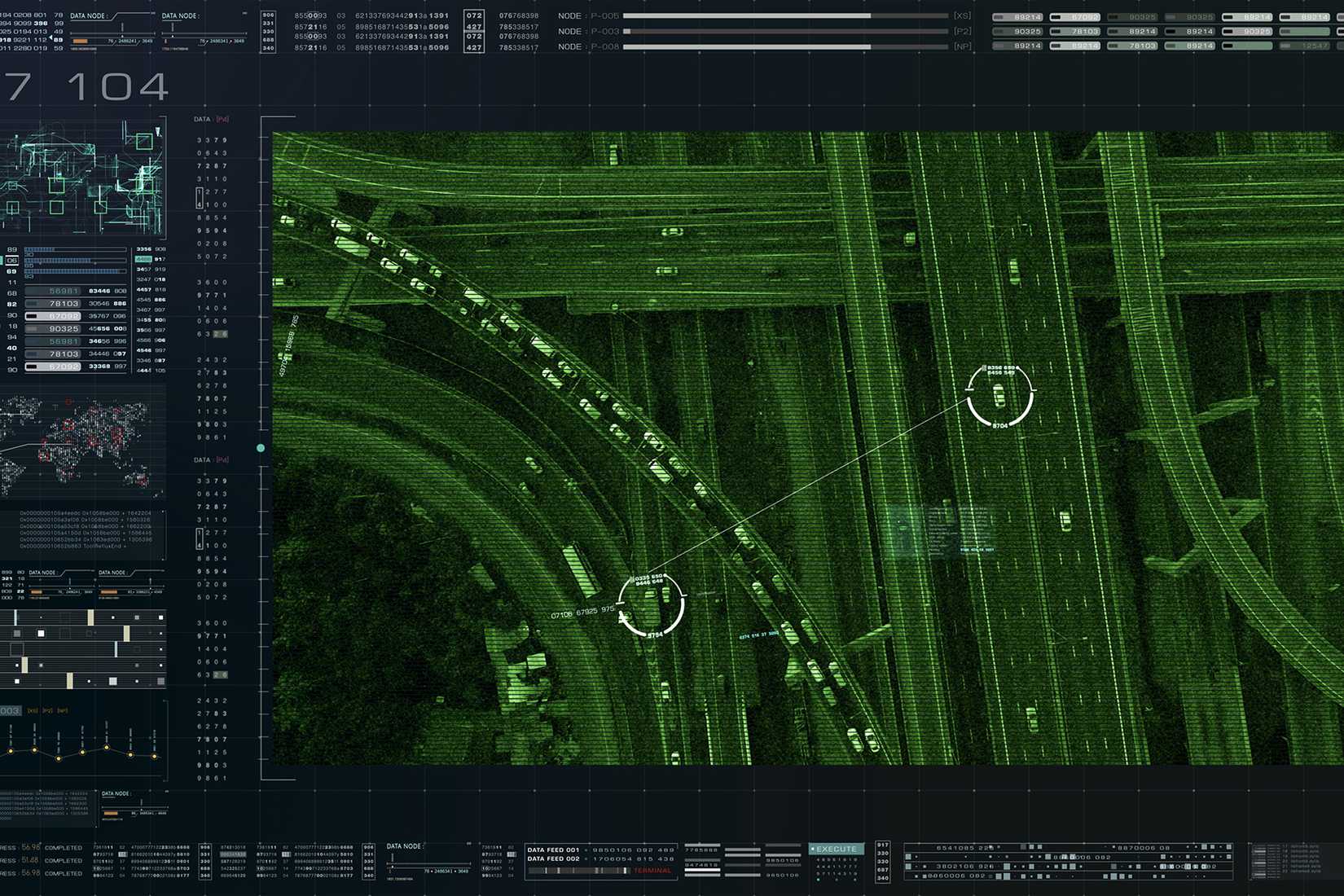
The military is also using AI in less visible ways. Coffman said artificial intelligence is helping commanders manage logistics, anticipate supply needs and process large amounts of intelligence data. The U.S. military already uses computer vision systems to detect and identify objects of interest in imagery and video.
Project Maven, one of the Defense Department’s best-known AI initiatives, applies object-detection algorithms to intelligence, surveillance and reconnaissance imagery to help analysts process large volumes of data more efficiently, reducing the amount of material that must be manually reviewed.
Why Quantum Computing Has Security Experts Concerned
Although artificial intelligence and quantum computing are frequently discussed together, Coffman stressed that they are separate technologies.
Quantum computers use quantum bits, or qubits, to perform certain calculations differently from conventional computers. Security experts have warned for years that sufficiently powerful quantum computers could eventually break some of the public-key cryptography systems that currently protect everything from banking transactions to government communications.
Cybersecurity experts often refer to that potential moment as “Q-Day”—the point at which a quantum computer becomes powerful enough to defeat widely used public-key encryption standards. While experts disagree on when Q-Day may arrive, concerns about its eventual impact have driven governments and private companies to begin planning years in advance.

That concern has driven a major government effort to develop quantum-resistant encryption standards.
In August 2024, the National Institute of Standards and Technology (NIST) finalized its first post-quantum cryptography standards and urged organizations to begin transitioning to them as soon as possible.
One of the biggest concerns is what cybersecurity experts call a “harvest now, decrypt later” strategy in which adversaries collect encrypted information with the expectation that future quantum computers may eventually allow them to unlock it.
This risk is one reason for accelerating the transition to post-quantum cryptography. Coffman described the stakes in practical terms.
“Every time you log into your bank, every time you log into your insurance company, your utilities—everybody is using encryption,” he said, adding that if organizations fail to transition to quantum-resistant protections before Q-Day arrives, financial transactions, communications networks, health records and other sensitive data could become vulnerable.
Preparing for a Post-Quantum Future
The federal government is already working toward a transition to quantum-resistant encryption.
Under the National Security Agency’s Commercial National Security Algorithm Suite 2.0, or CNSA 2.0, national security systems are expected to migrate key cryptographic functions to approved post-quantum algorithms over the coming years.
The NSA has established transition timelines that call for software and firmware signing systems to be quantum-resistant by 2035, with equipment that cannot support CNSA 2.0 being phased out by Dec. 31, 2030. The guidance reflects the government’s view that migrating to post-quantum security will likely take years and should begin well before a cryptographically relevant quantum computer becomes available.
Coffman said Forward Edge-AI has entered that space through a platform called Isidore Quantum, which he described as a hardware-and-software approach to post-quantum security.
According to Coffman, the goal is to allow organizations to add quantum-resistant protections to existing networks without completely replacing their underlying infrastructure.
“It’s not difficult, but it’s not something you do overnight if you have a large network,” he said.
He acknowledged that transitioning large organizations in government environments that often rely on a mix of modern and legacy systems to new cryptographic standards will be even more complex. Even so, he argued that preparation cannot wait until a quantum breakthrough occurs.
That view is increasingly shared across government and industry. NIST, according to public documents, has repeatedly encouraged organizations to begin planning now because migrating cryptographic systems across large networks can take years.
For Coffman, the broader issue is not just quantum computing or artificial intelligence. It is the growing convergence of emerging technologies, cyber threats and national security.
While much of the public discussion surrounding AI focuses on chatbots and automation, he argued that governments and critical industries must also prepare for the possibility that future quantum computers could fundamentally change the cybersecurity landscape.
Whether the challenge is AI-enabled cyber operations or the eventual arrival of Q-Day, he believes organizations that prepare early will be better positioned to withstand the next generation of threats.
Read the full article here
31 Comments
Nice to see insider buying—usually a good signal in this space.
The cost guidance is better than expected. If they deliver, the stock could rerate.
Interesting update on Retired Army General Warns of AI’s Effects on Military, National Security. Curious how the grades will trend next quarter.
Good point. Watching costs and grades closely.
The cost guidance is better than expected. If they deliver, the stock could rerate.
Good point. Watching costs and grades closely.
Good point. Watching costs and grades closely.
Production mix shifting toward USA might help margins if metals stay firm.
Good point. Watching costs and grades closely.
Good point. Watching costs and grades closely.
Exploration results look promising, but permitting will be the key risk.
Good point. Watching costs and grades closely.
Good point. Watching costs and grades closely.
Interesting update on Retired Army General Warns of AI’s Effects on Military, National Security. Curious how the grades will trend next quarter.
If AISC keeps dropping, this becomes investable for me.
Good point. Watching costs and grades closely.
Production mix shifting toward USA might help margins if metals stay firm.
Good point. Watching costs and grades closely.
Exploration results look promising, but permitting will be the key risk.
Good point. Watching costs and grades closely.
Silver leverage is strong here; beta cuts both ways though.
Good point. Watching costs and grades closely.
Silver leverage is strong here; beta cuts both ways though.
Good point. Watching costs and grades closely.
Good point. Watching costs and grades closely.
Silver leverage is strong here; beta cuts both ways though.
I like the balance sheet here—less leverage than peers.
Good point. Watching costs and grades closely.
The cost guidance is better than expected. If they deliver, the stock could rerate.
Good point. Watching costs and grades closely.
Good point. Watching costs and grades closely.