

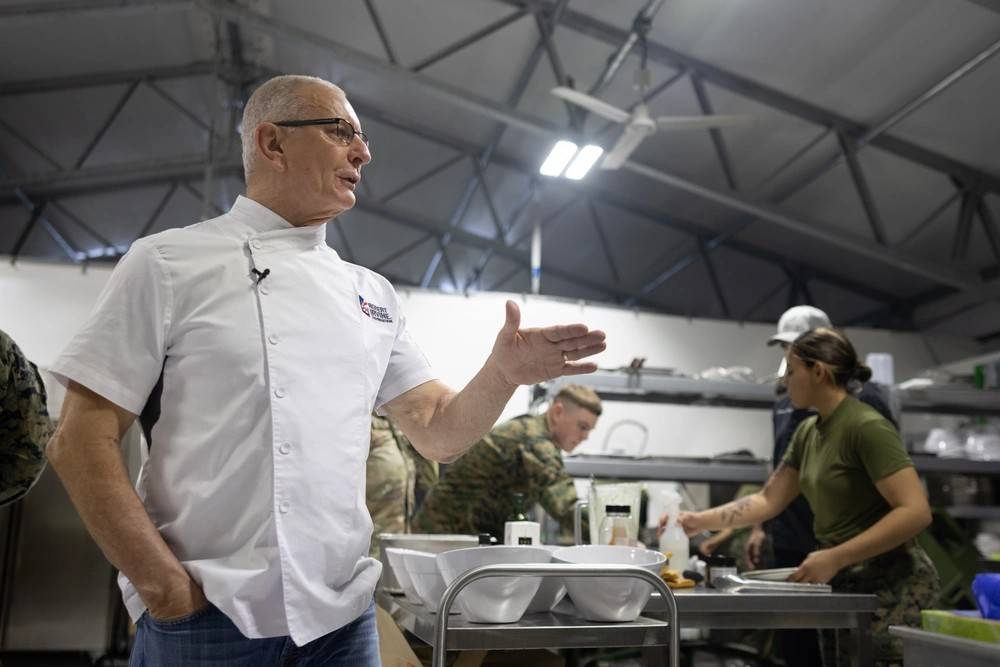
Robert Irvine has spent years trying to change the way the military feeds its service members.
Now, he wants to go further, potentially changing policies that determine how troops and their families eat, while using the dinner table as an entry point to address everything from nutrition and financial readiness to military family well-being.
The celebrity chef and longtime military advocate is partnering with USAA through Fuel to Serve, a new five-year initiative with an ambitious goal: reach 1 million members of the military community across 50 installations and communities by 2031.
Fuel to Serve is part of USAA’s broader Honor Through Action initiative, backed by a $500 million commitment over five years to support military families in areas including financial security, meaningful careers and well-being.
In an interview with Military.com, Irvine and Nate Sommers, USAA’s Director of Pentagon Partnerships, said the effort isn’t simply about providing more meals or improving what’s on the menu. They want to change the system around it.I think it’s always been needed, Irvine told Military.com when asked why the initiative was needed at this moment. We’ve just never had the resources and the team to be able to do it, and now we do. Fuel to Serve will begin with pilot efforts at Fort Bragg, North Carolina, and in the Washington, D.C., region before expanding to other military communities.
For Irvine, food is the starting point.
“It’s military feeding, school feeding, military and feeding at home,” Irvine said. “So it closes the ecosystem completely.”
‘He’s Got the Dining Table, I’ve Got the Policy Table’
The partnership pairs two different approaches.
Irvine has spent years working directly on military food and dining initiatives. Sommers, a retired Air Force officer who served 25 years and previously worked in military food service, is focused on policy and partnerships inside the Pentagon.
He’s got the dining table, I’ve got the policy table, right? Sommers told Military.com. And when those two tables join together, we break barriers down.
Sommers said some of those barriers are buried in policies that may have been in place for years and, in some cases, military leaders may not realize they are creating problems.
“We’ve already got some things that we’re working on the policy side because some of the policy is outdated, and they just don’t know it needs to be changed,” Sommers said.
His approach, he said, is to identify the barrier and bring a potential solution with him.
“Literally, I’m writing the policy for them and going, ‘Here’s your policy. Here’s why it’s wrong. Here’s what it should be,'” Sommers said. “Most often than not, they don’t even know that the policy is a barrier.”
For Irvine, that policy expertise could allow work that has taken years with one service to move more broadly across the military.
“It took me three years…just to change the legislation piece for the Army,” Irvine said. “Now I’ve got a partner that knows it way better than me, that can literally do the joint force from where we started with the Army.”
“The joint force is ready for it,” he added. “But it’s a policy change.”

Could More Military Families Eat in Dining Facilities?
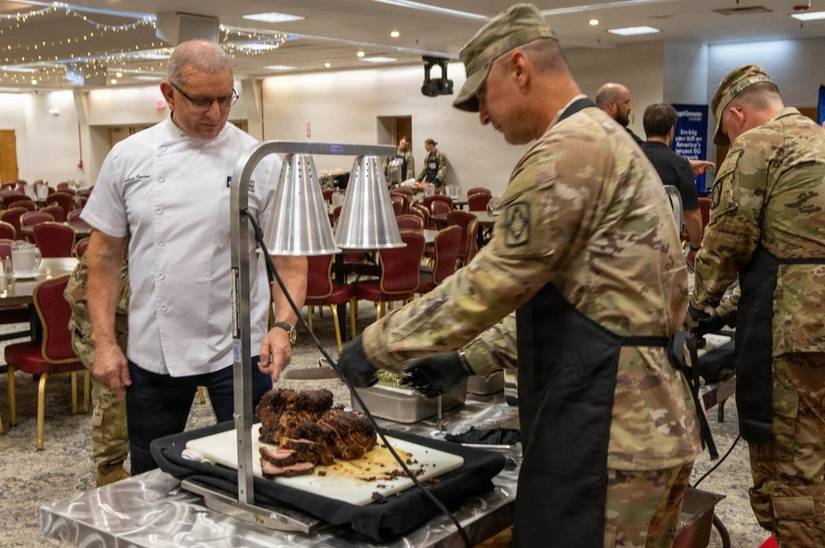
One potential target is expanding military family access to installation dining facilities.
Sommers recalled visiting Fort Drum, New York, and seeing the Army’s campus-style dining approach firsthand. The fresh, locally sourced food impressed him, but something else caught his attention.
He saw an ordering option labeled “For the Littles.”
“I literally turned around and said, ‘Can families sit here?'” Sommers recalled. “They said, ‘Absolutely.'”
For Sommers, the experience raised a larger question: Why couldn’t more military families routinely eat together in installation dining facilities?
The ability for the spouse and the family to come eat alongside their service member and get a low-cost, nutritious, healthy meal where they can spend time together, it’s one of the things that we’re working on policy that needs to change,”Sommers said.
Then he was more direct. “We’re going to change that.”
Access to military dining facilities can vary by installation and service, even as Defense Department financial regulations establish meal rates for military dependents eating in appropriated-fund dining facilities.
That can leave military families with different options depending on where they are stationed. Fuel to Serve’s broader goal is to identify barriers such as those while testing a model that goes beyond the meal itself.
‘Readiness Starts at Home’
That broader mission is where Sommers connects the initiative directly to military readiness.
“Readiness doesn’t start on the battlefield. Readiness starts at home.” Sommers said. “And we’ve invested a lot into weapon systems, but the most important weapon system is people.”
“If we invest in people and take care of them, if they’re fed, nourished, ready to fight, the rest will take care of itself.”
The concept closely mirrors an argument Irvine has increasingly made about treating service members themselves as a critical part of military readiness.
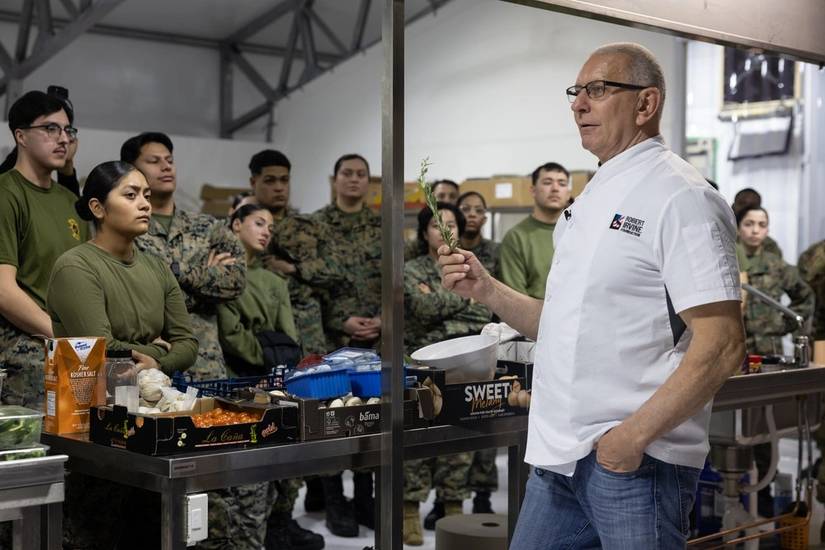
Fuel to Serve is organized around four areas, Nourish, Strengthen, Connect and Thrive, with food serving as a gateway to cooking and nutrition education, financial resources, benefits assistance, peer support and other services.
There’s an education piece which is really important, Irvine told Military.com. It’s how to make a budget, how to buy food, how to run your household, how to cook with your kids, how to get back to the family table.
Irvine also sees taking care of families as a retention issue.
The goal, he said, is a healthier, more resilient force in which service members don’t decide to leave because their families aren’t being adequately supported.
“So they don’t leave because we’re taking care of them and their families,” Irvine said. “It makes loyalty.”
Bigger Than Food
Fuel to Serve is just one piece of the larger Honor Through Action effort.
Sommers said the broader coalition includes about 20 partners, naming companies including Amazon, Fidelity, Visa, BlackRock, KKR, Oracle and Goldman Sachs.
The idea is to bring together organizations with different resources and expertise while also working with military leaders to identify barriers affecting service members and their families.
For Irvine, that gives his work something it has not always had: the ability to pair changes happening at individual installations with a broader effort to change the policies behind them.
“It’s not Robert going in and changing a base,” Irvine said. “I need the government to change their legislation on certain things, not just food, but housing and financial literacy and all these ecosystem things that happen. I’m one small piece of that.”
The scale of USAA’s broader commitment gives the partnership considerably more reach. The company has pledged $500 million over five years through Honor Through Action, while Fuel to Serve itself has set a five-year target of reaching 1 million people in 50 military installations and communities.
The dollar amount dedicated specifically to Fuel to Serve has not been disclosed. But Sommers suggested success may ultimately be measured less by the amount of money invested or even the number of meals served than by whether the effort can remove barriers affecting military families.
This is about taking care of military members, veterans and families, Sommers told Military.com. And we don’t have all the ideas, and so we need people to share. Where are the problems? Where are the challenges?
“Lift your voices up,” Sommers said, “and then let us go break the barriers down.”
Read the full article here
44 Comments
The cost guidance is better than expected. If they deliver, the stock could rerate.
Good point. Watching costs and grades closely.
Production mix shifting toward USA might help margins if metals stay firm.
Good point. Watching costs and grades closely.
Good point. Watching costs and grades closely.
Uranium names keep pushing higher—supply still tight into 2026.
Production mix shifting toward USA might help margins if metals stay firm.
Good point. Watching costs and grades closely.
Good point. Watching costs and grades closely.
Production mix shifting toward USA might help margins if metals stay firm.
Good point. Watching costs and grades closely.
Nice to see insider buying—usually a good signal in this space.
Good point. Watching costs and grades closely.
Good point. Watching costs and grades closely.
Production mix shifting toward USA might help margins if metals stay firm.
I like the balance sheet here—less leverage than peers.
Interesting update on Robert Irvine, USAA Launch Fuel to Serve for Military Families. Curious how the grades will trend next quarter.
Silver leverage is strong here; beta cuts both ways though.
Good point. Watching costs and grades closely.
Interesting update on Robert Irvine, USAA Launch Fuel to Serve for Military Families. Curious how the grades will trend next quarter.
Good point. Watching costs and grades closely.
Good point. Watching costs and grades closely.
Silver leverage is strong here; beta cuts both ways though.
I like the balance sheet here—less leverage than peers.
If AISC keeps dropping, this becomes investable for me.
Good point. Watching costs and grades closely.
Good point. Watching costs and grades closely.
Interesting update on Robert Irvine, USAA Launch Fuel to Serve for Military Families. Curious how the grades will trend next quarter.
Good point. Watching costs and grades closely.
Good point. Watching costs and grades closely.
Interesting update on Robert Irvine, USAA Launch Fuel to Serve for Military Families. Curious how the grades will trend next quarter.
Nice to see insider buying—usually a good signal in this space.
The cost guidance is better than expected. If they deliver, the stock could rerate.
Silver leverage is strong here; beta cuts both ways though.
Nice to see insider buying—usually a good signal in this space.
Silver leverage is strong here; beta cuts both ways though.
Good point. Watching costs and grades closely.
Good point. Watching costs and grades closely.
I like the balance sheet here—less leverage than peers.
Good point. Watching costs and grades closely.
Production mix shifting toward USA might help margins if metals stay firm.
Good point. Watching costs and grades closely.
Good point. Watching costs and grades closely.
Nice to see insider buying—usually a good signal in this space.