

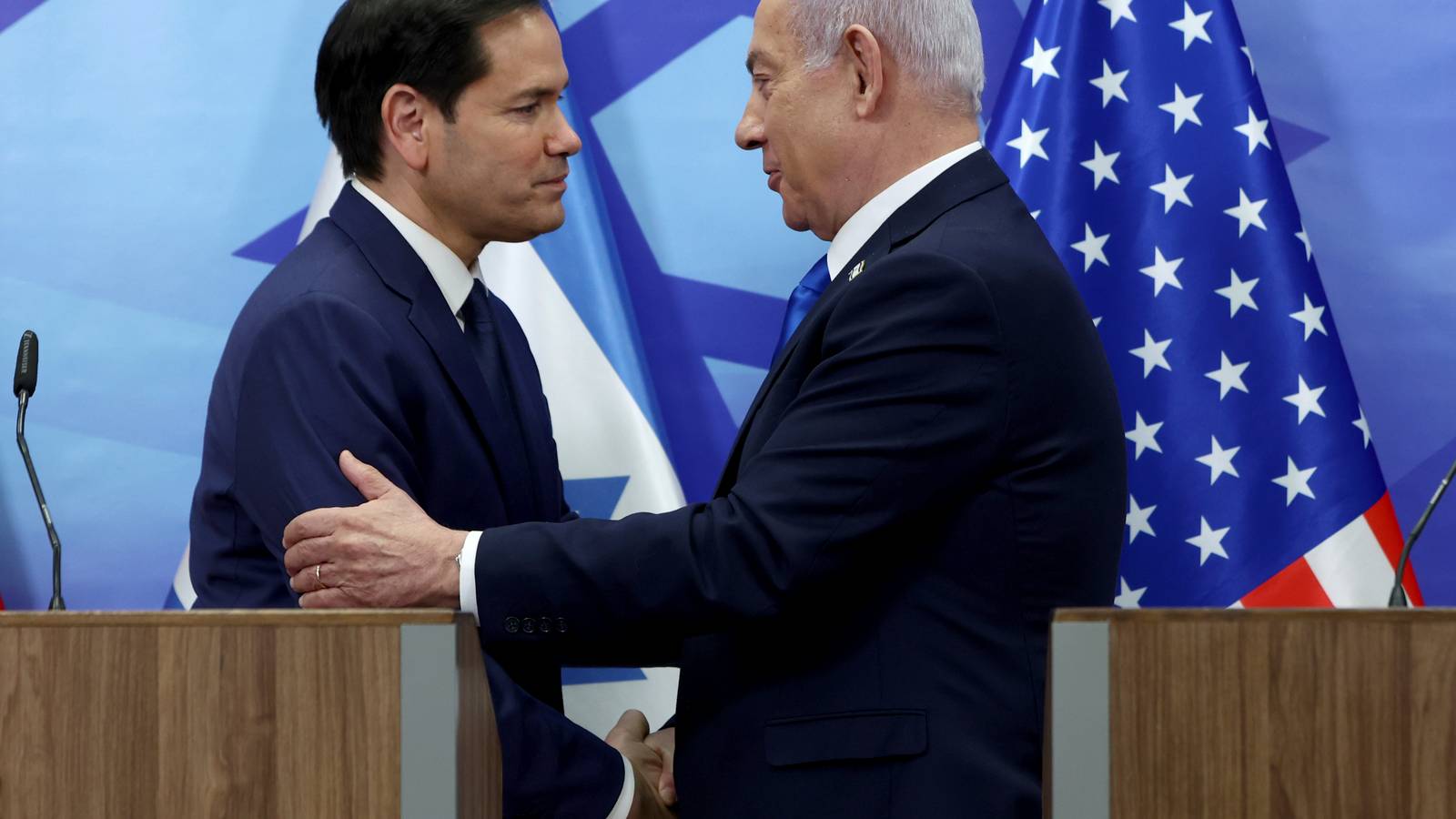
The Senate Intelligence Committee’s Intelligence Authorization Act for FY 2027 contains a series of provisions aimed at strengthening intelligence cooperation with U.S. partners. One of them, known as Section 622, goes further than the others and would amend the National Security Act of 1947 itself by adding Section 1115 to govern intelligence sharing with Israel.
The legislation was advanced by the Senate Intelligence Committee helmed by Rep. Tom Cotton, (R-Ark.), the committee’s chair, and was eventually approved in May. The amendment directs the president, acting through the director of national intelligence and, when necessary, the secretary of defense, to “expand and enhance intelligence sharing” with Israel.
It identifies terrorism, cybersecurity threats, sanctions evasion, adversarial technology proliferation, missile threats, unmanned systems, air and space domain awareness, and other regional security concerns as subjects for expanded intelligence cooperation.
The amendment also limits when intelligence sharing can be reduced. Intelligence sharing with Israel “shall not be suspended, reduced, or otherwise materially limited” unless the President determines that a “specific and identifiable national security concern” justifies doing so.
Any reduction must be documented and reported to Congress within 15 days. Congress also requires notification within 15 days whenever intelligence sharing is materially increased, reduced, suspended, or otherwise altered. The legislation spans 192 pages and contains several other intelligence-sharing provisions.
Military.com contacted Cotton’s office and inquired about the amendment’s effect on presidential flexibility, the absence of reciprocity requirements, the Jonathan Pollard case, disputes involving Iron Dome software access, and the decision to amend the National Security Act directly rather than create a temporary intelligence-sharing program.
The office did not respond.
How Israel’s Provision Compares to the Rest of the Bill
Section 619 addresses intelligence cooperation in the Indo-Pacific. It directs the intelligence community to strengthen intelligence relationships with Australia, Japan, New Zealand, the Philippines, South Korea, Thailand, India, and Vietnam.
The section encourages cooperation on maritime security, military warning, joint planning, exercises, Taiwan-related contingencies, and regional intelligence sharing.
But what Section 619 does not do is restrict a future president’s ability to reduce intelligence cooperation with those countries. Congress expresses support for deeper cooperation, though it does not create statutory barriers to changing the relationship.
Section 620, when dealing with Ukraine, takes a different approach. It requires continued intelligence support for Ukraine during its conflict with Russia—which is notably terminated 120 days after reaching an agreement with Russia—and similarly limits the ability to suspend that support.
The difference here involves who makes that decision. Under the Ukraine provision, the director of national intelligence, in coordination with the CIA director and DIA director, can identify the national-security concern necessary to suspend intelligence support. Under Section 622, that determination is reserved for the president, who must decide whether a national-security concern is sufficient to justify reducing intelligence sharing with Israel.
Congress also built extensive conditions into the Ukraine section. The legislation specifically identifies compromise by a foreign adversary, voluntary requests from Ukraine, human rights violations, atrocities, and violations of the law of armed conflict as examples of circumstances that can justify suspending support to Ukraine.

Section 622 contains no comparable language. The Israel amendment does not mention human-rights violations, atrocities, or violations of the law of armed conflict. Instead, it focuses on expanding intelligence sharing and limiting the circumstances under which it may be reduced.
Section 621 amends the National Security Act of 1947 to create a separate notification regime covering Israel, Ukraine, Taiwan, and any other country designated by the president as a “country of significant concern” to the United States. Israel is specifically listed alongside Ukraine and Taiwan.
That section also requires the director of national intelligence, which will soon be Bill Pulte by all accounts, to notify the congressional intelligence committees within 48 hours whenever intelligence support or intelligence activities provided to any designated country of significant concern are paused, terminated, restricted or materially downgraded.
Congress is Seeking Deeper Integration
Section 622 extends beyond intelligence sharing itself.
It requires the President to create annual reports for five years describing intelligence sharing with Israel and regional partners. Those reports must evaluate progress toward integrating Israel into regional air- and missile-defense architectures, improving interoperability among U.S., Israeli, and partner-country technology networks, securing those networks against cyber threats, and identifying barriers to deeper intelligence integration.
The amendment also directs expanded intelligence-sharing and analytic cooperation with countries that normalized relations with Israel under the Abraham Accords. Priority areas include counterterrorism, cybersecurity, missile-defense warning, geospatial intelligence, maritime security, and sanctions enforcement.
Taken together, the reporting requirements and regional cooperation provisions show that Congress is not merely preserving existing intelligence cooperation. The amendment establishes a framework for deeper integration among the United States, Israel, and – to a lesser extent – regional partners.
Questions the Amendment Does Not Address
The debate over Section 622 is unfolding against a broader congressional push for deeper U.S.-Israel security integration.
Section 224 of the House FY 2027 National Defense Authorization Act (NDAA) would establish a U.S.-Israel Defense Technology Cooperation Initiative covering areas ranging from artificial intelligence and cyber capabilities to autonomous systems and network integration.
Neither Section 622 nor Section 224 requires Israel to provide reciprocal access to technology, software, source code, or intelligence as a condition of expanded cooperation. It does not require certification that previous disputes involving technology-sharing have been resolved.
Those omissions are notable because disputes over access have previously surfaced. Israel negotiated unique accommodations within the F-35 program that were unavailable to many foreign operators. Later, after the U.S. Army purchased two Iron Dome batteries, Army officials repeatedly requested the system’s source code so the batteries could be integrated into the Army’s broader air-defense architecture.
Israel declined to provide the requested source code. Army officials subsequently concluded the batteries could not be fully integrated into the Army’s air-defense network, abandoned plans to purchase additional batteries, and scrapped a project that had been expected to cost more than $1 billion.
Section 622 does not condition expanded intelligence sharing on resolving those disputes or providing comparable access to the United States. The amendment contains no reciprocity requirement tied to those issues.

The legislation also does not address historical espionage controversies involving Israel.
Jonathan Pollard, a former U.S. Navy intelligence analyst, served 30 years in prison for spying for Israel. After his release, Pollard moved to Israel, where he was publicly celebrated and welcomed by Prime Minister Benjamin Netanyahu.
Pollard has since announced plans to seek election to Israel’s parliament, the Knesset. The Washington Post reported in 1991 on allegations that intelligence obtained through Pollard was later passed to the Soviet Union, although those allegations remain disputed.
The Defense Intelligence Agency recently elevated Israel’s threat designation in its assessment of foreign intelligence threats to the United States, yet the amendment contains no new counterintelligence conditions beyond general references to protecting sources and methods.
Nothing in Section 622 conditions expanded intelligence sharing on resolving any of these historical issues.
Read the full article here
44 Comments
If AISC keeps dropping, this becomes investable for me.
Good point. Watching costs and grades closely.
Good point. Watching costs and grades closely.
If AISC keeps dropping, this becomes investable for me.
Exploration results look promising, but permitting will be the key risk.
Interesting update on Section 622 Amendment Makes Israel Intelligence Sharing Harder to Reduce. Curious how the grades will trend next quarter.
Good point. Watching costs and grades closely.
Good point. Watching costs and grades closely.
Exploration results look promising, but permitting will be the key risk.
Good point. Watching costs and grades closely.
Interesting update on Section 622 Amendment Makes Israel Intelligence Sharing Harder to Reduce. Curious how the grades will trend next quarter.
Good point. Watching costs and grades closely.
Uranium names keep pushing higher—supply still tight into 2026.
Good point. Watching costs and grades closely.
Good point. Watching costs and grades closely.
Exploration results look promising, but permitting will be the key risk.
Uranium names keep pushing higher—supply still tight into 2026.
Good point. Watching costs and grades closely.
The cost guidance is better than expected. If they deliver, the stock could rerate.
Good point. Watching costs and grades closely.
Good point. Watching costs and grades closely.
Interesting update on Section 622 Amendment Makes Israel Intelligence Sharing Harder to Reduce. Curious how the grades will trend next quarter.
Good point. Watching costs and grades closely.
Nice to see insider buying—usually a good signal in this space.
Good point. Watching costs and grades closely.
Production mix shifting toward USA might help margins if metals stay firm.
Good point. Watching costs and grades closely.
Nice to see insider buying—usually a good signal in this space.
Good point. Watching costs and grades closely.
Uranium names keep pushing higher—supply still tight into 2026.
Good point. Watching costs and grades closely.
I like the balance sheet here—less leverage than peers.
The cost guidance is better than expected. If they deliver, the stock could rerate.
Good point. Watching costs and grades closely.
Good point. Watching costs and grades closely.
Production mix shifting toward USA might help margins if metals stay firm.
Good point. Watching costs and grades closely.
The cost guidance is better than expected. If they deliver, the stock could rerate.
Good point. Watching costs and grades closely.
Nice to see insider buying—usually a good signal in this space.
Good point. Watching costs and grades closely.
The cost guidance is better than expected. If they deliver, the stock could rerate.
Good point. Watching costs and grades closely.
Good point. Watching costs and grades closely.