

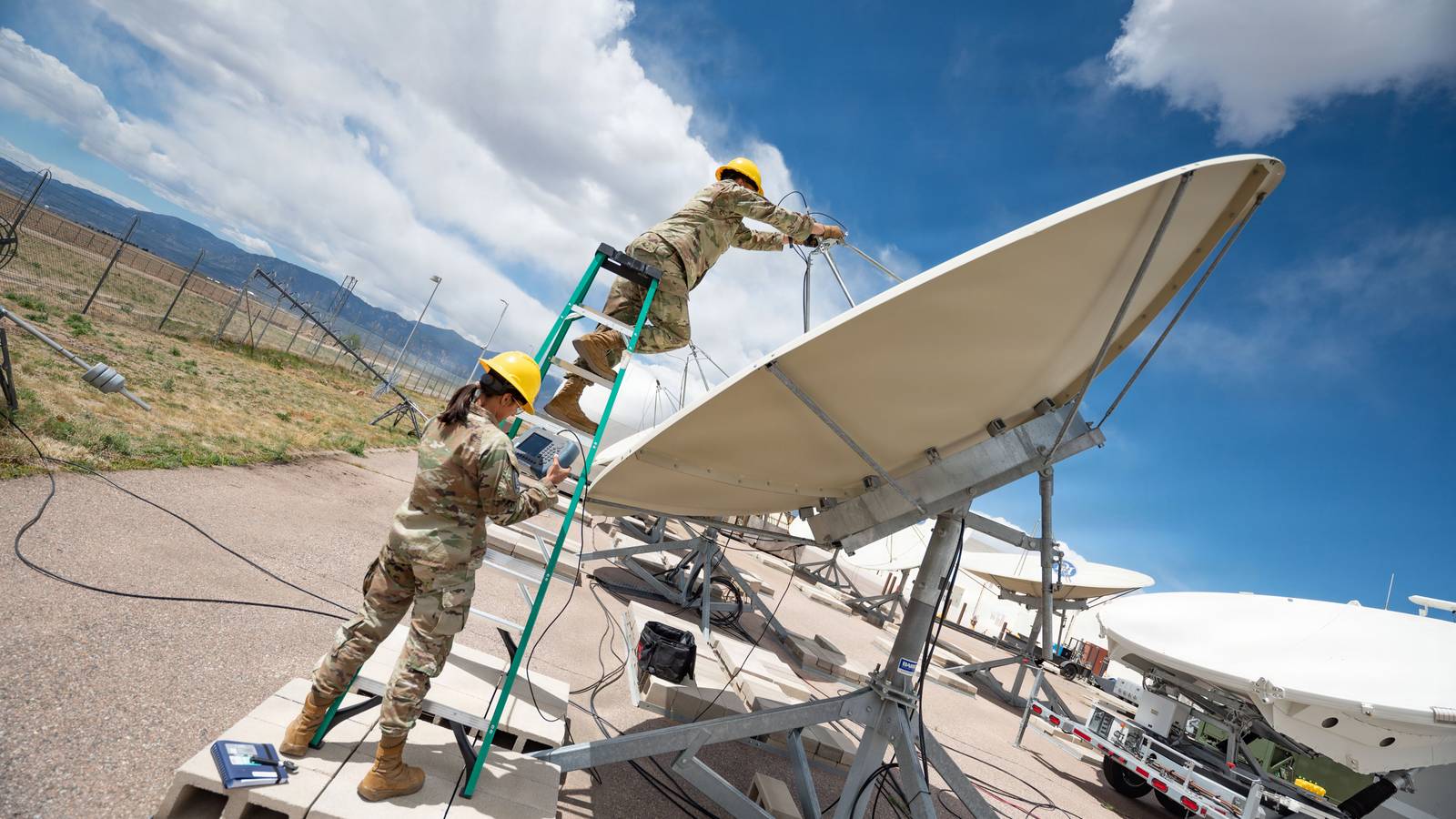
The U.S. Space Force is going even more high-tech by developing new software that will combine commercial and military flight tracking data into one component to deliver more timely and accurate information.
Col. Barry Croker, who heads up the Space Force’s Mission Delta 2, and spoke at this month’s annual Advanced Maui Optical and Space Surveillance (AMOSS) conference in Hawaii, said the plan is to launch the prototype software later this fall and build a “viable product” that can be up and running quickly.
“Space control begins with space domain awareness, as we cannot protect or defend what we do not track,” Col. Crocker said in a statement to Military.com. “Mission Delta 2 is prototyping new software to meet warfighter timelines by establishing a combat-oriented tactical catalog that prioritizes decision velocity and operational custody over legacy catalog perfection.”
Mission Delta 2 is responsible for organizing, training and equipping Space Force operations. It includes the 18th and 19th Space Defense Squadrons that operate the Space Surveillance Network of telescopes and radars around the globe and the software systems required to analyze the data they gather about space objects, in particular those operated by potential adversaries.
“The standards required for civil spaceflight safety should not limit tactical action. By shifting our data integration architecture, our prototype rapidly absorbs, correlates, and operationalizes commercial data that was previously excluded by legacy fidelity thresholds,” Col. Crocker added. “Our intent is to leverage sensors we already possess and network them to deliver faster combat support to the Joint Force.”
New Tracking Software Favors Speed Over Accuracy
According to Crocker, current military software and processes for analyzing data are biased toward accuracy rather than timeliness. By contrast, he said the prototype software will have lower accuracy levels, but faster observations and analysis.
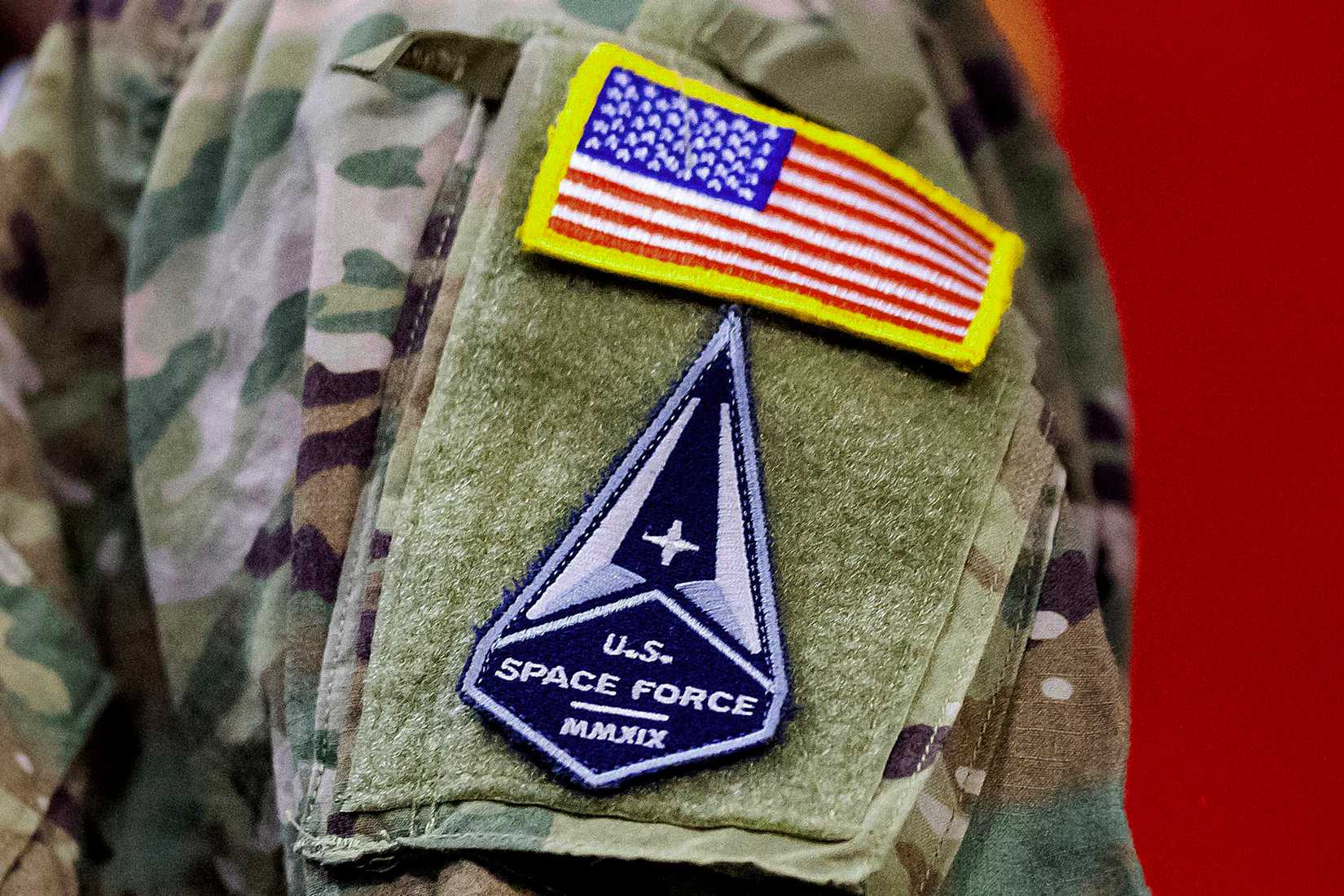
“I now have the opportunity to get a more timely state of something, even if it’s not perfect,” Crocker told a gathering of reporters at the AMOSS conference. “Now I can start to have a more timely indication of what’s going on. So that’s big. That’s the number one focus.”
The new prototype software launch was a hot topic at the AMOSS conference, where scientists converged to discuss the latest advances in space exploration, optics and surveillance. Conference leaders estimate 500,000 pieces of space junk are circling the Earth.
“Space has become so very, very busy. It’s full of debris. It’s full of flying spacecraft,” Elliot Pullham, CEO of Space Foundation, said in a conference video viewed by Military.com. “It’s just a very treacherous environment to operate in, and the capability for understanding that and managing that resides here on Maui. And so it’s important for us all to get together and talk about that.”
Hawaii Known For High-Altitude Observatory Sites
Hawaii is widely considered to have some of the best high-altitude observatory sites in the world, with researchers at the University of Hawaii at the forefront. In 2023, an observatory site at the Maui Space Surveillance Complex located atop the 10,000-foot summit of the Haleakalā volcano broke, causing a 700-gallon fuel spill that made headlines.
“So to be able to contribute to the world by providing these sites, sharing these sites, so that we can monitor and catalog the objects that we have in space, as well as the heavens beyond, is just extremely fortunate for the University of Hawaii,” Mike Maberry, assistant director at the University of Hawaii’s Institute for Astronomy, said in the AMOSS conference video.
Until the new software is operational, Crocker said the Space Force will continue to use commercial space tracking information via the Joint Commercial Operations cell. The data is housed in the cloud-based Unified Data Library, but it is not shared directly into military computer tracking systems.
The goal is to ensure precise targeting of adversary satellites and to be able to automatically integrate commercial space tracking data.
“We could take the largest step forward if we could just better integrate the commercial data and consistently fund the acquisition of that data, and then be able to drive it into our programs of record for space domain awareness,” Gen. Stephen Whiting, commander of SPACECOM, told the publication “Breaking Defense” at the AMOSS conference. “That would be the biggest initial step we could take, and we could take that in the short term.”
Read the full article here
45 Comments
Silver leverage is strong here; beta cuts both ways though.
Interesting update on Space Force Developing New Satellite-Tracking Software. Curious how the grades will trend next quarter.
Good point. Watching costs and grades closely.
Silver leverage is strong here; beta cuts both ways though.
Good point. Watching costs and grades closely.
Good point. Watching costs and grades closely.
Production mix shifting toward USA might help margins if metals stay firm.
Good point. Watching costs and grades closely.
Good point. Watching costs and grades closely.
I like the balance sheet here—less leverage than peers.
Good point. Watching costs and grades closely.
Good point. Watching costs and grades closely.
Production mix shifting toward USA might help margins if metals stay firm.
Good point. Watching costs and grades closely.
Production mix shifting toward USA might help margins if metals stay firm.
Uranium names keep pushing higher—supply still tight into 2026.
Good point. Watching costs and grades closely.
I like the balance sheet here—less leverage than peers.
Good point. Watching costs and grades closely.
Good point. Watching costs and grades closely.
Exploration results look promising, but permitting will be the key risk.
Good point. Watching costs and grades closely.
Good point. Watching costs and grades closely.
Silver leverage is strong here; beta cuts both ways though.
Good point. Watching costs and grades closely.
Good point. Watching costs and grades closely.
Silver leverage is strong here; beta cuts both ways though.
Nice to see insider buying—usually a good signal in this space.
Interesting update on Space Force Developing New Satellite-Tracking Software. Curious how the grades will trend next quarter.
Good point. Watching costs and grades closely.
Exploration results look promising, but permitting will be the key risk.
Good point. Watching costs and grades closely.
Exploration results look promising, but permitting will be the key risk.
If AISC keeps dropping, this becomes investable for me.
Good point. Watching costs and grades closely.
Uranium names keep pushing higher—supply still tight into 2026.
Nice to see insider buying—usually a good signal in this space.
Good point. Watching costs and grades closely.
If AISC keeps dropping, this becomes investable for me.
Good point. Watching costs and grades closely.
Good point. Watching costs and grades closely.
The cost guidance is better than expected. If they deliver, the stock could rerate.
Silver leverage is strong here; beta cuts both ways though.
Good point. Watching costs and grades closely.
Good point. Watching costs and grades closely.