

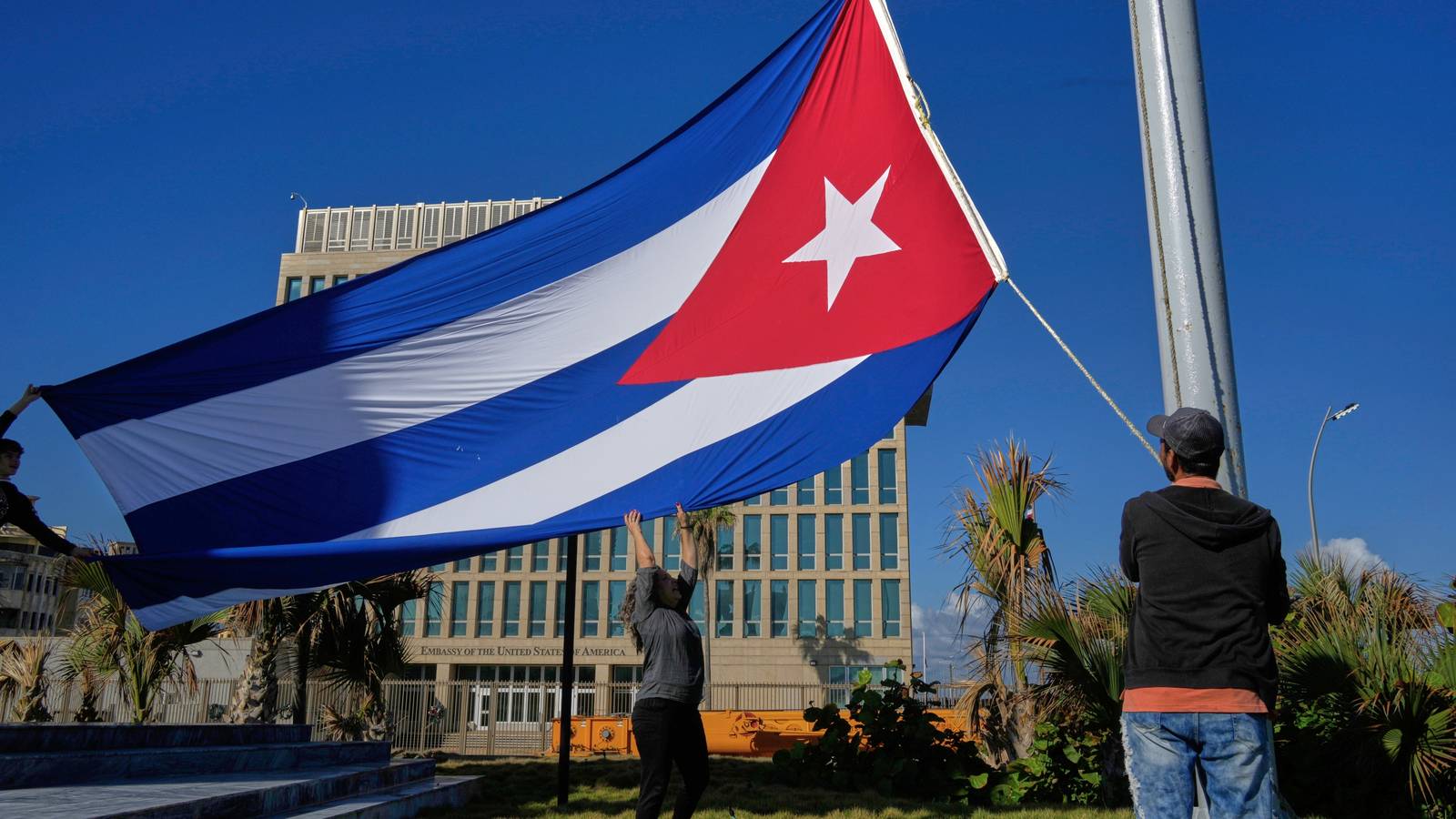
The Trump administration has accused Cuba of infiltrating the highest levels of the U.S. government, cultivating American activists and encouraging domestic unrest.
The sweeping allegation arrives days after President Donald Trump revived claims about Chinese election interference and as his administration continues to dismiss concerns about Israel’s visible influence over American elections and foreign policy.
State Department Alleges Decades of Cuban Subversion
The State Department’s 100-page report, “Cuba: The Capital of 21st Century Communism,” describes Havana as a unique threat despite its limited economic and military power. It accuses the Cuban government of infiltrating American institutions, recruiting sympathetic activists, supporting left-wing militant groups and using organizations inside the United States to advance Cuban interests.
The report connects alleged Cuban influence to events ranging from the growth of militant left-wing organizations to protests following George Floyd’s death and pro-Palestinian activism on college campuses.
It names organizations including the Democratic Socialists of America, the National Network on Cuba, the Communist Party USA, CODEPINK, Black Alliance for Peace and the Party for Socialism and Liberation. It also singles out political commentator Hasan Piker, Amazon Labor Union founder Chris Smalls, New York City Mayor Zohran Mamdani, journalist Amy Goodman and activist Isra Hirsi, the daughter of Rep. Ilhan Omar.
As evidence, it points to the National Network on Cuba’s plan to organize demonstrations at military bases, federal buildings and Immigration and Customs Enforcement facilities if the United States threatens or attacks Cuba.
It says Black Alliance for Peace circulated a guide identifying 1,335 military and law-enforcement facilities, while citing Cuba-related travel, solidarity events, anti-embargo advocacy and favorable statements about Cuba by the individuals it names.
The report describes activists and organizations as Cuban “front groups and fellow travelers,” but criticism of U.S. policy toward Cuba or participation in a solidarity movement does not necessarily establish that someone works for the Cuban government.
Some of the report rests on documented espionage cases. Cuban intelligence recruited Ana Belén Montes, a Defense Intelligence Agency analyst who pleaded guilty in 2002 to conspiring to commit espionage.
Former U.S. diplomat Manuel Rocha pleaded guilty in 2024 to secretly acting as an agent of Cuba for decades. Those cases demonstrate that Havana has successfully recruited people with access to sensitive government information.
The report goes further, however, by placing overt political advocacy, ideological sympathy and covert government direction along the same continuum. Cuba rejected the document as a pretext for maintaining American economic pressure.
Cuban President Miguel Díaz-Canel characterized the administration’s campaign as a new form of McCarthyism.
China and the Election Integrity Campaign
The Cuba report follows Trump’s July 16 address on election integrity, during which he accused China of acquiring information from 220 million American voter files. The White House said Chinese entities bought, stole or hacked voter information and that intelligence officials concealed the extent of the activity.
Much of the voter-registration information at issue was commercially or publicly available, and one intelligence document said the Chinese actor’s reason for downloading the data remained unknown.
An administration adviser acknowledged that the intelligence community had no evidence that a foreign power changed a vote in the 2020, 2022 or 2024 elections.
China denied interfering in American elections and called Trump’s allegations fabricated. The administration nevertheless used the disclosures to support its broader election agenda, including voter-identification and citizenship-verification requirements.
Trump also cited declassified material identifying Russia, Iran, North Korea and unspecified nonstate groups as actors capable of compromising parts of U.S. election infrastructure.
Influence Washington Treats Differently
The administration’s willingness to discuss Cuban and Chinese influence contrasts with its treatment of pro-Israel political power. The American Israel Public Affairs Committee (AIPAC) openly describes its mission as lobbying Congress, supporting pro-Israel candidates and preserving an “ironclad” U.S.-Israel relationship. AIPAC claims to be an American organization; however, its influence is nevertheless direct, organized and measurable.
AIPAC’s super PAC, United Democracy Project, has committed approximately $30 million to support Rep. Haley Stevens in Michigan’s Democratic Senate primary against Abdul El-Sayed, an outspoken critic of Israel and AIPAC.
Independent groups have spent or reserved more than $50 million supporting Stevens overall, making the race a national test of AIPAC’s ability to shape Democratic primaries.
The spending follows another of the most expensive congressional primaries in American history. Approximately $37 million was spent by both campaigns and independent political groups during the Republican primary between Rep. Thomas Massie and Trump-backed challenger Ed Gallrein, making it the most expensive House primary on record.
MAGA Kentucky, AIPAC’s United Democracy Project and other independent groups spent approximately $15.5 million opposing Massie, including the use of AI-generated ads.
Massie had repeatedly opposed military assistance to Israel and criticized U.S. involvement in the Iran war. The heavy spending did not establish that Israel controlled the election, but it showed that organized pro-Israel interests are willing to devote millions of dollars to defeating a sitting lawmaker over positions connected to U.S.-Israel policy.
AIPAC’s previous record came during New York’s 2024 Democratic primary between Rep. Jamaal Bowman and George Latimer. United Democracy Project spent more than $14.5 million supporting Latimer or opposing Bowman, accounting for approximately 60% of the race’s record $24.8 million in advertising. Latimer defeated Bowman, an outspoken critic of Israel’s war in Gaza.
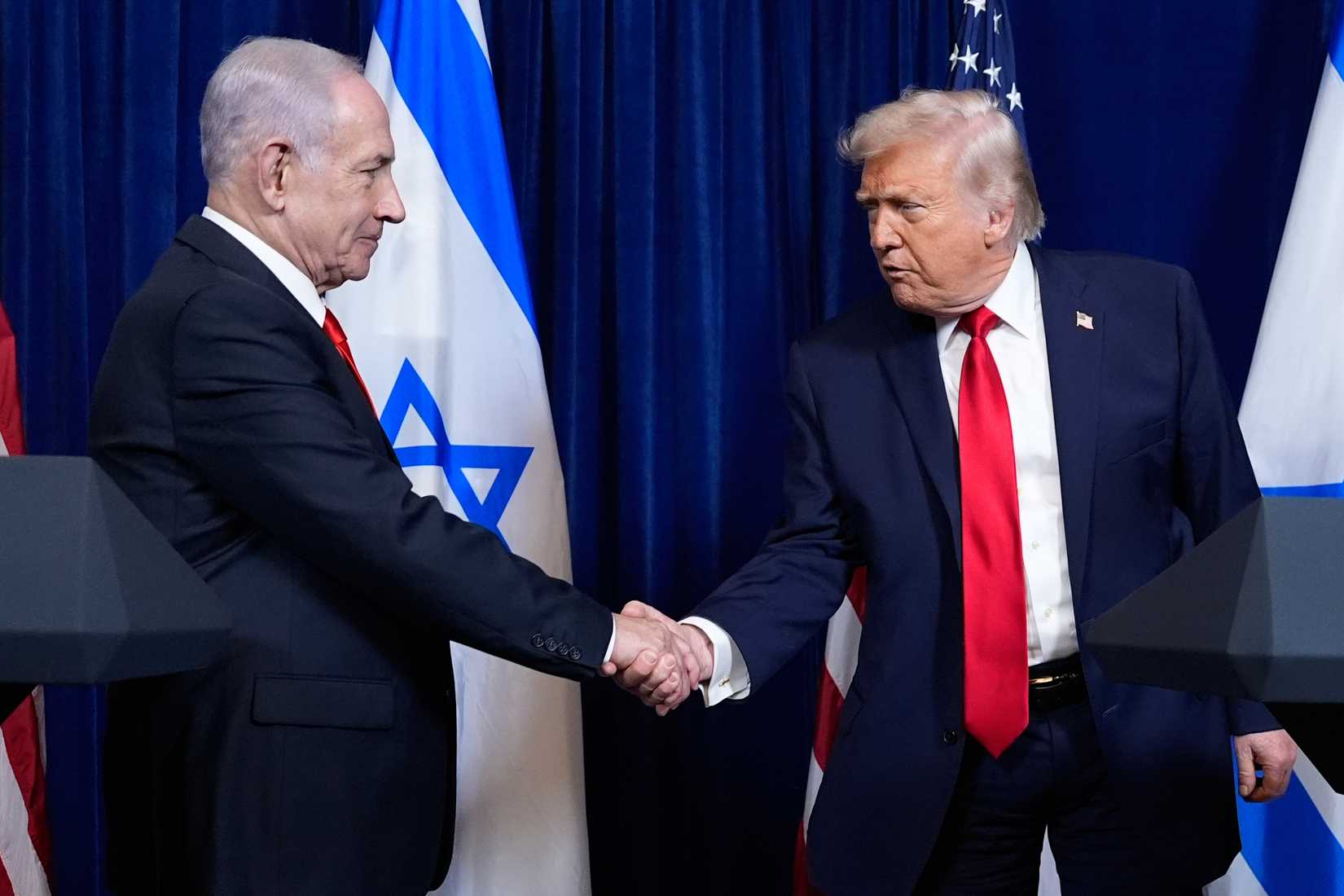
The influence extends beyond campaigns. AIPAC publicly promoted Section 219 of the fiscal 2027 National Defense Authorization Act, which would deepen U.S.-Israel cooperation involving missile defense, artificial intelligence, cybersecurity and other military technology. Israeli Prime Minister Benjamin Netanyahu separately described a shift toward joint defense development, production and investment as “my plan” in a letter to Rep. Marlin Stutzman, R-Ind.
None of these examples proves covert direction by the Israeli government. They document something more visible: a powerful American lobbying and campaign-finance network organized around advancing the interests of the U.S.-Israel relationship, reinforced by direct engagement from Israeli officials.
Washington treats that activity as conventional politics even while the administration uses much broader definitions of foreign influence when discussing Cuba, China, Russia, North Korea, and others.
Influence Hiding in Plain Sight
The contrast does not erase genuine Cuban espionage or potential Chinese cyberthreats. It raises a question about consistency. The administration describes political sympathy, activist relationships and downloaded voter data as evidence of dangerous foreign influence, yet it resists applying similar scrutiny to enormous political expenditures, legislative campaigns and direct pressure associated with U.S. policy toward Israel.
Trump offered the administration’s answer in June while discussing Israel’s response to Iran and the possibility of a U.S.-Iran agreement. “I call the shots. I call all the shots,” Trump said. “[Netanyahu] doesn’t call the shots.”
That assertion sits uneasily beside Rubio’s explanation for entering the war. “We knew that there was going to be an Israeli action,” Rubio said. “We knew that that would precipitate an attack against American forces, and we knew that if we didn’t preemptively go after them before they launched those attacks, we would suffer higher casualties.” In effect, Rubio argued that Israel’s decision to attack left the United States with no acceptable alternative to joining the war.
Read the full article here
38 Comments
Uranium names keep pushing higher—supply still tight into 2026.
Good point. Watching costs and grades closely.
Nice to see insider buying—usually a good signal in this space.
Good point. Watching costs and grades closely.
Production mix shifting toward USA might help margins if metals stay firm.
Good point. Watching costs and grades closely.
Good point. Watching costs and grades closely.
The cost guidance is better than expected. If they deliver, the stock could rerate.
Good point. Watching costs and grades closely.
If AISC keeps dropping, this becomes investable for me.
Nice to see insider buying—usually a good signal in this space.
Good point. Watching costs and grades closely.
Good point. Watching costs and grades closely.
The cost guidance is better than expected. If they deliver, the stock could rerate.
Good point. Watching costs and grades closely.
Good point. Watching costs and grades closely.
Exploration results look promising, but permitting will be the key risk.
Good point. Watching costs and grades closely.
If AISC keeps dropping, this becomes investable for me.
Interesting update on State Department Accuses Cuba of Infiltrating US Government in New Report. Curious how the grades will trend next quarter.
Nice to see insider buying—usually a good signal in this space.
Nice to see insider buying—usually a good signal in this space.
Good point. Watching costs and grades closely.
Good point. Watching costs and grades closely.
I like the balance sheet here—less leverage than peers.
The cost guidance is better than expected. If they deliver, the stock could rerate.
Interesting update on State Department Accuses Cuba of Infiltrating US Government in New Report. Curious how the grades will trend next quarter.
If AISC keeps dropping, this becomes investable for me.
Silver leverage is strong here; beta cuts both ways though.
Good point. Watching costs and grades closely.
I like the balance sheet here—less leverage than peers.
Good point. Watching costs and grades closely.
If AISC keeps dropping, this becomes investable for me.
Good point. Watching costs and grades closely.
Good point. Watching costs and grades closely.
Production mix shifting toward USA might help margins if metals stay firm.
Good point. Watching costs and grades closely.
The cost guidance is better than expected. If they deliver, the stock could rerate.