


Since the tech hype cycle for all-electric vehicles started, a long list of startups have come and gone, at varying stages of model development. A few highlights include the demise of Fisker Automotive, Dyson EV, Nikola, and Lordstown Motors. For the US, the brutal slaying of the $7,500 federal tax credit has become a giant hurdle for startups, and only three companies look like they could move from being startups to legitimate automakers.
The Tax Credit Extinction Event
Make no mistake, the early end to the $7,500 federal tax credit has screwed a huge number of people one way or another. For automakers, that meant having to make big pivots in their release plans for hybrid vehicles if they have the technology, and scrambling to develop hybrid systems if they don’t.
For startups, the $7,500 tax credit meant that customers had a big incentive to go electric, and would see the financial return for switching to electric power over gasoline engines quicker. Most importantly, it made up for the inherently higher cost of all-electric technology compared to equivalent gas and hybrid vehicles, and automakers and startups built it into their business plans. Add tariffs to the list of automakers’ woes, and the situation could have been the end for the EV story in the US. But it isn’t.
Scout Motors

A large part of the reason Scout Motors is still viable is that it’s only technically a startup. The marque is an independent subsidiary of Volkswagen Motors – the company that goes head-to-head every year for the title of biggest automaker in the world against General Motors and Toyota. However, Scout is a wholly US-based operation, managed separately from Volkswagen Group by its own executive team and board members.
Scout’s independent status allows it to go with a direct-to-customer model in many states, removing the dealership middleman from the financial equation – just like Tesla, Rivian, and Lucid. At least, that was the plan. The problem Scout has is that the National Automobile Dealers Association has already brought forth a lawsuit, as have some dealers of their own accord.
In 2023, Scout announced a $2 billion factory in Blythewood, South Carolina, capable of producing 200,000 vehicles a year. Its first vehicles, the Scout Traveler SUV and Scout Terra truck, are planned for launch toward the end of 2027. The obvious competitive target for Scout is Rivian with its outdoorsy, high-tech offerings.
Scout’s Financial Situation
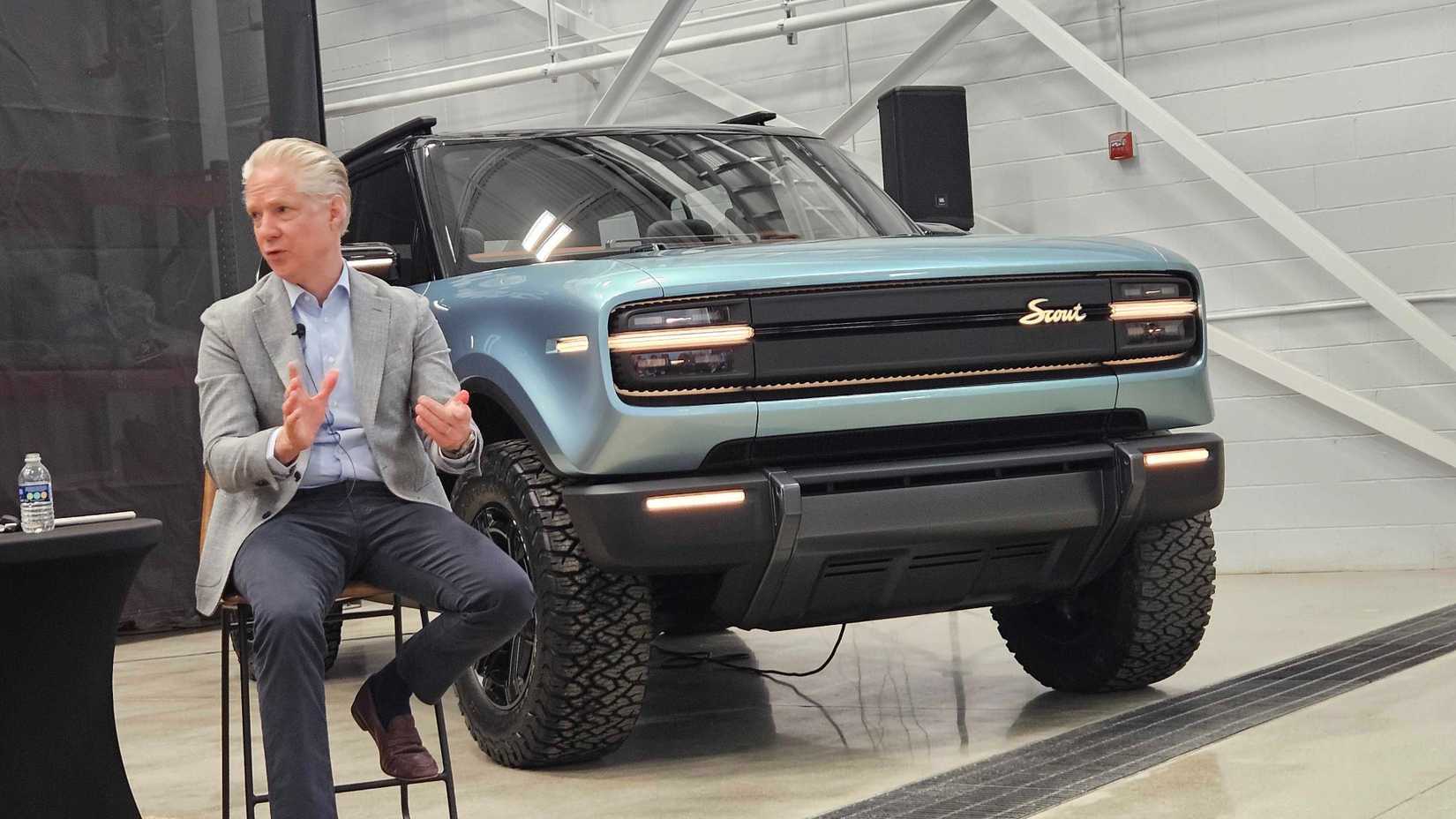
As Scout is financially backed by Volkswagen, which sees all-electric vehicles as a long-term strategy and already has huge investments in technology, there’s good reason to assume Scout can make it to production and sell vehicles. As of January 2026, Scout had collected over 150,000 refundable reservations since the 2024 model reveal, with a shocking 85% of those going to the extended range versions of the two models.
Telo Trucks

The lesser-known of the three major EV startups heading towards production is Telo Trucks. Based in San Carlos, California, and headed by Jason Marks, Forrest North, and noted industrial designer Yves Béhar, the product is an all-electric mini pickup truck. The first model due is the Telo MT1 toward the end of 2026, and it combines being shorter than a two-door Mini Cooper with the same interior space and bed length as a Toyota Tacoma.
Like Scout, Telo intends to play in the $40,000+ segment, although it’s hard to come up with a direct competitor. Perhaps, due to MT1’s future-forward design, the Tesla Cybertruck might be a rival due to its unconventional shape.
Telo is designing the MT1 for easy repairability with off-the-shelf parts and function over styling. In reality, the only comparison with the Cybertruck is that it has a unique appearance and an electric drivetrain.
The Telo MT1’s major selling point is its packaging – meaning its high level of pickup truck functionality but with a small footprint. Telo hasn’t gone down the route of making it look like a traditional truck, but its looks aren’t a styling statement, either.
Telo Trucks Financial Situation

At this point, Telo’s latest round of funding raised over $20 million, including input from Tesla co-founder Marc Tarpenning and Salesforce CEO Marc Benioff. Telo has also reported 12,000 reservations, and if you’re thinking these numbers are underwhelming, that’s really the point. “The graveyard of electric vehicles from the last 20 years almost all spent billions of dollars chasing high-volume production,” CEO Jason Marks pointed out to Reuters in September.
Telo Trucks’ approach is to stay capital efficient by using contract manufacturing while focusing its own resources on battery packs, design, and crash safety engineering. In other words, Telo designs the truck, and somebody else builds it on a per-cost basis. According to Telo, only 6,000 people have to follow through on their reservations and buy the truck to get Telo into profitability.
Sources: DriveTech / InsideEVs / EVworld /
Read the full article on CarBuzz
This article originally appeared on CarBuzz and is republished here with permission.
Read the full article here
48 Comments
Silver leverage is strong here; beta cuts both ways though.
Good point. Watching costs and grades closely.
Good point. Watching costs and grades closely.
I like the balance sheet here—less leverage than peers.
Production mix shifting toward USA might help margins if metals stay firm.
Production mix shifting toward USA might help margins if metals stay firm.
Production mix shifting toward USA might help margins if metals stay firm.
Good point. Watching costs and grades closely.
Exploration results look promising, but permitting will be the key risk.
Good point. Watching costs and grades closely.
Good point. Watching costs and grades closely.
Production mix shifting toward USA might help margins if metals stay firm.
Interesting update on Three EV Startups Survived The Tax Credit Extinction Event While Rivian And Lucid Struggle. Curious how the grades will trend next quarter.
Good point. Watching costs and grades closely.
Good point. Watching costs and grades closely.
Production mix shifting toward USA might help margins if metals stay firm.
Nice to see insider buying—usually a good signal in this space.
Good point. Watching costs and grades closely.
Good point. Watching costs and grades closely.
Silver leverage is strong here; beta cuts both ways though.
Good point. Watching costs and grades closely.
Exploration results look promising, but permitting will be the key risk.
If AISC keeps dropping, this becomes investable for me.
Good point. Watching costs and grades closely.
Good point. Watching costs and grades closely.
The cost guidance is better than expected. If they deliver, the stock could rerate.
Good point. Watching costs and grades closely.
Good point. Watching costs and grades closely.
Exploration results look promising, but permitting will be the key risk.
The cost guidance is better than expected. If they deliver, the stock could rerate.
Production mix shifting toward USA might help margins if metals stay firm.
Good point. Watching costs and grades closely.
Interesting update on Three EV Startups Survived The Tax Credit Extinction Event While Rivian And Lucid Struggle. Curious how the grades will trend next quarter.
Good point. Watching costs and grades closely.
Good point. Watching costs and grades closely.
Exploration results look promising, but permitting will be the key risk.
Good point. Watching costs and grades closely.
Good point. Watching costs and grades closely.
I like the balance sheet here—less leverage than peers.
Exploration results look promising, but permitting will be the key risk.
Good point. Watching costs and grades closely.
Nice to see insider buying—usually a good signal in this space.
If AISC keeps dropping, this becomes investable for me.
Good point. Watching costs and grades closely.
I like the balance sheet here—less leverage than peers.
Good point. Watching costs and grades closely.
Uranium names keep pushing higher—supply still tight into 2026.
Good point. Watching costs and grades closely.