

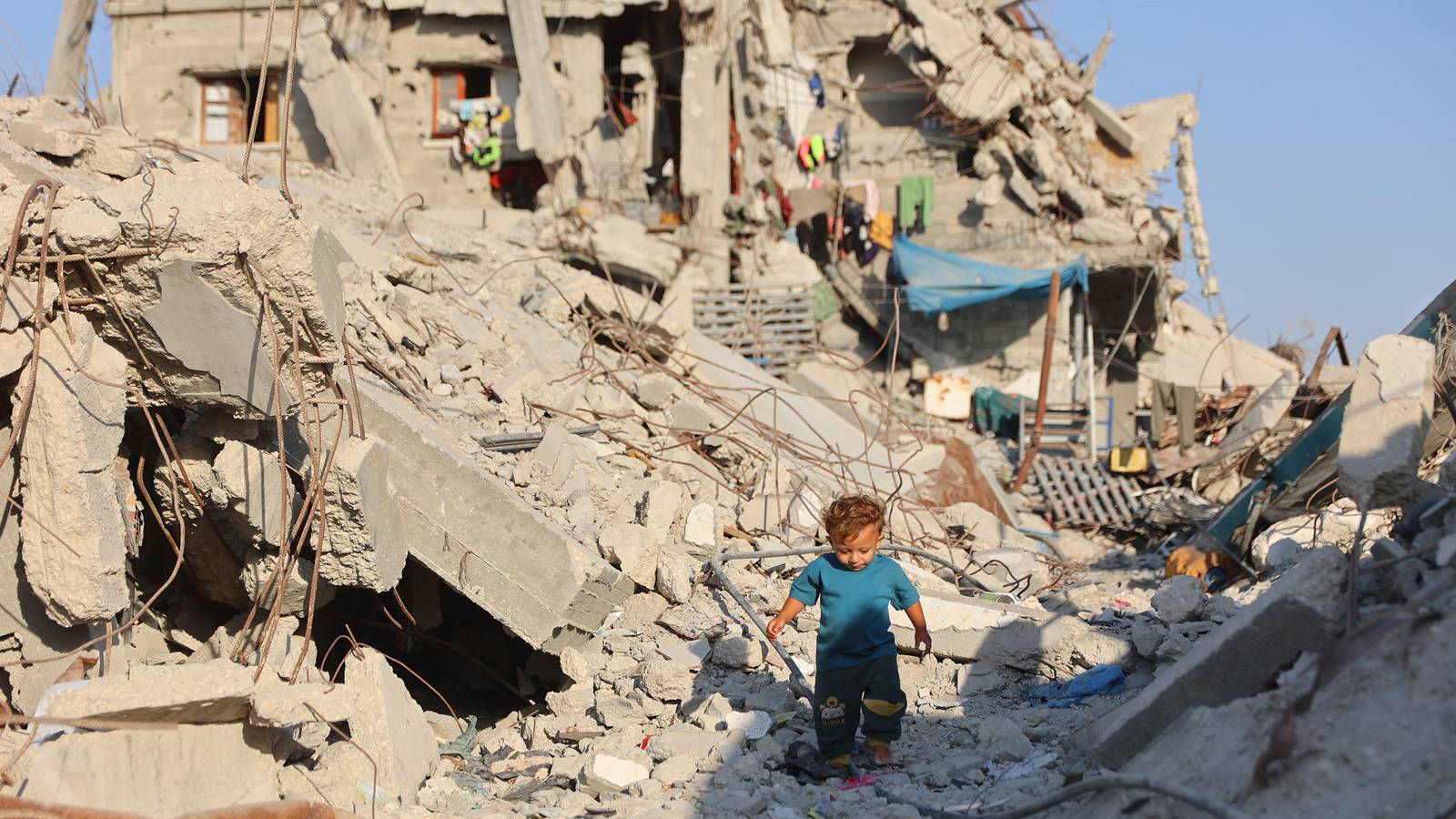
The Trump administration is proposing a $2.8 billion sale of 40,000 heavy bombs to Israel as Washington faces accusations that its military assistance has enabled genocide in Gaza. The proposed transfer would add to American support already under scrutiny from independent United Nations (UN) experts.
The sale has also drawn objections in Congress. Rep. Gregory Meeks, the House Foreign Affairs Committee’s top Democrat, announced Sept. 16 that he would withhold clearance, citing inadequate assurances about the lawful use of the 2,000-pound bombs and protections for civilians. His hold could delay the informal review process, but the administration can proceed over his objection.
Germany is already defending its support for Israel before the International Court of Justice, where Nicaragua alleges that German assistance facilitated genocide and that Berlin failed to prevent violations.
The case raises questions relevant to American weapons transfers: A government can face allegations over assistance to another military without its own troops conducting the attacks. Germany disputes the claims, and the court has not resolved its responsibility.
The accusations against Washington remain distinct from criminal charges or a court judgment against the United States. Independent U.N. experts have alleged that military assistance and diplomatic support enabled genocide; Washington and Israel reject that characterization.
What the United States is Accused of Enabling
In her October 2025 report, “Gaza Genocide: A Collective Crime,” Francesca Albanese, an independent U.N. special rapporteur on Palestinian territories, alleged that outside governments sustained Israel’s conduct through military assistance, economic ties and diplomatic protection.
She identified American and European arms transfers and military cooperation as central to that support.
The accusation concerns continued assistance despite evidence that established genocidal intent. Her report also examined intelligence sharing and diplomatic shielding. For American defense policy, that brings arms approvals, support arrangements and decisions to continue assistance within the scope of the alleged responsibility.
The warnings began earlier. In February 2024, independent U.N. experts called for an immediate halt to arms transfers for use in Gaza, identifying the United States and Germany as the largest suppliers.
In June 2024, experts warned companies including Boeing, Lockheed Martin and RTX that transfers risked complicity in international crimes, potentially including genocide.

A separate commission appointed by the U.N. Human Rights Council concluded in September 2025 that Israel was committing genocide. Israel rejected its findings as “distorted and false.”
The commission had also found Hamas and other Palestinian armed groups responsible for war crimes during the Oct. 7, 2023, attacks, including hostage-taking and deliberately attacking civilians.
The commission identified four categories of genocidal acts: killing Palestinians, causing serious bodily or mental harm, deliberately imposing conditions intended to bring about their physical destruction, and imposing measures intended to prevent births.
Its findings addressed military attacks, deprivation of essentials, and destruction of reproductive health care, alongside evidence it assessed as demonstrating intent to destroy Palestinians in Gaza as part of the Palestinian national group.
The accusation against Washington is that continued American assistance enabled that conduct despite knowledge of its genocidal character. These are findings and allegations by U.N. experts, not a criminal conviction of Israel or the United States.
Arms Sales Can Create Responsibility Without Direct Combat
International law distinguishes complicity in genocide from failing to prevent it.
In its 2007 Bosnia judgment, the International Court of Justice found Serbia had failed to prevent the Srebrenica genocide without finding it responsible for committing genocide or complicit in it.
The prevention duty arises when a state knows, or should know, of a serious risk of genocide. Required action depends partly on its capacity to influence perpetrators.

Complicity requires a separate showing, including awareness of the perpetrators’ genocidal intent when providing assistance. An arms sale alone does not establish those elements; a supplier’s knowledge and conduct require examination.
Germany illustrates how those arguments can reach court. Nicaragua sued it in March 2024 over military support for Israel and suspended funding to the U.N. Palestinian refugee agency. The allegations concern enabling violations and failing to prevent them, rather than German troops conducting attacks.
Germany disputes the allegations. The ICJ declined emergency measures in April 2024 but kept the case. Hearings on Germany’s preliminary objections ended Sept. 10, 2026, and a decision remains pending.
The Legal Hurdle for a Case Against Washington
The United States ratified the Genocide Convention with a reservation requiring its specific consent before an ICJ case against it proceeds under the treaty’s dispute clause.
That jurisdictional barrier limits a route to adjudication. The court has rejected the argument that genocide’s absolute prohibition overrides jurisdictional restrictions, including in its 2006 ruling involving Rwanda.
Washington has also taken action against governments pursuing international court proceedings against Israel. South Africa brought a separate ICJ case alleging that Israel violated the Genocide Convention in Gaza.
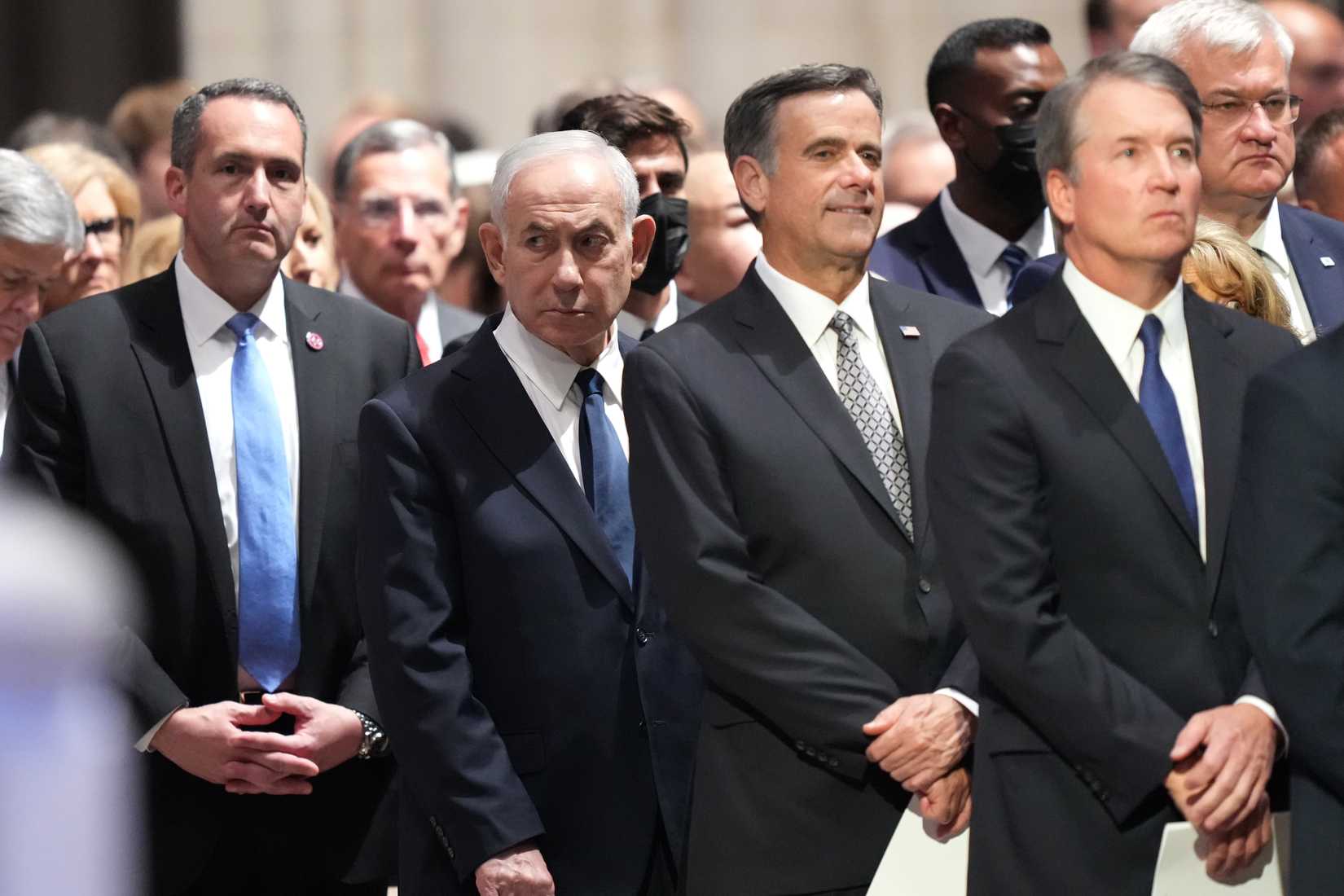
President Donald Trump’s February 2025 order halting aid to South Africa explicitly cited its genocide case against Israel, alongside domestic-policy allegations and ties with Iran.
In September 2026, Washington also extended visa restrictions on Palestinian officials, citing their pursuit of international court action among its reasons.
American warnings have also extended to countries imposing economic restrictions on Israel. On Sept. 8, U.S. Ambassador to Israel Mike Huckabee warned Britain that “the repercussions are going to be significant” if it imposed boycotts or sanctions, responding to its planned ban on goods from Israeli settlements in the occupied West Bank.
He cited state anti-boycott laws and potential harm to British businesses.
Colombia, meanwhile, withdrew its intervention in South Africa’s case as part of negotiations to restore ties with Israel. It notified the court Sept. 18 that it was withdrawing, later announced by the court on Sept. 22. The Colombian government linked its diplomatic shift to rebuilding relations with Israel.
Colombia had participated in the case by submitting its interpretation of the Genocide Convention under Article 63 of the ICJ statute. It was not a co-plaintiff. The withdrawal does not terminate South Africa’s case or resolve the allegations.
Read the full article here
29 Comments
Nice to see insider buying—usually a good signal in this space.
Good point. Watching costs and grades closely.
Good point. Watching costs and grades closely.
Nice to see insider buying—usually a good signal in this space.
Good point. Watching costs and grades closely.
Production mix shifting toward USA might help margins if metals stay firm.
Good point. Watching costs and grades closely.
Interesting update on US-Israel $2.8 Billion Arms Deal, 40,000-Bomb Supply Faces New Gaza Complicity Accusations. Curious how the grades will trend next quarter.
Good point. Watching costs and grades closely.
Good point. Watching costs and grades closely.
Silver leverage is strong here; beta cuts both ways though.
Good point. Watching costs and grades closely.
I like the balance sheet here—less leverage than peers.
Good point. Watching costs and grades closely.
Good point. Watching costs and grades closely.
If AISC keeps dropping, this becomes investable for me.
I like the balance sheet here—less leverage than peers.
Nice to see insider buying—usually a good signal in this space.
Uranium names keep pushing higher—supply still tight into 2026.
Silver leverage is strong here; beta cuts both ways though.
If AISC keeps dropping, this becomes investable for me.
Good point. Watching costs and grades closely.
Good point. Watching costs and grades closely.
Exploration results look promising, but permitting will be the key risk.
Good point. Watching costs and grades closely.
Good point. Watching costs and grades closely.
If AISC keeps dropping, this becomes investable for me.
Good point. Watching costs and grades closely.
Good point. Watching costs and grades closely.