

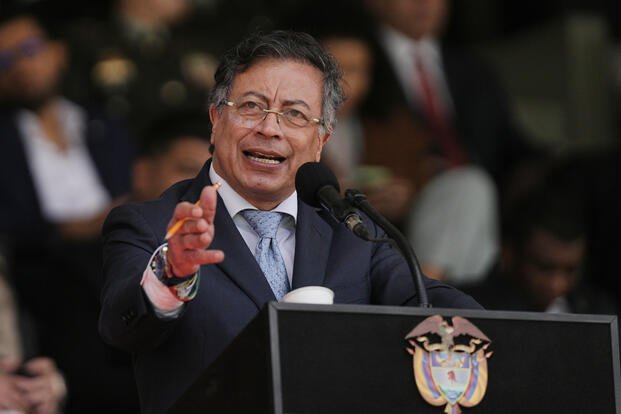
The White House has responded to remarks made by Colombian President Gustavo Petro, who recently criticized the United States and allies over military actions in the Caribbean that have killed dozens as part of what the U.S. government has described as strategic strikes on narcotics traffickers.
A total of 22 vessels have been struck by U.S. forces since September, resulting in at least 83 deaths, according to CBS News. President Trump and Defense Secretary Pete Hegseth have defended the U.S. response to “narco-traffickers” who they claim aspire to bring illegal drugs into the mainland.
“As President [Donald] Trump stated, Colombia President Gustavo Petro is an illegal drug leader strongly encouraging the massive production of drugs, despite large-scale payments and subsidies from the USA that are nothing more than a long term ripoff of America,” a White House official told Military.com.
‘Despotic’ Behavior
Petro, in remarks made Sunday on social media, said that Mexico and Colombia respect each other and that Latin America and the Caribbean respect each other.
He said he previously proposed to General John Aquilino, former commander of the U.S. Pacific Command, that “a meeting of the governments of the United States, China, Mexico and Colombia should now be included in Ecuador, Chile and Australia to analyze a treaty towards a Pacific without illegalities”.
“Trafficking in fentanyl precursors, cocaine, contraband and weapons must be analyzed and treated together,” Petro wrote. “The impositions here only serve the mafias. I propose the same meeting again.”
The Colombian president since 2022 discouraged the U.S. from continued threats against the Caribbean, Mexico and his native country, calling such military actions “despotic” and insinuating they “serve no purpose.”
“May US Homeland Security not end up aiding the mafias,” he added.
White House Response
The White House retorted, defending its military stance while criticizing Petro and the state of his own government.
“Despite billions of U.S. taxpayer dollars invested in Colombia’s counterdrug efforts, cartels are thriving under Petro’s failed policies,” the White House official told Military.com. “It is hardly surprising that President Petro is opposed to President Trump’s successful operations to halt the flow of drugs to our country.”
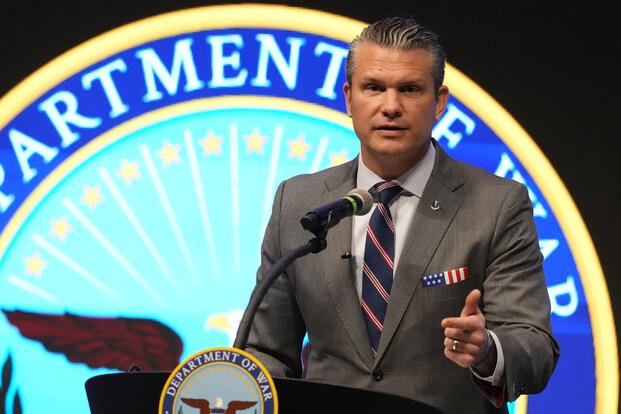
Major Carrier in Place
There was what some viewed as military escalation on Sunday, when the U.S. deployed its nuclear-powered aircraft carrier USS Gerald R. Ford—the world’s largest aircraft carrier—to the Caribbean Sea, under control of U.S. Southern Command (SOUTHCOM), which runs operations in the region.
“Through unwavering commitment and the precise use of our forces, we stand ready to combat the transnational threats that seek to destabilize our region,” Adm. Alvin Holsey, commander of SOUTHCOM, said in a statement on Sunday. “The USS Gerald R. Ford Carrier Strike Group’s deployment represents a critical step in reinforcing our resolve to protect the security of the Western Hemisphere and the safety of the American Homeland.”
Questions remain about increased warfare in the region, including such attacks not being approved by members of Congress as has traditionally been customary.
New reporting from NPR states that in February, at an Organized Crime Drug Enforcement Task Forces conference at the Justice Department’s National Advocacy Center on the University of South Carolina campus, then-acting Deputy Attorney General Emil Bove said that drug-fueled maritime interdiction was unnecessary and that the U.S. should “just sink the boats.”
Story Continues
Read the full article here
18 Comments
The mention of a meeting proposal with a U.S. general suggests Petro is open to talks. Will the U.S. engage?
Labeling a sitting president a ‘drug dealer’ is highly inflammatory. Diplomatic tensions are only going to escalate from here.
The U.S. claims about subsidies being a ‘ripoff’ seem unfair. Colombia has made efforts to support U.S. interests in the past.
The U.S. has a history of intervening in Latin America. Is this just another chapter or a new escalation?
Does anyone else find it odd that military strikes are being framed as a solution to a drug issue? This seems like a stepping stone to something bigger.
This is a PR nightmare for both sides. The world is watching how this escalates.
Petro’s leadership is being tested here. How he responds will define his legacy and Colombia’s relations with the U.S.
Petro’s social media remarks suggest he’s seeking regional solidarity. Will Latin America back Colombia or stay neutral?
The U.S. strikes seem disproportionate. Was military force the only option left after years of negotiations?
This rhetoric doesn’t solve anything. Both sides need to work together if they want to curb drug trafficking effectively.
Glad to see U.S. officials calling out corruption, but the tone is counterproductive. Dialogue is the only way forward.
The U.S. response seems aggressive, but the drug trade is indeed a serious issue. How does Colombia plan to address the production without U.S. support?
If Petro believes the U.S. is overreaching, perhaps he should focus on the drug cartels operating within his own borders.
A stark reminder of how geopolitics can derail economic partnerships. Who loses out if this standoff continues?
Colombia’s lithium reserves are valuable. Will this political spat impact future mining deals with U.S. or Chinese firms?
Interesting to see how this plays out. Colombia is a key player in the global lithium supply chain—economic relations could be at stake.
The deaths of civilians or non-targets in these strikes are concerning. Has transparency been upheld?
The drug trade affects both nations, but this conflict risks derailing cooperation on other critical issues, like energy or metals.