

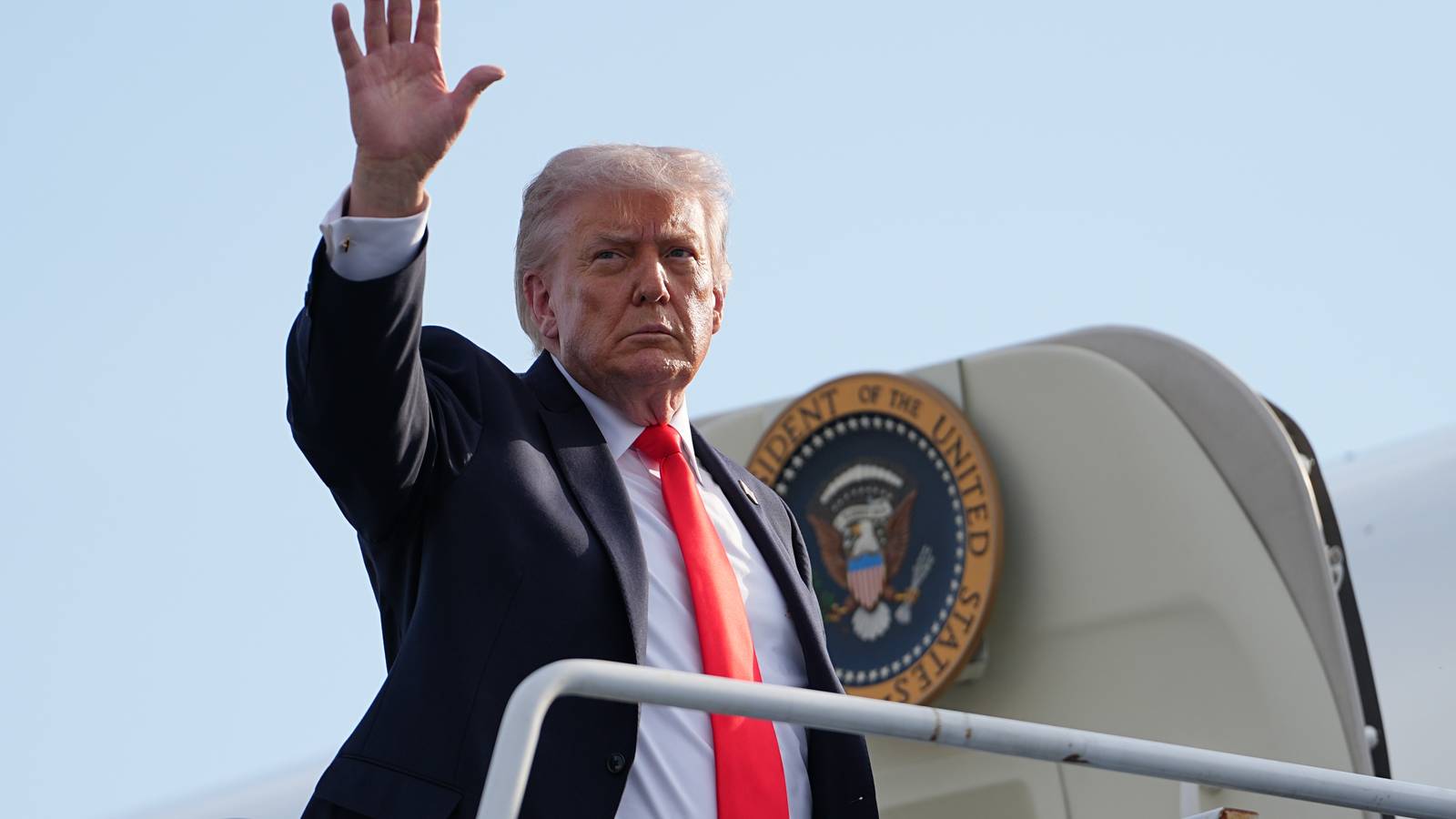
The U.S. will withdraw about 5,000 troops from Germany over the next six to 12 months, the Pentagon announced Friday, marking a significant shift in the American military presence in Europe.
Pentagon officials said the decision followed a review of force posture and reflects current operational requirements. The reduction represents roughly 14% of the approximately 36,000 U.S. troops stationed in Germany, which has long served as a central hub for American military operations on the continent.
Germany hosts key installations including Ramstein Air Base, a major logistics and command center that supports U.S. and NATO operations across Europe, Africa and the Middle East.
Tensions with Germany Shape Decision
The announcement comes amid escalating tensions between Washington and Berlin, driven in part by sharp criticism from German Chancellor Friedrich Merz over the U.S. handling of the Iran conflict. Merz said the United States was being “humiliated” by Iranian leadership and criticized Washington for lacking a clear strategy to resolve the conflict.
He also argued that the United States had “no truly convincing strategy” in its negotiations, underscoring a widening rift between the U.S. and European allies over both the conduct and direction of the war.
U.S. officials viewed the remarks as inappropriate, and a senior Pentagon official said the troop withdrawal reflects, in part, frustration with allied criticism and lack of support for U.S. operations.
President Donald Trump has since suggested the drawdown could go further, indicating the current reduction may be only the first step in a broader reassessment of U.S. troop levels in Europe. Trump also made a post on Truth Social stating “[t]he Chancellor of Germany should spend more time on ending the war with Russia/Ukraine (Where he has been totally ineffective!), and fixing his broken Country, especially Immigration and Energy, and less time on interfering with those that are getting rid of the Iran Nuclear threat, thereby making the World, including Germany, a safer place!”
Allies and NATO Seek Clarity
NATO officials said they are seeking additional details about how the withdrawal will be implemented, including whether the troops will return to the United States or be repositioned elsewhere in Europe.
German Defense Minister Boris Pistorius said the decision was not entirely unexpected but emphasized that U.S. forces in Europe contribute to shared security interests. He also reiterated calls for European nations to take greater responsibility for their own defense capabilities.
The drawdown comes as NATO continues to respond to Russia’s war in Ukraine, a conflict that has reinforced the alliance’s focus on deterrence along its eastern flank.
Lawmakers Raise Concerns
The decision has prompted concern from congressional leaders responsible for defense oversight. Sen. Roger Wicker (R-MS) and Rep. Mike Rogers (R-AL) said they are “very concerned” about the withdrawal of a U.S. brigade from Germany and urged the administration to coordinate closely with Congress and allied governments.
They also argued that if troop levels are reduced in Germany, the U.S. should consider shifting forces farther east rather than bringing them back to the United States, in order to maintain deterrence against potential adversaries.
Germany Remains a Central Hub
Even after the planned withdrawal, Germany will remain one of the largest hosts of U.S. forces overseas. The reduction would leave roughly 31,000 American troops in the country, assuming no additional cuts follow.
The long-term impact will depend on which units are withdrawn and whether additional reductions are announced. The move signals a recalibration of U.S. military posture in Europe while leaving open the possibility of further changes in the years ahead.
Read the full article here
20 Comments
Interesting update on US To Pull 5,000 Troops from Germany. Curious how the grades will trend next quarter.
Uranium names keep pushing higher—supply still tight into 2026.
Good point. Watching costs and grades closely.
Good point. Watching costs and grades closely.
I like the balance sheet here—less leverage than peers.
Good point. Watching costs and grades closely.
Good point. Watching costs and grades closely.
Production mix shifting toward USA might help margins if metals stay firm.
Uranium names keep pushing higher—supply still tight into 2026.
Production mix shifting toward USA might help margins if metals stay firm.
Good point. Watching costs and grades closely.
Good point. Watching costs and grades closely.
If AISC keeps dropping, this becomes investable for me.
Interesting update on US To Pull 5,000 Troops from Germany. Curious how the grades will trend next quarter.
Good point. Watching costs and grades closely.
Good point. Watching costs and grades closely.
If AISC keeps dropping, this becomes investable for me.
Good point. Watching costs and grades closely.
Good point. Watching costs and grades closely.
Nice to see insider buying—usually a good signal in this space.