


The USS Abraham Lincoln is returning to San Diego this week. A military spouse and veteran, as well as the father of a U.S. Navy sailor aboard the long-deployed vessel, spoke to Military.com after months of controversial reports coinciding with the ongoing military operation in the Middle East.
A U.S. Navy official confirmed to Military.com that the Nimitz-class aircraft carrier and elements of the Abraham Lincoln Carrier Strike Group (ABECSG) are scheduled to arrive at 12 p.m. local time at Naval Air Station North Island in Coronado following a 10-month deployment.
Commander of the Carrier Strike Group 3, Rear Adm. Robert Loughran Jr., and commanding officer of the USS Abraham Lincoln, Capt. Daniel J. Keeler, are slated to provide remarks on the return, deployment and answer questions from the press following the conclusion of the 300-plus day deployment—the second-longest since the Vietnam War.
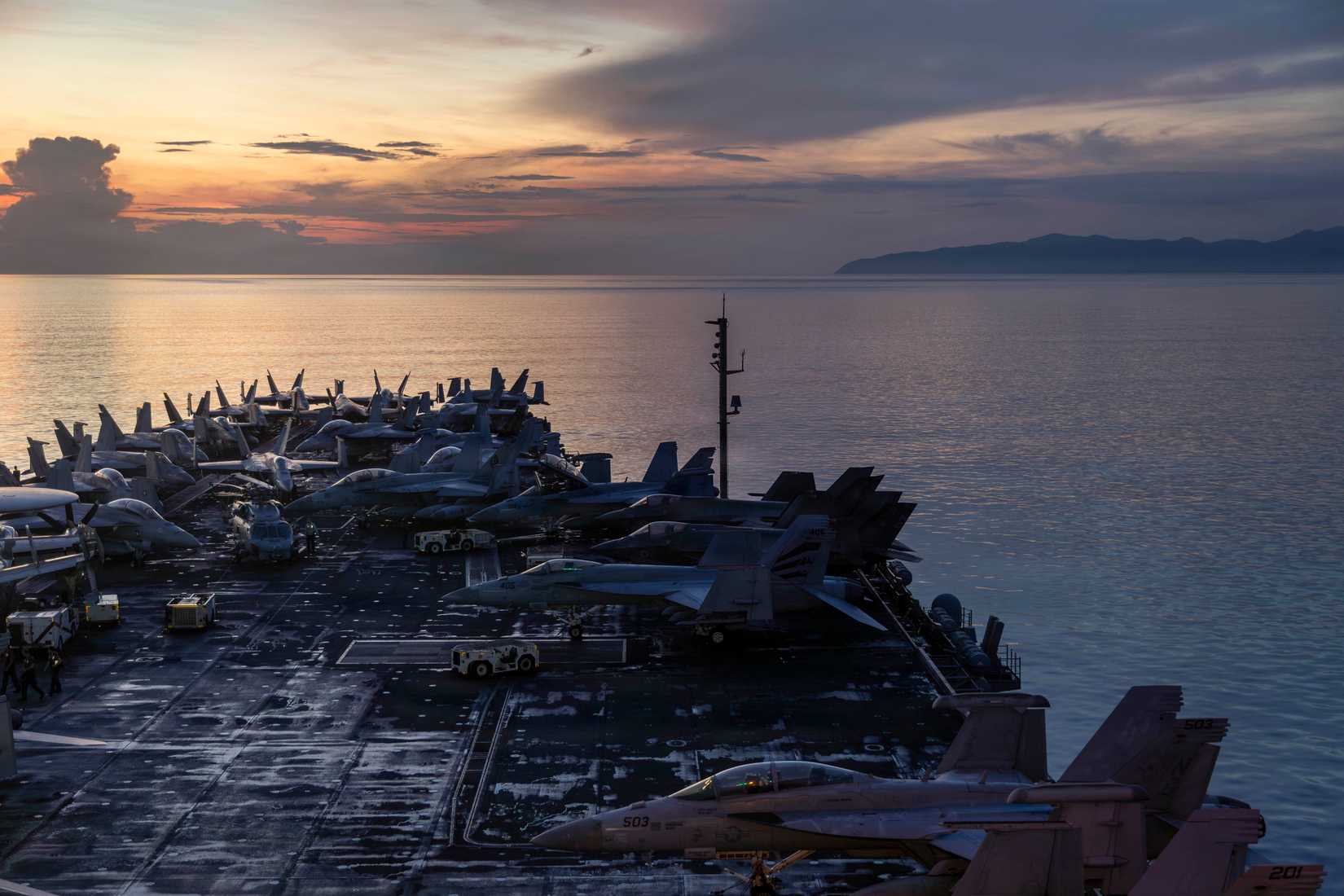
“The ship steamed over 85,000 nautical miles crossing the Pacific Ocean, navigating through the San Bernardino Strait, Surigao Strait, and Strait of Malacca, and executing operations in the South China Sea, Indian Ocean, and North Arabian Sea,” the Navy official said.
A Highly-Publicized Deployment
The Navy official also told Military.com that the ABECSG played a leading role in support of Operation Epic Fury and in enforcing a maritime blockade against the Islamic Republic of Iran, including sustained combat operations and maritime operations in the Middle East.
“More than 5,000 Sailors and Marines contributed their individual expertise to ABECSG operations, enabling the strike group to sustain combat operations and accomplish its assigned missions,” the official said.
But the deployment was not without its scrutiny. In August, widespread reports alleged that sailors were experiencing mental health issues due to the lengthy deployment.
Reports at the time, citing interviews with sailors’ family members, alleged that sailors made multiple attempts to jump overboard and experienced other negative impacts including exhaustion, suicidal thoughts and low morale. Spouses also allegedly said they partners had prevented their partners from jumping overboard on at least one occasion.
Also in August, an unnamed sailor’s wife reportedly told MS Now that her husband jumped from the ship in a suicide attempt on Aug. 3. He was accused of violating the articles of the Uniform Code of Military Justice (UCMJ).

In late September, Acting Navy Secretary Hung Cao said in a letter to Sen. Kirsten Gillibrand (D-N.Y.) that there was a total of eight suicide attempts across the strike group—including the Lincoln crew and sailors from the carrier air wing, strike group and destroyer squadron staff, escorting destroyers and all embarked aviation squadrons.
“Over the course of their operations, Abraham Lincoln’s crew conducted 72 replenishments-at-sea, received more than 20.5 million gallons of aviation fuel, served 4 million meals to the 4,500 personnel aboard, and supported more than 13,000 aviation sorties from Carrier Air Wing (CVW) 9 aircraft, totaling 28,500 flight hours,” the Navy official told Military.com.
A Navy Sailor’s Father Makes a Final Plea
In August, Jefferson Kelley made an unusual request to his state senator: “swapping” positions with his 20-year-old son, Jackson, aboard the Lincoln due to the conditions and 250-plus day deployment.
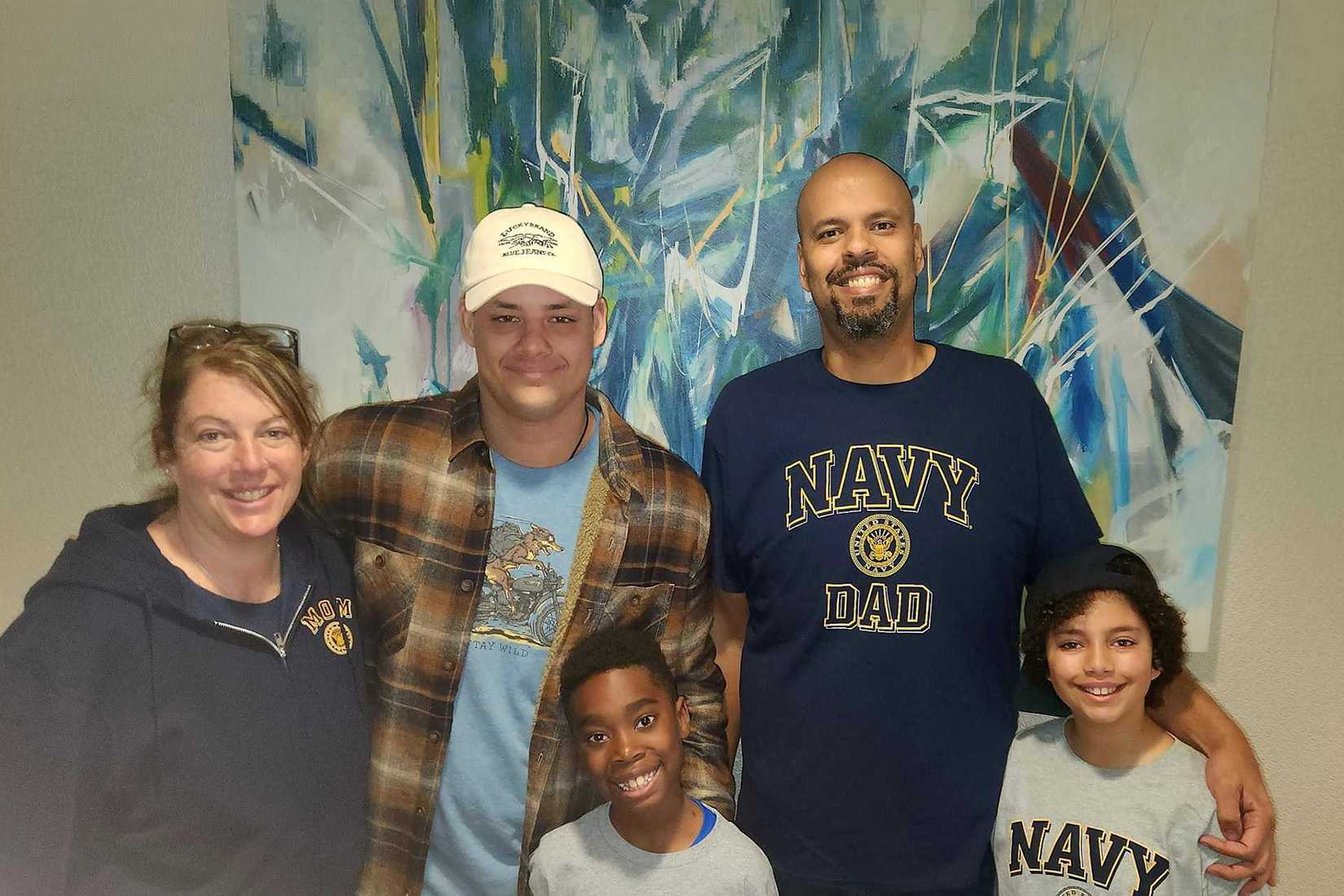
At the time, Jefferson told Military.com that he wrote the Aug. 13 three-page letter to Sen. Bernie Moreno (R-Ohio) as a means of drawing more attention to the vessel at local, state and federal levels. It was borne out of a feeling of helplessness.
Today, Jefferson Kelley is “thrilled” that sailors, including his son, are returning home after the “unprecedented deployment.” He said it didn’t have to be that way, however, calling it a distraction from other aspects of public interest.
“I can’t imagine what they went through on a daily basis,” he told Military.com on Tuesday. “We can’t forget about the ships and servicemen and women that are still stationed in the Middle East during this conflict.

“This is a war of choice that is being used as a distraction to the Epstein Files. We’re in another Republican administration forever war, which is customary for all Republican administrations. It is even more important now that all of us and families of loved ones that are a part of Operation Epstein Fury, continue to keep media pressure on the accountability, or lack thereof, of this administration.”
Kelley added that such pressure “will be the only way to get answers for what our military is actually going through.”
Military Veteran, Spouse Wants Families to Use Resources
Meg O’Grady, a U.S. Army veteran and military spouse, has spent years building military family policy at the federal level.
She told Military.com that when she was in Germany back in 2006, she was a spouse and her brigade was deployed to Iraq. It was supposed to return after 12 months, but that was extended as combat operations ramped up.
“I can really relate to receiving that kind of news and understanding that you don’t have an idea of when that end date might be,” O’Grady said. “I think it’s really important for military families to be able to communicate their concern, and I am seeing that across the board that there’s a lot of communication now that we didn’t have then.
“There are online communities, virtual communities, and I think because of those situations back when we first started this kind of sustained operations that we have now, it’s really interesting to see how we’ve adapted and adjusted. It’s not necessarily that uncommon.”
Now the senior vice president of military and government programs at National University, she knows firsthand how military communities operate.
At National University, for example, approximately 30% of its students are military affiliated—equating to almost 10,000 students, whether they are active-duty veterans or their families.
Formerly, O’Grady was situated within the Pentagon and worked with the Military Spouse Education and Career Opportunities program, now called Spouse Works, which provides people with counseling and installation resources, fleet and family support centers that are local to the area, and confidential counseling referrals.

Those “one-stop quality resources” can help both active-duty service members in addition to those who transitioned to civilian life within the last 180 days.
She said the influx of communication today, in which sailors and Marines aboard ships can directly contact their families, represents a major change as opposed to two decades ago.
But maintaining that resource base for those families remains pivotal.
“Here in the San Diego area, we are seeing a lot of dialogue from families who are experiencing this deployment,” O’Grady added. “I think what really is important is that families are able to consistently tell us what they need, and that the existing support is there.
“It’s really important for folks to know how much of the existing support really goes unused because folks don’t know it’s there.”
Read the full article here
47 Comments
I like the balance sheet here—less leverage than peers.
Silver leverage is strong here; beta cuts both ways though.
Good point. Watching costs and grades closely.
Good point. Watching costs and grades closely.
Interesting update on USS Abraham Lincoln Returns to San Diego After Historic and Controversial 300-Day Deployment. Curious how the grades will trend next quarter.
Good point. Watching costs and grades closely.
Good point. Watching costs and grades closely.
The cost guidance is better than expected. If they deliver, the stock could rerate.
Good point. Watching costs and grades closely.
Production mix shifting toward USA might help margins if metals stay firm.
If AISC keeps dropping, this becomes investable for me.
Exploration results look promising, but permitting will be the key risk.
Production mix shifting toward USA might help margins if metals stay firm.
Good point. Watching costs and grades closely.
I like the balance sheet here—less leverage than peers.
Good point. Watching costs and grades closely.
I like the balance sheet here—less leverage than peers.
Good point. Watching costs and grades closely.
Good point. Watching costs and grades closely.
Production mix shifting toward USA might help margins if metals stay firm.
Good point. Watching costs and grades closely.
I like the balance sheet here—less leverage than peers.
Exploration results look promising, but permitting will be the key risk.
Good point. Watching costs and grades closely.
Good point. Watching costs and grades closely.
Production mix shifting toward USA might help margins if metals stay firm.
If AISC keeps dropping, this becomes investable for me.
Good point. Watching costs and grades closely.
Silver leverage is strong here; beta cuts both ways though.
Nice to see insider buying—usually a good signal in this space.
Good point. Watching costs and grades closely.
Interesting update on USS Abraham Lincoln Returns to San Diego After Historic and Controversial 300-Day Deployment. Curious how the grades will trend next quarter.
Good point. Watching costs and grades closely.
Exploration results look promising, but permitting will be the key risk.
Good point. Watching costs and grades closely.
Good point. Watching costs and grades closely.
If AISC keeps dropping, this becomes investable for me.
Good point. Watching costs and grades closely.
Interesting update on USS Abraham Lincoln Returns to San Diego After Historic and Controversial 300-Day Deployment. Curious how the grades will trend next quarter.
Exploration results look promising, but permitting will be the key risk.
Good point. Watching costs and grades closely.
Silver leverage is strong here; beta cuts both ways though.
Good point. Watching costs and grades closely.
I like the balance sheet here—less leverage than peers.
Good point. Watching costs and grades closely.
Uranium names keep pushing higher—supply still tight into 2026.
Good point. Watching costs and grades closely.