


The Department of Veterans Affairs completed a record nearly 60 million appointments with private health care providers last year, part of a massive expansion of outside medical care for veterans.
But VA Secretary Doug Collins says one of the government’s most closely watched measures of whether veterans can access that care, how long they wait, doesn’t tell the whole story.
“What they didn’t care about, and what we didn’t care about or know about at the time, was it wasn’t measuring quality,” Collins said during a wide-ranging question-and-answer session at the Military Influencer Conference, or MIC, in Tampa, Florida.
The distinction comes as the VA is pointing to record numbers across several measures of its performance.
The department processed more than 3 million disability benefits claims in fiscal 2026 by Sept. 18, surpassing the record set during the previous fiscal year before FY2026 had even ended. The VA said the average time to complete a disability claim decision fell to 75.6 days in September, down from 141.5 days on Jan. 20, 2025, while claims-processing accuracy stood at 94%.
On the health care side, the VA completed a record 82,083,918 direct-care appointments in fiscal 2025, up 4.1% from the previous year, and 59,989,662 community-care appointments, a 12% increase.
Those numbers help illustrate Collins’ broader argument: Measuring how VA performs is more complicated than any single metric.
Why the VA Measures Wait Times
Wait times became a national issue after the 2014 VA scandal involving veterans waiting for appointments while employees at some facilities manipulated scheduling records.
The fallout helped drive passage of the Veterans Access, Choice and Accountability Act of 2014 and, later, the VA MISSION Act, which expanded veterans’ ability to receive care from private providers in their communities.
Collins, a former Georgia congressman who served in the House during that period, said lawmakers were trying to solve a legitimate problem but created a system heavily focused on one measure.
The reason we measure wait times is because we had negligent employees in areas in Augusta, Atlanta and Phoenix who were keeping people off of lists, Collins said at MIC.
But he said that measure did not necessarily capture the quality of the care veterans ultimately received. Today, wait times remain an important part of determining whether veterans qualify for community care.
Veterans may generally qualify based on access standards when VA cannot provide primary care, mental health care or non-institutional extended care within 20 days, or specialty care within 28 days. Drive-time standards also apply.
Collins’ argument isn’t that those waits should be ignored. It’s that they don’t tell the entire story.

VA Says It Measures More Than Wait Times
VA Press Secretary Quinn Slaven emphasized that the department uses several measures beyond wait times to assess its performance.
VA completed a record 82,083,918 direct-care appointments in fiscal 2025 and a record 59,989,662 community-care appointments, according to figures provided by the department.
The community-care total represented a 12% increase from fiscal 2024.
Since Jan. 20, 2025, VA has also offered veterans more than 3.2 million appointments outside normal operating hours, according to the department.
Slaven said more than 290,000 new veterans have enrolled in VA health care in 2026 and that VA has opened 43 new health-care facilities since Jan. 20, 2025.
The department has also committed nearly $5 billion in fiscal 2026 to modernize, repair and improve health-care facilities, which VA describes as the largest nonrecurring maintenance investment in its history.
Those figures provide important context for Collins’ remarks: VA isn’t measuring its performance solely through wait times.
But Collins questioned whether wait times should be treated as a proxy for the quality of care veterans ultimately receive. The growth in outside care also creates another complication.
Community care is private doctors, Collins said. I cannot force them to take your appointment.
His point was that once VA sends a veteran into the private health care system, the department does not control every part of what happens next, including whether an outside provider has an available appointment.
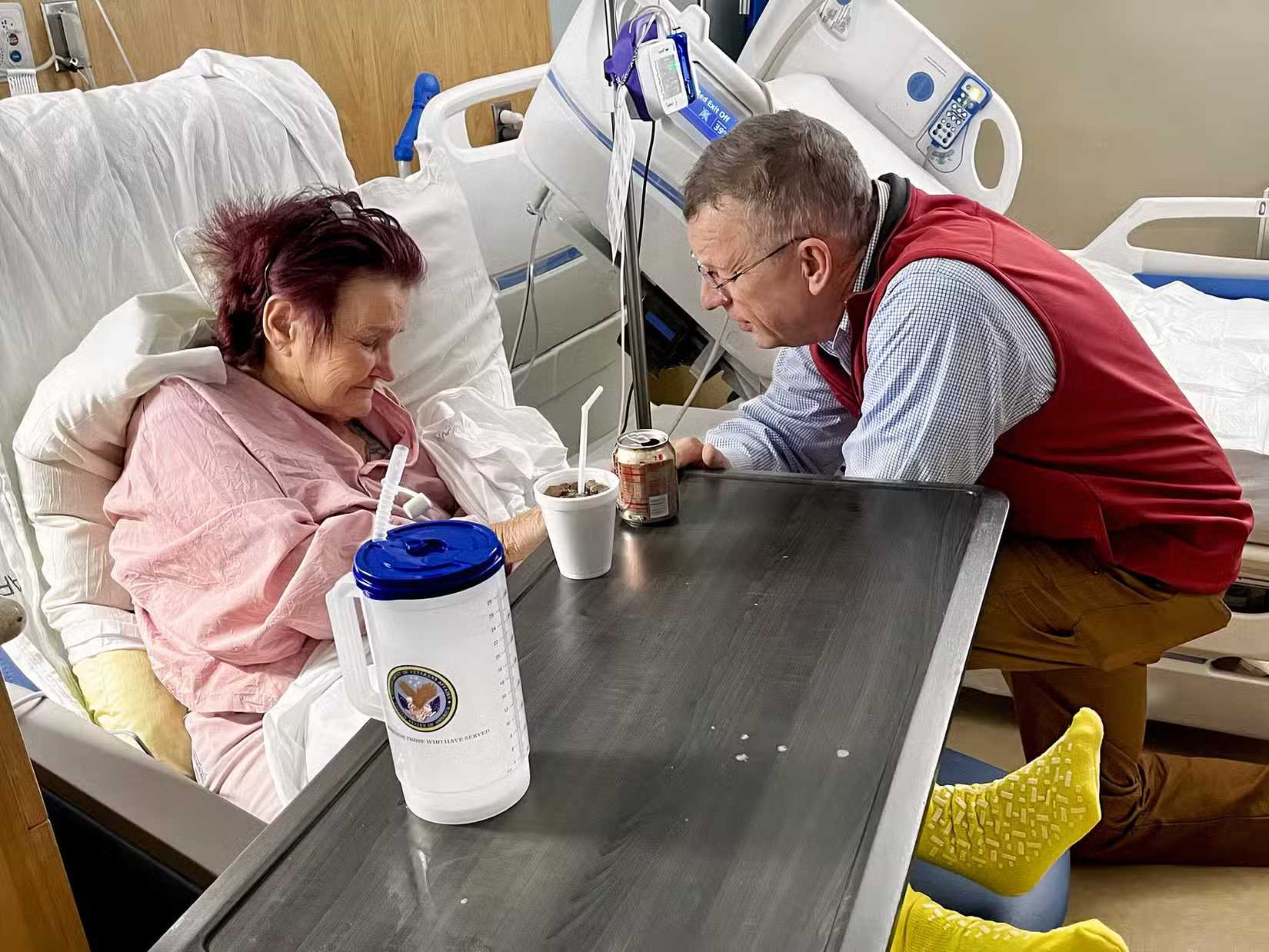
‘If a Veteran Doesn’t Come to the Door … You Don’t Have a Job’
Collins’ broader message at MIC was that VA employees should ultimately judge their work by what it does for veterans rather than by the size of the department’s budget, workforce or other institutional measures.
If a veteran doesn’t come to the door at a hospital, or a veteran doesn’t get online, or a veteran doesn’t visit, then you don’t have a job, Collins said.
He described changing that mindset as one of the challenges he encountered after taking over the department.
Collins said the VA has reorganized parts of the Veterans Health Administration and made changes to both its hospital system and community care. His basic test, he said, is straightforward.
If it helps veterans, we do it, Collins said. If we don’t help veterans, we don’t do it.
He said that philosophy also means being willing to reverse course.
Collins pointed to a recent VA policy the department withdrew following intense criticism from veterans. He said some claims circulating about the proposal, including that it would strip benefits from veterans already receiving them, were inaccurate.
“It would never have done that,” Collins said. But Collins said the reaction itself mattered. “My veterans were not happy,” he said.
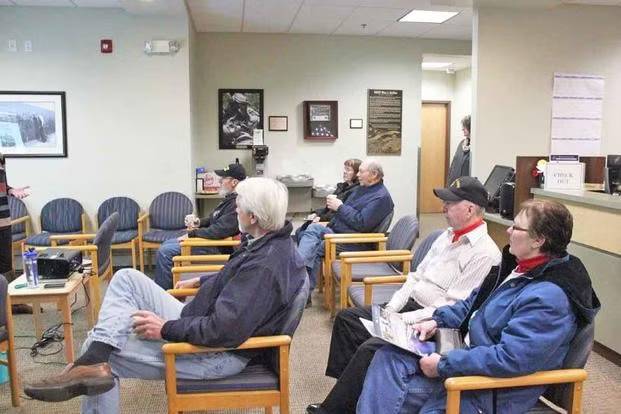
Reaching Veterans Outside VA
That concern led Collins to what may have been his broader point about how the department’s performance is discussed.
The VA serves millions of veterans, but Collins said he is also concerned about those who aren’t using the system at all, including veterans in crisis deciding whether they believe VA can help them.
“They’re the ones right now that are deciding what they’re going to do with their life, and they don’t know if they’re going to have a chance.”
Collins argued that criticism of VA’s failures is legitimate but warned that portraying the entire system as incapable of helping veterans could discourage some from seeking care.
I have no problem discussing the issues of VA. I have no problem discussing our problems, Collins said.
The challenge, Collins’ comments suggest, is deciding which measures best show whether those problems are actually getting better.
On disability benefits, VA can point to more than 3 million claims processed this fiscal year, a dramatically smaller backlog and decisions being made in nearly half the time they took in January 2025.
On health care, VA points to more than 82 million direct-care appointments, nearly 60 million community-care appointments, millions of appointments offered outside normal operating hours, 43 new facilities and hundreds of thousands of new enrollees.
More than a decade after wait times became synonymous with accountability at VA, Collins’ argument is that those numbers remain important, but they aren’t enough on their own to determine whether the system is working for veterans.
Read the full article here
38 Comments
If AISC keeps dropping, this becomes investable for me.
Good point. Watching costs and grades closely.
Good point. Watching costs and grades closely.
Nice to see insider buying—usually a good signal in this space.
Good point. Watching costs and grades closely.
Silver leverage is strong here; beta cuts both ways though.
Good point. Watching costs and grades closely.
Good point. Watching costs and grades closely.
The cost guidance is better than expected. If they deliver, the stock could rerate.
Good point. Watching costs and grades closely.
Good point. Watching costs and grades closely.
Nice to see insider buying—usually a good signal in this space.
Uranium names keep pushing higher—supply still tight into 2026.
Good point. Watching costs and grades closely.
Good point. Watching costs and grades closely.
Interesting update on VA Secretary Doug Collins Questions Focus on Veterans’ Wait Times. Curious how the grades will trend next quarter.
Silver leverage is strong here; beta cuts both ways though.
Good point. Watching costs and grades closely.
Production mix shifting toward USA might help margins if metals stay firm.
Good point. Watching costs and grades closely.
Good point. Watching costs and grades closely.
Uranium names keep pushing higher—supply still tight into 2026.
Good point. Watching costs and grades closely.
Good point. Watching costs and grades closely.
I like the balance sheet here—less leverage than peers.
Interesting update on VA Secretary Doug Collins Questions Focus on Veterans’ Wait Times. Curious how the grades will trend next quarter.
Silver leverage is strong here; beta cuts both ways though.
Exploration results look promising, but permitting will be the key risk.
Good point. Watching costs and grades closely.
Good point. Watching costs and grades closely.
Interesting update on VA Secretary Doug Collins Questions Focus on Veterans’ Wait Times. Curious how the grades will trend next quarter.
Good point. Watching costs and grades closely.
Good point. Watching costs and grades closely.
If AISC keeps dropping, this becomes investable for me.
Good point. Watching costs and grades closely.
Exploration results look promising, but permitting will be the key risk.
Good point. Watching costs and grades closely.
Uranium names keep pushing higher—supply still tight into 2026.