

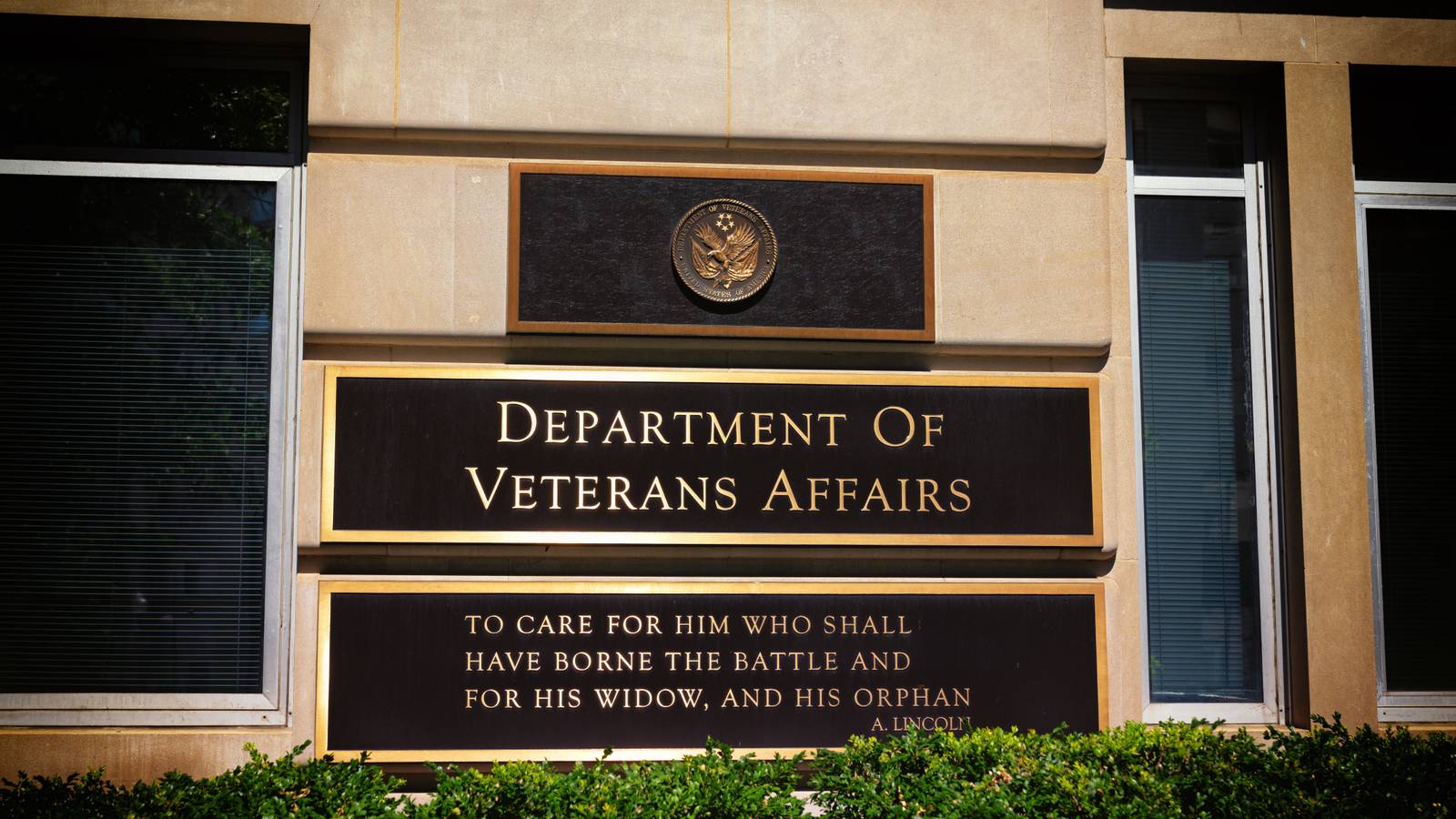
A graphic promising veterans free athletic shoes has circulated online since at least mid-June, dressed in Department of Veterans Affairs (VA) branding wrapped in the veneer of wellness language. It even carries a working agency phone number.
The VA published the image itself, stamped in red with a single word: “scam.”
“This message is not from VA,” the department said in an advisory posted June 17 out of Bedford, Mass., under the byline of public affairs officer Leanna Lynch. Scammers were using the offer to collect personal information, the notice said, warning veterans not to respond, click links or share anything personal.
What the advisory did not explain is why the counterfeit works so well. It is because the benefit is actually real.
There’s an Actual Benefit Available
The VA issues footwear to certain veterans under certain conditions.
Under VHA Directive 1173.9, dated Oct. 22, 2021, updated July 12, 2024, the Veterans Health Administration provides therapeutic footwear and in-shoe orthoses when a clinician determines they are medically necessary.
Qualifying conditions include a high foot risk score, amputation, or mismatched sizing after limb loss. Credentialed pedorthists inside the VA’s prosthetics service handle the fittings, using their speciality in the foot and lower limb to find suitable footwear.
Related programs deepen the impression that shoes are simply out there for the asking. Prevention of Amputation in Veterans Everywhere, VA’s program for patients with diabetes or vascular disease, routes at-risk veterans toward protective footwear.
A separate annual clothing allowance, authorized under 38 CFR 3.810, pays veterans whose orthopedic devices wear out their clothes. That allowance is frequently mistaken for a shoe voucher. It is nothing of the kind.
Every legitimate path does share one distinctive feature. Each begins with a clinician; however, none begins with a flyer.
Veterans service officers spotted the distinction early. In Kearney, Neb., the Buffalo County veterans service office pushed a warning through the county sheriff on the same day the VA posted its own.
The notice said the message misused the VA name and reminded veterans that medically necessary footwear exists and is obtainable only through a primary care provider. Maryland VA Health Care System circulated the alert on social media. Regional television in Maine picked it up.
Any Leads?
Nobody has said much yet. VA told Fox News that the promotion came from no official program, ruling out its prosthetic representatives, the Central Office, and Whole Health.
According to that account, the flyer tells veterans they may qualify for shoes “at no cost to you.” It displays recognizable athletic brands. It describes a redemption process that appears to involve a VA provider.
Absent from the public record is anything about the logistics involved. No agency has identified a phishing domain, a phone number, or a QR code destination. No confirmed victim has surfaced. VA characterized the intent as harvesting personal data. Characterization is not evidence, which, three weeks on, has yet to be produced.
Neither the VA nor the Federal Trade Commission has released a report on just how many veterans’ lives it might have crept into. Whether a dozen veterans saw this flyer or a hundred thousand did remain, at this writing, a crucial question gone unanswered.
Black Market for Shoes
If you set the flyer against the broader fraud economy, a second possibility emerges, one that doesn’t require stolen passwords. Free medical footwear has a market. That market has a magnetic attraction to malfeasance.
Orthotics fraud ranks among the most aggressively prosecuted health care crimes in the country. Federal investigators have documented a business model built on precisely the pitch this flyer makes. Telemarketers buy patient lists.
They call with an offer of free equipment. Names, birthdates, insurance identifiers, all of it gets harvested. Prescriptions arrive pre-filled at physicians’ offices, where physicians sign them without meeting the patient. You can assume billing follows closely after.
Losses have run into ten figures. Investigators at the Department of Health and Human Services found in 2024 that Medicare lost roughly $1.2 billion to telemarketers who pushed orthotic braces to beneficiaries, often without any meaningful clinical assessment.
One New Jersey jury convicted a marketing company owner in February 2025 for his role in a $100 million scheme along those lines, a case worked on in part by the VA’s own inspector general. Such schemes “compromise the integrity of VA’s programs and services,” VA Office of Inspector General Special Agent in Charge Christopher F. Algieri said when the Justice Department announced the verdict.
Regulators are still moving. On Feb. 25, the Centers for Medicare and Medicaid Services imposed a six-month nationwide moratorium on new Medicare enrollment for certain suppliers of durable medical equipment, prosthetics and orthotics, citing longstanding fraud.
Groundhog Day
Veterans were an obvious target before anyone drew this graphic. Military consumers filed 99,443 fraud reports with the FTC in 2024, according to the agency’s Consumer Sentinel Network Data Book, still the most recent edition available.
Reported losses reached $584 million. Median loss was $700, compared with $497 for the general public. Veterans, as well as retirees, accounted for $419 million of the total. Impostor scams led every category, generating 44,587 reports worth nearly $200 million in losses.
Survey work by AARP Research last year found the pressure is close to universal. Among veterans polled, 39 percent had been solicited by someone claiming to represent VA or another government agency. Another 28 percent believed their veteran status made them a target. More than a quarter said they had lost money to fraud, most losing over $500.
Avenues to report these transgressions do exist. VA joined eight federal partners in August 2024 to launch VSAFE.gov, which came with a companion hotline at 1-833-38V-SAFE. Veterans can also file a report at reportfraud.ftc.gov, as the June advisory instructed.
Verification is easy. Simply ask a VA primary care provider about a therapeutic footwear evaluation. Confirm any benefit through VA.gov or a local facility. Of course, look out for your brothers and sisters by warning other veterans without forwarding the image, guidance Veterans Affairs issued for good reason. Every share puts the counterfeit in front of someone who might miss the attached warning.
July also happens to be Military Consumer Month. On July 7, the Federal Trade Commission convened a session on protecting service members from fraud. Three days later, the shoe flyer was national news.
Read the full article here
21 Comments
Interesting update on VA Warns Veterans About Free Shoe Scam, Confirms Real Footwear Benefit. Curious how the grades will trend next quarter.
Interesting update on VA Warns Veterans About Free Shoe Scam, Confirms Real Footwear Benefit. Curious how the grades will trend next quarter.
Good point. Watching costs and grades closely.
Silver leverage is strong here; beta cuts both ways though.
Production mix shifting toward USA might help margins if metals stay firm.
If AISC keeps dropping, this becomes investable for me.
Exploration results look promising, but permitting will be the key risk.
The cost guidance is better than expected. If they deliver, the stock could rerate.
Good point. Watching costs and grades closely.
The cost guidance is better than expected. If they deliver, the stock could rerate.
Exploration results look promising, but permitting will be the key risk.
I like the balance sheet here—less leverage than peers.
Good point. Watching costs and grades closely.
Good point. Watching costs and grades closely.
Nice to see insider buying—usually a good signal in this space.
The cost guidance is better than expected. If they deliver, the stock could rerate.
Good point. Watching costs and grades closely.
Good point. Watching costs and grades closely.
I like the balance sheet here—less leverage than peers.
Good point. Watching costs and grades closely.
Good point. Watching costs and grades closely.