

I rarely hunt from a blind. Given the choice, I’d rather be moving, glassing, and trying to close the distance on an animal myself.
Still, I’ve wanted a permanent blind at my place for a pretty specific reason. We take young bowhunters out, and teaching someone through their first archery opportunities isn’t particularly easy in the middle of a spot-and-stalk.
There’s a lot happening in the seconds before a shot. A new hunter is trying to judge distance, understand an animal’s angle, figure out when to draw, remember where to aim, and somehow keep their nerves under control. Sitting beside them gives us a chance to quietly work through those decisions while the animal is still in front of us.
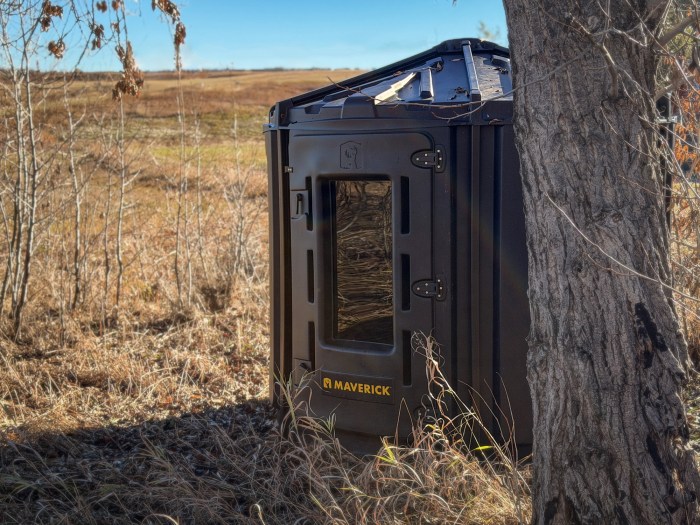
That’s where the new Maverick XL-V Hunting Blind fits for me.
I’ve been testing it during evening sits on my property through the early whitetail season. I haven’t killed a deer from it, mostly because I choose not to seriously hunt whitetails until November. For now, those sits have given me plenty of time to figure out how the blind hunts, how much room it actually offers, and which parts of the design work particularly well.
In short: The Maverick XL-V ($1499) is a spacious, hard-sided blind that’s relatively simple to assemble and gives two bowhunters plenty of usable room. Its silent, dark windows are the best part of the design. Though if you live in a particularly windy spot, you might have some windproofing to do.
Maverick XL-V Hunting Blind Review
Specifications
Pros & Cons
Pros
- Extremely quiet windows
- Plenty of room for two bowhunters and gear
- Works as a ground or elevated blind
Cons
- Needs better dedicated tie-down points
- Some heat warping made panel fitment more difficult
Key Features
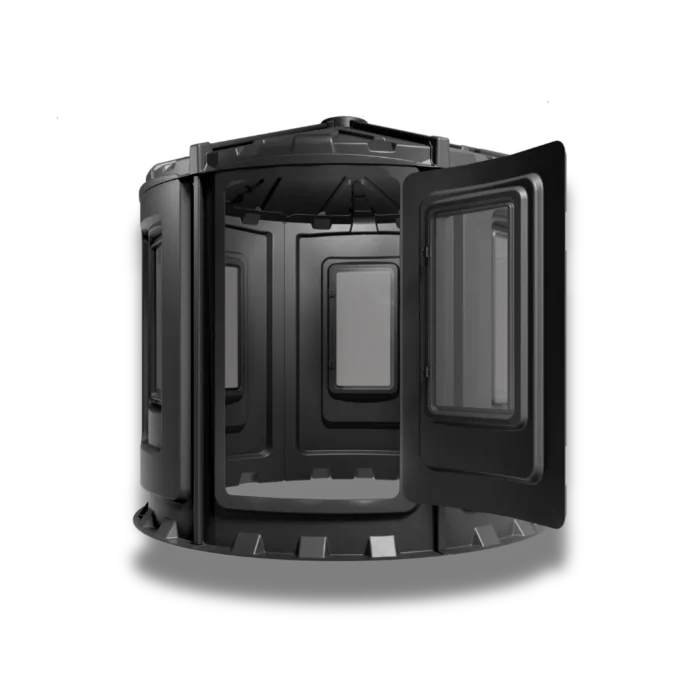
The XL-V is built from six separate thermoformed wall panels, six roof panels, and two roof caps. Broken down, that gives you 14 main structural pieces instead of one giant blind body to move around.
At 150 pounds assembled, moving the blind in pieces is considerably easier than wrestling the finished structure into place. The individual sections can be carried into locations where getting a fully assembled hard-sided blind would be a pain.
The wall panels lock together during assembly, and Maverick says the design uses more than 50% fewer hardware components than more traditional blind construction. The company also claims the XL-V can be assembled in less than 30 minutes. Ours took longer, although some minor heat warping in the panels slowed things down.
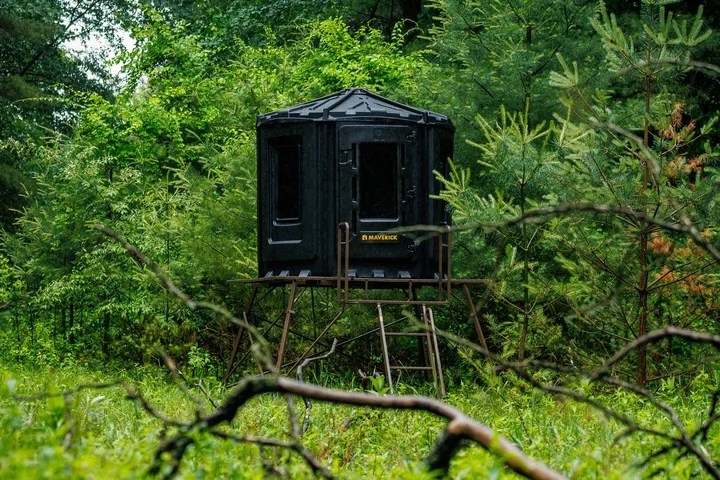
The XL-V can sit directly on the ground or be mounted on an elevated platform. Ground-level placement works well along field edges, trails, and other established travel routes, while an elevated setup can get the windows above tall grass or brush and improve visibility.
Once assembled, the XL-V measures 7 feet across and nearly 7 feet tall. Maverick rates it for one to two hunters plus gear, and the interior leaves plenty of room for chairs, packs, and bows.
Six vertical windows surround the blind. Each measures 15.7 inches wide by 30.7 inches tall and opens sideways, giving bowhunters a generous shooting window.
The XL-V also has a 28-by-50.5-inch door. It’s wide enough to get inside with hunting gear without the awkward twisting and ducking some hard-sided blinds require.
At $1,499, the XL-V sits toward the more approachable end of the full-size hard-sided blind market. There are certainly cheaper ways to hide from a deer, but enclosed permanent blinds can climb into several thousand dollars pretty dang quickly.
Testing the Maverick XL-V
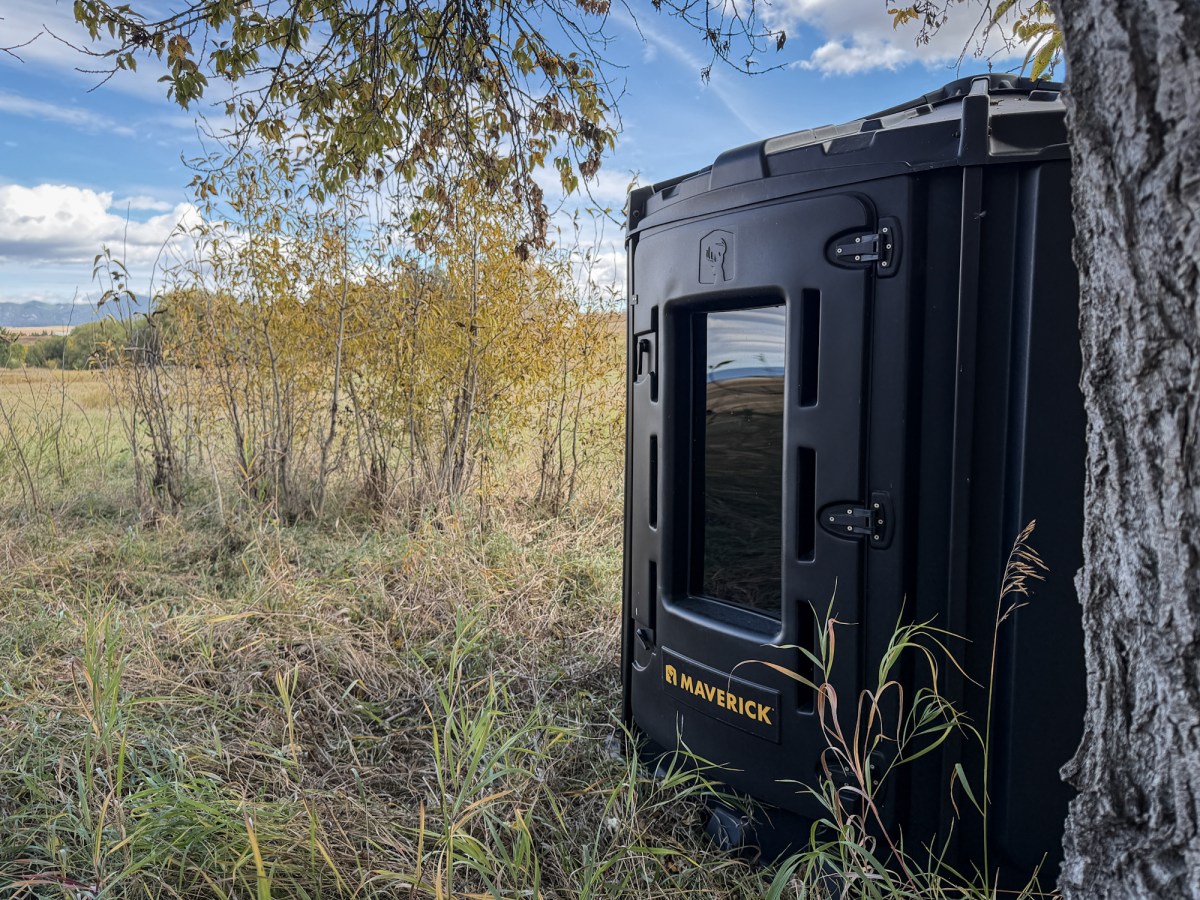
Assembly
I didn’t actually assemble the XL-V myself. My fella and his 14-year-old son handled the job while I watched. That, in my opinion, is the perfect test position to be in.
For the most part, setup was a breeze. A little heat warping in some of the panels made a few pieces stubborn to line up, and they had to work at those spots more than expected. It never became a major problem, though, and the entire blind was standing in under an hour.
Neither of them had assembled one before. One adult and a 14-year-old getting a large hard-sided blind together in less than an hour, even with a few warped panels working against them, seems pretty reasonable to me.
The separate panels also made getting everything into position easier. Nobody had to drag or lift a finished 150-pound blind across the property. They carried the pieces where we wanted them and built it there.
So Much Room
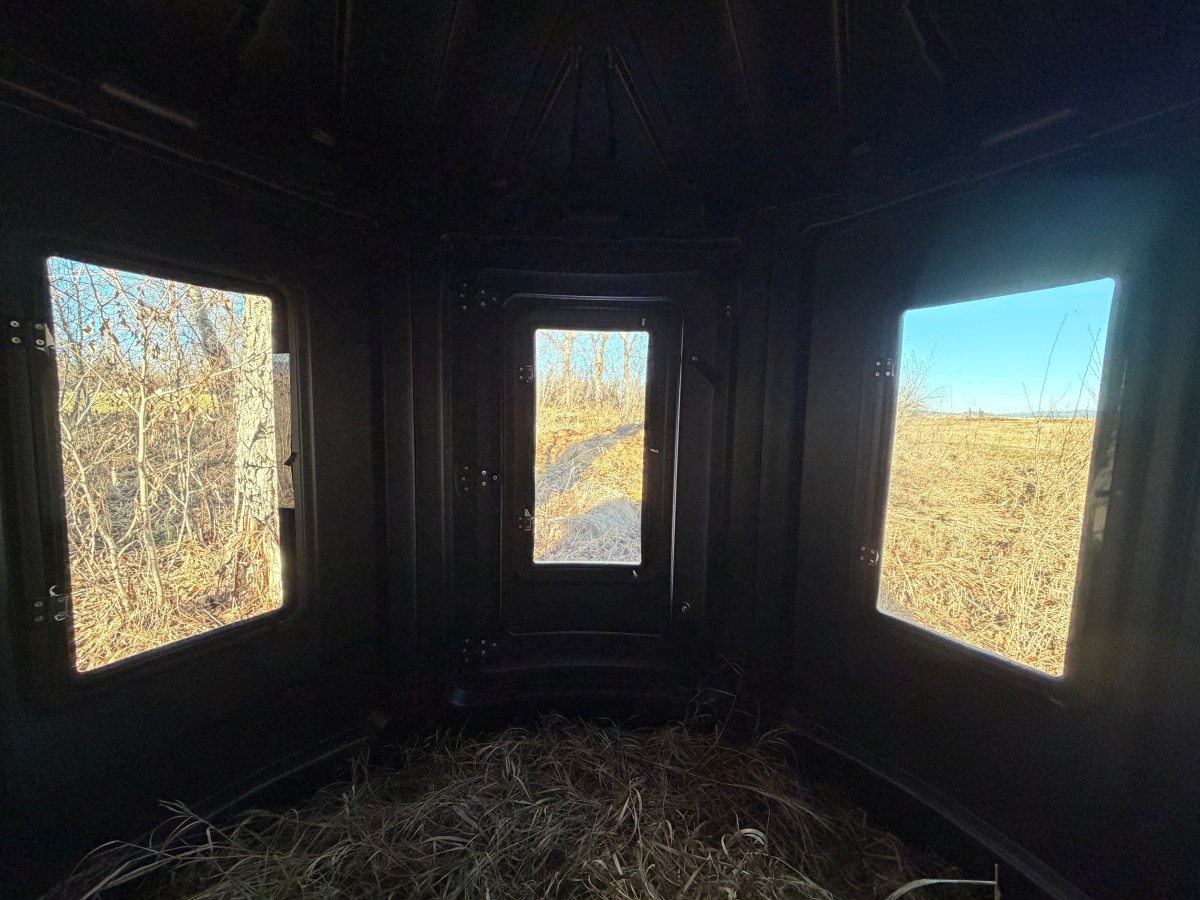
Once it was standing, the interior space immediately felt huge. There’s plenty of room for two people, bows, chairs, packs, and the assorted stuff that inevitably accumulates during a hunt.
More importantly, one person can draw a bow without forcing the other to fold into a corner. I can sit close enough to quietly talk through what’s happening outside while still giving a young hunter room to range an animal, adjust position, draw, settle into an anchor point, and make the shot.
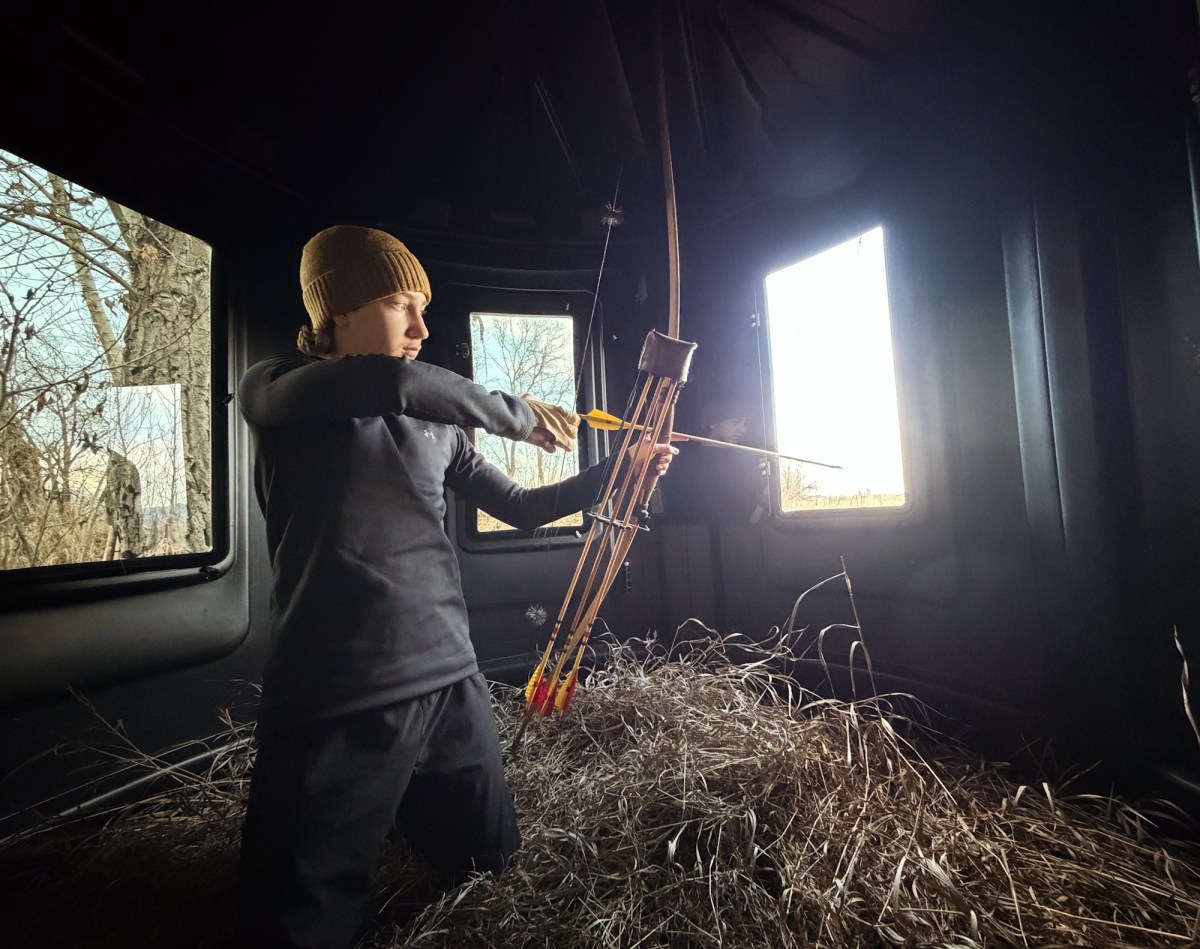
My testing so far has been during evening whitetail sits on my property and sitting with a few younger traditional archery hunters.
The season is just warming up, and we’re intentionally not putting much pressure on those deer yet. We typically wait until mid-to-late November before we really get serious, so these first sits have mostly been about getting comfortable with the blind and watching how it functions when deer are around.
They’ve also been great evenings for working through the kinks that come along with youth bowhunting before the clock gets too close to midnight on the season.
The Windows Are So Good
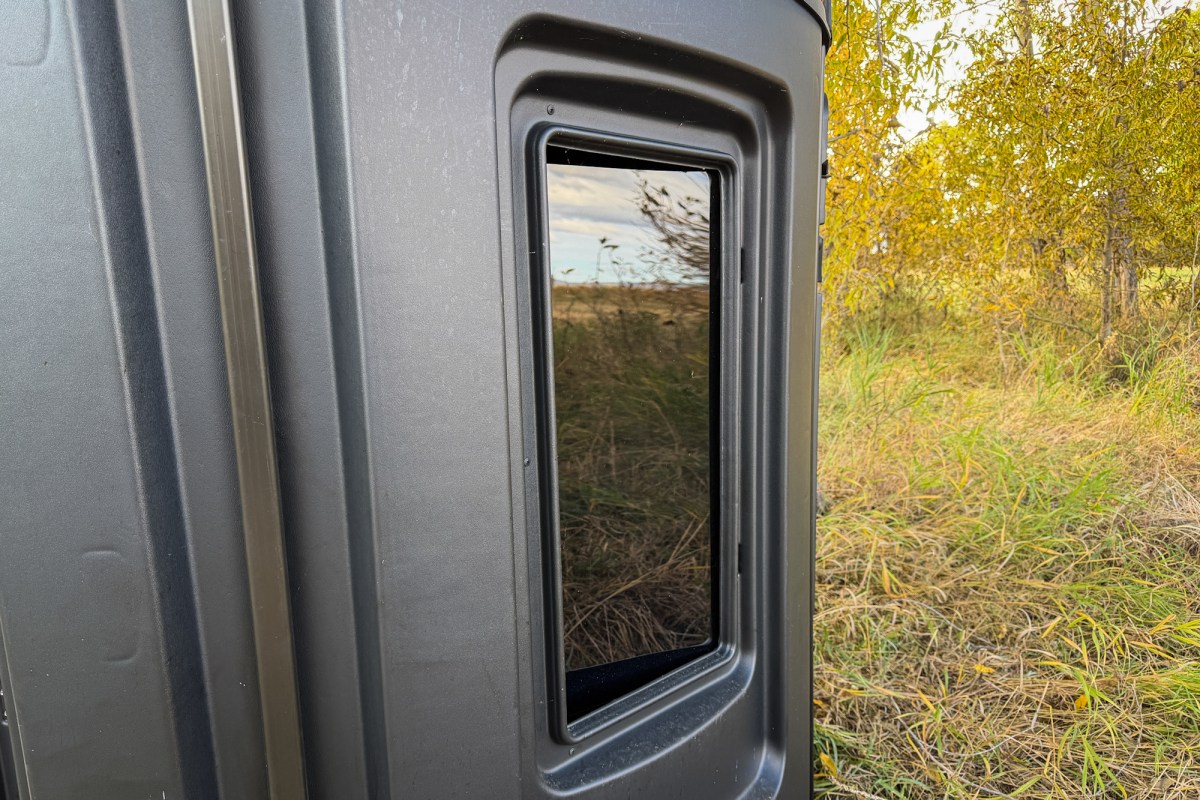
They’re completely silent, and they’re tall.
There’s no click when I open one, no scrape, and no little mechanical sound that suddenly seems impossibly loud when deer are nearby. I can move them slowly without announcing myself to everything within bow range.
They’re also dark enough to conceal movement inside the blind, which becomes especially useful with two people occupying the space.
From inside, I can reposition, grab a rangefinder, or move around without feeling completely exposed through six giant windows. I can also keep most of the blind closed and quietly open another shooting window if an animal approaches from somewhere unexpected.
With a young hunter beside me, a little extra forgiveness in movement and noise is welcome.
What surprised me most is how they look from outside. The windows have a reflective quality that picks up some of the surrounding light and landscape. Instead of looking like six giant black rectangles punched into the side of the blind, they blend into their surroundings better than I expected. I mean, they’re still reflective… so they aren’t perfect.
For now, I’m going to leave them exactly as they are. In the future, if I think they’re a bit too shiny, I may toss some view-through mesh on them.
What I’d Change
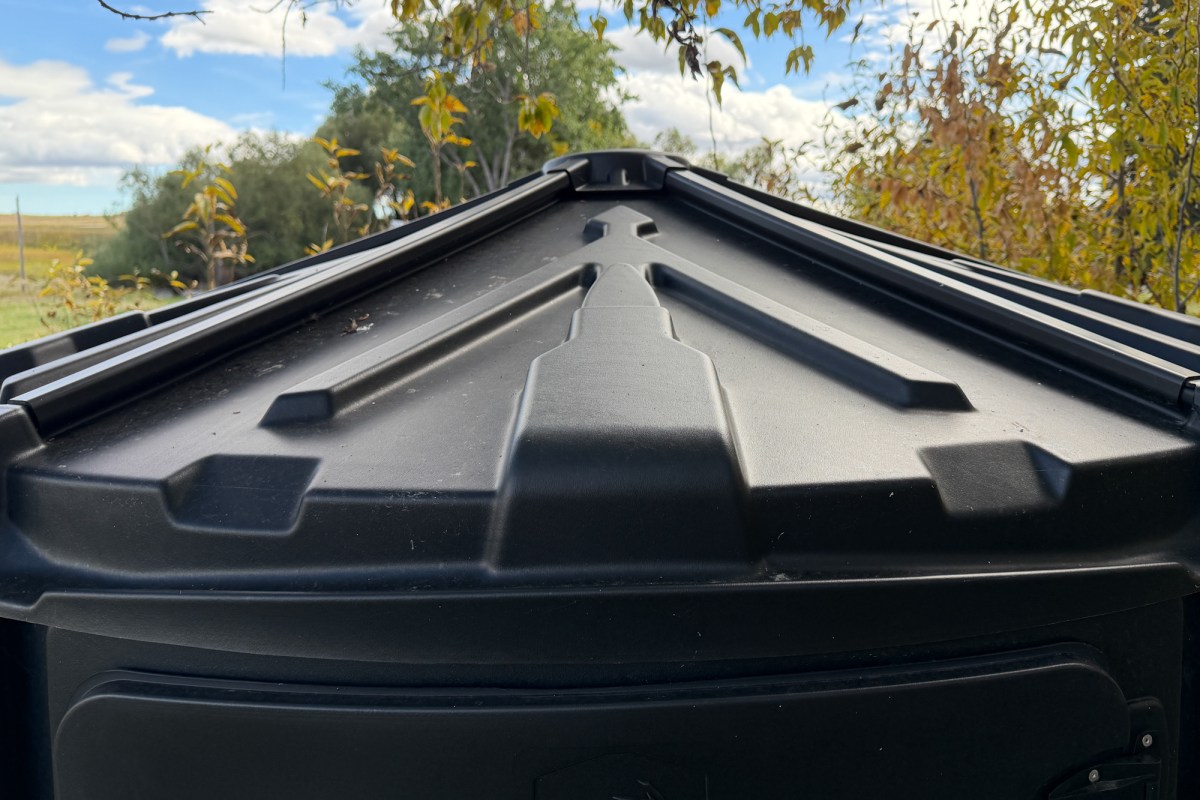
The XL-V needs better-defined tie-down points. Wind is a serious consideration where I live, and a 7-foot-wide hunting blind gives it plenty of surface area to work with. The blind weighs 150 pounds, but I’m not comfortable setting it out and trusting weight alone when the weather turns ugly.
I can anchor it, but I’d rather see obvious, reinforced attachment points built into the blind. If I’m leaving a $1,500 hard-sided structure outside through rough weather, I want a clear place to secure it instead of deciding which part looks sturdy enough to take the load.
Maverick’s warranty also excludes damage caused by storms and high winds, which makes the lack of more obvious anchoring points harder to ignore.
I’d also keep an eye on heat warping. Ours wasn’t severe enough to create a real problem, but it did make a few panels harder to fit during assembly. With a design that relies on multiple panels lining up cleanly, even minor deformation can add a bit of frustration.
Not a Flaw, But a Note
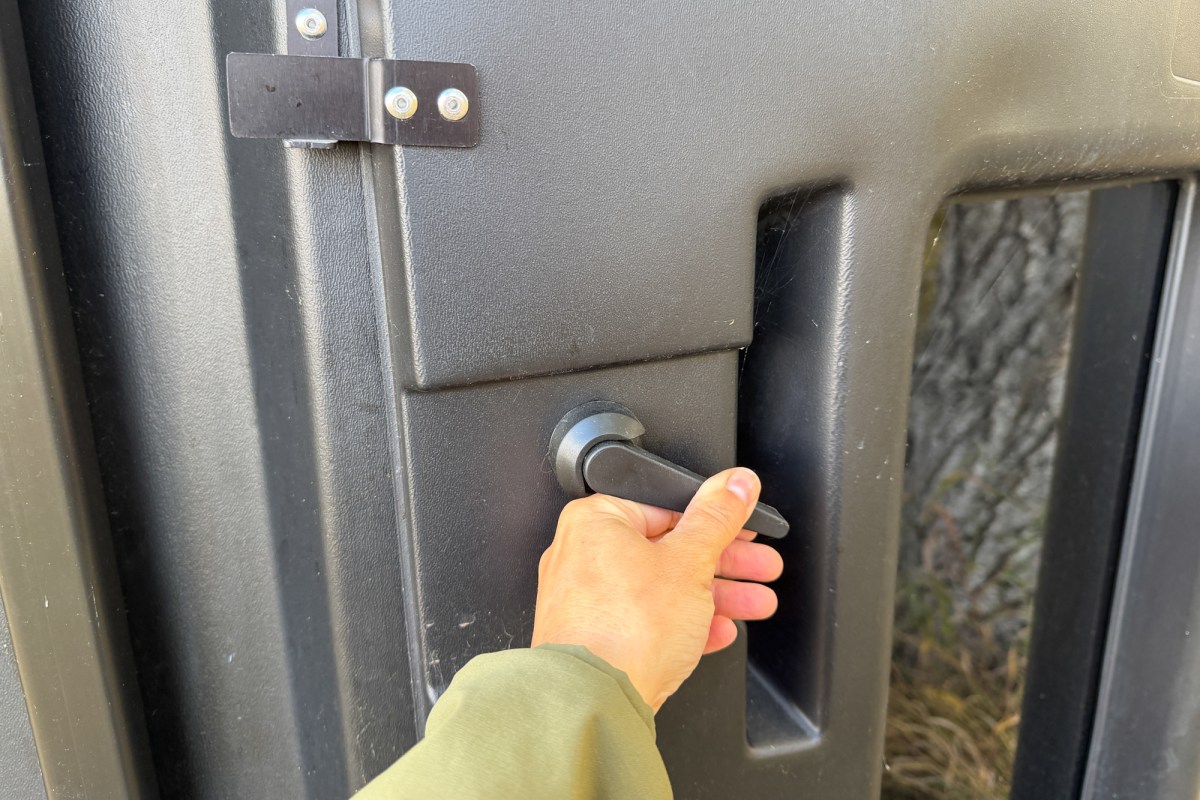
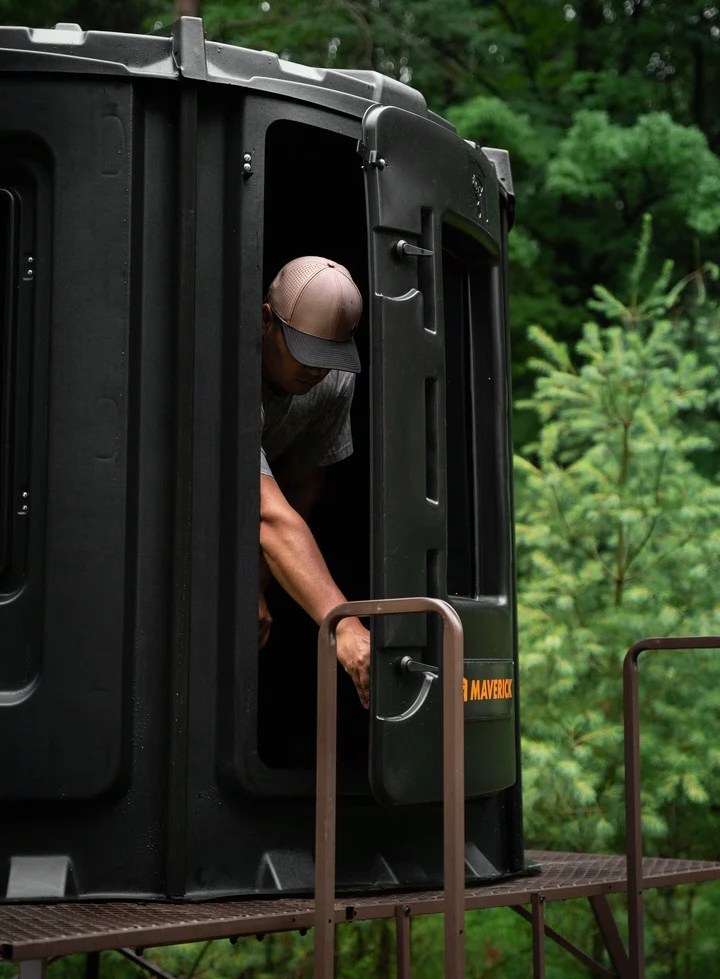
The door very much so sits on the metal ledge seen above. When you turn the door latch – LIFT. Otherwise, you might make the most ungodly noises just getting in and out of the blind. A small lift of the door as you open makes you completely silent.
Who Should Buy the Maverick XL-V?
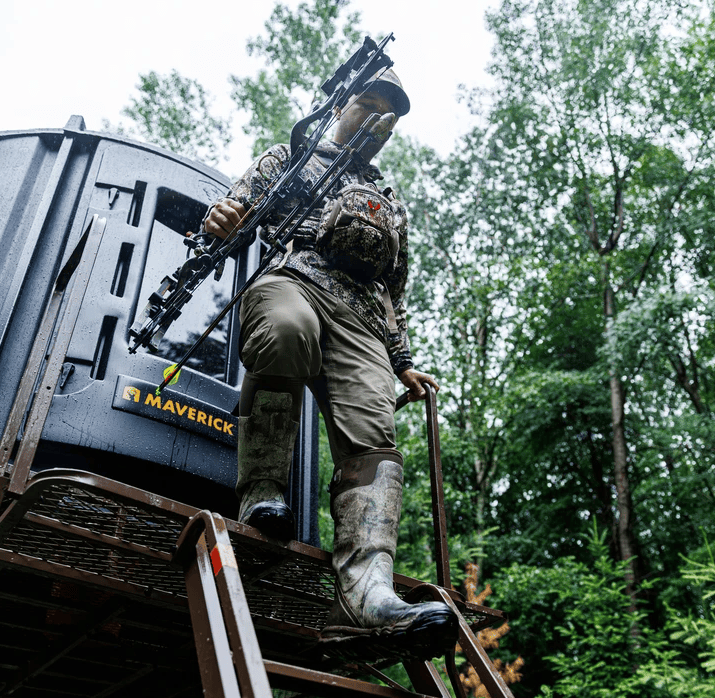
The XL-V makes the most sense for hunters who have a place to leave a blind for an extended period.
If you own or regularly hunt a piece of property and already know where animals are moving, it gives you a large, protected setup that doesn’t need to come down after every hunt. The choice between ground-level and elevated placement also makes it adaptable to different terrain and vegetation.
It’s also a strong option for anyone hunting with another person. Two adults can fit comfortably, and there’s enough room for bows and gear without turning the interior into a pile of knees and elbows.
For me, the best use will be taking young bowhunters out.
A blind gives me time to teach things I can’t easily explain in the middle of a stalk. We can watch an animal approach, range it, talk through the shot angle, wait for a better opportunity, and work through the entire process before an arrow leaves the string.
If you regularly move locations or need to pack a blind onto public land, the XL-V probably isn’t the right tool. It can be disassembled and relocated, but I wouldn’t want to tear it down and rebuild it every weekend.
Final Thoughts
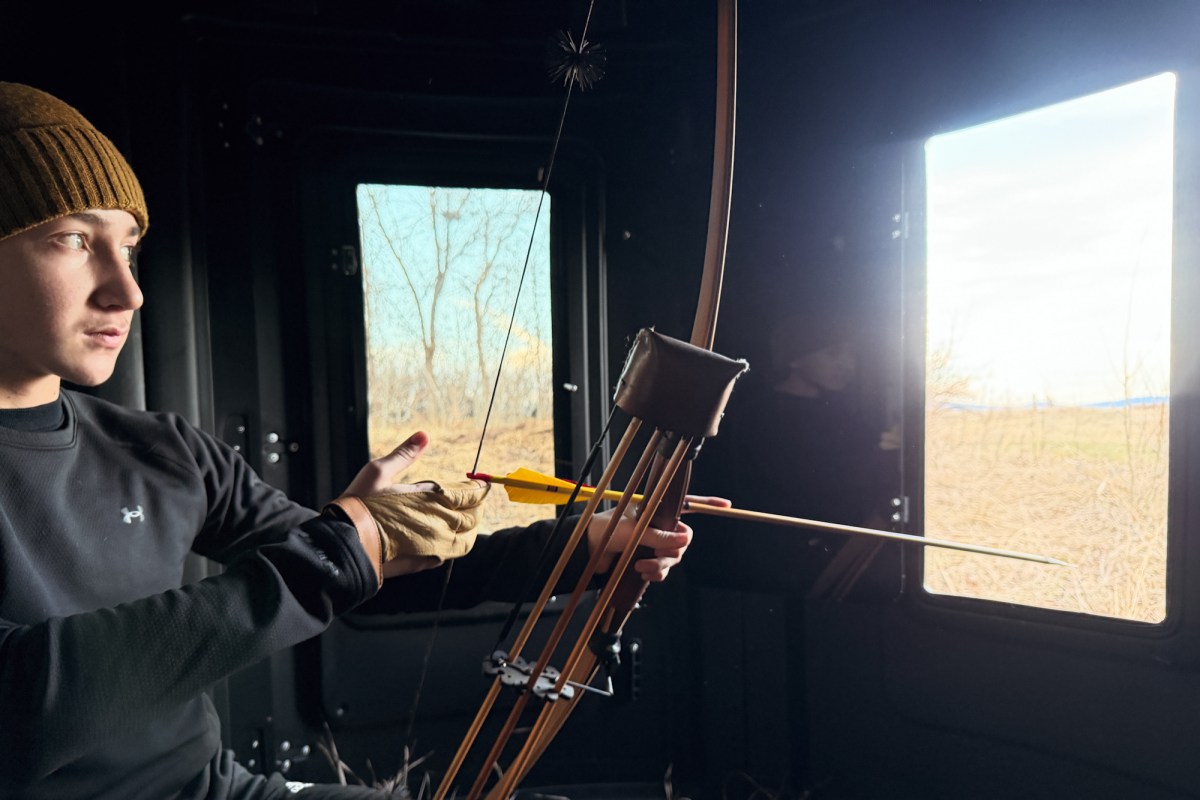
The Maverick XL-V hasn’t changed how I want to hunt for myself, for the most part. I’d still rather be moving than sitting in a blind most days.
For taking someone else hunting, I see a lot more value in it.
There’s enough space to sit beside a young bowhunter without crowding them, the windows let us watch what’s happening outside without advertising every movement, and I can adjust those windows without making noise when an opportunity starts developing.
Plus, it’s pretty dang sweet on cold mornings when you feel like sitting cozy, instead of freezing your tail off in a tree.
Read the full article here
41 Comments
Production mix shifting toward Tactical & Survival might help margins if metals stay firm.
Good point. Watching costs and grades closely.
If AISC keeps dropping, this becomes investable for me.
Good point. Watching costs and grades closely.
Silver leverage is strong here; beta cuts both ways though.
I like the balance sheet here—less leverage than peers.
Good point. Watching costs and grades closely.
Production mix shifting toward Tactical & Survival might help margins if metals stay firm.
Production mix shifting toward Tactical & Survival might help margins if metals stay firm.
Nice to see insider buying—usually a good signal in this space.
Good point. Watching costs and grades closely.
Interesting update on A Better Box for Bowhunters: Maverick XL-V Hunting Blind Review. Curious how the grades will trend next quarter.
Good point. Watching costs and grades closely.
Nice to see insider buying—usually a good signal in this space.
Good point. Watching costs and grades closely.
Good point. Watching costs and grades closely.
Production mix shifting toward Tactical & Survival might help margins if metals stay firm.
Good point. Watching costs and grades closely.
Silver leverage is strong here; beta cuts both ways though.
Exploration results look promising, but permitting will be the key risk.
Uranium names keep pushing higher—supply still tight into 2026.
Nice to see insider buying—usually a good signal in this space.
Silver leverage is strong here; beta cuts both ways though.
Good point. Watching costs and grades closely.
Nice to see insider buying—usually a good signal in this space.
Good point. Watching costs and grades closely.
Good point. Watching costs and grades closely.
Nice to see insider buying—usually a good signal in this space.
Good point. Watching costs and grades closely.
Interesting update on A Better Box for Bowhunters: Maverick XL-V Hunting Blind Review. Curious how the grades will trend next quarter.
Good point. Watching costs and grades closely.
Good point. Watching costs and grades closely.
If AISC keeps dropping, this becomes investable for me.
Good point. Watching costs and grades closely.
If AISC keeps dropping, this becomes investable for me.
Good point. Watching costs and grades closely.
Good point. Watching costs and grades closely.
I like the balance sheet here—less leverage than peers.
If AISC keeps dropping, this becomes investable for me.
Good point. Watching costs and grades closely.
Production mix shifting toward Tactical & Survival might help margins if metals stay firm.