

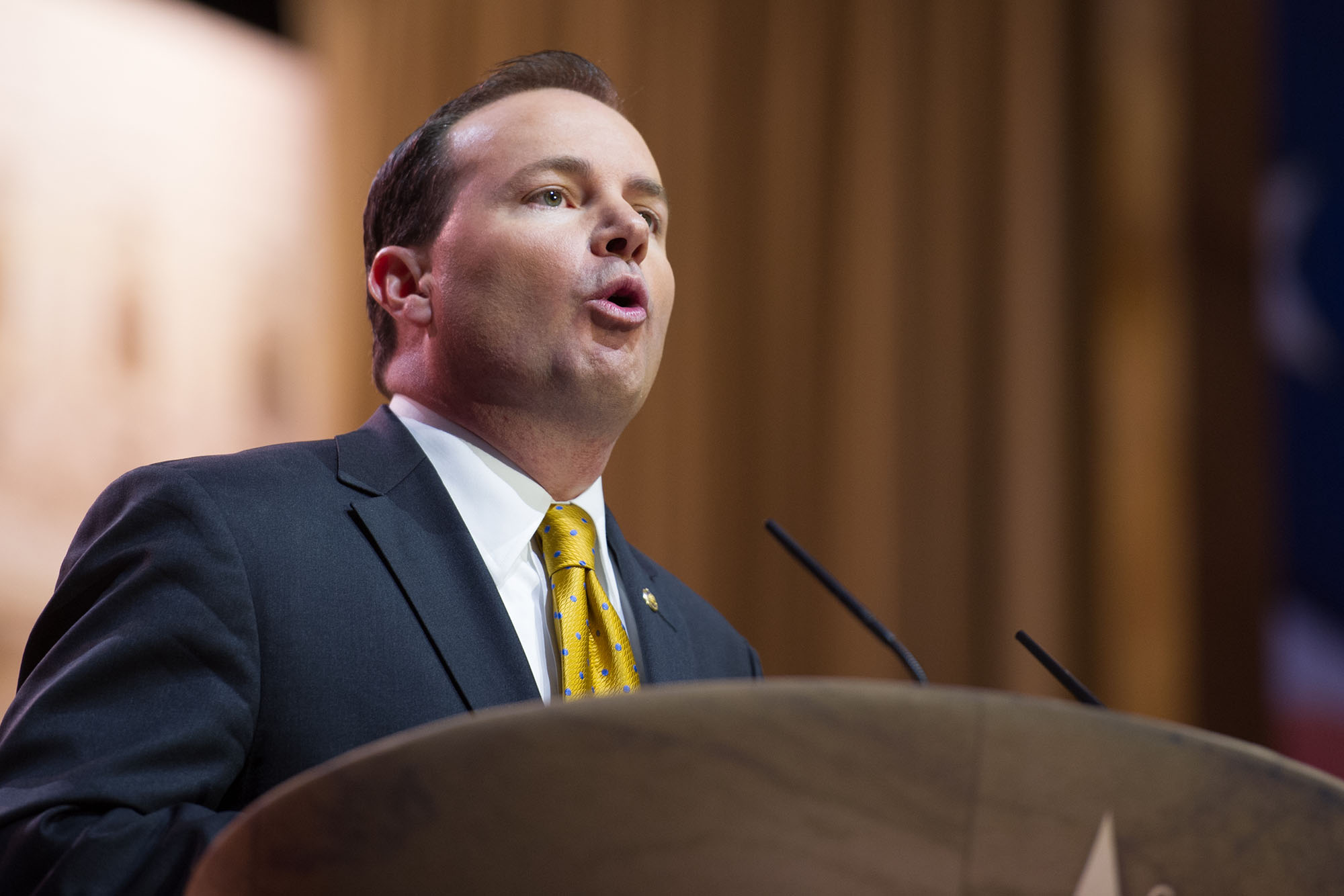
U.S. Sen. Mike Lee has spent years arguing that selling or transferring federal public land could help address housing costs in the West. Then on June 22, he voted against a bipartisan housing package aimed at expanding supply and improving affordability.
The Senate passed the 21st Century ROAD to Housing Act by a vote of 85-5. Lee, a Utah Republican, joined Sens. Ron Johnson of Wisconsin, Rand Paul of Kentucky, Rick Scott of Florida, and Tommy Tuberville of Alabama in voting no.
The bill is not a public lands bill. It is a housing package aimed at cutting red tape, increasing housing supply, lowering costs, and updating federal housing programs. The final version also includes language limiting purchases of single-family homes by large institutional investors.
The House passed the bill the next day, 358-32.
Lee’s office defended his vote in a June 22 statement, calling the bill “flawed” and saying it would expand federal involvement in the housing market. Lee said Congress should reduce the federal government’s role in housing policy, cut federal spending, and continue deportations of people in the country illegally.
Lee’s Public Lands Housing Pitch
In June 2025, Lee released Senate Energy and Natural Resources Committee reconciliation text, which included a mandatory public land sale provision. The committee framed the plan as a way to “unlock underutilized federal land for affordable housing.”
The proposal quickly drew opposition from conservation groups, hunters, anglers, and some Western Republicans. The original version would have required sales of land managed by the Bureau of Land Management and the Forest Service. After the Senate parliamentarian ruled against the proposal under reconciliation rules, Lee narrowed it. He later pulled the land-sale language from the package.
Lee has also promoted the HOUSES Act, a separate bill that would allow states or local governments to buy certain BLM parcels at a reduced price to address housing shortages. His office says the bill would require at least 85% of acquired land to be used for residential purposes and related community needs, with a density requirement of at least four homes per acre.
Housing and conservation advocates have pushed back on broad public-land disposal as a housing fix, especially when proposals lack enforceable affordability requirements. A coalition of housing, conservation, and community groups released the Shared Ground framework in April, calling for infill development, zoning reform, community-based development, and strict affordability guardrails for any targeted use of public land.
The Housing Bill Also Hit a White House Wall
The president initially called on Congress to pass the housing package. But, after it cleared both chambers, he canceled a planned signing ceremony and refused to sign it until lawmakers moved on the SAVE America Act, a separate voting bill.
A few days later, Trump downplayed the housing bill, calling it “a big yawn,” and said he had not decided whether he would sign it. The bill can still become law without his signature if he doesn’t sign or veto it within 10 days, excluding Sundays.
Why Public Land Users Should Care
Lee’s no vote didn’t stop the housing bill. It passed both chambers with overwhelming bipartisan support: the Senate 85-5 and the House 358-32.
But it does put his public-lands pitch in a clear light. He’s argued that federal land sales would help ease housing costs in the West. When Congress put a bipartisan housing bill in front of him, without a public-land selloff attached, he voted no.
Housing costs are hammering many Western communities. But selling public land is permanent, and it affects hunting and fishing access, wildlife habitat, grazing, recreation, and the local economies tied to those places. Analysts have overwhelmingly shown that the sale of public land will do nothing to solve the housing crisis.
When Lee was given the opportunity to move the needle on the housing crisis Americans are facing, he made his priorities clear. Turns out, the housing part of his values was negotiable. The public-land selloff was not.
Read the full article here
33 Comments
Silver leverage is strong here; beta cuts both ways though.
Good point. Watching costs and grades closely.
Good point. Watching costs and grades closely.
The cost guidance is better than expected. If they deliver, the stock could rerate.
Exploration results look promising, but permitting will be the key risk.
Good point. Watching costs and grades closely.
I like the balance sheet here—less leverage than peers.
Good point. Watching costs and grades closely.
Good point. Watching costs and grades closely.
The cost guidance is better than expected. If they deliver, the stock could rerate.
Silver leverage is strong here; beta cuts both ways though.
Good point. Watching costs and grades closely.
Good point. Watching costs and grades closely.
If AISC keeps dropping, this becomes investable for me.
The cost guidance is better than expected. If they deliver, the stock could rerate.
Good point. Watching costs and grades closely.
Good point. Watching costs and grades closely.
If AISC keeps dropping, this becomes investable for me.
Good point. Watching costs and grades closely.
I like the balance sheet here—less leverage than peers.
If AISC keeps dropping, this becomes investable for me.
Good point. Watching costs and grades closely.
Good point. Watching costs and grades closely.
Uranium names keep pushing higher—supply still tight into 2026.
Good point. Watching costs and grades closely.
Good point. Watching costs and grades closely.
Silver leverage is strong here; beta cuts both ways though.
Good point. Watching costs and grades closely.
Good point. Watching costs and grades closely.
Uranium names keep pushing higher—supply still tight into 2026.
Good point. Watching costs and grades closely.
The cost guidance is better than expected. If they deliver, the stock could rerate.
Good point. Watching costs and grades closely.