

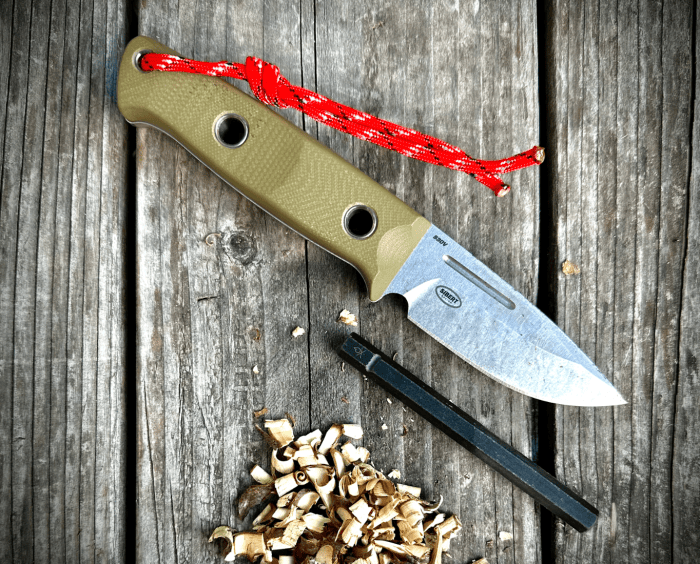
You might be asking yourself, “What is bushcraft, and why are there specific knives for it?” Well, according to Dave Canterbury, in his book “Bushcraft 101,” bushcraft is defined as “wilderness skills and the practice of surviving and thriving in the natural world.”
The knives in this guide are designed to help you do just that — we made sure of it. Lead tester Nick LeFort spent a full year carving wood, sparking campfires, and performing everyday chores with these blades in camp, on hikes, and at home to determine which were the best of the best.
After we made our final cuts, the Benchmade Mini Bushcrafter reigned supreme thanks to its precision, durability, and construction quality. The Morakniv Companion Spark took home the title of our favorite budget pick, with an impressive edge and fire-starting ability for less than $50.
If you’re looking for heftier blades that are designed for life-or-death situations, fear not — we have a separate guide for the best survival knives.
Editor’s Note: We updated this guide on November 17, 2026 with in-depth review formats, a new product comparison chart, and current availability and prices.
The Best Bushcraft Knives of 2026
Best Overall Bushcraft Knife
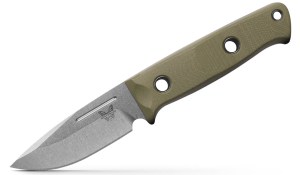
Benchmade Mini Bushcrafter
Best Budget Bushcraft Knife
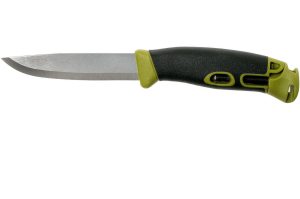
Morakniv Companion Spark
Best Bushcraft Folding Knife
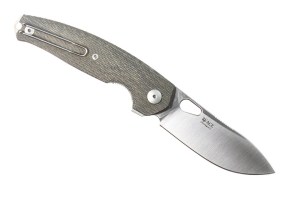
GiantMouse Jagt
Best Multi-Function Bushcraft Knife
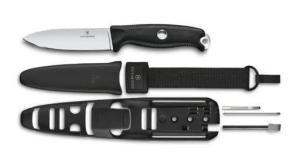
Victorinox Venture Pro
Best Bushcraft-and-Survival Knife Combo
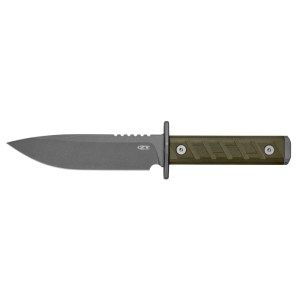
Zero Tolerance 0006
Lightest Bushcraft Knife
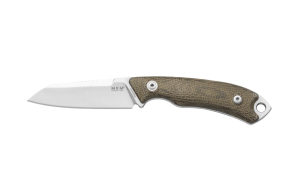
MKM Knives DCA Pocket Tango 1
Most Durable Folding Bushcraft Knife
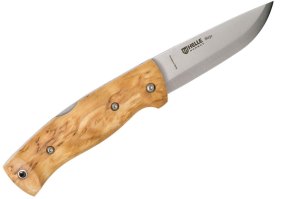
Helle Bleja
See more picks
Benchmade Mini Bushcrafter
-

-
(photo/Nick LeFort)
-
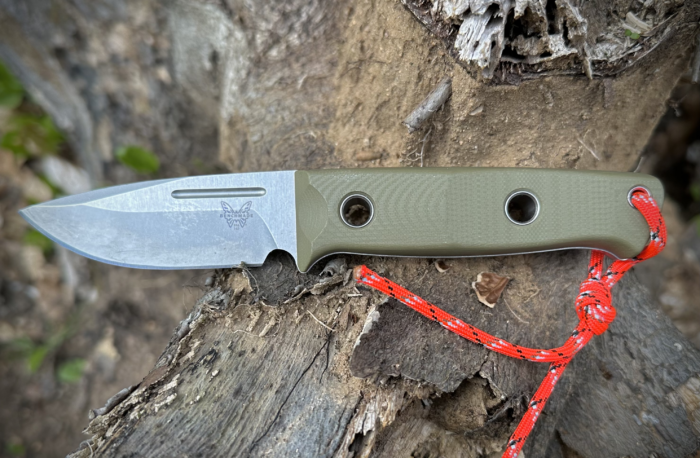
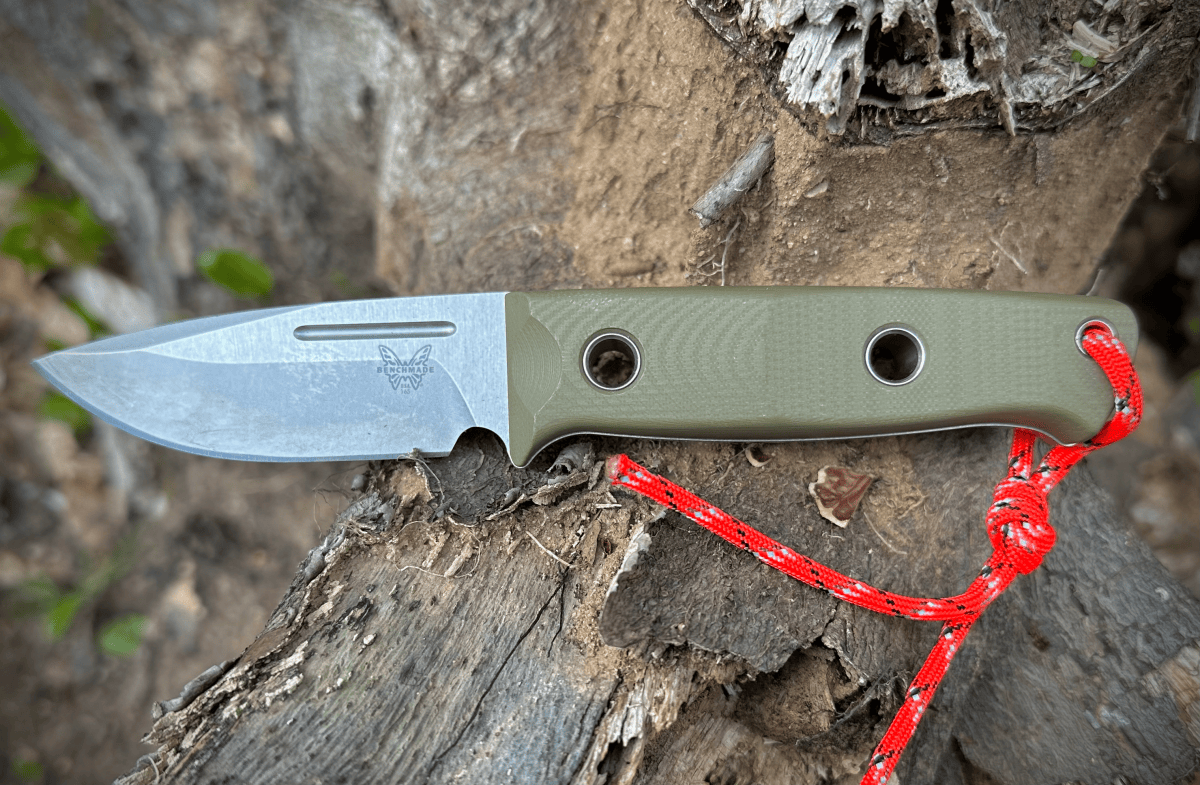
The Benchmade Mini Bushcrafter is a premium blade that's worth every penny; (Photo/Nick LeFort)


Specifications
Pros & Cons
Pros
- Optimal hand control and fit
- Stout build
- Drainage hole in sheath (uncommon in leather)
Cons
- Knife will far outlast the sheath
- Sheath is right-hand only
Bottom Line: Don’t be thrown off by this knife’s size: This portable and handy blade packs in more performance than much larger competitors.
When Bushmaster released this smaller version of the iconic 162 Bushcrafter, the Mini Bushcrafter ($300) immediately made waves. The surge in attention was understandable: This is a compact, easy-to-control knife that does everything a full-sized blade can. It easily bridges the gap between everyday carry and backcountry utility.
The Tech: The Mini Bushcrafter is built with S30V stainless steel and is flat-ground. While we can appreciate a good Scandi grind, the higher flat grind on this knife is more useful overall. That’s partly due to the false edge at the top of the blade, which allows it to puncture effectively. Additionally, knife steel — like S30V — has been inspected and perfected to the point where it could be argued that it’s better than any carbon steel out there.
What We Like: The Mini Bushcrafter is short and stout, making it both durable and precise. It sits well in your hand and gives you a heightened level of control for cutting and carving — so much so, in fact, that lead tester Nick LeFort found himself enraptured with the simple task of using the knife to make fur sticks and tinder piles. The handle tapers in all directions, which improves ergonomics and helps prevent premature cramping. It’s not a folding knife, so if you want something even more packable, check out the GiantMouse Jagt.
What We Don’t: The sheath that comes with this knife is not on par with the rest of the Mini Bushcrafter’s construction quality. Plus, it’s right-handed only.
Should You Buy It? For $300, you want a knife to do everything it’s expected to. The Mini Bushcrafter exceeds those demands and will never feel too heavy in your pack or pocket.
Morakniv Companion Spark

Specifications
Pros & Cons
Pros
- Ferro rod in bottom of knife
- You can’t beat the price
- Adequate for simple bushcraft tasks
Cons
- Blade's spine is broken, making it harder to make a fire
Bottom Line: Paying just slightly more for a versatile knife is worth it. That describes this model, which adds a fire starter to its bargain-bin build.
This high-value knife is the handier cousin to the Morakniv Companion ($22), which is found in hardware stores and upscale gas stations across the country. But the Morakniv Companion Spark ($48) is even more full-featured and still costs less than $50.
The Tech: The Companion Spark is made from Sandvik 12C27 stainless steel. This stuff has been around seemingly forever, and can be found in a majority of Morakniv knives. Aside from being corrosion-resistant, it maintains a fantastic edge, enhanced by the blade’s Scandi grind. Rounding out the design is the rubberized handle, which provides excellent grip in all conditions.
What We Like: The main difference between the Companion and the Companion Spark is that the latter adds a fire starter that stores in the butt of the knife. This is a consumable piece that will eventually need to be replaced, but Morakniv sells replacements when the time comes. Either way, it provides an affordable solution for fire prep, as well as the myriad of other things you can do with the Companion Spark itself. Plus, a fun fact about the color-matched sheath that comes with the knife: It can hang from a button on your shirt or coat, or clip to your belt.
What We Don’t: This is a simple, utilitarian knife — it doesn’t have the craftsmanship you’ll find in premium blades like the Benchmade Mini Bushcrafter or the MKM Knives DCA Pocket Tango 1.
Should You Buy It? If you can wrangle up the extra $18, there’s no reason you shouldn’t make the leap from the Morakniv Companion to the Companion Spark. It’ll cut what you need, within reason, and it can also help start a fire if you need one.
GiantMouse Jagt
-
-
The Micarta version of the Pontius; (photo/GiantMouse)
-
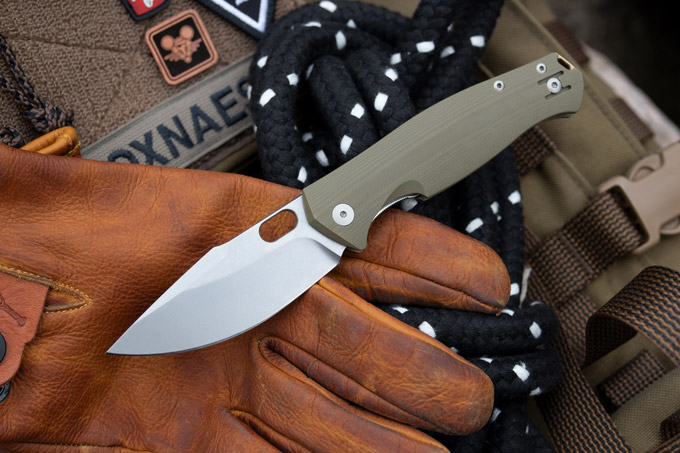
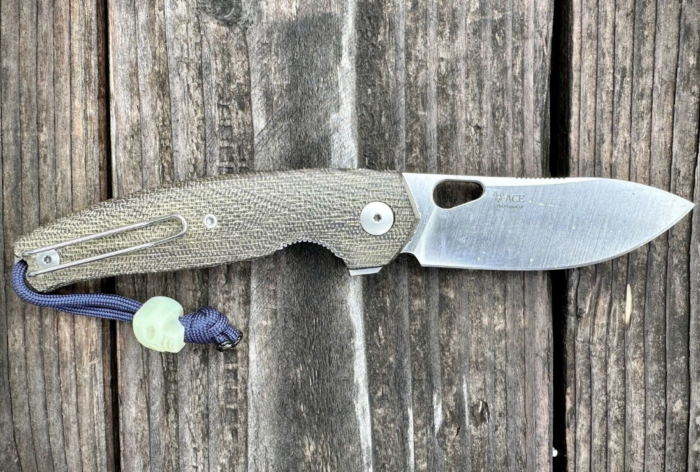
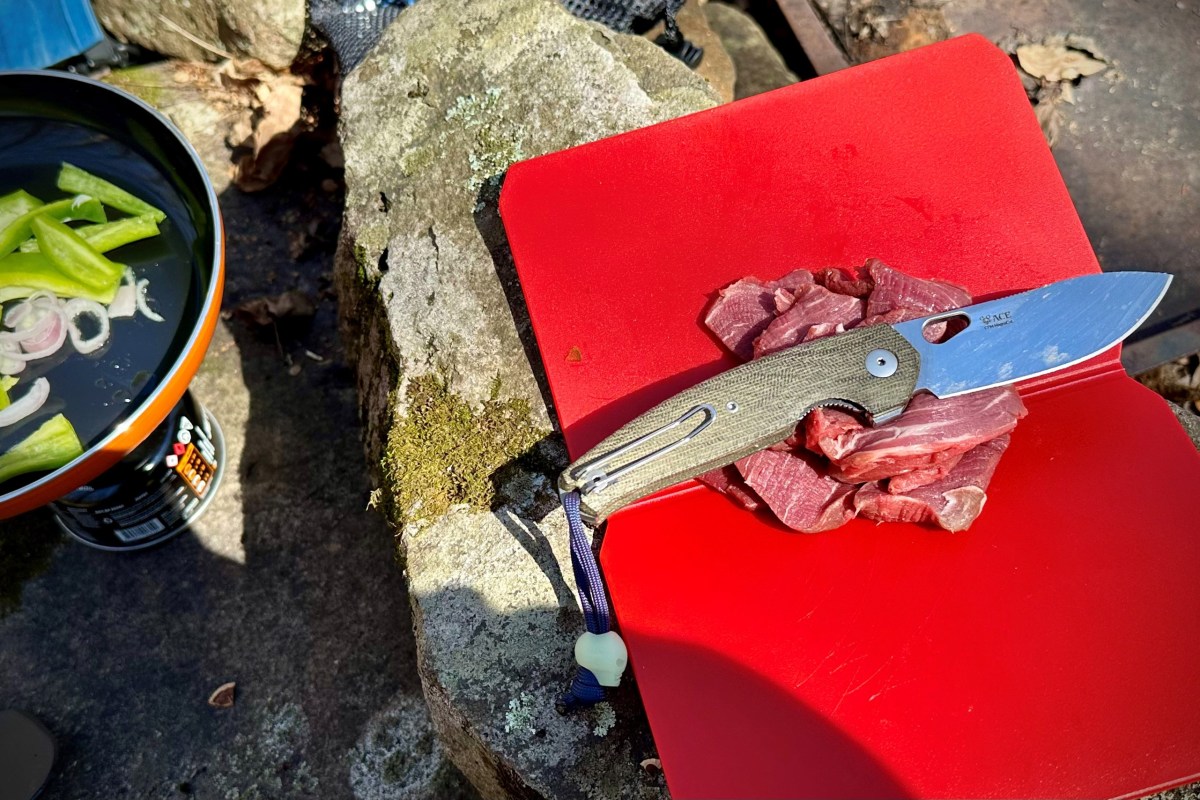
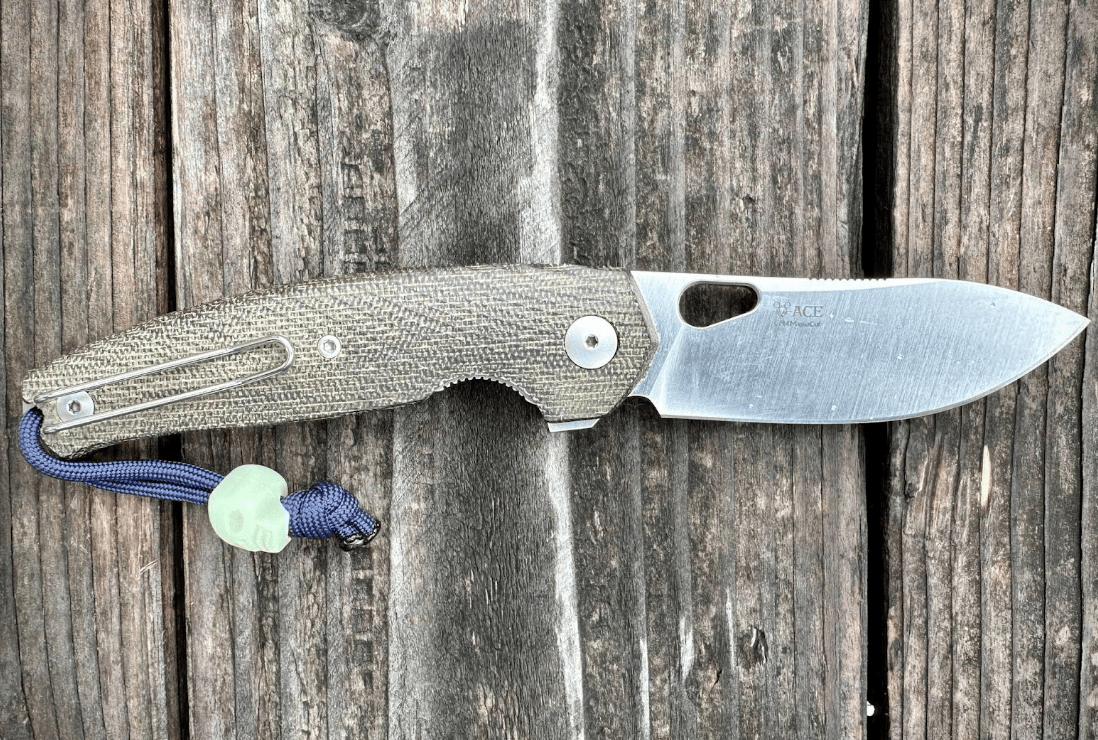
$215 is a steal for a reliable bushcraft knife like the GiantMouse ACE Jagt; (photo/Nick LeFort)
-
(Photo/Nick LeFort)
-
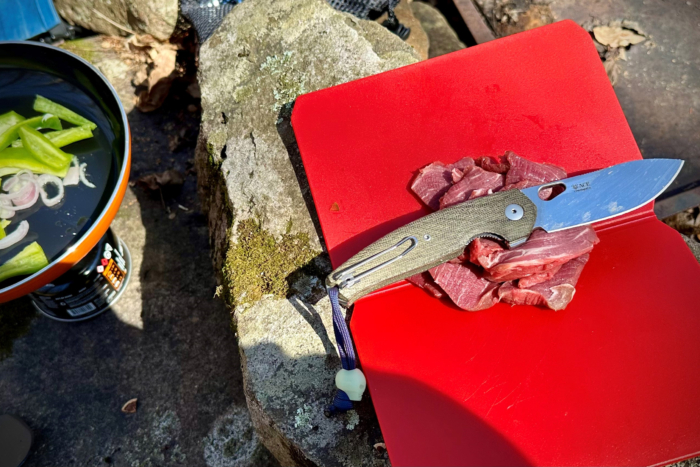
Cooking with the folding GiantMouse Jagt;(Photo/Nick LeFort)


Specifications
Pros & Cons
Pros
- Nessmuk blade design
- Rippled Micarta looks great
- Fantastic hand feel
- Well-balanced
Cons
- Rounded edges minimize your firestarting options
- Spine jimping could be a stretch for smaller hands
Bottom Line: This knife’s heritage blade design makes it incredibly versatile for a variety of field tasks. It also folds up for easy carrying.
Folding bushcraft knives are far and few between. So when we saw the GiantMouse Jagt ($215), it piqued our interest — and when we experienced its performance, we knew that it had to go in this guide.
The Tech: The Jagt is made from MagnaCut steel, which, as far as we’re concerned, is hard to beat for a bushcraft blade. It also has a historically significant blade shape — the “Nessmuk Knife” popularized by George Washington Sears, a 19th-century writer and explorer of the Adirondacks — and comes with a pocket clip.
What We Like: The Nessmuk design allows the Jagt to process meat, fruit, and vegetables precisely and easily. It’s also great for carving and shaping, which comes in handy when considering some facets of bushcraft. The Jagt is small enough for precision tasks but large enough to process kindling. Lead tester Nick LeFort also found it great for foraging, as the shape of the handle, in conjunction with the blade, allowed him to hold it so he could reach under a morel cap or fiddlehead stem and make a good, clean cut.
What We Don’t: The Nessmuk blade’s rounded design means its fire-starting ability lags behind that of other knives, such as the kitted-out Victorinox Venture Pro.
Should You Buy It? The Jagt can do many more things than what’s expected of a bushcraft knife, and that’s the appeal. It’s compact enough for backpacking, and worth the price for a superlight, super-useful blade.
Victorinox Venture Pro
-
-
(Photo/Nick LeFort)
-
(Photo/Nick LeFort)
-
(Photo>/Nick LeFort)


Specifications
Pros & Cons
Pros
- Multiple carry options
- Has a fire-making blow tube
- Excellent ferro rod action
Cons
- Do we really need a ballpoint pen?
Read Review: Swiss Army Fixed Blade Multitool? Vitorinox Venture Pro Knife Review
Bottom Line: As much of a multitool as it is a knife, this is about as close to an all-in-one solution as you can get in a bushcraft blade.
Victorinox decided they wanted to throw their hat into the bushcraft ring, and we’re wicked happy they did. The brand’s Venture Pro ($115) is not only a great full-tang bushcraft blade but also has onboard accessories that make it a viable multitool.
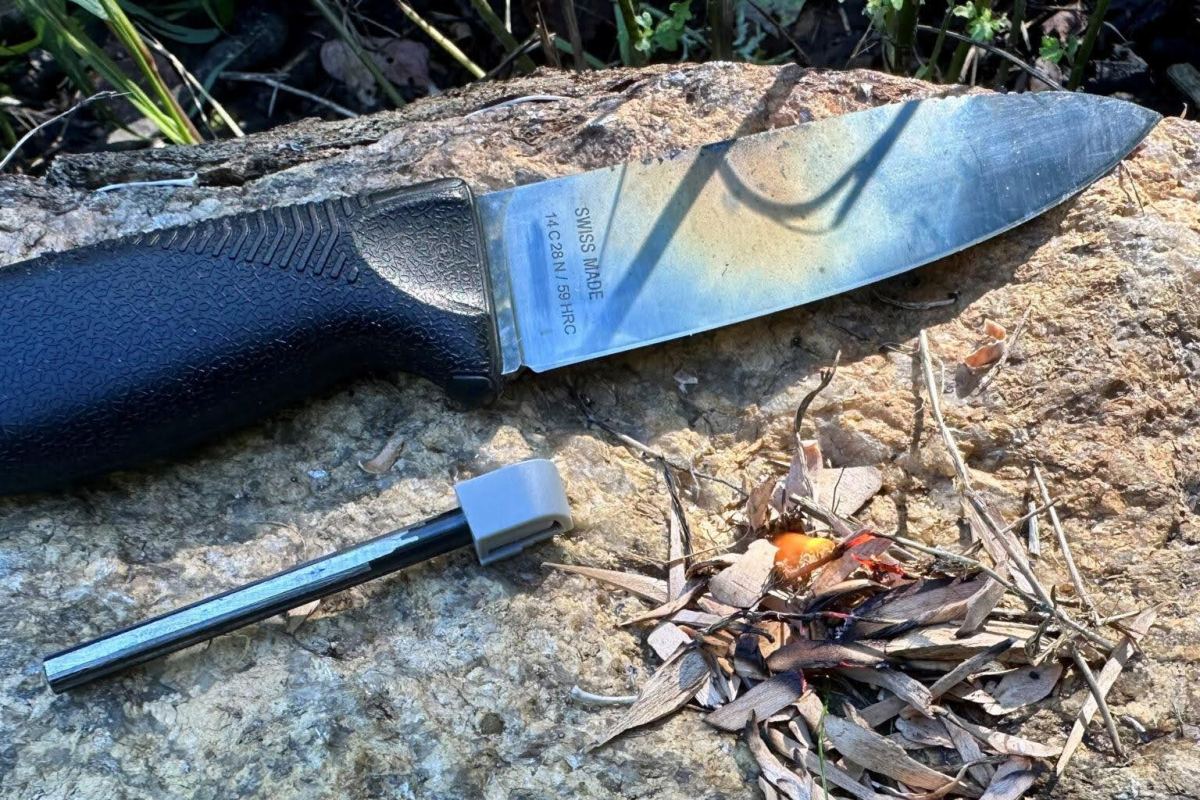
The Tech: Victorinox really did its homework with the Venture Pro. It’s got a bow drill cup in the handle, and its sheath can be used as a fire-making blow tube. Made from 14C28N stainless steel, the blade on the Venture Pro won’t rust, is tough, and is super sharp. Victorinox chose not to break the edges on the spine, so the included ferro rod can throw an impressive shower of sparks with a single pass. Other accessories like the 1⁄4 hex bit holder and tweezers open up your options to do a heck of a lot more.
What We Like: The ferro rod is extremely effective, with lead tester Nick LeFort noting he wanted to stop and admire the shower of sparks it produced when he used it on the unbroken spine. This blade is also devilishly sharp; LeFort cleanly sliced a paper towel holder after throwing it into the air. It might not reach the heights of the GiantMouse Jagt, but the Venture Pro is much easier to produce a spark with.
What We Don’t: We’re not really sure why Victorinox added a ballpoint pen to the mix. It’s not really a hindrance, but it doesn’t quite fit in.
Should You Buy It? If you want your bushcraft knife to be much more than a knife, the Venture Pro is the tool for you. Its functionality becomes even more attractive when you consider its reasonable price.
Zero Tolerance 0006
-
-
(Photo/Nick LeFort)
-
(Photo/Nick LeFort)


Specifications
Pros & Cons
Pros
- Burly enough for intense cutting tasks
- Handle scales make for a great grip
- Sleek, despite its length
Cons
- Extremely expensive
- Not as portable as other knives
Read Review: Zero Tolerance 0006 Review: The Bushcraft Blade Rambo Would Want
Bottom Line: This is a large knife for tackling involved tasks in camp. It’s plenty durable, but make sure you’re prepared to carry its heft.
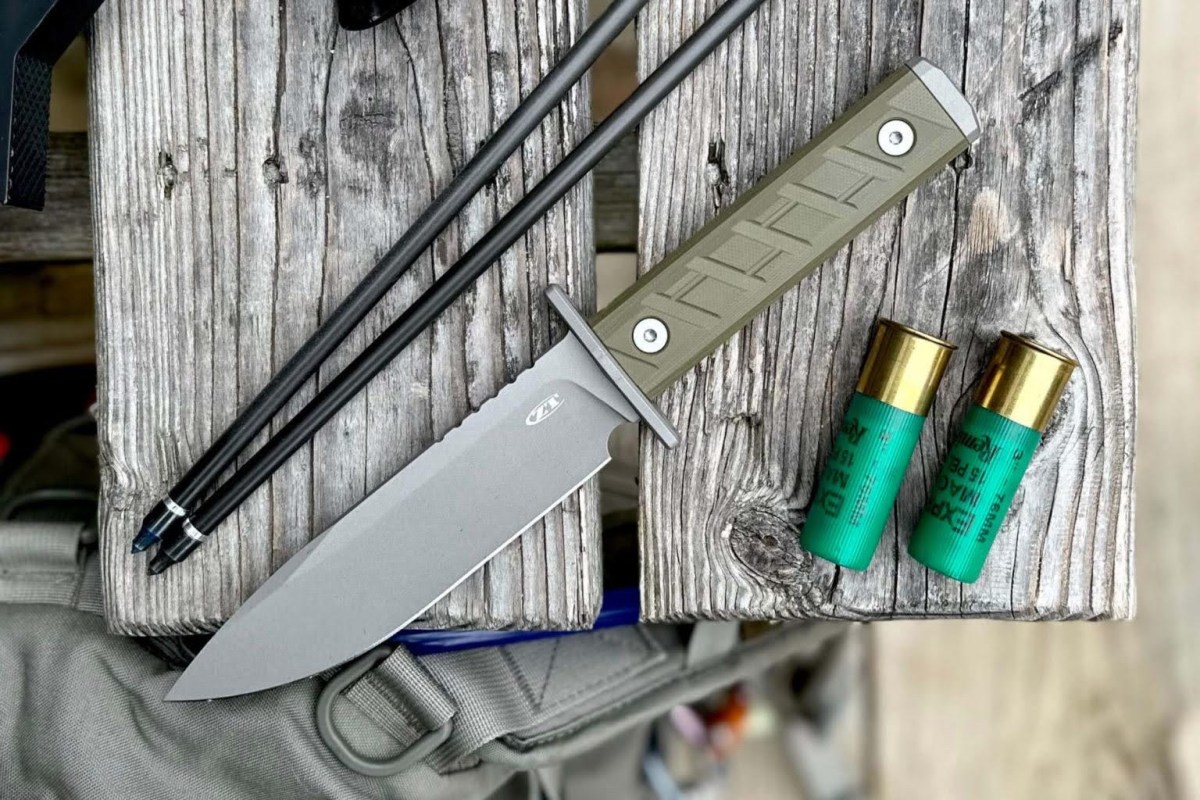
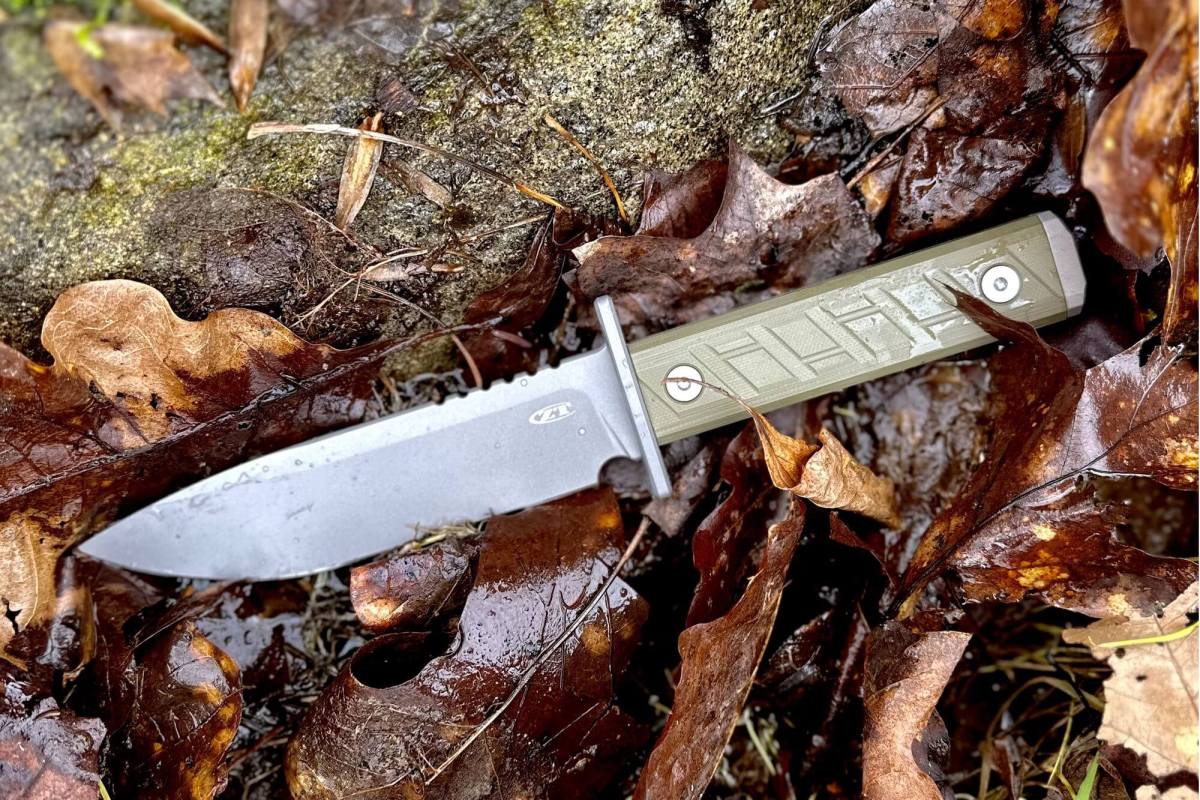
The Zero Tolerance 0006 ($430) is a premium knife built for rugged use. It’s easier to wield than it looks, though, and you’ll be glad you have it if you’re faced with a lot of paring, cutting, and camp prep that might make you leave the hatchet at home.
The Tech: The CPM 3V steel is wicked tough, but — unlike almost every other knife on this list — it’s not stainless. To combat that, Zero Tolerance Cerakoted the steel, making it even more durable and impervious to rust. When you combine that with the rugged, thick, patterned G10 handle scales, the 0006 becomes formidable in every situation it faces.
What We Like: The one surprising thing about this knife is its weight, or lack thereof. For a full-tang knife of this length to weigh only 7.4 ounces is a real treat. At this weight, the 0006 can maneuver more fluidly. So, where the 0006 is built to do demanding tasks like splitting kindling, it’s also able to cut and slice with precision. Lead tester Nick LeFort admitted that he perhaps had a little too much fun testing the Zero Tolerance 0006, which he found makes a great throwing knife as well as a survival and bushcraft knife. It’s great around camp for various reasons, from food prep to fire prep, but the steel butt on the 0006 makes it perfect for hammering in tent stakes as well.
What We Don’t: It may be effective, but this knife is flat-out expensive. It costs $130 more than the Benchmade Mini Bushcrafter, the second most expensive knife in this guide and a much more portable option.
Should You Buy It? If you’re in the market for a real-deal fixed-blade knife that can stand up to wilderness use, you’ll get your money’s worth with the 0006. The initial cost is steep, but it will be a reliable partner for camp chores for years to come.
MKM Knives DCA Pocket Tango 1
-
-
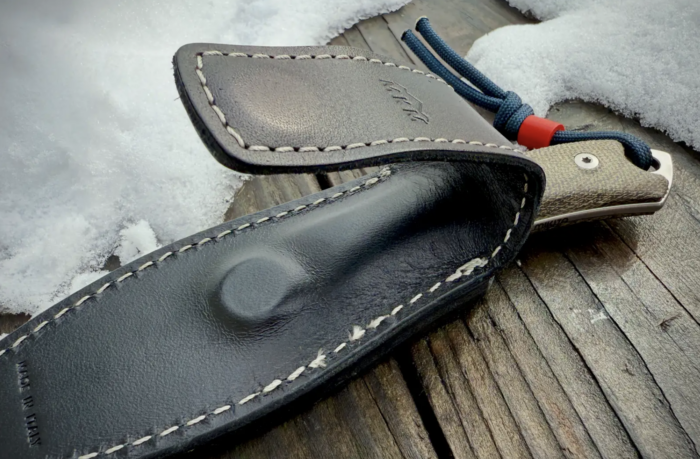
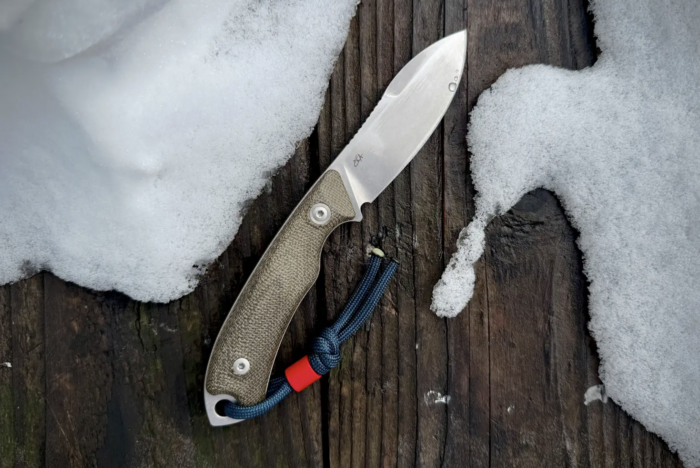
The MKM Knives DCA Knives Pocket Tango 1 delivers high performance for its ultralight weigt; (Photo/Nick LeFort)
-
-


Specifications
Pros & Cons
Pros
- Nessmuk-style MagnaCut steel
- Incredible size-to-weight ratio
- Ambidextrous magnetic leather sheath
Cons
- May be undersized for large hands
Bottom Line: The phrase “pocket knife” conjures a very specific type of blade — but this knife brings far more than pure packability. It’s light, sharp, and precise.
Pocket fixed-blade knives are a growing trend that have found their way into bushcraft. Though they’re not intended to replace your belt knife, a model like the ultralight MKM Knives DCA Pocket Tango 1 ($318) could easily do so. Especially when you consider the Nessmuk version, which is uber-efficient for shaving, slicing, cutting, and carving.
The Tech: Made from MagnaCut steel and featuring Micarta handle scales, the DCA Pocket Tango was designed by David C. Andersen of KnifeCenter fame. DCA is a bit of a knife encyclopedia, so it’s really nice to see him apply his vast knowledge to knife design. This one is small and slight (only 2.5 ounces) and feels like a scalpel in your hand. Along with advanced ergonomics, this sets the tone for your ability to perform precision tasks without shying away from more demanding ones.
What We Like: Lead tester Nick LeFort found that the versatile Pocket Tango graduated from bushcraft tool to EDC carry within a day of its arrival. He noted that using it felt like performing surgery because of its precision. One of the Pocket Tango’s unique innovations is the ambidextrous leather sheath. It uses a magnetic closure on the belt flap to keep it attached to your belt or in your pocket. In testing, we had zero issues with the sheath detaching, and we also enjoyed how easy it was to remove from our belt and pocket when needed.
What We Don’t: If you get into shaving down wood or slicing up meat, it wouldn’t hurt to bring a pocketknife sharpener for touch-ups. Knives like this work best when they’re razor sharp, which might not be high on the priority list if you’re going minimalist. For something that requires a bit less care, you could opt for the Zero Tolerance 0006.
Should You Buy It? If you’ve been considering a small fixed-blade pocket knife, the DCA Pocket Tango should be your starting point. It’s small enough to forget about — until you start using it for every small task.
Helle Bleja
-
-
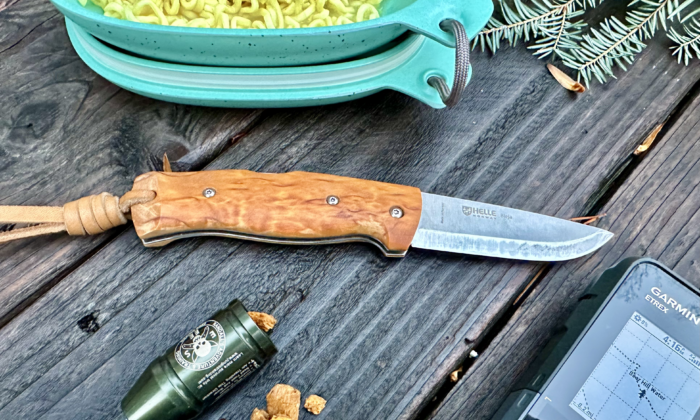
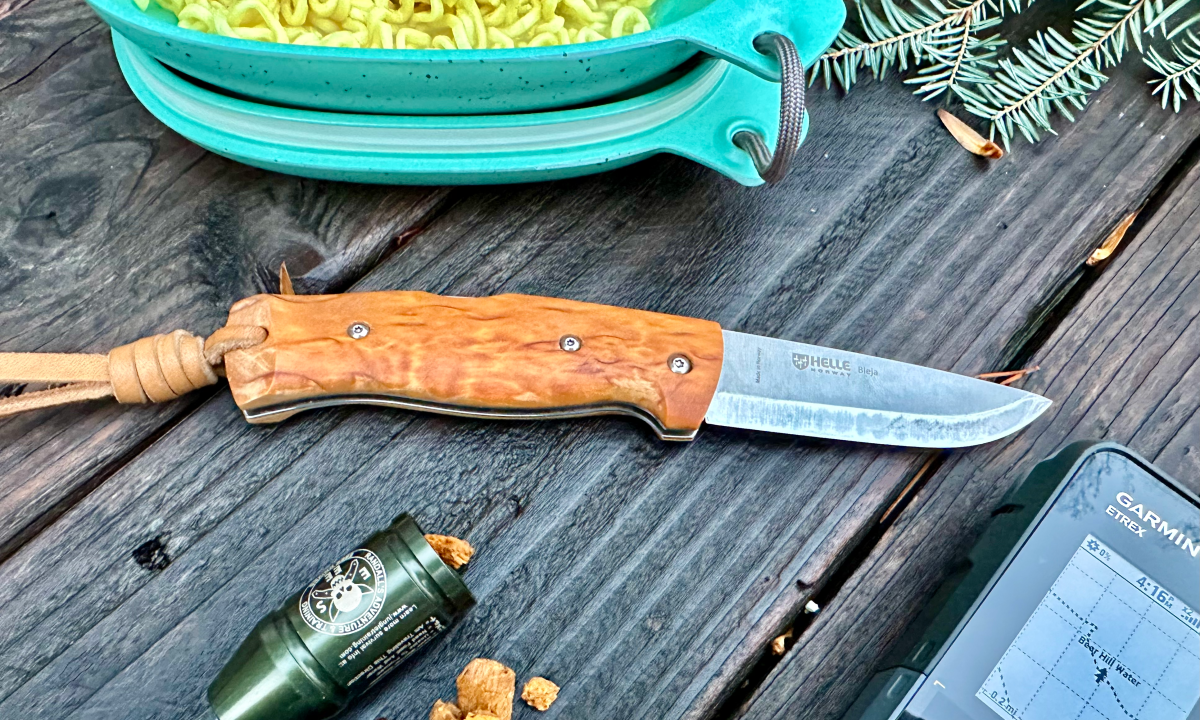
The Helle Bleja is a folding knife with an excellent locking mechanism; (Photo/Nick LeFort)
-
-



Specifications
Pros & Cons
Pros
- Uses Helle’s proprietary stainless steel
- Stable for a folding knife
- Curly birch handles scales
- Scandi grind
Cons
- It’s a bit heavy
- No pocket clip
Bottom Line: Folding knives aren’t usually our first choice for bushcraft work, but this is one model that challenges that notion. It’s sturdy and well-made.
There aren’t a lot of folding bushcraft knives on the market, but the Helle Bleja ($249) is the blueprint for what one should be. Made from Helle’s own triple-laminate stainless steel and curly birch handles, the Bleja is a robust knife built incredibly well.
The Tech: Aiding in the knife’s build are a pair of stainless steel liners. These liners help keep the knife rigid and allow it to be used and abused without worry. The blade steel, known simply as H3LSS, has excellent corrosion and abrasion resistance. It also keeps an incredible edge. We do love a good Scandi grind around here, and it’s an enhancement on the Bleja that aids in cutting and slicing. Helle has put a lot of stock in this proprietary blade formula and has used it in the majority of their knives since the 1960s.
What We Like: The Bleja is intended to function like a fixed-blade knife, and it does. Its lock-back lock keeps the blade in place even if you decide to hammer on it to split kindling. Due to this design, you’ll need both hands to open the Bleja. This isn’t a fidgety knife at all; it’s a workhorse. Tester Nick LeFort got right to work with it by using it for batoning, and everything held firm and worked as it should. There’s also a nail nick on the blade to aid in the opening.
What We Don’t: There’s no pocket clip on the Bleja, which would be a welcome touch. And as far as folding bushcraft knives go, we think it’s been eclipsed by the higher-performing (and more affordable) GiantMouse Jagt.
Should You Buy It? The Bleja is a handsome blade, but it’s fine for getting down and dirty. If a folding bushcraft knife appeals to you, this is one of the best.
Bushcraft Knives Comparison Chart

Benchmade Mini Bushcrafter |
Morakniv Companion Spark |
GiantMouse Jagt |
Victorinox Venture Pro |
Zero Tolerance 0006 |
MKM Knives DCA Pocket Tango 1 |
Helle Bleja |
|
|---|---|---|---|---|---|---|---|
|
Compare |
|
|
|
|
|
|
|
|
Price |
$300 |
$48 |
$215 |
$115 |
$430 |
$318 |
$249 |
|
Overall Length |
7.58” |
8.75” |
8” |
9.5” |
10.7” |
6.69” |
7.9” |
|
Blade Length |
3.38” |
4” |
3.27” |
4.13” |
6” |
2.54” |
3.35” |
|
Weight |
6.5 oz. |
4.5 oz. |
4 oz. |
7.4 oz. |
7.4 oz. |
2.54 oz. |
6.6 oz. |
|
Blade Steel |
CPM-S30V |
Sandvik 12C27 |
CPM MagnaCut |
14C28N |
CPM 3V |
MagnaCut |
H3LSS |
|
Blade Shape |
Drop point |
Drop point |
Modified drop point |
Drop point |
Clip point |
Nessmuk |
Drop point |
|
Sheath |
Leather |
Polymer |
None (folding) |
Nylon / TPE |
Kydex, nylon belt loop |
Leather |
Leather |
How We Tested the Best Bushcraft Knives
Our Expert Testers
Nick LeFort — outdoor knife expert and lead tester for this guide — has been testing and writing about blades for over a decade. He has been around long enough to see blade steel evolve and understands the true meaning of durability. He’s also a part-owner of a boutique knife company.
To put this version of the guide together, LeFort tested all of the knives you see here over the course of a year. He used his extensive knowledge of the category, as well as the testing information gleaned from thoroughly using each model for food prep, camp chores, sparking campfires, and whatever other tasks he could summon.
Our Testing Process & Grounds
Bushcraft is all about making do with what you have, and so the only way to determine the top knives in the category is to get out there and rely on them. LeFort is based in Middletown, Connecticut, and so much of his testing was conducted in New England’s mixed forests.
Before we head out on any adventure, we do our research. A good bushcraft knife needs to be reliable, packable, and durable. You can’t always figure that out by reading specs online. We head to retail shops, talk with our survivalist friends, and read up on what’s new in the category. From there, we decide which knives we want to test.
Rather than just using the knives in our kitchens and garages, we make sure to spend time with each model in the backcountry. That could be a few days in the woods at a state campground; it could also be a few days in the woods in the middle of nowhere without a trail or campsite in sight. Wherever it is, we use the knives to process food, cut timber, make kindling, baton small logs, and (hopefully) perform every other task we ask of them.
Buyer’s Guide: How to Choose a Bushcraft Knife
Blade Shape
The key to bushcraft is simplicity. So when looking for the right bushcraft knife for years of use and abuse, avoid knives with wild grinds. Recurved blades and serrated blades will only complicate things and prove to be a royal pain to resharpen.
The ideal bushcraft knife blade will be between 3.5 and 4.5 inches long. The knife itself should have an overall length of 10 inches or less. Regarding the overall shape, drop point and clip profiles are the most common because they’re the most useful.
In his book, “Bushcraft: Outdoor Skills and Wilderness Survival,” legendary outdoorsman Mors Kochanski states, “All general-use knives should have the blade tip close to the profile center-line of the handle.” This allows users to more easily control the blade’s point during drilling or detail work. This approach also brings added durability to the knife, as the tip is less thin than a Bowie design.
Knife Steel
The amount of knife blade steel and handle materials out there is pretty impressive. But where the handle materials seem to have stabilized, there’s new steel coming out every year. As you can see from the above selection of eight knives, there are seven different knife steels. Our recommendation is to consider each steel on a case-by-case basis. But they should still meet or exceed the following requirements:
Corrosion Resistance
The last thing you want is your knife turning orange on you out in the field. Especially if you’re planning on using it to prepare food. All of the steel mentioned in this guide either has exceptional corrosion resistance or has been coated to eliminate the occurrence of rust.
Abrasion Resistance
Some people consider this property to be more form than function. But in all reality, if your blade can easily get scrapped up that can lead to chipping, which then could lead to blade failure.
Edge Retention/Ease of Resharpening
No matter what knife you carry, the worst knife you could carry is a dull one. That being said, you want to look for knife steels that either excel in edge retention or can be easily resharpened.
All that said, a lot of traditional bushcraft subscribers believe that using carbon steel is the best way to go. They believe that because carbon steel is usually softer than stainless steel those blades are less likely to shatter. Where at one point, we would have agreed to with this hypothesis, over time it’s proven to be a moot point.
Stainless steels like Sandvik 12C27 and 14C28N have been used by Morakniv and Victorinox, respectively, for more than 50 years in bushcraft and utility applications without fail. Newer stainless steels like S35VN and MagnaCut, which feature improved toughness, have started replacing carbon steels like 1095 and 440C, which are great for toughness — but are susceptible to rust.
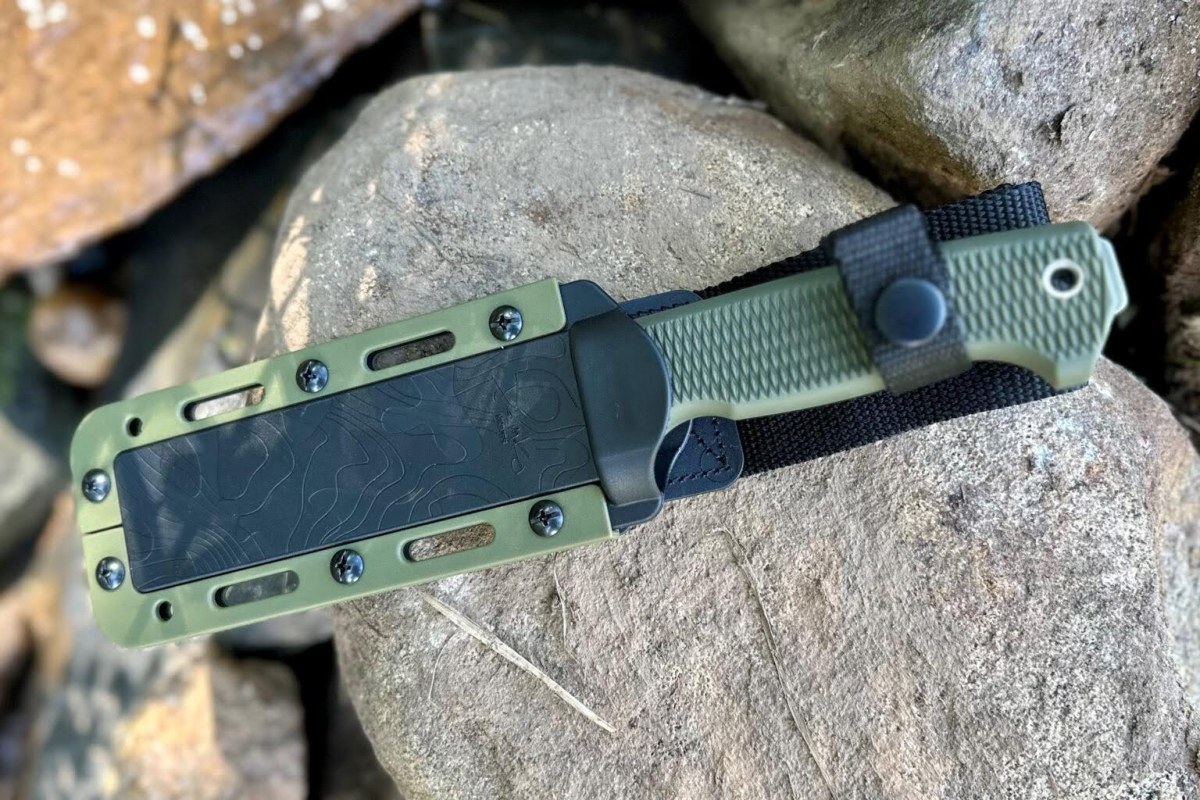
Handle Material
When it comes down to handle material it’s all about grip. Ergonomics play a part in this as well, as you could have great handle material in a weird shape that will cause fatigue. In the end, you won’t want to use the knife, and you’ll have wasted your money. These are some of the more preferred materials on the market today:
G10 & Micarta
G10 and Micarta are both extremely strong materials. Both excel in grip whether your hands are wet or dry, which is why those two materials are so popular with EDC, Survival, Tactical, and Bushcraft-style knives.
Nylon & Plastic
Nylon and plastic also make for great handle materials because they’re durable and lightweight, but they’re also generally textured. It’s this texturing and styling that increases the grip on a knife with these materials.
Note: Nylon and plastic handle scales can be called a litany of names. Some of the more popular names are FRN/Zytel (Fiber Reinforced Nylon), GRN (Glass Reinforced Nylon), GFN (Glass Filled Nylon), and Grivory (Injection Molded).
Rubber
In some knife worlds, rubber is the sign of a cheap knife. However, in bushcraft, rubberized handles can be a great benefit to you due to their durability as well as their unsurpassed grip.
Wood
Wood is a fantastic handle material as long as it has been stabilized so it won’t crack. It offers a good amount of grip, which generally increases when the wood gets wet. It also looks very nice.
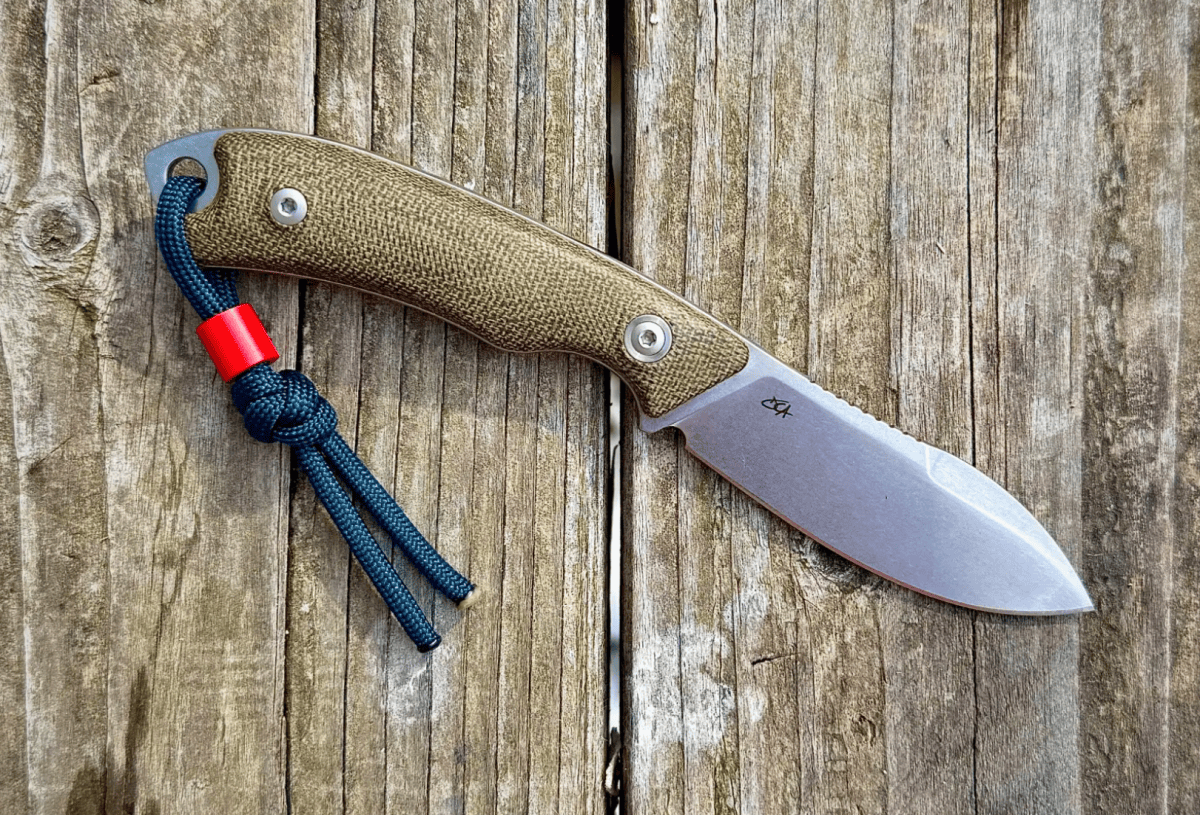
Ease of Use
Ease of use is a big deal when considering what knife is right for you. It can come in many forms from ergonomics, to lock design, to the hardware used to keep the knife together and in good functioning order. All in all, the last thing you want to do is struggle with or be uncomfortable using your knife.
Ergonomics
A good knife will feel right in your hand. From the shape of the handle scales to the overall thickness, and even texturing, ergonomics can be the difference between you being confident with your knife or leaving it in your drawer at home. When you consider a knife, put it in your hand and give it a good squeeze. Then, push down hard on a hard surface. If everything feels right — that’s your next knife.
Sheath
A good bushcraft knife is only as good as its ease of carry. In considering your next bushcraft knife, consider a sheath made from leather or kydex. Leather will cost you more, but can last you for years. Kydex, which is widely used by the military, is durable and generally offers not only multiple carry options, but room for you to expand it to carry a Ferro rod.
Lock Mechanism
Without fail, you will find yourself in a position where you need to rely on the lock on your knife more than you expected.
Some of the more common lock types are liner/frame locks that use a bar that indexes into the back of the blade. There are also button-style locks that use a steel barrel to keep the blade engaged. However, the most popular lock type is the crossbar lock, which also uses a steel bar to hold the knife in place.
In our time and experience, we have never seen a crossbar-style lock mechanism fail without some outside force creating a major disruption in how the knife functions. Like a truck running it over.
Price & Value
Knife pricing isn’t as cut and dry as I think most of us would like it to be. Yes, just like with any other consumer good, factors like materials, design, and function all play into the final price of a knife. However, there are a lot of things going on behind the scenes that determine what we pay at the store for a knife.
How much material a knife manufacturer buys has a major impact on the price you pay for a knife. Material prices, in general, will fluctuate based on how much of each item is being bought overall. We’ve most recently seen this with MagnaCut, which became a popular steel seemingly overnight. As more brands adopted it in knives, the overall price of the steel itself went down.
Overall, bushcraft knives tend to be more affordable. They’re simple knives designed to do a lot of different things. But they’re generally not flashy and composed of common materials. For a niche market, this is a welcomed departure. As we have seen with other knife categories — like Tactical Knives — sometimes being purpose-built or labeled a certain way can have a big impact on pricing.
With that being said, we’re going to break knives down into the following three categories based on pricing in general. But, to be fair, in the production knife world, there are no clear and defining lines between budget knives, mid-tier knives, or premium knives. The following is a generalization of what you can expect from each category.
Budget
Budget bushcraft knives are usually made from carbon or stainless steel and feature simple designs for use and carry. Although some bushcraft knives can excel in ergonomics and be more complex than others, the common recipe is to keep the form simple so it functions with ease. With that being said, a good budget bushcraft knife could easily be under $50.
The Morakniv Companion Spark is made from Sandvik 12C27 stainless steel and uses a simple polymer handle that stores a ferro rod in the butt. Like other Morakniv knives, the Spark is what you should expect from a budget to even mid-tier bushcraft knife with the added benefit of having a firestarter included. If you don’t need a ferro rod, you can always save another $16 by going with the standard Morakniv Companion.
Mid-Tier
A good mid-tier bushcraft knife will be top out at $200. If you look at this list, a majority of the knives on it are mid-tier. Again, bushcraft is about durability and reliability. Sure, there are a couple of carbon fiber-handled bushcraft knives out there, but if you bring one of them out there by the fire, someone is going to give you a hard time.
The Victorinox Venture Pro is a multifunction knife designed specifically for bushcraft and the Scouts. For $115, you can have a reliable stainless steel knife that comes with a ferro rod, tweezers, pen, and two sheaths, making your carry and deployment experiences enjoyable.
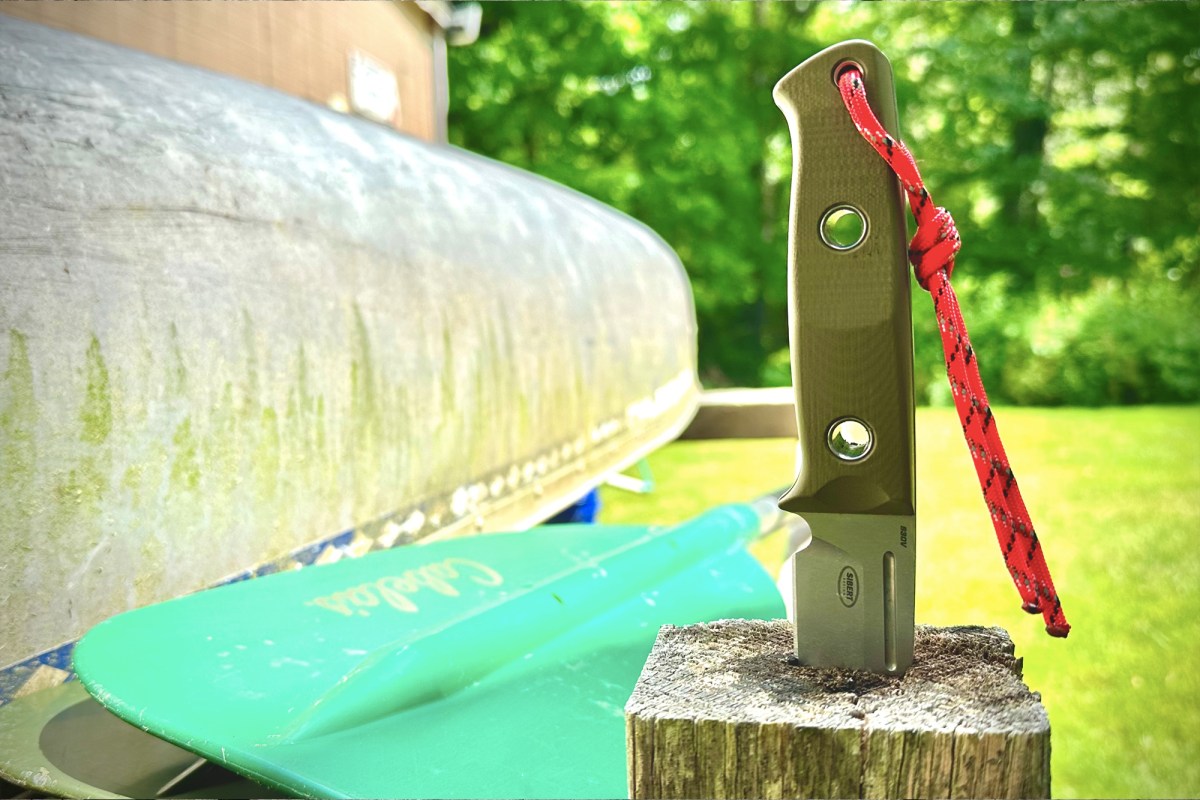
Premium
A premium bushcraft knife is one that goes above and beyond the demand of bushcraft. It’s one that is built from premium materials, and hosts advanced ergonomics. In some cases, this is where you’ll start to see a transition from a polymer or Kydex sheath over to a leather one, but that’s not always the case.
Benchmade’s Mini Bushcrafter ($300) is the definition of premium. In both form and function, it will offer you a lifetime of reliability while being used and abused. It’s not only made from premium materials but there’s an extra layer of attention baked into all facets of the knife.
This can be seen in the tapering of the handles, the false edge on the blade, and even the notch at the back of the blade for the ferro rod. This carries over to the premium leather sheath, which has been stylized to cradle the knife and has a spot for a built-in ferro rod.
Frequently Asked Questions
Bushcraft is the practice of using a few basic tools to transform the natural resources of the forest into the things one needs to survive. Things like carving, building shelters, starting fires, and laying snares and traps all fall under the umbrella of bushcraft. This is generally seen as more of a hobby for outdoors enthusiasts. This is different from the concept of survival, which has to do almost exclusively with life-and-death situations.
Bushcraft knives are medium-size fixed-blade knives, mostly utilizing carbon or high-quality stainless steel. Their hallmarks include comfortable grips, sharpened spines for scrapping a ferro rod or other firestarter, and edges suitable for carving and splitting natural materials such as wood.
Most bushcraft knives are meant to be carried on a belt with a formed sheath made from kydex, leather, or plastic. While some can be used for high-stress work, most bushcraft knives fall into a medium-duty role.
While some would argue that edge retention or a precision Scandi grind is the most important feature of a bushcraft knife, handle comfort should be at the top of the pile. Having a blade that’ll split wood and featherstick a whole tree is great, but it’s going to be a miserable experience if the knife doesn’t fit in your hand.
The best bushcraft knife is the one that covers all your needs. Do you enjoy building shelters? Then maybe you want something a little tougher. Or, if carving feathersticks and starting campfires is the highlight of your day, then maybe something with a comfortable grip would fit the bill. The list we’ve assembled above should help you choose the bushcraft knife that’s right for you.
14 Best Backpack Coolers of 2026 (Ice Retention Tested)
The Best Electric Coolers of 2026
Read the full article here
26 Comments
I like the balance sheet here—less leverage than peers.
Good point. Watching costs and grades closely.
Production mix shifting toward Tactical & Survival might help margins if metals stay firm.
Good point. Watching costs and grades closely.
Exploration results look promising, but permitting will be the key risk.
Good point. Watching costs and grades closely.
Interesting update on The Best Bushcraft Knives of 2026. Curious how the grades will trend next quarter.
Good point. Watching costs and grades closely.
The cost guidance is better than expected. If they deliver, the stock could rerate.
Good point. Watching costs and grades closely.
Good point. Watching costs and grades closely.
The cost guidance is better than expected. If they deliver, the stock could rerate.
Good point. Watching costs and grades closely.
Good point. Watching costs and grades closely.
Exploration results look promising, but permitting will be the key risk.
Good point. Watching costs and grades closely.
Good point. Watching costs and grades closely.
Nice to see insider buying—usually a good signal in this space.
Good point. Watching costs and grades closely.
Good point. Watching costs and grades closely.
Silver leverage is strong here; beta cuts both ways though.
Good point. Watching costs and grades closely.
The cost guidance is better than expected. If they deliver, the stock could rerate.
Good point. Watching costs and grades closely.
Nice to see insider buying—usually a good signal in this space.
Good point. Watching costs and grades closely.