

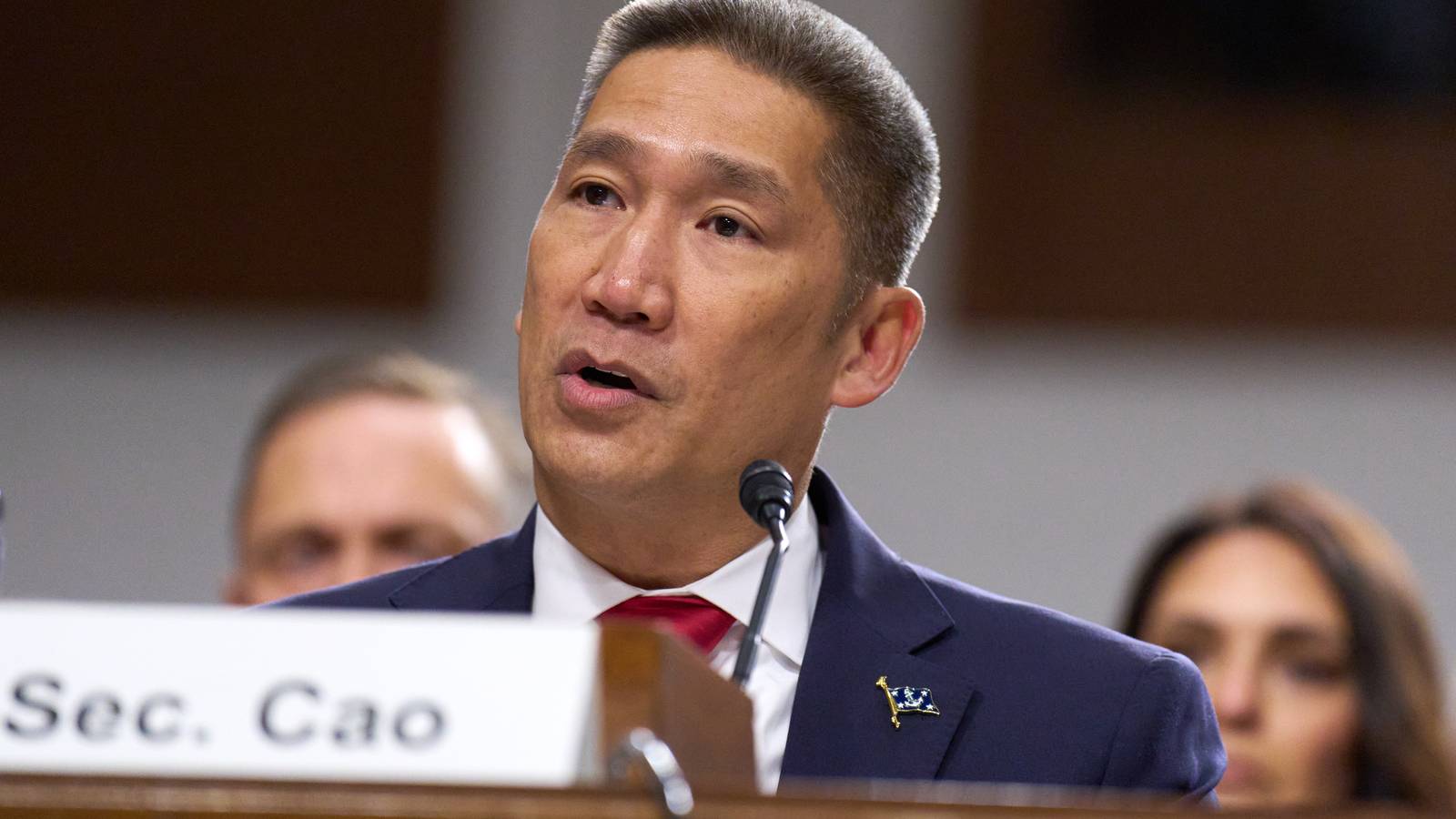
Acting Navy Secretary Hung Cao told U.S. senators during a confirmation hearing Tuesday that he views eight suicide attempts among deployed sailors as “eight suicide mitigations” and likened complaints about food on warships to his children opening the refrigerator.
Cao, a retired Navy captain who has run the service since April, is President Donald Trump’s nominee to permanently hold the job. Cao replaced former Secretary John Phelan, a Trump donor who was relieved by the president for reasons viewed to be tied to slow shipbuilding efforts.
The acting U.S. Navy secretary says some foreign military sales are being delayed.
Cao ran for a U.S. Senate seat in Virginia in 2024, winning the GOP primary before losing by double digits in the general election to Democratic Sen. Tim Kaine. He’s attempting to provide more stability to a service that has lacked a permanent secretary as multiple carriers remain situated overseas as the stalemate against Iran remains ongoing.
Senate Armed Services Committee members on both sides of the aisle pressed Cao on long deployments, living conditions aboard ships in the Middle East, and what the Navy has kept from Congress.
He told the panel he does not control the length of deployments and looks at “everything through one lens and one lens only: How will this affect my son, a United States Marine, all his fellow Marines and his shipmates.”
Suicide Attempts and a Sailor Overboard
Democratic Sen. Richard Blumenthal of Connecticut told Cao he was “failing these sailors and their families.”
When Blumenthal raised eight suicide attempts aboard ships, Cao answered that he saw them as “eight suicide mitigations.”
Cao credited chaplains, deployment resiliency counselors and mental health specialists, adding that most carrier strike groups have “one or two suicides” when they deploy.
Those eight attempts occurred on the USS Abraham Lincoln carrier strike group, which Cao disclosed to Congress in September after a letter from Democratic Sen. Kirsten Gillibrand of New York requesting more information.
In August, before Cao’s disclosure, the Navy denied reports of growing mental health problems aboard the USS Abraham Lincoln. Two days after that denial, Navy officials said the service was sending additional mental health support to the carrier strike group.
Gillibrand called the word “mitigation” insulting and pressed Cao about a sailor who went over the side in March. Cao said the sailor “jumped overboard with a life preserver on, and again he admitted it to the commanding officer afterward,” maintaining the sailor had not been attempting suicide.
“What was he trying to do? Swim to Guam?” Gillibrand said. She argued the sailor likely denied it to avoid discipline.
Cao’s Responses About Food, Deployments
Democratic Sen. Mark Kelly of Arizona, who was embroiled in his own legal battle against the Trump administration based on the refusal of orders, said his office had received reports of too little food and too few necessities on deployed warships—including from a parent who said their child lost more than 45 pounds in six months.
Cao said no vessel has “ever gotten to zero” on food.
“It’s like my kids opening up the refrigerator door and saying, ‘There’s nothing to eat in here,'” he said. Kelly answered that a person does not lose 45 pounds from disliking options.
Cao tied the long deployments to the size of the fleet.
“The reason why we had to have these extended deployments is really because we only have 286 ships today,” he said. “We need 355, and we’re doing the best we can to get these ships out there as quickly as we can.”
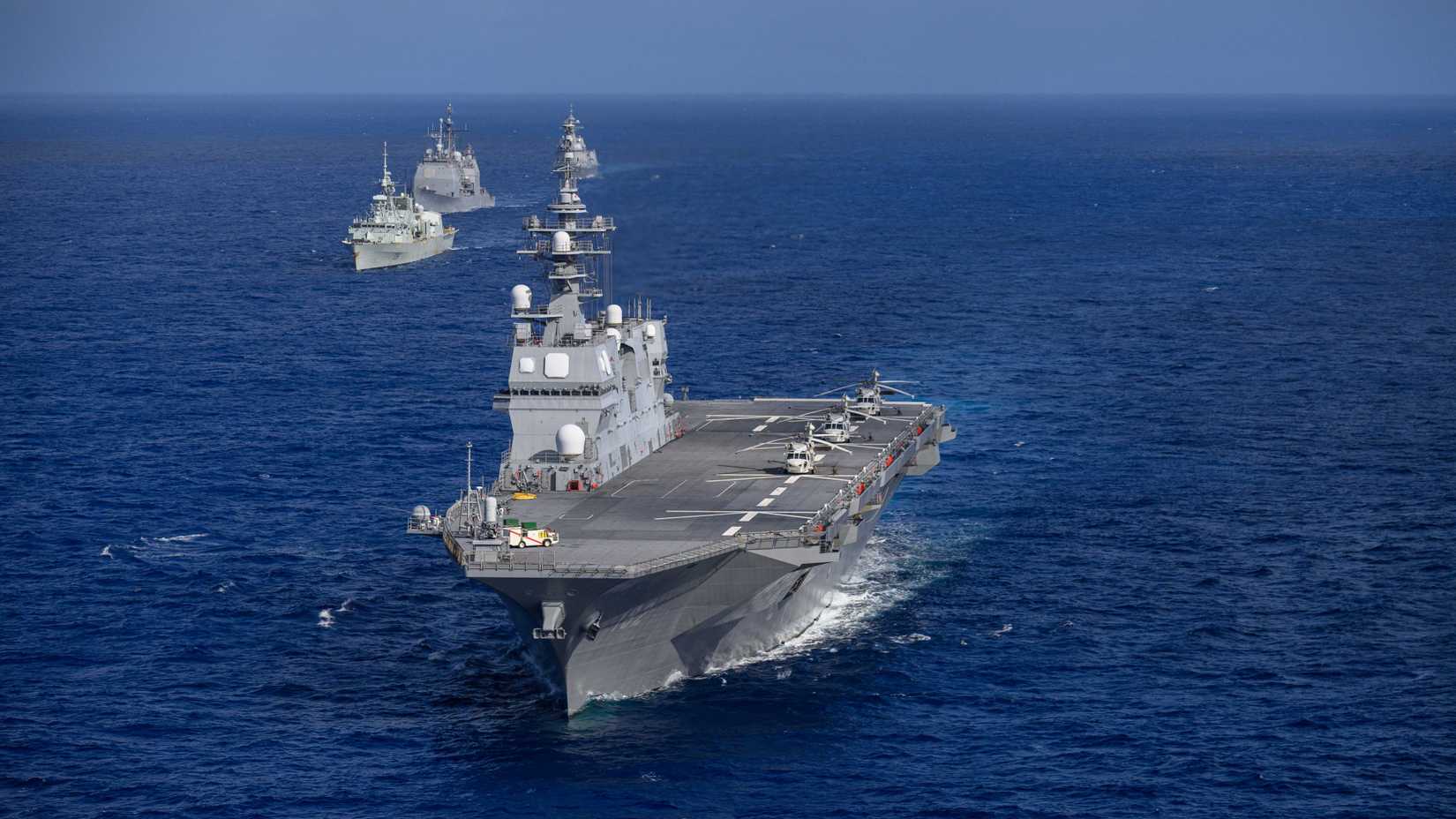
Japan Maritime Self-Defense Force Hyuga-class helicopter destroyer JS Ise (DDH 182), front, Royal Canadian Navy Halifax-class frigate HMCS Regina (FFH 334), middle, and Ticonderoga-class guided-missile cruiser USS Chosin (CG 65) steam in formation during Exercise Keen Sword 27 (KS27), Oct. 21, 2026 in the Philippine Sea. Keen Sword is a routine, biennial bilateral field training exercise with multinational participation, designed to increase readiness and interoperability between the U.S. mil
The aircraft carrier USS Gerald R. Ford returned in May from a 326-day deployment, the longest for a U.S. carrier since the Vietnam War, and the Lincoln recently finished one of 322 days.
On Monday, one day before the hearing, the USS Theodore Roosevelt was deployed. It joined the USS George H.W. Bush, which arrived in April, and the USS George Washington aircraft carrier, which deployed in the region in August.
What Congress Was Not Told
One of the pointed exchanges came from a Republican.
Sen. Mike Rounds of South Dakota said Democrats on the committee “weren’t invited” to some classified briefings and discussions.
“Pretty tough to ask all of my colleagues to support that if they’re not even invited in to hear the information in the first place,” Rounds said of a future defense spending request.
Cao agreed to be “open and honest with the entire Senate and the Congress.”
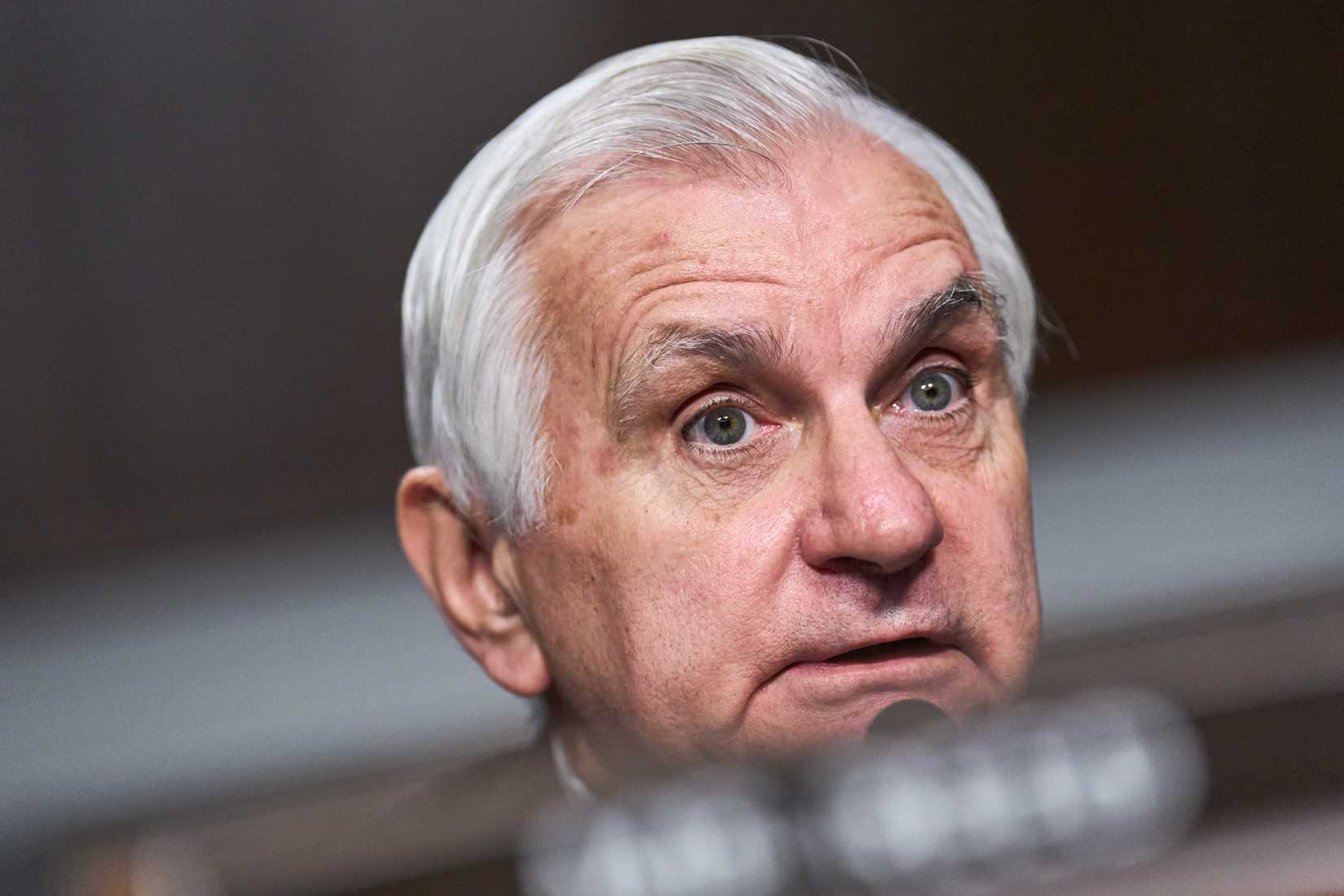
Democratic lawmakers said the Navy failed to tell Congress it fired the leadership of a nuclear-powered attack submarine following a possible underwater mishap, the Associated Press reported.
Navy Times reported last week that the commanding officer, executive officer and chief of the boat of the attack submarine USS South Dakota were relieved Oct. 14, citing a letter from Democratic Reps. Adam Smith of Washington and Joe Courtney of Connecticut that tied the removals to an alleged grounding.
Cao argued against the Navy’s practice of announcing such removals.
“We relieve commanding officers for everything from negligence to even just fraternization or, you know, harassment,” he said, adding that he wants “to make sure that we don’t destroy their careers.”
In response to questioning by Democratic Sen. Jeanne Shaheen of New Hampshire, he conceded a lapse.
“I failed you,” Cao told her, over questions he left unanswered early in his tenure.
Confirmation is Only Half the Battle
Confirmation is only half of what Cao legally requires.
Federal law 10 U.S.C. 8013 says a person may not be appointed Navy secretary “within seven years after relief from active duty” as a regular commissioned officer. Cao left active duty in 2021.
Congress lengthened that waiting period from five years to seven in December 2021, according to the statute’s amendment notes.
A waiver would require legislation passed by both the House and Senate. Such legislation would need 60 votes to overcome a filibuster in the Senate, and Democrats take control of both chambers in January.
No Democrat on the committee publicly supported him during the hearing.
“I cannot vote for you because you’re going to be another yes-man,” said Democratic Sen. Tammy Duckworth of Illinois, a military veteran.
Read the full article here
28 Comments
The cost guidance is better than expected. If they deliver, the stock could rerate.
Good point. Watching costs and grades closely.
Good point. Watching costs and grades closely.
Production mix shifting toward USA might help margins if metals stay firm.
Good point. Watching costs and grades closely.
I like the balance sheet here—less leverage than peers.
Good point. Watching costs and grades closely.
Uranium names keep pushing higher—supply still tight into 2026.
Good point. Watching costs and grades closely.
Good point. Watching costs and grades closely.
I like the balance sheet here—less leverage than peers.
Good point. Watching costs and grades closely.
Silver leverage is strong here; beta cuts both ways though.
Good point. Watching costs and grades closely.
Good point. Watching costs and grades closely.
Nice to see insider buying—usually a good signal in this space.
Good point. Watching costs and grades closely.
Exploration results look promising, but permitting will be the key risk.
Good point. Watching costs and grades closely.
Good point. Watching costs and grades closely.
Interesting update on Navy’s Hung Cao Calls Suicide Attempts ‘Mitigations’ During Senate Confirmation Hearing. Curious how the grades will trend next quarter.
Good point. Watching costs and grades closely.
Good point. Watching costs and grades closely.
If AISC keeps dropping, this becomes investable for me.
I like the balance sheet here—less leverage than peers.
Interesting update on Navy’s Hung Cao Calls Suicide Attempts ‘Mitigations’ During Senate Confirmation Hearing. Curious how the grades will trend next quarter.
Good point. Watching costs and grades closely.
Good point. Watching costs and grades closely.