

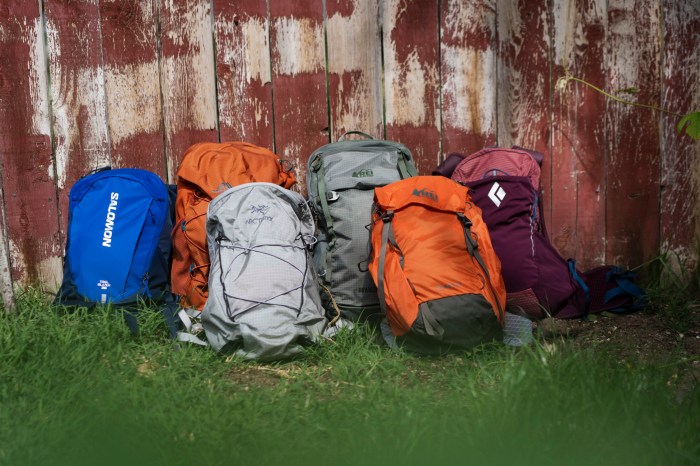
A great daypack carries your backcountry essentials while feeling weightless on your back. To find 2026’s best, testers Nick Belcaster and Miya Tsudome spent six months evaluating eight new bags, logging over 100 miles across the North Cascades, the Sierra, and Bozeman, Montana.
Whether you need the organization of the Osprey Talon 22, the summit-ready minimalism of the REI Co-op Flash 18, or the run-ready stability of the Black Diamond Pursuit 15, our selection represents the pinnacle of modern pack design.
This guide reflects 15 years of field testing, over 75 vetted models, and 1,000 hours of expert evaluation. We’ve distilled all that data to ensure your next pack is an investment built for seasons to come.
Editor’s Note: We updated our Daypacks guide on November 13, 2026 to entirely update our reviews and make them more detailed (and easier to compare). We also ensured that our selection is still widely available and at the right price.
The Best Daypacks of 2026
Best Overall Daypack
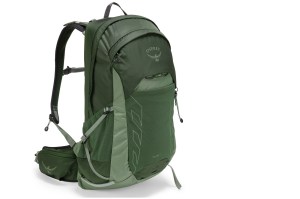
Osprey Talon 22
Best Budget Daypack
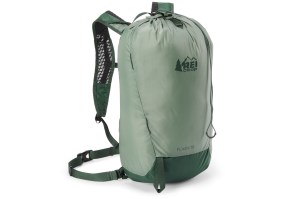
REI Co-op Flash 18 Pack
Best Lightweight Daypack for Travel
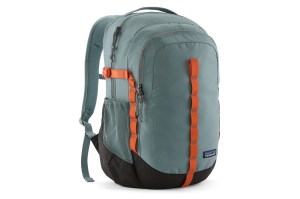
Patagonia Refugio 26L Pack
Best Rainproof Daypack
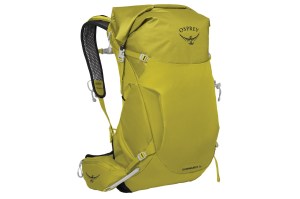
Osprey Downburst 36
Best Daypack Sling
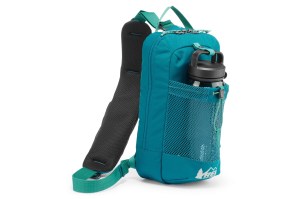
REI Co-op Trailmade Hydration Sling
Best Technical Daypack for Scrambling & Peak Bagging
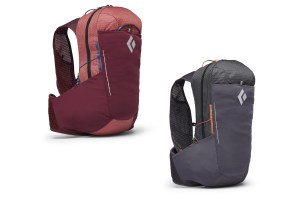
Black Diamond Pursuit 15
Best Value Daypack
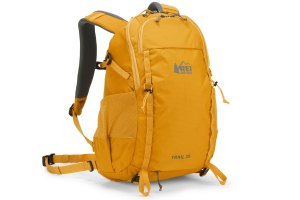
REI Co-op Trail 25
See more picks
Osprey Talon 22
-

-
The Talon 22 is one of the most well-balanced daypacks I've ever used; (photo/Nick Belcaster)
-
(Photo/Erika Courtney)


Specifications
Pros & Cons
Pros
- Many attachment features
- Cushy suspension system
- Available in extended sizes
- Pocket for nearly everything
Cons
- On the heavier end at 2 pounds
- Fairly pricey compared to similar daypacks
Bottom Line: An adjustable torso sliding yoke, breathable AirScape foam back panel, and versatile multi-sport attachment points make this the premier choice for outdoor enthusiasts seeking a do-it-all daypack.
The Osprey Talon 22 ($175) stands out as a uniquely adaptable 22-liter daypack that blends some multi-sport utility with custom-fit load transfer. Built around a durable ripstop nylon shell and an ergonomic harness system, it’s a do-it-all option that transitions between different missions with ease.
The Tech: The pack weighs 2 pounds while offering 22 liters of main clamshell storage capacity. The material makeup is, as expected from Osprey, dialed in, and uses 210-denier and 420-denier recycled ripstop nylon. The big deal, however, is the frame on this bag, which is an updated AirScape back panel built with die-cut foam ridges layered beneath moisture-wicking spacer mesh. An adjustable torso sliding yoke allows quick customized fit adjustments across different back lengths, while specialized external attachments include a ‘Stow-on-the-Go’ trekking pole system, a LidLock bike helmet attachment toggle, a rear blinky light loop, and twin zippered hip belt pockets. All in all, this is one tech-laden daypack.
What We Like: The pack proved in our testing to be an exceptionally comfortable and capable single-quiver daypack. Senior Editor Nick Belcaster used this daypack across an entire year of activities and found that the sliding yoke allowed for precise adjustments to the torso fit and added extra hip contact for heavy loads. The AirScape panel kept gear weight flush against the spine without creating hot spots during steep trail pushes (which was important during high-humidity testing on Costa Rican hikes), and the intuitive pocket arrangement offered a dedicated place for trail snacks, water bottles, and extra layers. The convenience of the Stow-on-the-Go pole loops for stashing poles also earned high marks, and it’s a simple and easy way to stash your poles quickly on trail.
What We Don’t: The 2-pound overall weight sits on the heavier side for simple daypacks, adding some extra pack mass for those who want to go quick and unencumbered. Beyond the added weight, locating the internal hydration bladder sleeve inside the main pack compartment creates potential soak risks for gear during refilling compared to external hydration access. We’d rather see the bladder sleeve tucked behind the frame, instead.
Should You Buy It? Outdoor adventurers looking for an exceptionally versatile, multi-sport daypack that replaces single-use bags with custom-fit load support will find steady value here. It offers long-term durability and adaptable organization for hikers, cyclists, and scramblers alike.
REI Co-op Flash 18 Pack
-
-
(Photo/Meghan LaHatte)
-
At $40, the Flash 18 is an affordable entry to hiking daypacks; (photo/Meghan LaHatte)
-
(Photo/Meghan LaHatte)
-
(Photo/Meghan LaHatte)


Specifications
Pros & Cons
Pros
- Doubles as stuff sack when turned inside out
- Removable straps for an incognito look
- Extra gear loops provide ample storage
- Budget-friendly
Cons
- Exterior panel loops could be more durable
- Lack of exterior water bottle sleeve
- No place to hide tails of harness and chest straps
Bottom Line: A budget-friendly daypack design that strips back the unessential to make something that simply works, and doesn’t cost an arm and a leg to snag.
At $45, the REI Co-op Flash 18 is a downright steal for what you get, and works for a wide range of outdoor activities. 18 liters of internal space is just enough for day hikes, and the pack doubles as a stuff sack for larger bags when traveling.
The Tech: Built with 70-denier, Bluesign-approved ripstop nylon treated with a PFAS-free DWR finish, the pack weighs 9.5 ounces fully configured and strips down to 7 ounces with the webbing hip belt removed. It’s a main bucket-style compartment with a drawstring closure and protective storm flap, an internal hydration reservoir sleeve fitting up to 2-liter bladders, two unzipped internal organizer pockets, and a hidden rear-panel zippered security pocket. The frameless back panel houses a removable foam pad for structure, while exterior attachment loops allow strapping on extra gear. Otherwise, this pack is simple, and that’s exactly why we like it.
What We Like: Tester Meghan LaHatte took the Flash 18 for a spin for three months of Colorado summer, where the pack proved to be an exceptionally packable and versatile option. LaHatte put the pack’s adaptability to the test by clipping mini skis and boots directly to the exterior for high-country ski missions, and used the built-in shoulder strap whistle to call her dog during hikes without straining her voice. The removable foam back pad performed admirable double duty as a protective buffer against firm gear and a dry sit-pad during trailside breaks, while the interior compartment easily secured a camera cube for sunrise photography sessions.
What We Don’t: The frameless silhouette lacks much in the way of structural rigidity, requiring users to pack carefully with soft layers against the back panel to prevent hard items from poking through. LaHatte also noted that an exterior cord loop tore during testing when heavier gear was clipped via a carabiner, and the pack lacks dedicated exterior water bottle pockets. Don’t expect to haul the world around in this pack — it’s got a weight limit for sure.
Should You Buy It? The Flash 18 offers long-term reliability and versatile utility for day hikers and ultralight travelers alike. If you need a simple ‘get-it-done’ daypack that won’t break your gear budget, it’s an excellent place to start. Those looking for a bit more space should also consider the Flash 22 version — which gains a bit more space and features for only $20 more.
Patagonia Refugio 26L Pack
-
-
(Photo/Meghan LaHatte)
-
(Photo/Meghan LaHatte)
-
(Photo/Meghan LaHatte)


Specifications
Pros & Cons
Pros
- Larger capacity for added remote-work essentials
- Made of recycled materials
- Ample padded shoulder straps and back panel
Cons
- New version loses the removable laptop sleeve
- Stiffer back panel isn't as comfortable when under packed
Read Review: Patagonia Refugio Daypack Review: The Perfect Pack for Outdoorsy Professionals
Bottom Line: An included padded desk caddy, breathable harness, and generous 30-liter storage volume make this the premier choice for outdoorsy professionals needing a smooth trail-to-office hybrid.
The Patagonia Refugio Daypack 26L ($115) is the daypack we recommend to anyone looking for a laptop bag that can hang on a hike after work. It’s got everything we look for in a work bag that’ll port around your laptop, plus enough to keep you happy once 5 P.M. hits.
The Tech: Done up in a slick-looking silhouette that doesn’t stand out at the office, the Refugio is constructed from 100% recycled polyester with a moisture-repellent DWR finish, and weighs 1 pound, 10.9 ounces while providing 30 liters of capacity across two main compartments. The removable, padded desk caddy sleeve is an absolute highlight, reported tester and remote worker Meghan LaHatte, and it swaps out directly with a hydration bladder using a dedicated pass-through port. The harness system includes breathable, ventilated mesh shoulder straps, a sternum strap, a rear bike-light attachment clip, deep side bottle pockets, and front exterior shock cords for holding extra gear.
What We Like: LaHatte found that the removable desk caddy served double duty as a convenient lap desk to keep laptop heat off her legs, while the internal sleeve organization kept USB cables and chargers easily visible. The breathable mesh harness kept her cool while working up a sweat skinning uphill, and the spacious side bottle pockets easily swallowed large water bottles and even a camera tripod. For a daypack that’s being pulled in two different directions (the office and the trail), the Refugio walks the line near perfectly.
What We Don’t: The DWR-treated polyester fabric handles light precipitation well, but testing under a running sink revealed that the base material absorbs moisture, making the pack vulnerable during heavy downpours. Beyond the lack of complete waterproofing, the front shock cords tend to snag on branches when pushing through dense brush, and the harness lacks a waist belt for added load stabilization during technical moves.
Should You Buy It? Outdoorsy professionals and students looking for a single, dual-purpose daypack that replaces separate work bags and hiking packs will find the Refugio to be an excellent ‘do-both’ option. Some may benefit from two separate packs, but if your gear closet is already full, this Patagonia pack makes great sense.
Osprey Downburst 36
-
-
(Photo/Will Brendza)
-
(Photo/Will Brendza)
-
(Photo/Will Brendza)
-
(Photo/Will Brendza)



Specifications
Pros & Cons
Pros
- IPX5-rated water-resistant main compartment with welded seams
- Comfortable AirSpeed suspension system
- Simple trekking pole holster system
- Separate hydration reservoir sleeve from main compartment
Cons
- Quite pricey
- Not totally waterproof when submerged
- On the heavier side at over 3 pounds
Bottom Line: An IPX5-rated daypack for those who get outside no matter the weather forecast. While not 100% waterproof, this bag is as close as we’ve seen and carries excellently to boot.
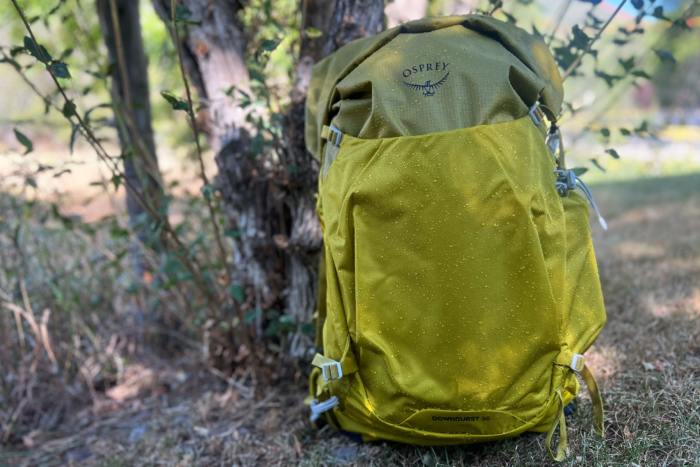
The Osprey Downburst 36 ($320) comes out of left field, but it’s a daypack for those who can’t stand missing a day outside (or have to work in the rain anyway), and its rainproof design is a lifesaver. The durable 210-denier TPU-coated recycled nylon shell and an RF-welded seam structure are complemented by a pack frame that only Osprey could ace so well, and from paddleboarding to trail work, we found it performed even better than expectations.
The Tech: The pack revolves around its IPX5-rated waterproof rolltop main compartment, and is assisted by PU-laminated zippers in keeping precipitation out, as well as an exterior non-waterproof compression stuff pocket to stash your already-wet gear. The suspension utilizes a tensioned AirSpeed mesh back panel suspended away from the spine to maximize airflow (surprising given most other waterproof packs lack much frame at all), while additional storage includes an external hydration bladder sleeve, quick-access side water bottle pockets, ice axe loops, and zippered hip belt pockets.
What We Like: The pack proved to be an exceptionally protective and comfortable heavy-weather hauler. Secured to the front of tester Rebecca Parsons’ paddleboard, the main compartment successfully sealed out heavy splashing and nose waves without letting moisture penetrate internal gear. The suspended AirSpeed frame kept sweat to a minimum during hard paddling pushes, and the external stuff pocket easily secured wet rain jackets for quick access without contaminating dry interior contents. Backcountry trail crew leader Erika Courtney also tested the pack and found it to be a dependable dry space for radios and first aid kits during days when they simply couldn’t get wet. The frame was also up to the task of hauling in heavy trail tools, and adjustable to fit different torso lengths.
What We Don’t: The heavy-duty TPU fabrics and reinforced frame bring the pack weight to 3 pounds, 6 ounces, making it noticeably heavier than standard daypacks. Beyond the extra pack mass, the IPX5 rating protects against low-pressure water streams and heavy rain but fails to keep gear dry during full submersion, while the $320 price tag sits on the premium end of the market.
Should You Buy It? Wet-weather hikers, paddlers, and trail workers, take note. The Downburst is for pretty much anyone who wants a pretty-much-drybag for day-hike-sized use, but doesn’t want to totally forgo their back comfort to do it.
REI Co-op Trailmade Hydration Sling
-
-
(Photo/Erika Courtney)
-
(Photo/Erika Courtney)
-
(Photo/Erika Courtney)
-
(Photo/Erika Courtney)
-
(Photo/Erika Courtney)
Specifications
Pros & Cons
Pros
- Easy access to everything you'd want on a hike
- Well padded strap and back panel
- Comes with a HydraPak water bottle
- Can be worn on right or left shoulder
Cons
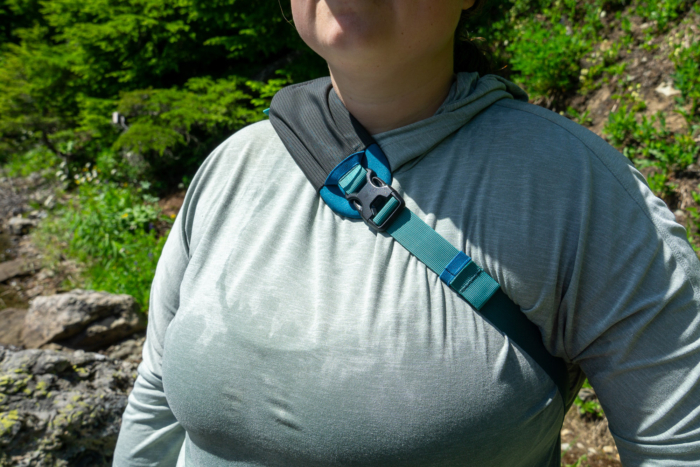
- Not the most comfortable for those with a bust
- Limited internal space
Bottom Line: An ambidextrous cross-body strap, dedicated hydration bottle sleeve, and compact 6-liter capacity make this hydration sling ideal for minimalist hikers.
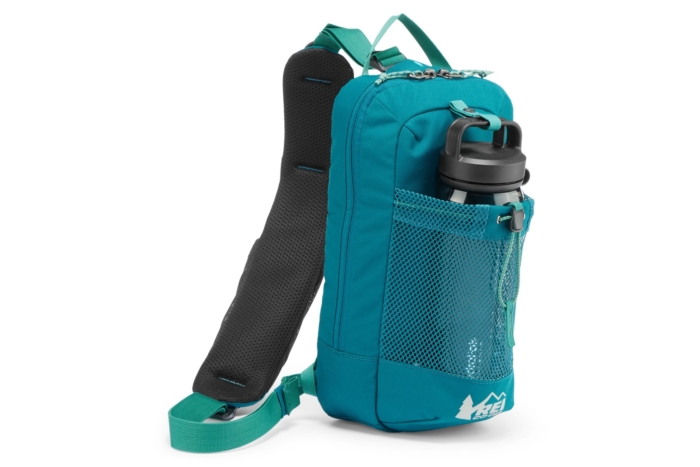
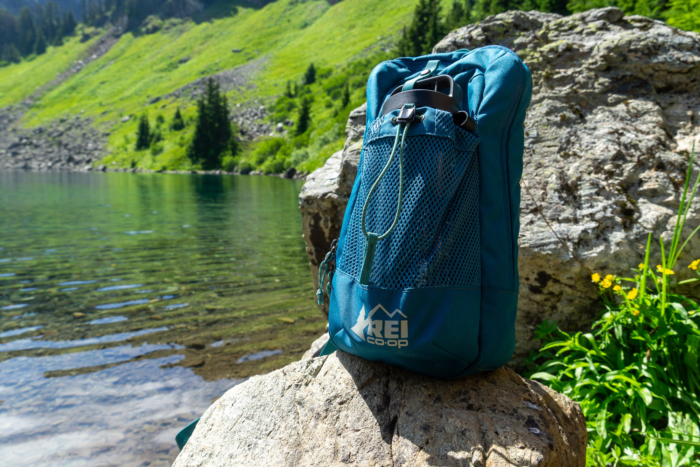
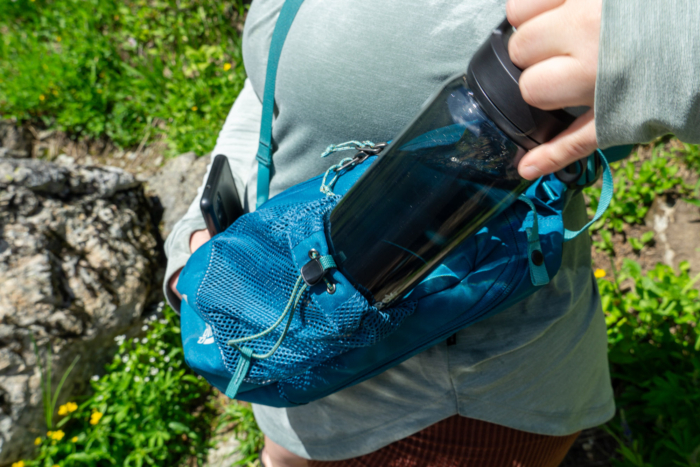
The REI Co-op Trailmade Hydration Sling ($70) is a low-profile daypack alternative with a cross-body carry and streamlined trail organization. Built from Bluesign-approved recycled polyester with a PFAS-free DWR finish, it carries well from neighborhood dog walks to fast-paced afternoon scrambles with ease.
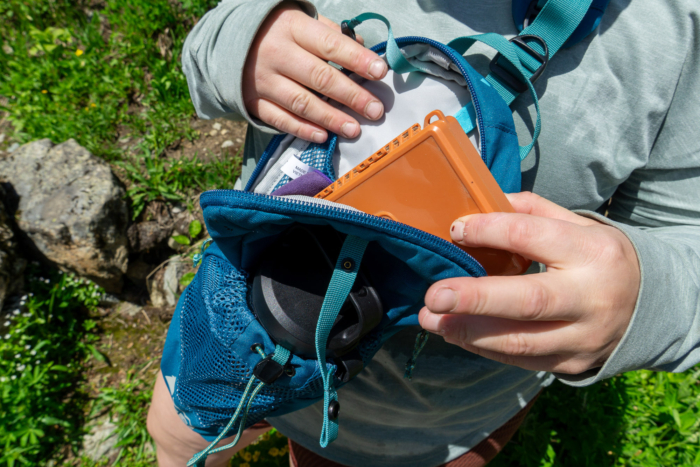
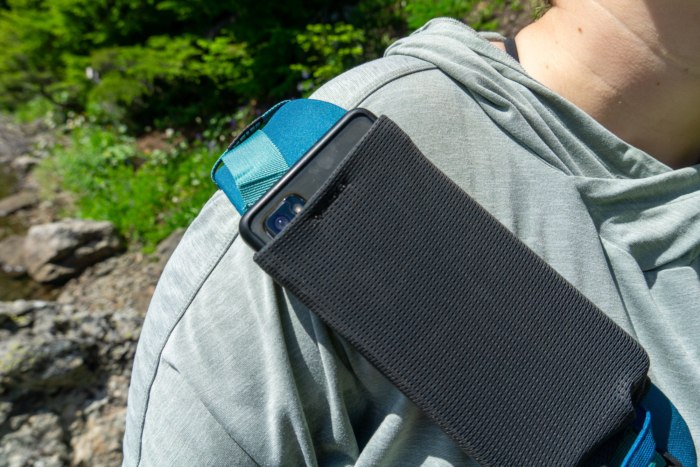
The Tech: Constructed from recycled polyester with a moisture-repellent DWR finish, the sling provides 6 liters of gear storage capacity alongside a dedicated hydration compartment housing an included 750 mL HydraPak bottle. It hangs from an ambidextrous padded shoulder strap that clips to either side of the pack base for dual-shoulder versatility, internal zippered organizer pockets for small essentials, and a swift-swing rotational harness setup.
What We Like: Tested across fast-and-light afternoon outings by gear tester Erika Courtney, the pack proved to be an exceptionally nimble and accessible trail companion. Courtney found the ambidextrous strap attachment particularly useful for switching shoulders on the fly to relieve shoulder pressure, while the smooth-swiveling cross-body design allowed swinging the main compartment around to her chest for instant access to trail snacks without removing the bag. The included 750 mL HydraPak bottle (that’s sized perfectly for the bag) offered convenient off-the-shelf hydration, and the compact silhouette kept gear stable without bouncing during off-trail scrambles.
What We Don’t: The compact 6-liter storage volume sits on the smaller side for technical day hikes, limiting space for extra cold-weather layers or bulky gear. Beyond the tight capacity, overstuffing the main compartment causes the sling to ride awkwardly against the torso, altering load balance on steeper trail sections.
Should You Buy It? Minimalist hikers and trail runners looking for an affordable, body-hugging sling will find a lot to like here. The Trailmade Hydration Sling offers cross-body comfort for quick loop hikes and urban outings alike, and REI Co-op backs the unit with standard warranty support.
Black Diamond Pursuit 15
-
-
(Photo/Miya Tsudome)
-
(Photo/Miya Tsudome)
-
(Photo/Miya Tsudome)
-
(Photo/Miya Tsudome)


Specifications
Pros & Cons
Pros
- Comfortable suspension system with seamless wing construction that hugs your body
- Lots of pockets
- Easy access trekking pole storage
- Deep front stuff pocket
Cons
- No ice axe loop like the Black Diamond Distance pack
- Pricey for the size
Bottom Line: A vest-inspired harness, supportive waistband, and stable 15-liter capacity make this the premier choice for technical mountain scrambles and fast-and-light peak bagging.
The Black Diamond Pursuit 15 ($150) is a technical daypack with some running-vest agility and traditional mountain pack support. Made to move with you, the body-hugging frame and hip belt work together to both support your pack and not limit your motion when you’ve got to make a technical move.
The Tech: The pack weighs 1 pound, 8 ounces and has 15 liters of storage volume. It incorporates a seamless BD Continuous Fit Harness with stretchy vest-style shoulder straps, a wide and breathable waist belt, a large stretch-woven front drop pocket, dual quick-access side pockets, and a zippered internal pocket with a key clip. Shoulder-strap organization includes three stretchy mesh pouches for flasks and gels alongside a zippered pocket, while a quick-pull front compression system keeps loads secure on the move. The whole pack is constructed from a durable 100% recycled polyester.
What We Like: We tested the Pursuit 15 across high-alpine routes and class-three scrambles on Mt. Emerson in the High Sierra, where the pack proved to be an exceptionally stable and comfortable technical companion. Trail runner and climber Miya Tsudome found that the wide, cushioned hip belt kept the pack tracking securely against her torso during demanding moves like twisting, high-stepping, and running down scree fields without excessive bouncing. The vest-style shoulder harness held its cinch adjustment tightly throughout long pushes, and the deep waistband pockets offered convenient stashing for trekking poles on the fly.
What We Don’t: The side exterior pockets slope downward and run somewhat shallow, making them better suited to stout bottles like Nalgene bottles than tall Smartwater bottles. Beyond bottle storage ergonomics, the main zipper opening is partially intersected by the compression cord system, and the pack lacks dedicated ice axe attachment loops.
Should You Buy It? Mountain athletes and technical hikers should certainly consider the Pursuit. Some may have even more technical needs and should likely consider the Black Diamond Distance 22 pack instead, but if your adventures don’t get quite that RPM, stick with the Pursuit.
REI Co-op Trail 25

Specifications
Pros & Cons
Pros
- Comfortable framesheet suspension
- A good amount of pack for the price
- Lots of useful features
- Good quality materials
Cons
- No padded waist belt
- Pockets can make the front flap of the pack top heavy
Bottom Line: A high-value option that has pretty much anything you might need in a daypack. The hip belt isn’t the most comfortable for a 25-liter pack, but for most adventures it’s no issue.
The REI Co-op Trail 25 ($100) is an excellent value in a daypack, and comes equipped with the host of features you’d expect on an REI pack. If the $160 of our top pick is a bit too rich for your blood, check out this bag.
The Tech: Built from 100% recycled nylon treated with a PFAS-free DWR finish, the pack weighs 2 pounds 1.5 ounces while providing 25 liters of main compartment volume. It incorporates an HDPE frame sheet for structural support, dual stretch-mesh side bottle pockets accommodating 32-ounce Nalgene bottles, an internal hydration sleeve fitting up to 3-liter bladders, and an integrated rain cover stowed in its own dedicated pocket. Organization includes a large U-zip main opening, internal and external zippered lid pockets, and exterior trekking pole attachment loops.
What We Like: The pack proved to be exceptionally comfortable and easy to organize in our testing. Miya Tsudome found the 25-liter capacity to hit the ideal sweet spot for single-day trips into the Sierra foothills, comfortably carrying extra layers, water, sunscreen, and trail accessories without overpacking. The plushly padded shoulder straps and cushioned back panel provided immediate out-of-the-box comfort, while the deep side mesh pockets allowed grabbing a water bottle on the move without hassle. We also appreciated the inclusion of a dedicated rain cover, which adds instant weather protection off the shelf.
What We Don’t: The unpadded webbing hip belt provides minimal load-bearing support, making it less comfortable when carrying heavier gear loads over long distances. Beyond the basic waist strap, packing heavy items into both top flap pockets creates an unbalanced front weight distribution, making the main compartment zipper somewhat awkward to operate when the main cavity isn’t fully stuffed.
Should You Buy It? Anyone looking for a do-it-all pack, but not wanting to spend top-dollar to get it. The Trail 25 is a classic design and will serve most any hiker well.
Other Daypacks to Ruck Your Kit In, Tested
There are hundreds of daypacks on the market, and while we think the packs awarded above are just a bit better than the rest, we’ve also rigorously field-tested many others we’d trust to carry our day hiking kits in. Check out the daypacks below before making your choice.
Arc’teryx Aerios 18
-
-
(Photo/Erika Courtney)
-
(Photo/Miya Tsudome)
-
(Photo/Nick Belcaster)


Specifications
Pros & Cons
Pros
- Comfortable shoulder harness with zippered pockets and pouches
- Double set of stretchy chest cords to keep pack from moving too much
- High-quality Cordura materials with integrated LCP grid
- Back panel is one of the more well-designed we've seen
Cons
- Pricey for a daypack
- No hydration sleeve
- Side pockets are not the most secure
Bottom Line: A vest-inspired harness system, high-tenacity CORDURA grid fabric, and a bounce-free carry profile make this the premier choice for mountain athletes seeking an agile trail-running daypack hybrid.
The Arc’teryx Aerios 18 ($180) is constructed around super-tough 100-denier CORDURA nylon reinforced with a liquid crystal polymer ripstop grid, and is a technical daypack that blends running-vest accessibility with lightweight mountain pack durability.
The Tech: This is one tech-heavy pack. It’s built from lightweight 100-denier CORDURA nylon that’s interwoven with a 200-denier liquid crystal polymer (LCP) grid (say that ten times fast). The pack weighs 1 pound, 4 ounces while providing 18 liters of storage, and it incorporates an AeroForm mesh back panel with a removable frame sheet, broad running-vest-style shoulder straps (with zippered pockets and pouches), twin corded sternum straps, and deep side bottle pockets.
What We Like: The broad shoulder harness distributed weight evenly in our testing, providing convenient vest-pocket storage for soft water flasks, snacks, and a phone while on the move. Miya Tsudome used the bag across steep Sierra Nevada scrambles and fast downhill trail runs, where the front cordage compression system cinched internal contents down to prevent bounce on downhill pushes. This pack travels well, too, as removing the internal frame sheet allowed the pack to roll up tightly for travel stowage inside larger duffels.
What We Don’t: The bungee-style twin sternum cords tend to loosen over time during downhill running, requiring tied-off overhand knots to keep the chest fit tight. Beyond the slipping chest cords, the pack lacks a dedicated internal hydration bladder sleeve, forcing users to store full reservoirs inside the main body alongside dry layers and electronics.
Should You Buy It? Fastpackers and mountain runners looking for a lightweight pack with a body-hugging vest harness will find the Aerios 18 pretty appealing. It might be a bit too-techy (and pricey) for some, but if you value unrestricted mobility on your adventures, this is a great option.
Hyperlite Mountain Gear Daybreak 22
-
-
(Photo/Erika Courtney)
-
(Photo/Erika Courtney)
-
(Photo/Erika Courtney)


Specifications
Pros & Cons
Pros
- Dyneema fabric shrugs off trail damage
- Slim, no-snag profile is perfect for tight canyons
- Angled side pockets allow for on-the-move hydration
Cons
- Nearly double the cost of similar packs
- Minimalist webbing hip belt offers little support
Bottom Line: Waterproof Dyneema construction, extreme abrasion resistance, and a sub-1.3-pound profile make this the premier choice for alpine scramblers seeking a bombproof, minimalist daypack.
The Hyperlite Mountain Gear Daybreak 22 ($240) is a streamlined 22-liter technical pack from the ultralight backpacking brand, and in classic form, is built around a 100% waterproof Dyneema Composite Fabric (DCF) shell. Compact enough for day hikes, this bag is dang-near bombproof.
The Tech: Constructed from 100% waterproof Dyneema Composite Fabric with sealed construction, the pack weighs 1 pound, 4 ounces for the 22 liters of internal volume. It opens through a clamshell zippered main opening and carries on a frameless back panel backed with a 1/4-inch foam pad, contoured shoulder straps, and a minimalist 3/4-inch webbing hip belt. On the exterior, a shock-corded front stuff pocket wrangles your quick-access gear, and side water bottle pockets keep your bottles at hand.
What We Like: Senior Editor Nick Belcaster appreciated how the low-profile foam back panel kept the load pinned flush against his spine, providing a connected carry that eliminated pack sway on off-camber rock moves. The Dyneema shell shed rain showers effortlessly during sudden alpine squalls at home (as well as in the rainforests of Costa Rica), while the clamshell zipper layout allowed quick access to extra layers without wrestling with roll-top buckles. We also appreciated the super durability of the material, which held up against our not-too-nice treatment.
What We Don’t: The minimal webbing hip belt provides stability rather than true load transfer, meaning this pack certainly has a weight limit. The price will also raise some eyebrows, but that’s the going rate for using a high-tech textile like DCF.
Should You Buy It? Ounce-counting mountaineers and alpine scramblers looking for a virtually indestructible, rainproof pack that trades bulky padding for locked-in stability will find the Daybreak to be a great option. It’s pricey, yes, but also investment-worthy for the durability you’ll get out of it.
Osprey Tempest Velocity 30
-
-
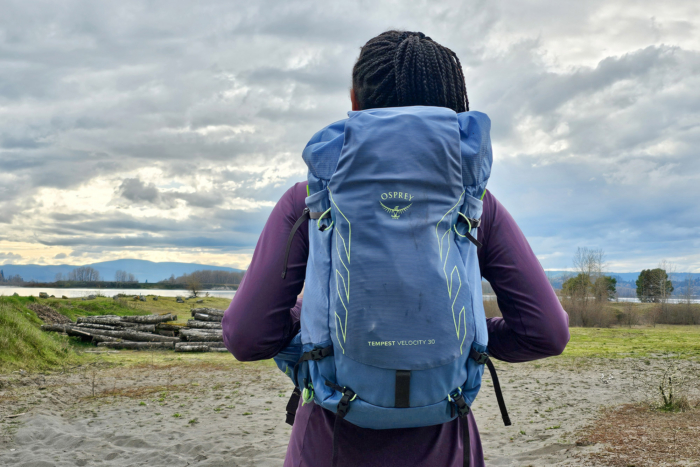
The Osprey Tempest Velocity 30 is a quick-paced daypack for movement, and the fit is exceptional; (photo/Rebecca Ross)
-
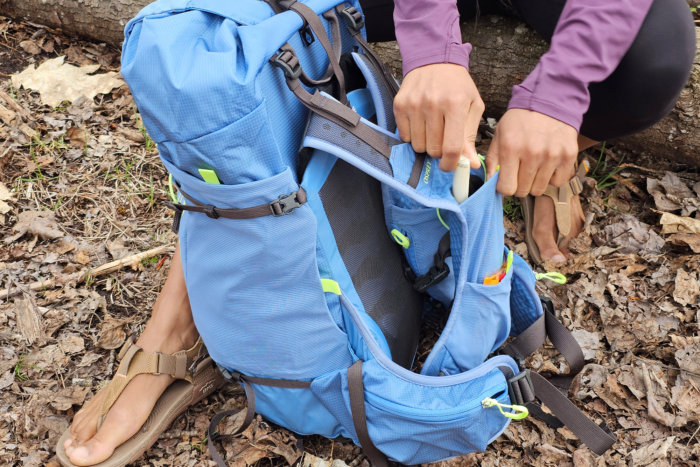
The pack offers plenty of easy access storage, with a flexible top cinch closure that adjusts as the load changes; (photo/Rebecca Ross)
-
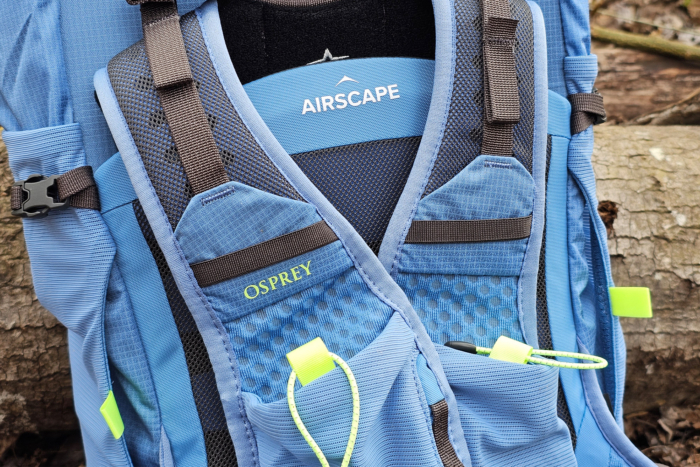
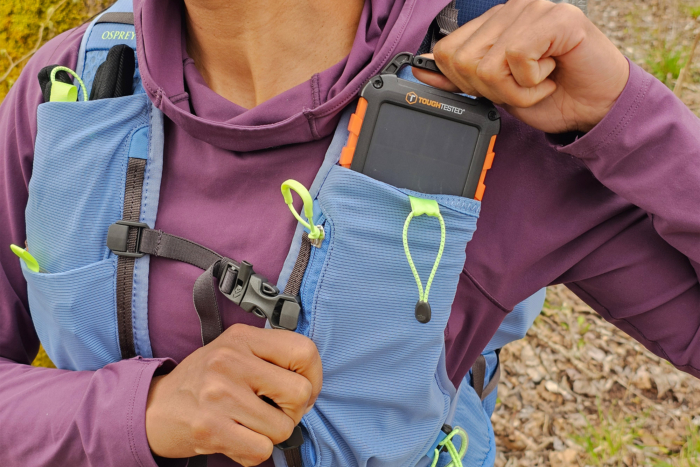
The running vest inspired design kept the Tempest Velocity 30 snug, stable, and comfortable on uneven terrain; (photo/Rebecca Ross)
-
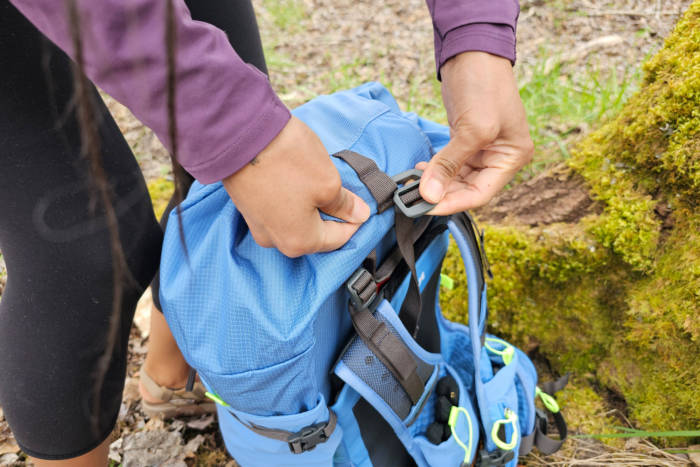
The pack stayed stable through longer trail days, weighted training, and quick changes in pace; (photo/Rebecca Ross)
-
The shoulder strap pockets made it easy to keep soft flasks, a phone, snacks, and smaller essentials within reach; (photo/Rebecca Ross)
Specifications
Pros & Cons
Pros
- Multisport versatility for hiking, training, and travel
- Highly adjustable, dialed-in fit
- Lightweight but stable under load
- Thoughtful pocket layout and external attachments
Cons
- Capacity feels slightly smaller than advertised
- Top closure limits additional use like coiled ropes
- Premium price point
Bottom Line: For high-output mountain endurance athletes needing gear-swallowing volume, this running-vest-supported pack is made to move fast.
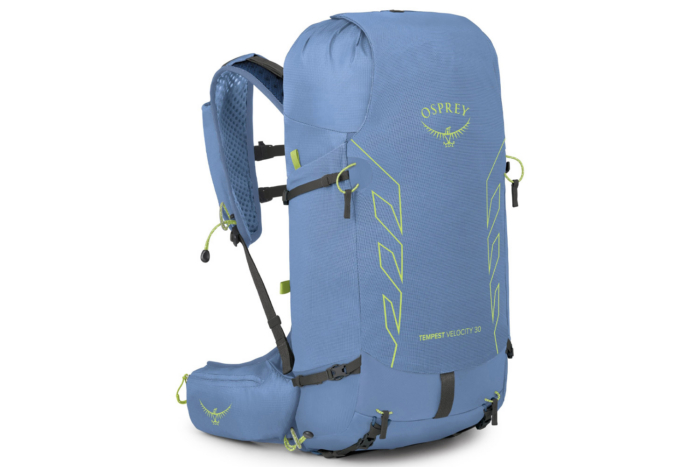
The Osprey Tempest Velocity 30 ($215) is a fastpack-inspired women’s daypack with the accessibility of a trail-running vest accessibility and the load capacity of a technical daypack. It’s got the bells and whistles where you want them, but aims to stay lightweight and balanced on your back.
The Tech: The Tempest Velocity incorporates an adjustable torso back panel, dual sternum straps, a wrap-around BioStretch hip belt, which all support the running-vest style shoulder straps to carry up to 30 liters of kit. The pack body is constructed from 100-denier and 210-denier recycled high-tenacity nylon with a PFAS-free DWR finish, and the pack weighs just over 2 pounds. On top, a flexible cinch-top drawcord main opening provides access, while the deep stretch-mesh pockets on the vest catch soft flasks or phones.
What We Like: Tested across fast-paced mountain outings by trail runner Rebecca Ross, the hybrid design proved to be an exceptionally stable and accessible endurance pack. Ross noted that the adjustable back panel and dual chest straps allowed those with shorter torsos to lock the load securely against the back without restricting breathability or causing bounce. The vest-style shoulder harness kept daily essentials close at hand on the trail, keeping energy gels, smartphones, and soft flasks instantly reachable without breaking stride. We also appreciated the generous 30-liter storage volume, which comfortably accommodates extra cold-weather layers for shoulder-season excursions.
What We Don’t: The flexible cinch-top drawcord closure makes it difficult to lash bulky external gear like a coiled climbing rope securely across the top of the pack. Beyond the top-closure limitation, Ross noted that the main compartment volume feels slightly smaller than advertised, and the $215 price tag is fairly high compared to other packs of the same volume.
Should You Buy It? The Tempest Velocity 30 offers long-term durability and versatile accessibility for high-speed mountain pursuits, and if you want to go quick and have all of the kit to enjoy yourself out there, it’s one to consider.
Daypack Comparison Chart

Osprey Talon 22 |
REI Co-op Flash 18 Pack |
Patagonia Refugio 26L Pack |
Osprey Downburst 36 |
REI Co-op Trailmade Hydration Sling |
Black Diamond Pursuit 15 |
REI Co-op Trail 25 |
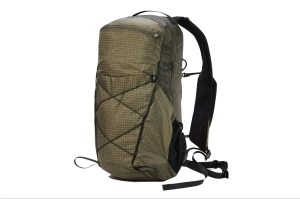
Arc’teryx Aerios 18 |
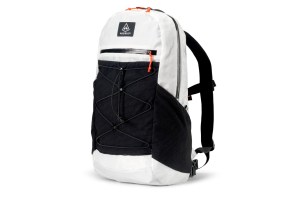
Hyperlite Mountain Gear Daybreak 22 |
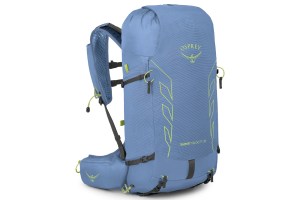
Osprey Tempest Velocity 30 |
|
|---|---|---|---|---|---|---|---|---|---|---|
|
Compare |
|
|
|
|
|
|
|
|
|
|
|
Price |
$175 |
$45 |
$115 |
$320 |
$55 |
$180 |
$100 |
$180 |
$240 |
$195 |
|
Material |
210D/420D recycled ripstop nylon |
70-denier recycled ripstop nylon |
Recycled polyester |
210D TPU, 70D, and 420D high-tenacity 100% recycled nylon |
300-denier recycled polyester |
100% recycled polyester |
Recycled ripstop nylon |
100-denier Cordura nylon; 210-denier Cordura nylon with twisted 200-denier LCP grid |
Dyneema Composite Hybrid 5.1 and Dyneema Hardline stretch mesh |
100 x 210-denier nylon |
|
Pockets |
Three external stretch, one external zippered, and two hipbelt |
One back panel pocket |
3+ main compartment |
Three external stretch, two hip belt |
Two + main compartment |
1 zippered and 3 stretch pockets on straps; 1 large stretch front pocket; 2 quick-access side pockets |
2 mesh side pockets, 1 main compartment, 2 zippered pockets, 1 pocket for hydration bladder |
Main compartment, small front pocket, two side zippered pockets, internal security pocket with key clip, shoulder harness pockets |
Three external stretch, one external zippered |
8 + main compartment |
|
Suspension Style |
Frameless foam back panel |
Frameless |
Foam back panel |
AirSpeed suspension system |
Over-shoulder sling |
Frameless foam back panel |
Internal HPDE framesheet |
Highly breathable AeroForm back panel with anti-barreling frame sheet |
Frameless foam back panel |
Flexible back panel |
|
Hydration-Compatible |
Yes |
Yes, up to 2 L |
Yes |
Yes, up to 3 L |
Yes |
Yes |
Yes |
No |
Yes |
Yes |
|
Ideal Use |
Hiking, biking, or even traveling |
Quick day hikes, commuting |
Travel, commuting, school |
Wet-weather hiking |
Day hikes |
Scrambling or summit pack |
Day hikes, around town |
Trail running and day hikes |
Day hikes |
Trail running |
|
Weight |
2 lbs. |
9.5 oz. |
1 lb., 7.5 oz. |
3 lbs., 6 oz. |
7 oz. |
1 lb., 8 oz. |
1 lb., 15 oz. |
1 lb., 4 oz. |
1 lb., 3.2 oz. |
2 lbs., 1 oz. |
How We Tested the Best Daypacks
Our GearJunkie testers are a multisport bunch who take every opportunity to sneak out for the types of brief adventures that daypacks shine in. And, we’ve put our heads together here to drum up the best daypacks on the market in 2026.
Our gearheads have been testing daypacks for over 15 years now, combing the field each year to find new great packs to add to our list. The 15 in this review reflect a variety of the best packs you can find today, covering different uses from casual hiking, technical peakbagging, commuting to work, or traveling abroad. The beauty of a daypack is in its absolute versatility, and we’ve used ours to tackle nearly everything.
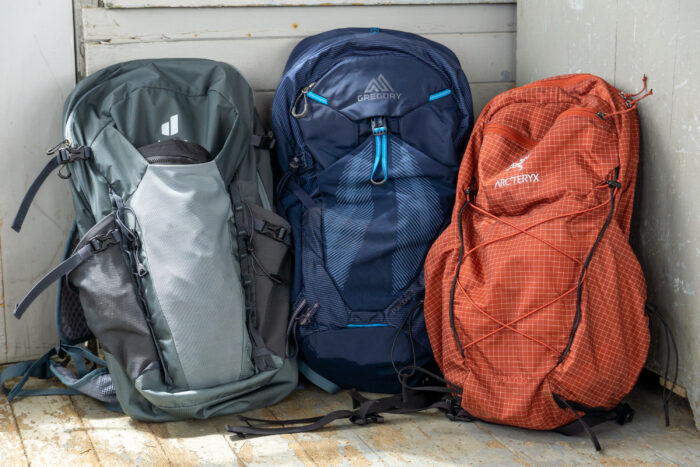
Our Testing Process and Testing Grounds
For this list, our team looked at daypacks across the spectrum — from packable and travel-friendly rucksacks to full-featured hiking and riding packs. Then, we hit the trails, loading them up with the essentials, noting their frame style, comfort and adjustability, features, breathability, and waterproofing.
- Field testing: Our testing regimen requires a minimum of 10 miles hiked in each daypack — the length of a solid day trip — before we render any type of opinion. We loaded, then overloaded packs to see how they carried in real life. We strapped odd-shaped kit to the exterior to see how it held. Running-inspired packs were run in, and commuters loaded down with laptops and taken to work. In all, we aimed to test these packs in exactly the way you’ll use them.
- In-house weighing and volume testing: Weighing these daypacks is natural, and followed closely by volume testing, where we employ ping pong balls of known volume to hone in on just how much these packs will tote.
- Hose-down challenge: Finally, a quick and dirty moisture resistance test with a spray bottle gives us a look under the hood when it comes to shrugging off an errant rainstorm.
- Our daypacking rating system:
- Comfort: 30% weighted. Comfort is a big deal in daypacks, and I prioritize easy carry over pretty much everything else when rating these packs. Our team looks for well-padded shoulder straps and hip belts, functional frames, and good load transfer when judging comfort.
- Organization & Volume: 30% weighted. In order to be rated highly for organization and volume, I look for daypacks that make good use of internal volumes by keeping things simple with only a few pockets for essentials. Exterior pockets are also considered, with the highest rated packs hosting specialty sleeves like padded sunglasses pockets or quick-access snack pouches on shoulder straps.
- Durability: 20% weighted. Long-term durability is judged on the wear and tear that can be put on these daypacks across an entire summer — the minimum span of time we test before rendering a verdict. I look for smooth-running zippers, pack body material that has resisted tears or stains, and intact plastics such as buckles and webbing sliders.
- Weight: 20% weighted. Finally, the weight of your daypack should be considered, but I don’t rank it exceptionally high, as most will be reasonable for day hikes and similar activities. Anything below 2 pounds receives a passing grade, with packs at or below 1 pound being deemed ultralight and earning a higher rating.
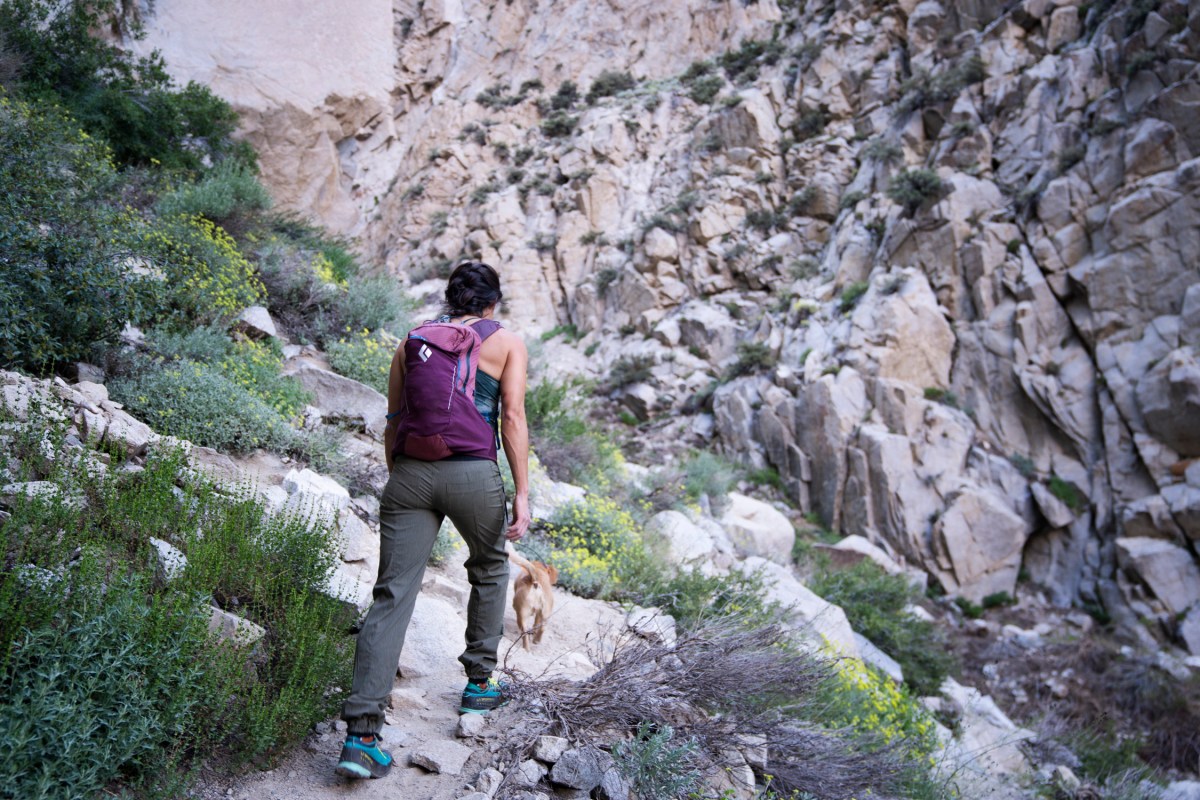
Our Expert Testers
Guide manager Nick Belcaster is a Washington-based trail hound who knows well the “get-it-while-you-can” aspect of adventuring in what is sometimes known as the Pacific Northwest. His exploits range from car-to-car alpine adventures in North Cascades National Park to ripping around on mountain bikes just outside of town, and in doing so, he’s cultivated a taste for what makes a daypack the one.
Our other chief daypack tester, Miya Tsudome, lives in the high desert of Bishop, Calif., at the base of the Sierra Nevada mountain range. She has thousands of hours of gear testing under her belt and spends the majority of her time in the summer climbing, backpacking, and going on day hikes. When it comes to packing a kit for a day, she knows what to look for in a daypack for navigating mountain terrain.
And as always, assisting in our efforts is a backbench of highly motivated GearJunkie outdoors folk of every stripe, from high alpinists to park kickback types. This year, that includes backcountry trail crew leader Erika Courtney, who uses daypacks everywhere from work spikes to day hikes across the North Cascades, and Rebecca Ross, a backpacker and mountaineer based in Washington state.
Every daypack we test gets a cycle through the rotation and sees several folks before it receives the nod — ensuring that we’ve got input from all types.
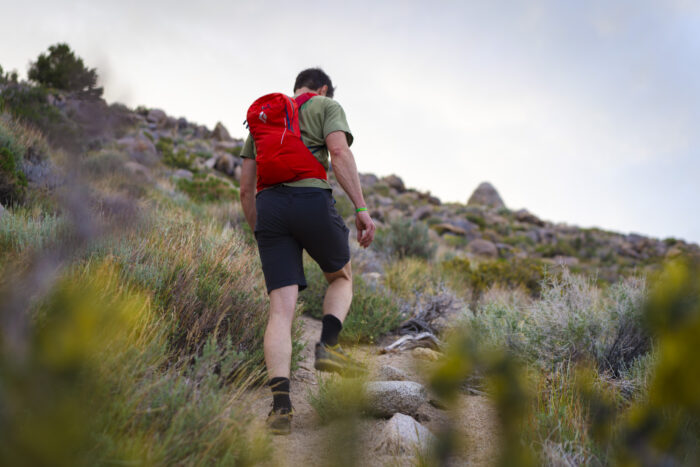
Daypack Architecture: Selecting Your Ideal Volume
Choosing a daypack is a balance between carrying capacity and physical agility. Whether you need a town-to-trail hybrid or a specialized alpine fastpack, your pack is the foundation of your safety and comfort in the backcountry. For our 2026 evaluations, we focused on the 15L to 30L range, but within that bracket, the utility changes significantly based on your intended mileage and gear list.
- The Extended/Multi-Sport (25L–30L): If your day involves technical gear (like climbing shoes, a harness, or a professional camera setup), you’ll want the extra room of a pack like the REI Co-op Trail 25. This volume is also the preferred choice for parents carrying extra layers for kids or hikers tackling high-desert routes where carrying 4 to 6 liters of water is a safety requirement. In a pinch, a well-featured 30L pack can even serve as an ultralight overnight bag for minimalist summer trips.
- The Minimalist (11L–18L): Packs in this category, such as the Arc’teryx Aerios 18, are designed for fast and light objectives. With enough room for the essentials (water, a light shell, a first aid kit, and snacks), they excel during high-output activities like trail running, peak bagging, or cycling. Their low profile makes them incredibly versatile for daily commutes, but they offer little overflow room if you need to carry extra layers for a partner or specialized gear.
- The Day-Hiker Standard (20L–25L): This is the sweet spot for most weekend outings. A 20-plus liter pack allows you to carry a full 3L hydration reservoir, a substantial lunch, and a dedicated midlayer or rain jacket without overstuffing the seams. This volume is ideal for variable spring or fall weather where you might start the morning in a puffy jacket and end it in a T-shirt.
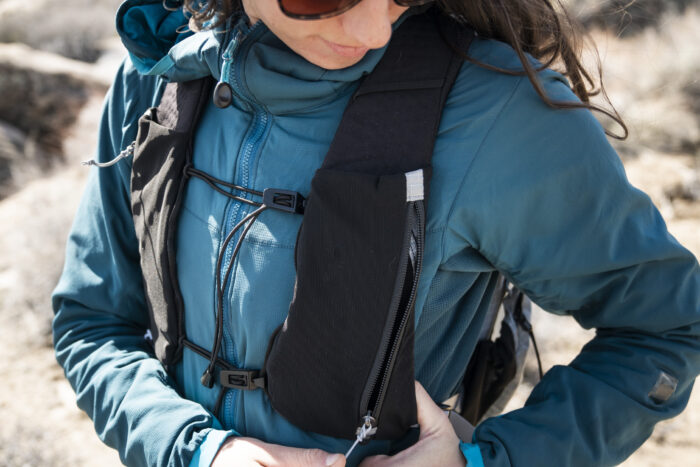
Suspension & Support: Framing Your Load
Because daypacks are designed for lighter payloads, they rarely feature the heavy, rigid frames found in multi-day expedition packs. Instead, they rely on clever suspension geometry and materials to keep your gear stable without adding unnecessary bulk.
- Frameless & Foam-Based Systems: Most modern-daypacks use a high-density foam framesheet to provide structure. This keeps the pack from barreling and protects your back from being poked by sharp items like a stove or a multi-tool. Leading examples like the Osprey Talon 22 offer incredible support through these foam panels while remaining lightweight. Some packs, like the REI Co-op Flash 22, even allow you to slide the foam sheet out to use as a dry sit-pad for trail-side lunches.
- The Frameless Weight Limit: Frameless packs typically have a functional load ceiling. Once you exceed 15 pounds, the foam begins to compress, and the weight will start to pull at your shoulders. For heavier loads (think winter hiking or carrying extra water), look for a pack with a minimal internal frame. These allow you to carry 20+ pounds with significantly less fatigue.
- Shoulder Strap Ergonomics: Your straps are your primary contact point and come in three main configurations. J-straps are the traditional standard, while S-straps are contoured to better accommodate those with broader chests or more athletic builds. For high-output activities, vest-style straps (found on fast-packs) distribute weight across the ribcage rather than just the shoulders, minimizing pack bounce while you’re moving quickly.
- Hip Belts & Stability vs. Support: On a daypack, the hip belt is often more about stability (preventing the pack from swinging) than load transfer. Minimalist packs like the HMG Daybreak 22 use simple webbing belts that can be removed for around-town use. However, if you’re tackling big mileage, a padded hip belt like the one on the Black Diamond Pursuit 15 uses spacer mesh and foam to wrap the iliac crest, effectively moving the weight from your shoulders to your hips.
Materials & Breathability: Balancing Weight and Durability
Because daypacks carry lighter loads than expedition haulers, they are often constructed from streamlined fabrics to minimize bulk. However, lightweight doesn’t have to mean fragile, and we’ve focused on how different textile densities (measured in denier) affect the long-term lifespan of your pack.
- Understanding Fabric Density: The denier (D) of a fabric tells you the thickness of the individual threads. For most day-hiking scenarios, materials in the 100D to 200D range strike the perfect balance between weight and abrasion resistance. If you plan on scrambling over granite or bushwhacking through dense brush, look for higher-denier reinforcements. The Osprey Talon 22 is a standout here, utilizing 210D and 420D high-tenacity nylon in high-wear areas to ensure it survives years of abuse.
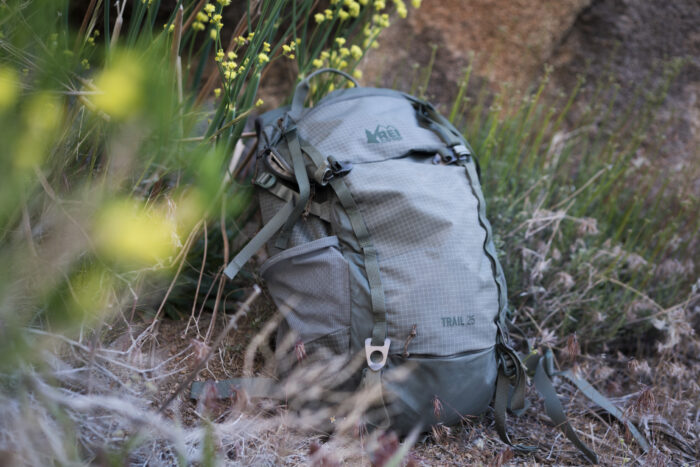
- Sustainability in Textiles: We’ve seen a massive shift toward Bluesign-approved and recycled materials across the industry. Packs like the REI Co-op Trail 25 prove that using recycled polyester doesn’t sacrifice performance, providing a rugged, water-resistant exterior that aligns with modern environmental standards.
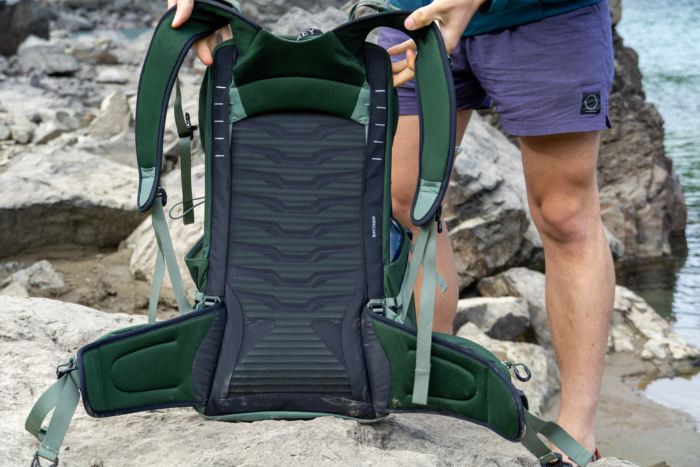
- Back Panel Ventilation: A pack’s breathability is often the biggest factor in your overall comfort. Packs with flat fabric back panels trap heat and moisture, leading to the dreaded sweaty back syndrome. To prevent this, prioritize designs that incorporate spacer mesh and die-cut foam. These channels create an air gap between your body and the pack, allowing heat to escape. Systems like Osprey’s AirScape or Gregory’s 3D-Foam panels are the benchmarks for keeping you cool during mid-summer ascents.
Back Panels: Managing Airflow and Structure
While durability protects the pack, the back panel design protects the hiker. On high-output days, the interface between your back and your gear determines whether you stay comfortably dry or end up soaked in perspiration. In our evaluations, we look for a ventilation-to-weight ratio that suits your specific climate and activity level.
- Ventilated Support Systems: The most effective designs utilize spacer mesh and segmented foam to create physical air channels. By breaking up the surface area of the back panel, these packs allow heat to escape while keeping the load’s center of gravity close to your spine. We were particularly impressed by the Osprey Talon/Tempest Pro series; their suspended mesh systems provide a noticeable chimney effect that wicks moisture far better than flat-panel designs.
- The Ultralight Trade-off: At the lighter end of the spectrum, some fast-and-light packs forgo thick foam and mesh to save weight. While this improves packability, it creates a compromise in breathability. Without air channels, perspiration is trapped against the fabric, which can be a significant drawback in humid environments or during high-exertion ascents.
- Structural Integrity: Beyond cooling, a well-cushioned back panel acts as the soft frame of the pack. Segmented foam provides just enough rigidity to prevent the bag from sagging or barreling when fully loaded. This structural support ensures that the weight is distributed evenly across your back rather than pulling awkwardly at your shoulders.
Organization & Architecture: Pockets, Closures, and Access
A daypack’s utility is defined by how effectively it organizes your Ten Essentials while providing quick access to high-use items. We evaluate a pack’s layout based on functional accessibility, meaning you shouldn’t have to dump your entire kit on the trail just to find a headlamp or a snack.
- Sport-Specific Tool Carry: If your days involve more than just walking, look for dedicated lashing points. The REI Co-op Trail 25 has external trekking pole attachments that keep your hands free for scrambles, while technical packs like the Black Diamond Pursuit 15 incorporate vest-style shoulder strap pockets. These pouches are a tester favorite for storing soft flasks, smartphones, or high-calorie snacks for on-the-go fueling.
- Hydration Integration: Our first assessment always focuses on water management. We look for dedicated internal sleeves or external hangers that can accommodate reservoirs ranging from 1.5L to 3L. For bottle users, side pockets made of durable stretch-mesh are a must. We specifically look for reach-through pockets that allow you to grab a bottle without taking the pack off.
- Closure Systems & Weather Protection: The way a pack opens dictates its speed and security.
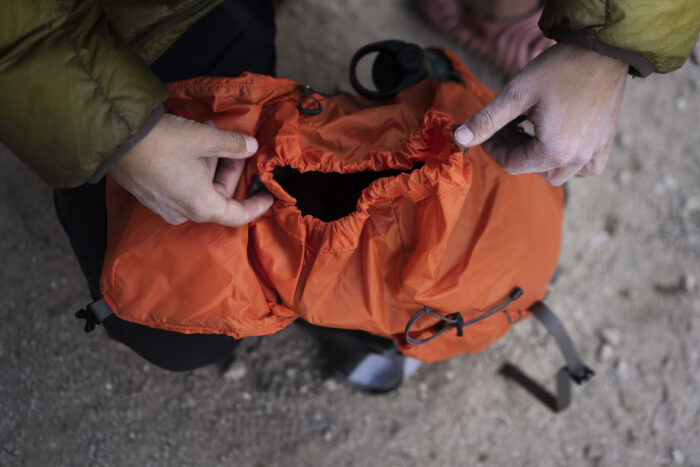
- Drawcord Closures: Found on minimalist packs like the Flash 18, these are the fastest to operate but offer the least water resistance.
- Roll-Tops: Models like the Osprey Downburst offer superior weatherproofing by creating a physical seal against rain, though they are slower to access.
- Zippered Panels: These provide the best organization and clamshell access, but require maintenance. In sandy or gritty environments, zippers must be kept clean to prevent slider failure.
Hydration Compatibility: Efficient Water Management
Staying hydrated is the most effective way to maintain your pace on the trail, and how your pack manages that weight is a critical performance factor. We’ve found that the best systems (like the Platypus BigZip EVO or Osprey Hydraulics reservoirs) rely on a seamless integration with the pack to keep the water weight centered and stable.
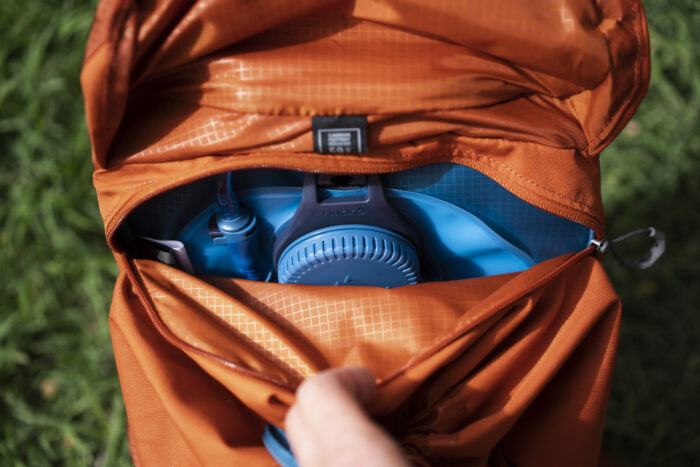
- Dedicated Reservoirs & Routing: A hydration-ready pack should offer more than just a sleeve. We look for specialized hooks or clips that prevent a half-empty bladder from slumping to the bottom of the bag. Higher-end models, such as Gregory’s H2O Series, host integrated magnetic bite-valve attachments on the sternum strap, ensuring your tube is always exactly where you need it.
- Volume Compatibility: While a 3L bladder is the standard for long desert hauls, it may overflow the internal sleeve of a compact pack. Always cross-reference the brand’s recommended maximum reservoir size; forcing a large bladder into a small sleeve can put undue stress on the pack’s zippers and compromise your back panel comfort.
- The Weight of Water: Water is often the heaviest item in your kit (roughly 2.2 pounds per liter). Carrying a full 3L setup adds over six pounds of shifting weight to your back. If you frequently carry high volumes of water, we strongly recommend a pack with a dedicated internal frame or a stiffened back panel. Frameless packs often buckle under the weight of a heavy water carry, leading to shoulder strain and poor weight distribution.
Moisture Management: Weatherproofing and Water Resistance
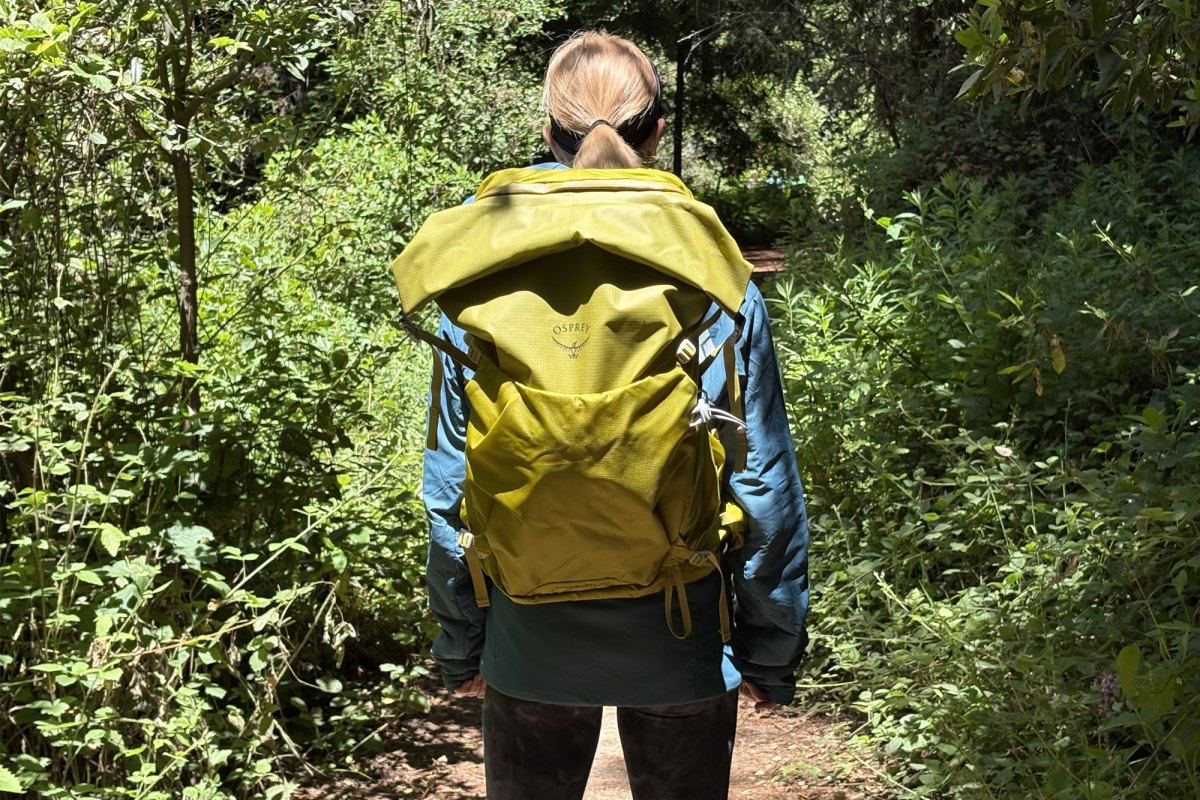
In the backcountry, a sudden afternoon squall can quickly turn a routine hike into a gear-soaking ordeal. When evaluating a pack’s ability to protect your essentials, we look beyond simple waterproof labels to analyze the specific technologies (coatings, closures, and construction) that keep your kit dry.
- Integrated vs. External Protection: If your pack isn’t inherently waterproof, check for an integrated rain cover. Models like the REI Co-op Trail 25 have a dedicated pocket housing a custom-fit cover that can be deployed in seconds. For extreme conditions, many of our testers also employ internal dry bags or lightweight pack liners for double-bagging sensitive electronics and down insulation.
- Coatings and Fabrics: Most performance daypacks are treated with a DWR (Durable Water Repellent) finish, which causes moisture to bead off the surface. In 2026, we prioritize PFC-free DWRs that balance environmental health with high performance. For truly wet climates like the Pacific Northwest, look for fabrics with a PU (Polyurethane) coating on the interior; this provides a physical barrier against water penetration and increases the overall abrasion resistance of the pack bottom.
- Sealed Architecture: A pack’s waterproofness is only as strong as its weakest seam or zipper. Technical packs like the Osprey Downburst 26 set the standard by utilizing TPU-filmed fabrics and taped seams, which prevent water from seeping through needle holes. For maximum protection, roll-top closures are vastly superior to zippers, as they create a mechanical seal that even driving rain struggles to breach.
Tester’s Tip: “The backpanel is one of the more-likely places where water will sneak into your pack. Make sure that any pack covers you use cover your shoulder straps a bit to keep things drier.” — Nick Belcaster, Lead Gear Tester
Gender-Specific Fit & Ergonomics:
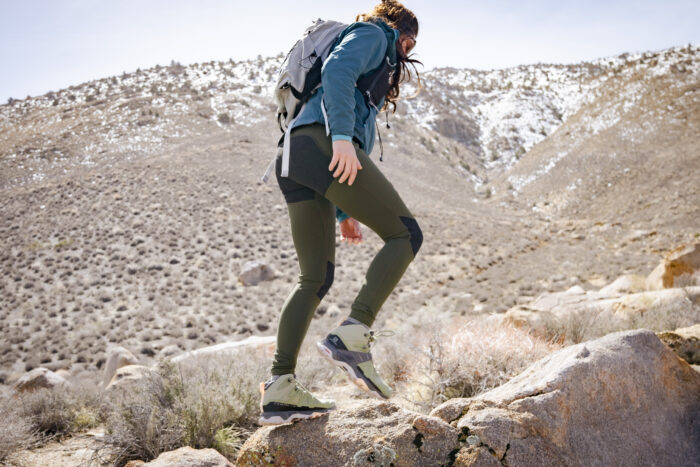
Women’s-specific daypacks are not just about aesthetics; they are engineered with distinct geometry to accommodate shorter torso lengths, narrower shoulders, and different hip-to-waist ratios. For 2026, we’ve seen a shift toward more nuanced sizing, moving away from the ‘shrink it and pink it’ philosophy of the past.
- Sternum Strap Placement: On women’s-specific packs, the sternum strap is often adjustable across a wider vertical range. This allows for placement either above or below the bust to prevent restrictive pressure during heavy exertion.
- Torso Length and Sizing: The most critical fitment factor is the distance from your C7 vertebra (the bump at the base of your neck) to your iliac crest (the top of your hip bone). Women’s-specific models, like the Osprey Tempest Pro, are built with shorter torso ranges to ensure the hip belt sits on the hips rather than the glutes. Many premium packs now offer adjustable torso harnesses, allowing you to slide the shoulder yoke up or down to achieve a custom fit.
- Shoulder Strap Contouring: Women typically have narrower shoulders and different chest dimensions than men. Women’s-specific straps are usually contoured with an S-shape to curve away from the chest, preventing chafing and pinching at the armpits. In contrast, unisex or men’s straps are often straighter (J-shape), which can pull uncomfortably across the bust for some hikers.
- The Conical Hip Belt: Men’s hips tend to be more cylindrical, whereas women’s hips are often more conical. A women’s-specific hip belt is canted at a different angle to wrap around the flare of the hips, distributing weight more effectively across the pelvic shelf. We’ve found the Black Diamond Pursuit 15 (Women’s) to be particularly adept here, offering a waist belt that feels integrated rather than just strapped on.
Price & Value
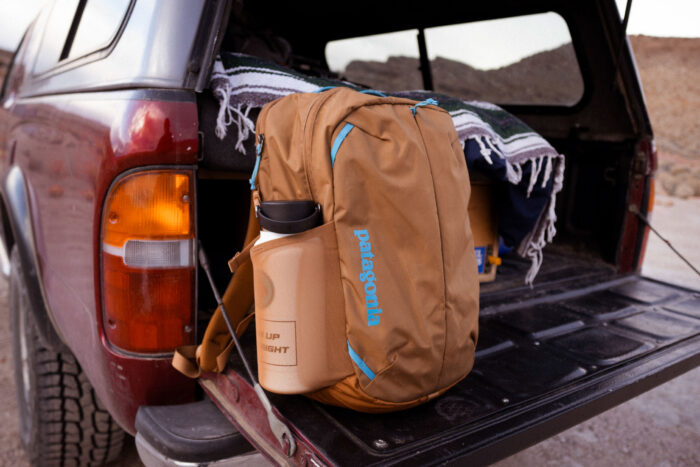
Daypacks run the gamut in terms of cost, from budget-minded sacks to high-end bags for in-a-day adventures. A good rule to follow is the broader your horizons, the more you’re likely to spend. Additional features add up quickly, and the daypack that can do it all certainly comes with a price tag. More budget-minded options will also likely have a limited lifespan, so treat them with care.
Budget ($45–100)
This tier is dominated by essentials designs like the REI Co-op Flash 18 ($45) and the Trail 25 Packs ($100). These bags are often lightly framed (if at all) and use lighter-weight fabrics (typically 100D–200D). They are perfect for commuters, light day-hiking, or as summit packs stashed inside larger luggage. While they lack the load-bearing architecture of more expensive bags, they offer the highest utility-to-weight ratio for those carrying under 10 pounds.
Mid-Tier ($100–150)
Here, we see the introduction of advanced ergonomics and specialized utility. Packs like the Black Diamond Pursuit 15 ($150) host better-ventilated back panels and more robust harness systems. This tier is also where hybrid packs live, offering dedicated laptop sleeves or integrated rain covers that bridge the gap between mountain trails and urban environments. You are paying for a more comfortable carry over longer distances.
Premium ($150–200+)
At the top of the market, you are investing in expedition-grade durability and high-performance suspension. Models like the Osprey Talon/Tempest ($175) and Black Diamond Pursuit 15 ($180) utilize elite materials such as ultra-high-molecular-weight polyethylene (UHMWPE) or high-denier ripstop nylon. These packs mirror the complexity of full-sized expedition bags — featuring waterproof zippers, multi-density contoured harnesses, and extreme breathability. For in-a-day alpine pushes or rugged scrambles where gear failure isn’t an option, these are the expert choice.
Frequently Asked Questions
The best daypack is hard to define because the sizing will vary based on your needs. Some days, we’ll reach for our trusty 22L REI Flash. On other days, we might need a 24-30L pack depending on the activity.
That being said, the Osprey Talon 22, REI Co-op Trail 25, and Black Diamond Pursuit 15 packs were some top staff favorites.
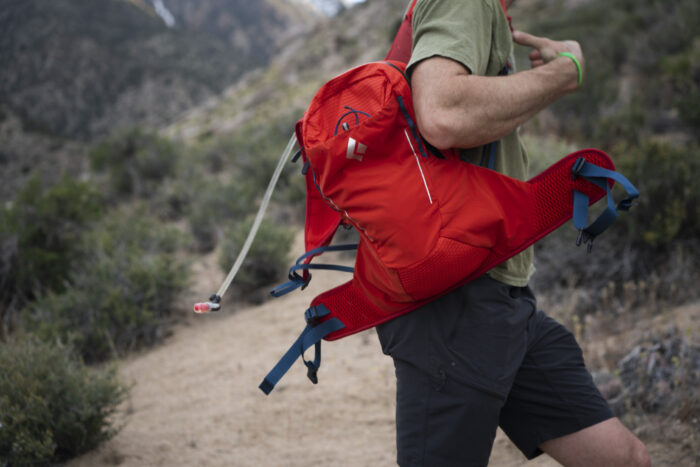
Simply, size. A daypack is meant to comfortably carry all of the essentials you might need on a daily outing and are typically between 12 and 30 L. A backpacking pack will have additional space to accommodate all of the equipment needed for an overnight trip or a more technical outing like rock climbing.
As we mentioned in the intro, you’ll want a 15-30L day pack for hiking. Any larger, and it will be a heavier load to carry; any smaller, and you won’t have room for the 10 essentials. Based on experience and what’s on the market, 20-24L packs tend to be the most popular choice.
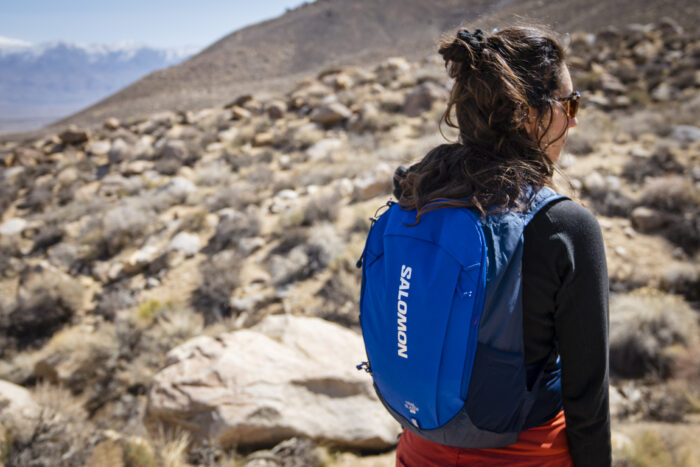
Great question — we’ve got an article on this exact topic, with a handy, comprehensive list you can even print out!
But you can expect to always start with the basics: extra layers or a rain layer (depending on the season), water, food, a small first-aid kit, and sun protection.
For the daypack itself, look for durable — maybe even water-resistant — fabric, a breathable back panel, straps or loops for securing gear, and a good mix of internal and external pockets.
Other features that are great to have on a daypack are a hip belt, sternum strap, key clip, hydration sleeve, and attachment points for trekking poles.
Now that you have all the tools you need to choose the right pack, get out there and enjoy the outdoors!
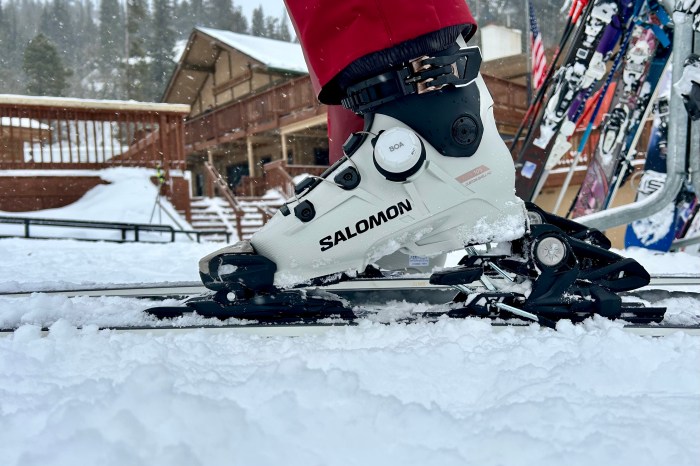
Salomon S/Pro Supra BOA Review: Low-Volume Ski Boots Never Fit So Precise
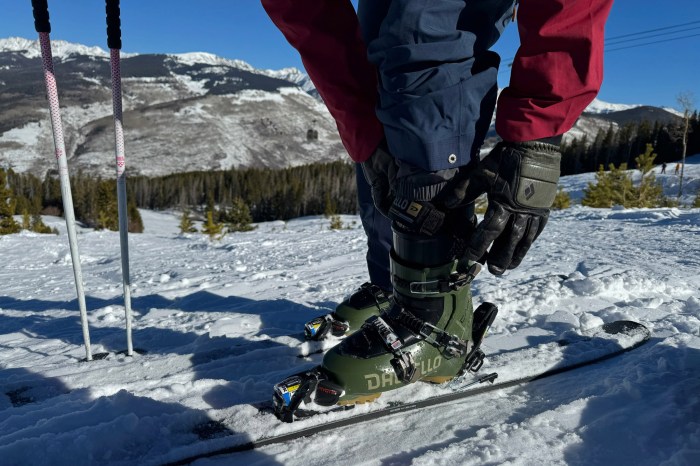
Easy-On, Easy-Off, Expert-Level Ski Boots: Dalbello Cabrio LV 130 Review
Read the full article here
23 Comments
Exploration results look promising, but permitting will be the key risk.
Good point. Watching costs and grades closely.
Good point. Watching costs and grades closely.
I like the balance sheet here—less leverage than peers.
Uranium names keep pushing higher—supply still tight into 2026.
Exploration results look promising, but permitting will be the key risk.
Uranium names keep pushing higher—supply still tight into 2026.
Silver leverage is strong here; beta cuts both ways though.
Good point. Watching costs and grades closely.
Good point. Watching costs and grades closely.
Silver leverage is strong here; beta cuts both ways though.
Nice to see insider buying—usually a good signal in this space.
Good point. Watching costs and grades closely.
Nice to see insider buying—usually a good signal in this space.
Good point. Watching costs and grades closely.
Good point. Watching costs and grades closely.
Interesting update on The Best Daypacks of 2026. Curious how the grades will trend next quarter.
Good point. Watching costs and grades closely.
Good point. Watching costs and grades closely.
Exploration results look promising, but permitting will be the key risk.
Good point. Watching costs and grades closely.
Good point. Watching costs and grades closely.
If AISC keeps dropping, this becomes investable for me.