

Pocket knives are flat-out handy. And they’re a ton of fun. Whether you’re a general outdoorsman, blue-collar worker, or someone who’s looking for an everyday practical tool, they can quickly turn into an obsession.
Since its founding, GearJunkie has tested, reviewed, and reported on more than 800 knives. For this buying guide, contributor Nick Lefort and editor-in-chief Sean McCoy have tested about 100 pocket knives since 2021.
Here’s the brass tacks of hundreds of hours of testing: The best all-around pocket knife you can buy today is the Benchmade Bugout (the Vapyr edition is the best of the best, but also the most expensive, and not available until June 1). The best budget knife, and an astounding value, is the Civivi Yonder. The best value for a hardworking EDC knife is the Knafs Lander 2. Any of those three will serve almost any user well. If you’re in a hurry, grab one and be on your way!
But we have a lot more to say. So stick around to learn about and shop for the best pocket knives. We’ve put them through the wringer and are confident every choice will serve its intended purposes wonderfully.
Editor’s Note: This guide was revamped on May 15, 2026, with focused selections. The guide emphasizes everyday carry (EDC) pocket knives and a few models that are great for camping, hiking, and the outdoors. For other niche selections, check out our guide to the best hunting knives, best tactical knives, and best multitools.
The Best Pocket Knives of 2026
Best Overall EDC Pocket Knife
9.0/10 RATING
Best Budget Pocket Knife
7.9/10 RATING
The best Knife Under $25
8.2/10 RATING
Best Pocket Knife Value
9.0/10 RATING
Best high-End Value Pocket Knife
8.7/10 RATING
Best Heavy Use Pocket Knife
8.8/10 RATING
Best Swiss Army Knife For EDC
8.4/10 RATING
Best Sheepsfoot Blade
8.3/10 RATING
Best do-It-All Pocket Knife
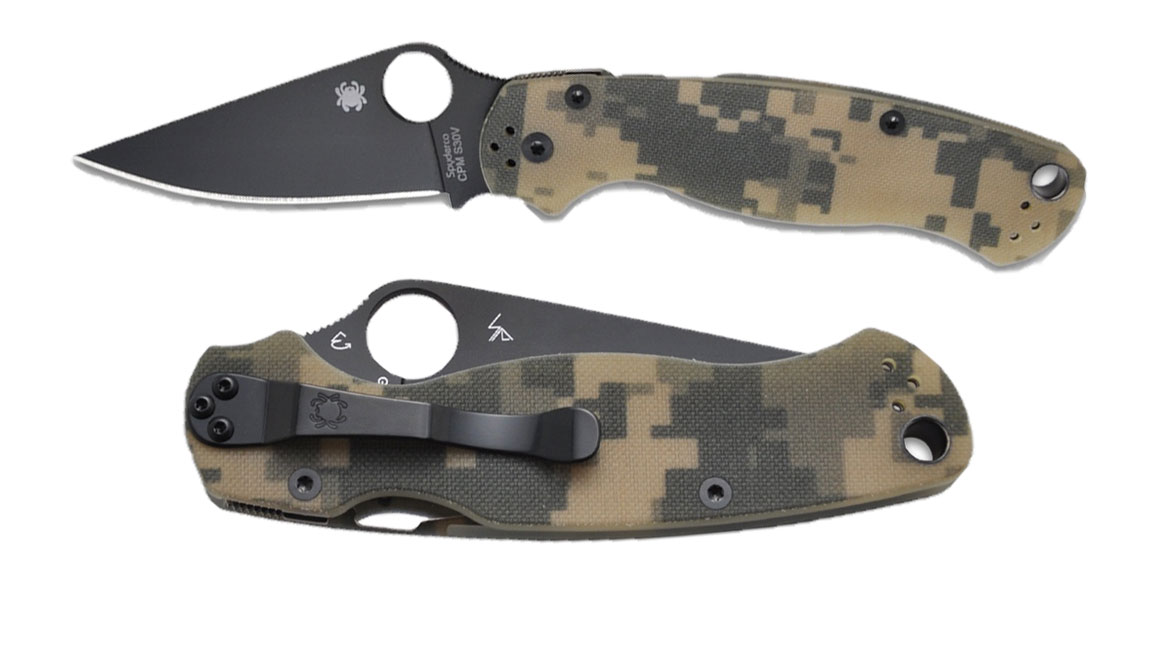
8.0/10 RATING
The Best Automatic EDC Pocket Knife
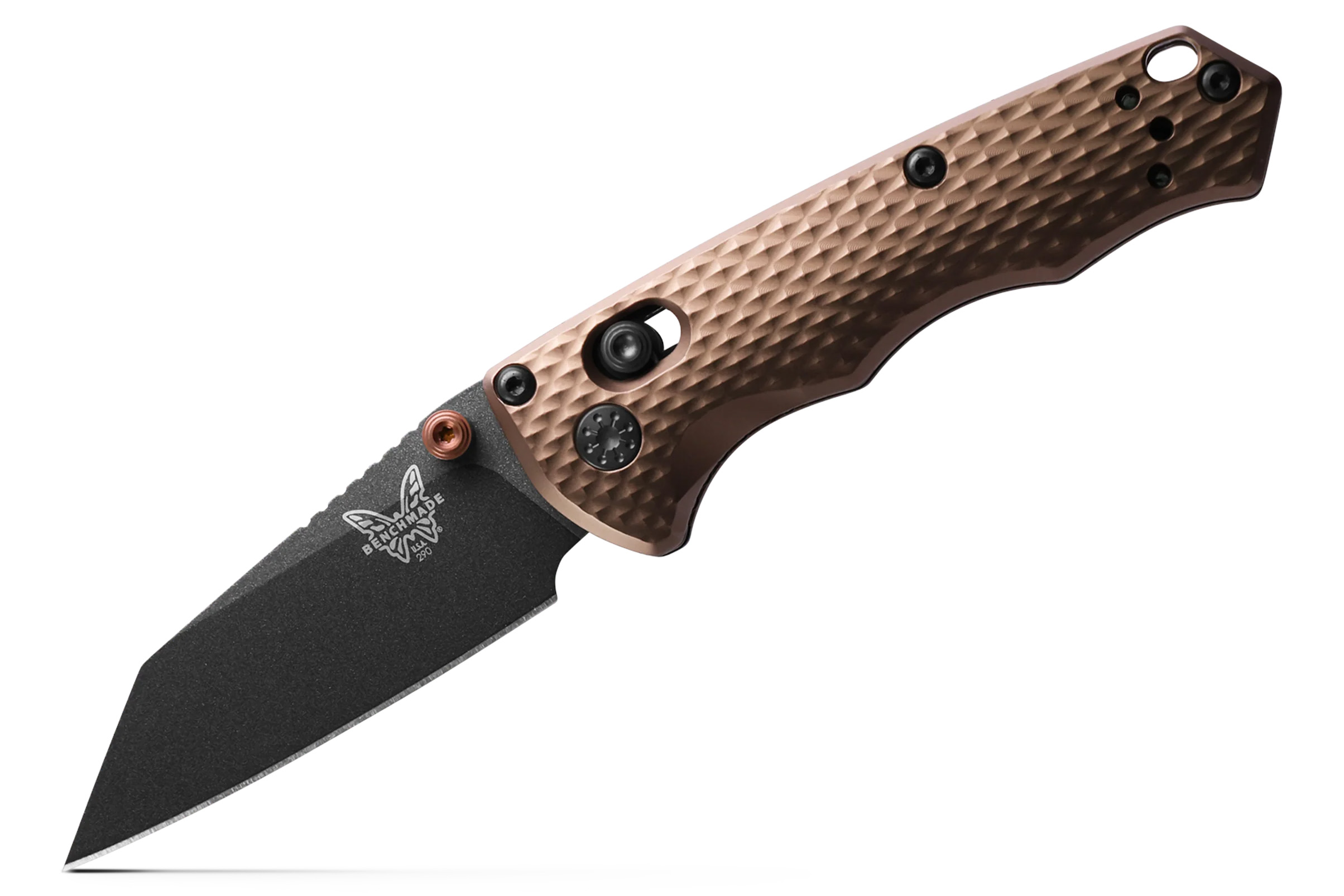
8.3/10 RATING
Best Tactical Pocketknife
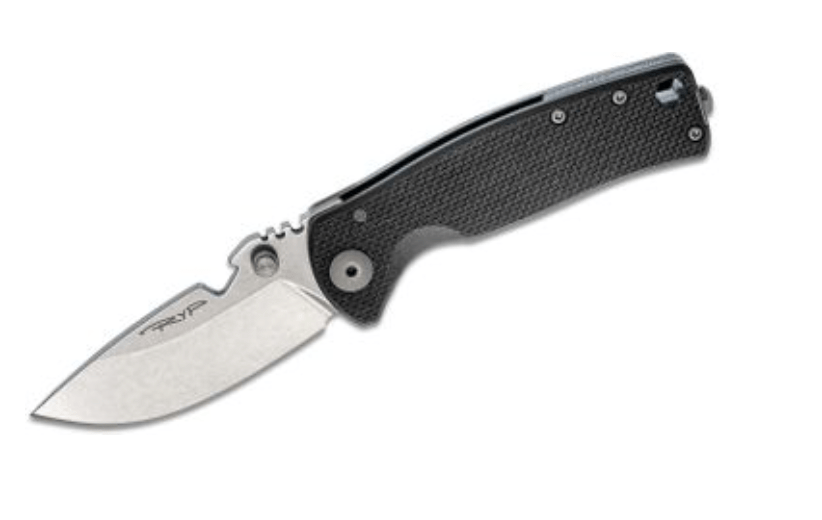
8.5/10 RATING
See more picks
Blade Steel
S30V (other steels available)
Pros
- Very light for a full-size knife
- Versatile design can do anything
- Virtually disappears in the pocket
Cons
- Expensive relative to materials used
Read Review: Hiker’s Dream Knife: Benchmade Bugout Review
Tester’s note: It was spitting snow when I got to the campsite. I needed dinner quickly, and flicked open the Benchmade Bugout to open a stubborn pack of vacuum-sealed meat sticks. The knife is always in my pocket, because it weighs nothing.
Buy me if: You want a versatile, lightweight knife ideal for hiking, backpacking, and everyday carry (EDC) tasks.
Benchmade crafts some of the best knives on the market, and the Bugout (starting at $175, with many iterations available) is the top seller. If you’re looking for a knife to be your trusted companion for the next decade, it should be high on your list, even if it is a bit cliché for those obsessed with knives from custom makers.
From an EDC standpoint, it’s one of the nicest carrying pocket knives available. It’s ridiculously light at 1.85 oz, and the handle is a mere 0.42″ inches wide. The knife slides into your pocket perfectly, and it’s easy to forget it’s there.
Despite the light weight, the knife isn’t too small for practical everyday use. The standard version is equipped with a 3.24-inch, drop-point, S30V stainless steel blade. Our tester used it to slice cord, cut food in camp, and do some carving. Since its launch, several testers have used it on hundreds of tasks, and it’s never failed. It’s a useful blade that maintains utility in a lightweight package.
And with the knife’s popularity, Benchmade now lets you customize the Bugout virtually any way you want. Seriously, the options are immense. Check it out here. You can upgrade steels, handles, put custom designs on the blade, you name it. If you want a high-performing, unique-to-you pocket knife to carry by your side every day, you’ll be hard-pressed to find a better option.
And, launching in June 2026, the Benchmade Vapyr is potentially the best knife our team has ever tested.
Worth noting: The lightweight, thin Grivory handle (on the base model) flexed under heavy pressure. If you need a heavy-use knife, the Benchmade Osborne, Knafs Lander 2, or Leatherman Glider (all below) are better choices. But the thin, ultralight design is well worth the tradeoff for most EDC, camping, and hiking users. The Bugout may be the quintessential, trusty pocket knife.
Pros
- Great balance between size and weight
- Optimal grip options for all hand sizes
- 14C28N
Cons
- Crossbar lock has shorter pull than the industry standard
- No obvious lanyard options
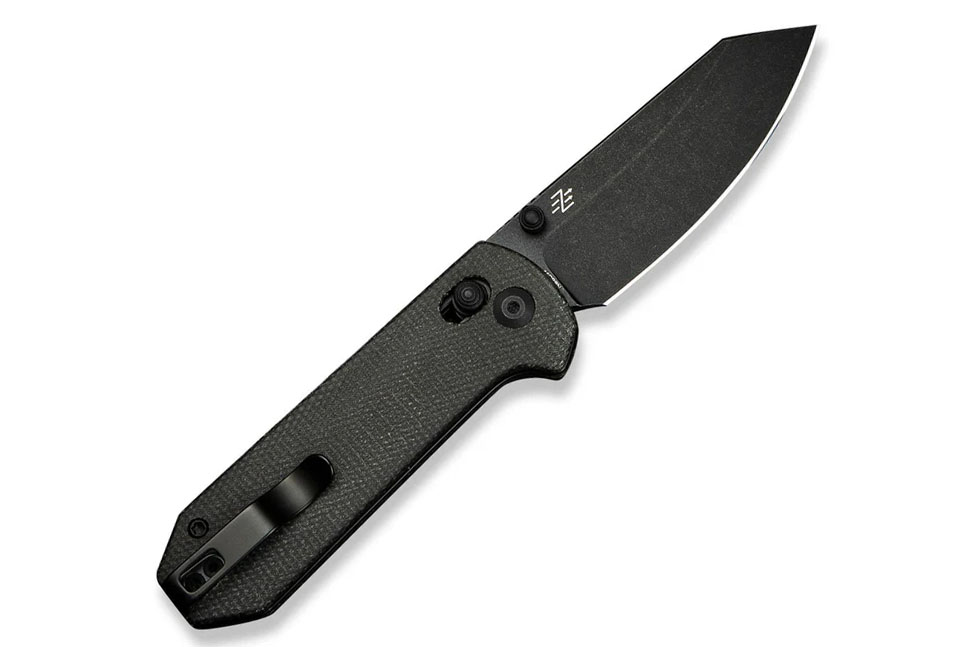
Tester’s Note: The Spey Point blade excelled at retrieving half-cooked hot dogs off the fire, carving up apples, and drilling into wood. The more I used and handled the Yonder, the fonder I became of it.
Buy me if: You want a screaming great deal on a fabulous knife. It has good steel and carries wonderfully. It’s impossible to beat at this price.
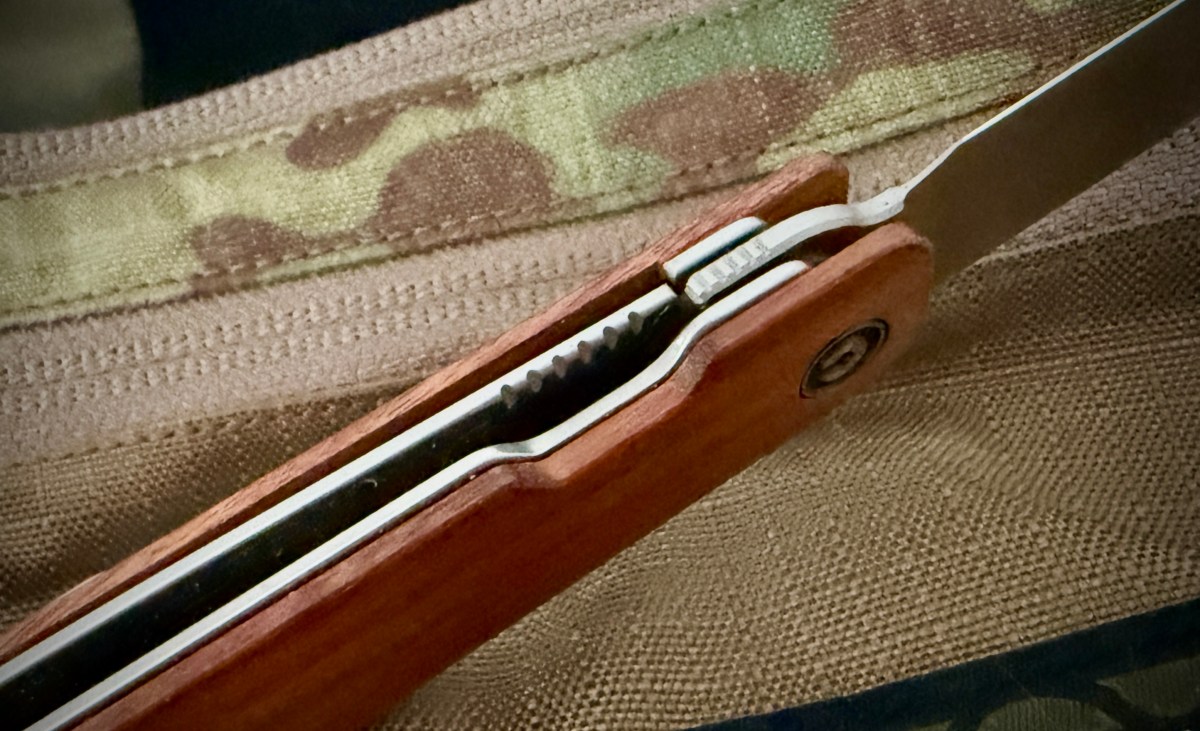
The CIVIVI Yonder ($67) is a mid-size folder with Micarta handles and a 14C28N stainless-steel spey-point blade. It has a crossbar lock and caged ceramic ball bearings around the pivot for fluid opening and closing, and locks up reliably when in use.
With an overall length of 6.62 inches, the Yonder is compact but well-suited for people of all hand sizes. For those folks with really big paws, you’ll enjoy the ability to move your thumb up the spine of the blade onto the jimping and use the grip in a three-finger configuration, wrapping your pinky up around the butt of the knife.
14C28N is considered a value steel, and it’s become increasingly popular in the knife world over the past year as more brands look for ways to cut costs while still using a high-quality, reliable material. It’s stainless steel, so corrosion won’t be an issue, and its abrasion-resistant qualities are also impressive. In terms of edge retention, you should expect the Yonder to hold an edge for a decent amount of time, and resharpening will be a breeze.
The Yonder won “Blade Show Best Buy of the Year 2024” days after it debuted in the summer of 2024. I think it’s the kind of knife made for anyone looking for a dependable pocket knife for years to come.
Note: In the original review of the Yonder, LeFort listed one of the cons as the crossbar lock’s shorter pull. He wants to take that back — in the last few months, he’s gotten used to it and recognizes that the shorter pull allows for quicker deployment.
Blade Steel
Sandvik 12C27 stainless steel
Pros
- Excellent out-of-the-box sharpness
- Very lightweight at a mere 1.6 oz.
- Locking blade is easy to use
- Comfortable handle
Cons
- Grit, dirt, and sand get jammed in blade-locking ring
- Convex grind takes a bit more skill to sharpen compared to a flat grind
- Sandvik 12C27 is a fine stainless steel, but not a premium choice
Tester’s note: I was at turkey hunting camp in April 2026 when my buddy asked to borrow a knife to spread some peanut butter. Realizing he had no pocket knife (come on bud), I tossed him an Opinel from my kitchen kit. “Keep it,” I said.
Buy me if: You need a basic but time-tested knife that’s darned near free.
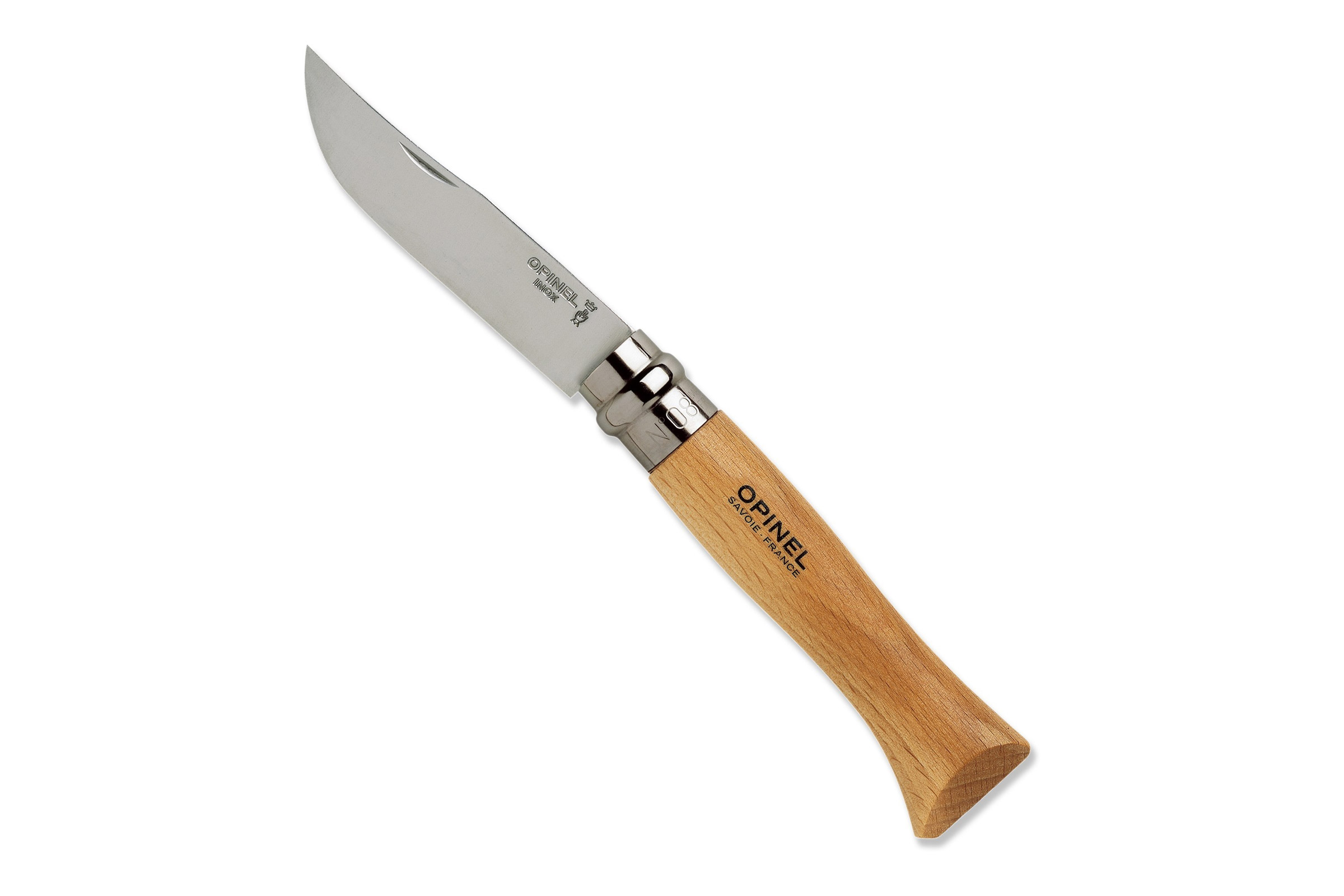
Nineteen bucks for a pocket knife? In today’s world? Surely, this has to be something from TEMU. But no, the Opinel No.08 Inox ($22) is actually from France, where it’s been manufactured for 135 years. People relied on this knife as an everyday carry before humans had even taken flight.
The design has remained pretty much the same, which is why the price is borderline criminal. While not as fancy as some of the new knives at our disposal, it’s time-tested, and it clearly gets the job done. If it hadn’t, it would have been discontinued during its more than a century of service.
The blade is 3.28″ long and is made from Sandvik 12C27 stainless steel. Is the Swedish steel going to blow your socks off? No, modern steels are much better for holding an edge, but again, it’s $22. Give it a quick, easy touch-up, and you’ll be back in action. As far as corrosion resistance goes, GearJunkie contributor Matt Jancer said he’s never had a single spot of rust pop up on his trusty Opinel No.08, despite not babying it.
One of the few updates this knife has received since its inception is the inclusion of a locking mechanism. In the tradition of a more old-timey aesthetic, it’s a simple feature without fancy springs or small parts. Just rotate the locking ring at the top (called Virobloc), and the blade is literally blocked from closing on your hands. While it is prone to getting gummed up with dirt, it’s easy enough to clean out and is a much-needed upgrade.
The out-of-the-box sharpness is surprisingly good; the factory edge is better than some more expensive knives. Whether you’re on a shoestring budget or looking for a timeless classic to add to your collection with minimal investment, the Opinel delivers time-tested performance.
Lock type
Clutch lock (Crossbar Lock)
Pros
- Size-to-weight ratio
- Clutch lock
- The fat-bellied S35VN drop point blade
Tester’s note: With the new year, I switch over from ProBars to meat and cheese during my adventures. This is where that big belly on the Landers 2’s blade came in handy. There’s nothing like an efficient knife that knows how to prep some kielbasa and cheddar on a random picnic table, rock, or log.
Buy me if: You want a hard-working pocket knife with excellent blade steel, a versatile shape, and grippy handles at a very reasonable price.
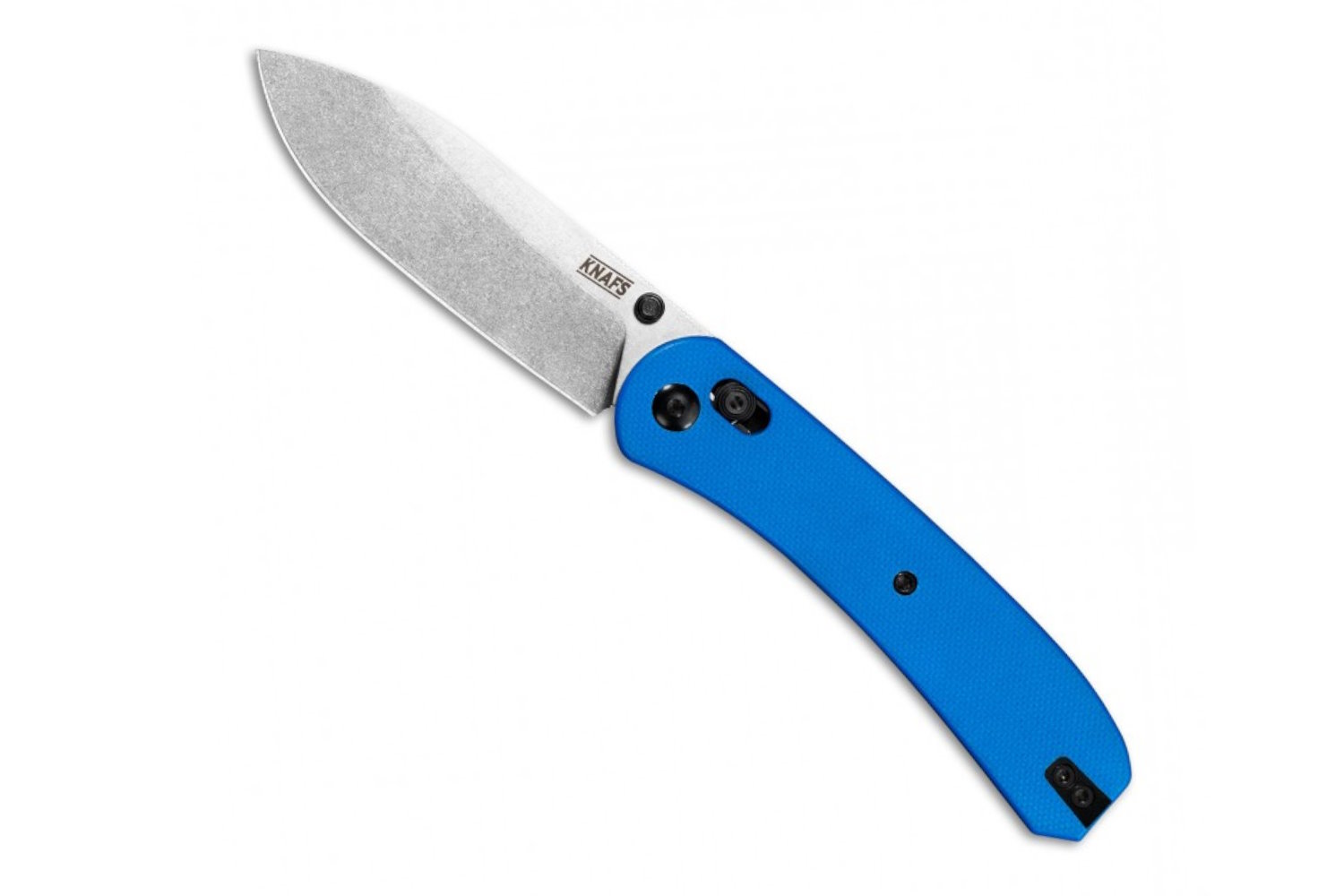
The Knafs Lander 2 ($135) is the hardworking answer to Benchmade’s Bugout ($175). While the Bugout has been touted for being lightweight, the trade-off is that it’s only good for light- to medium-duty work. By adding only an ounce more of weight, the folks at Knafs created a pocket knife that can be used and abused at your discretion for years to come.
Available now in a variety of handle-scale options and blade finishes, the Lander 2 uses S35VN steel. S35VN is one of the most popular premium steels because it’s easy to maintain and staves off corrosion and abrasion like a champ. It also hosts the strongest lock mechanism on the market today, the Clutch Lock, a branded version of the crossbar lock that first climbed to fame through Benchmade as its Axis lock.
From LeFort: “One of four different Lander models, the Lander 2 gets my top pick award because the balance between materials, size, function, and weight is hard to match. Since writing the original article in January of this year, I have swapped out my Blue G10 carry for the Green Micarta version. However, if you plan on adding a Lander 2 to your pocket, I would recommend you look at the brand’s expanded lineup of custom handle scales — or consider making them yourself.”
Blade Shape
Reverse Tanto
Lock Type
Sliding bar lock
Pros
- Great steel
- Easy-to-use and tough lock
- Slim size and weight
- Super-thin blade stock
- Good handle design
- Price
Cons
- Umm … the clip sticks out from the handle about a quarter inch — does that count?
Tester’s note: There were a few times when it processed seafood, such as lobster. I was not careful and did not regularly wipe down the blade, and despite the food and the sea air, the MagnaCut was no worse for wear.
Buy me if: You want a very high-quality knife that offers exceptional value.
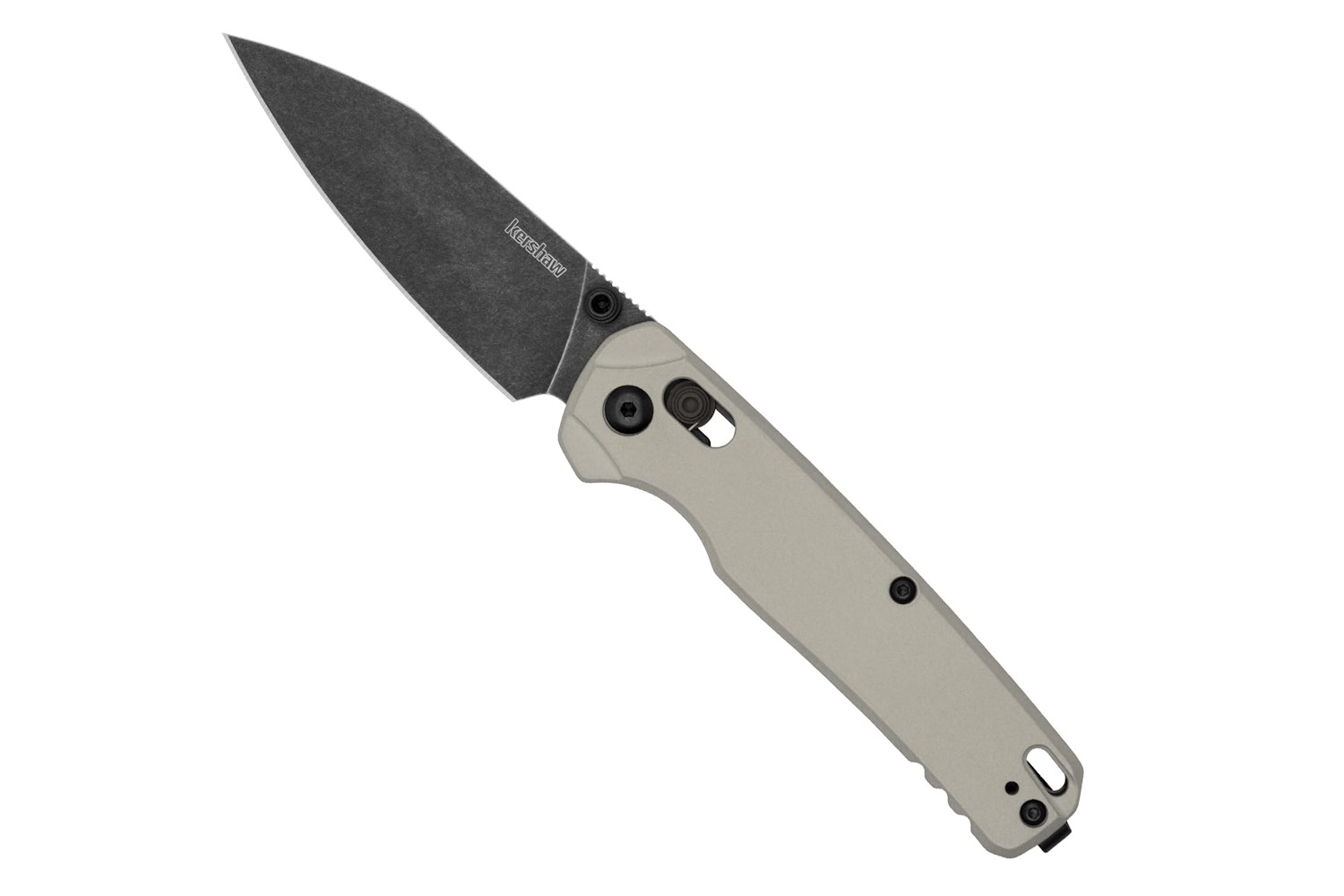
While the listed price ($260) of the Kershaw Bel Air doesn’t scream value, the kicker is that this knife is often available for considerably less. At the time of this writing, it’s available for around $150 in most places, and certain colors are available for $115 on Amazon. And it’s a MagnaCut blade.
Yep, that’s right, you can see what the MagnaCut craze is all about without feeling like you’re blowing a ridiculous amount of cash on a pocket knife. It’s a premium steel at a middle-of-the-road knife price. That alone makes it a super cool pocket knife.
But the benefits of the Bel Air don’t stop at just the steel. The Reverse Tanto blade is thin, at a mere .09″, something that is usually reserved for much more expensive, or hard to get knives. While thick blades used to dominate the market, thinner, much “slicier” blades are now possible due to improvements in steel technology. The Bel Air gives you that at a reasonable, mass-produced knife price.
Our tester took only this knife on a vacation, and used it to cut up snacks for kids, open cardboard beer boxes, carve driftwood, and process lobster for dinner. The only wear the knife showed was a slight diminishment of the blackwash on the blade. While some may view that as a negative, it actually gives it a cool, “trusty, used tool” vibe.
The handle is aluminum with grippy scales and a Cerakote finish. Even after being taken to the beach, the knife was in great shape, although our tester did admit to babying it a bit around sand. That was due to the Duralock locking mechanism. It is quite literally a replica of the Benchmade mechanism (the patent expired), and it can certainly be trusted. But it does have a lot of moving parts that can get gummed up with extreme use.
Honestly, this U.S.-made pocket knife is a steal for just about anyone. But it’s an especially good grab for those who are considering dabbling in the premium pocketknife world, just to see what the hype is all about. There’s hardly anything not to love.
Blade steel
CPM-MagnaCut Stainless
Blade shape
Reverse tanto
Lock type
Axis (Crossbar)
Weight
2.72 oz. (confirmed)
Pros
- Top-shelf steel
- Light, easy to pocket and carry
- Versatile blade shape
- Comfortable handle
Cons
- Not good for food prep
- Expensive
Tester’s note: I took it to the woodshed, so to speak. I used it to hack several small branches from an overgrown elm tree, clip dozens of shoots off my tomato plant, trim back my zucchini, and do some whittling. It worked great through the tests.
Buy this if: You want a modern classic that is comfortable as both an EDC and hard-use camping and outdoor blade.
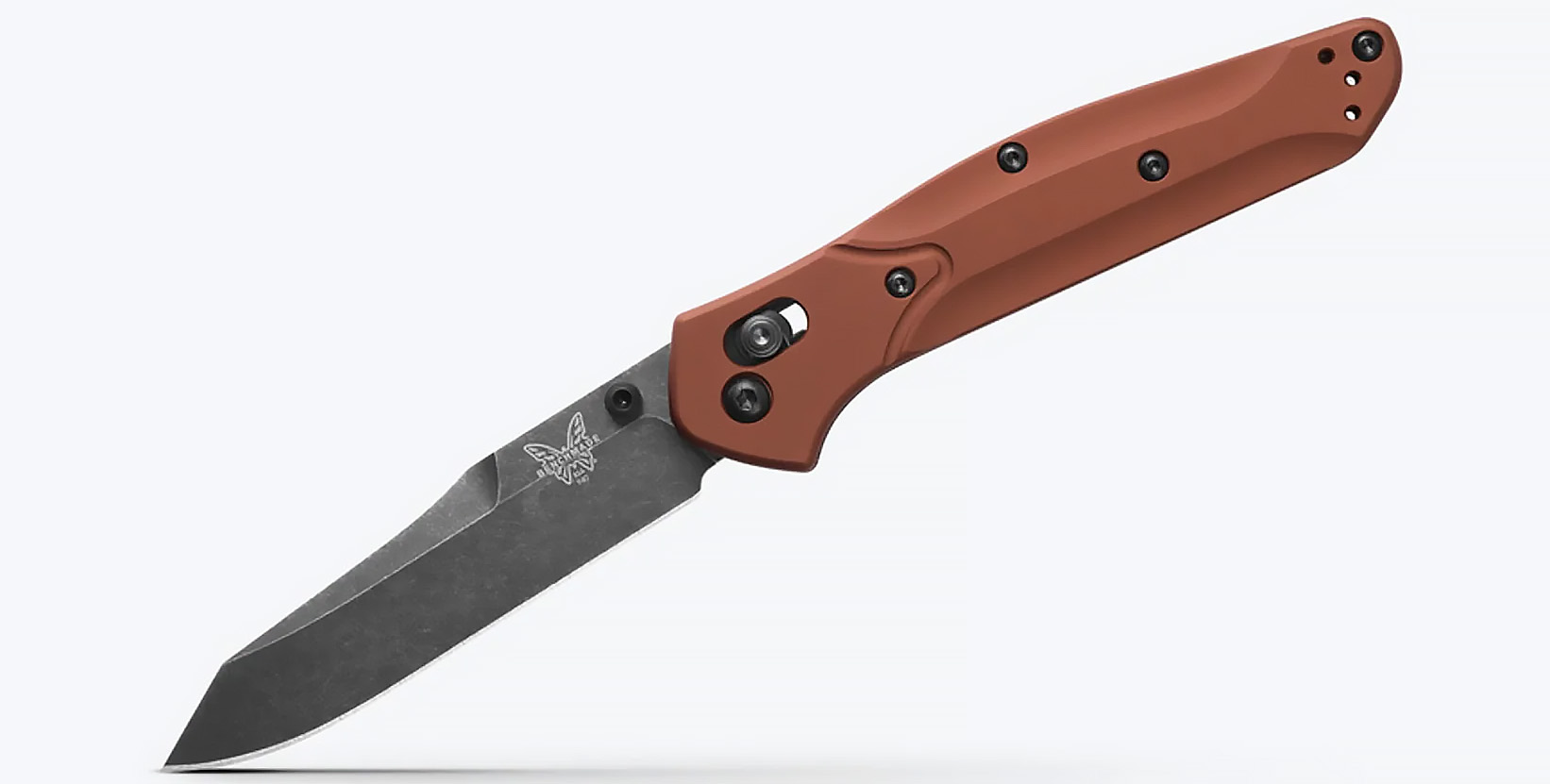
Many of the knives on this list stand out as subtle, thin, easy-to-carry pocket knives. While the Benchmade Osborne ($300 Magnacut, $250 S30V) isn’t a heavy or bulky carry, it is built to withstand heavier-duty tasks than other knives on this list. That gives it a good position for those who demand more than opening packages or cutting up the occasional snack from an everyday carry.
The unique blade design, the antithesis of modern thin blades, allows it to handle tougher tasks. The spine is 2.92 mm thick, and the grind shape creates an aggressive wedge rather than an ultra-thin profile. It’s very angular and beefy, making it great for some tasks and not so good for others, like thinly slicing vegetables.
But it excels at tougher tasks, like hacking branches off trees, and it wouldn’t be ridiculous to use it for heavier-duty fire-making. And after cutting 50 1-foot slices through a cardboard box, Sean McCoy found the knife was still sharp enough to cut through paper, though not as cleanly as it had out of the box.
Like many of the knives listed, you can find an Osborne in different steel types to fit your exact needs and budget. All of them look really good, though, and the knife demands attention from onlookers with a modern but rustic look.
Steel
Martensitic stainless steel
Handle material
ABS/Cellidor
Pros
- 16 tools at your fingertips
- Pressurized ink pen is cool
- Excellent bang for the buck
Cons
- Package opener tool is less than ideal
- No Phillips head screwdriver
Tester’s note: During the last several weeks, I’ve been carrying the Companion as my primary EDC more often than not. It’s small and easy to toss into a pocket, the hallmark for a great EDC knife. If you’re not comfortable carrying it, what’s the point of calling it an EDC?
Buy this if: You like the convenience of a great multitool in a small, discreet package that fits in a pocket.
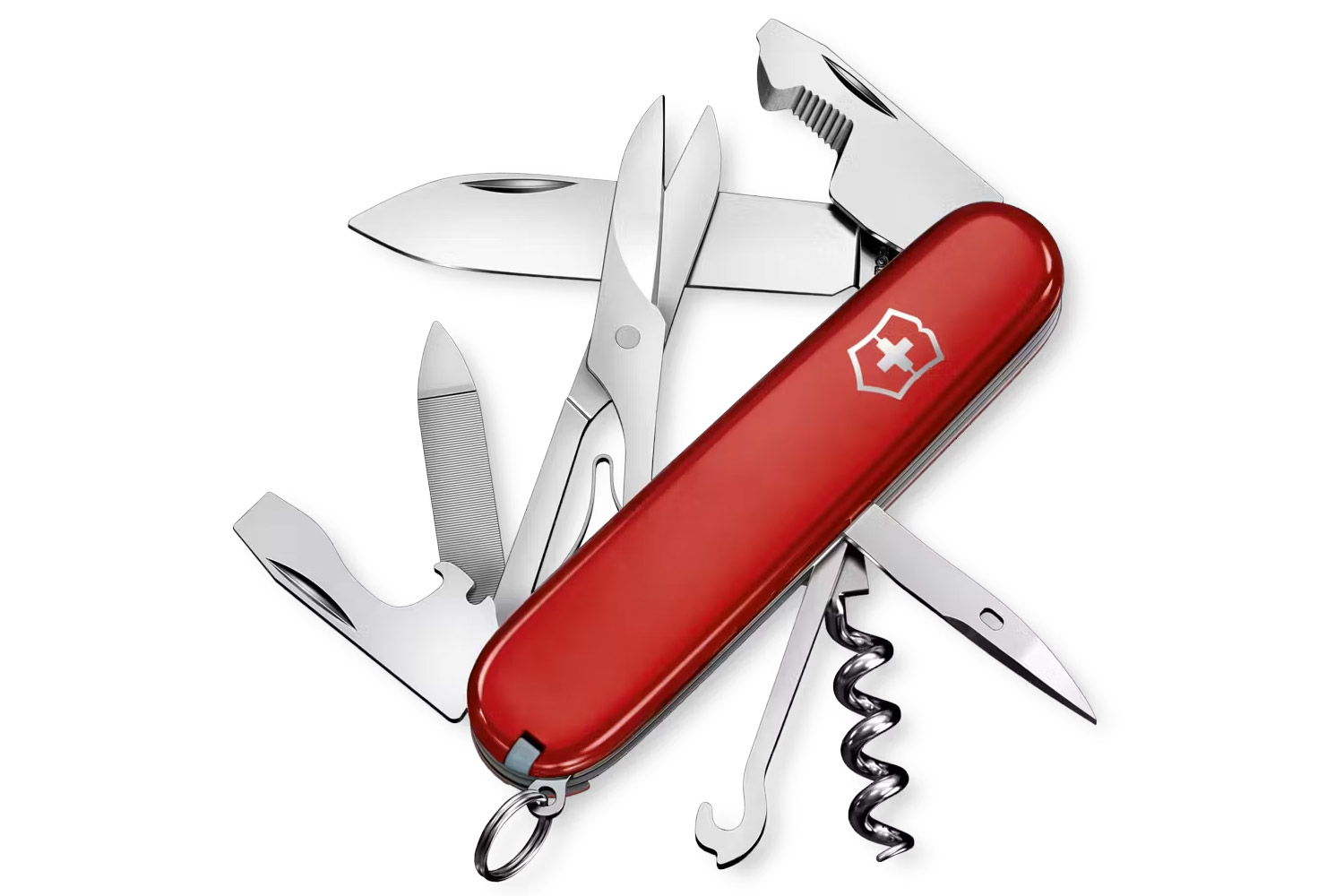
The Victorinox Swiss Army Companion ($48) is a refined take on the classic multi-tool, specifically engineered for the needs of the modern urban dweller. While traditional models like the Huntsman are geared toward the backcountry, the Companion prioritizes tools that solve daily problems found in the city and suburbs.
With its 3.6-inch closed length and a weight of just 2.9 ounces, it’s a highly portable mobile toolbox that disappears into a pocket until needed, making it an ideal choice for a dedicated everyday carry.
This tiny 16-tool kit introduces some non-traditional additions alongside the classics. In addition to the standard 2.75-inch blade, sharp scissors, and wire stripper, the Companion includes a pressurized ballpoint pen — perfect for quick notes on the go or signing a hunting license in the field — and a dedicated box opener tool. While the box opener can be a bit aggressive on cardboard, the overall utility ensures you’re prepared for everything from snipping loose threads to minor home or camp repairs.
At roughly $48, the Companion offers exceptional value and the legendary build quality associated with the Victorinox name. Though it lacks a dedicated Phillips-head screwdriver, its martensitic stainless steel construction and polished finish provide a durable, rust-resistant tool that can last for decades. The Companion is a reliable, budget-friendly tool that balances tradition with modern-day EDC functionality.
Tester’s note: I made several hard cuts, including stabbing through the skulls of some walleyes before filleting them (with a fillet knife — come on, I’m not an animal), and the Glider felt both strong and secure in my grip.
Buy this if: You want a premium, tough-as-nails pocket knife that, while a little heavy, rides well in a pocket and offers the exceptional versatility of a MagnCut sheepsfoot blade.
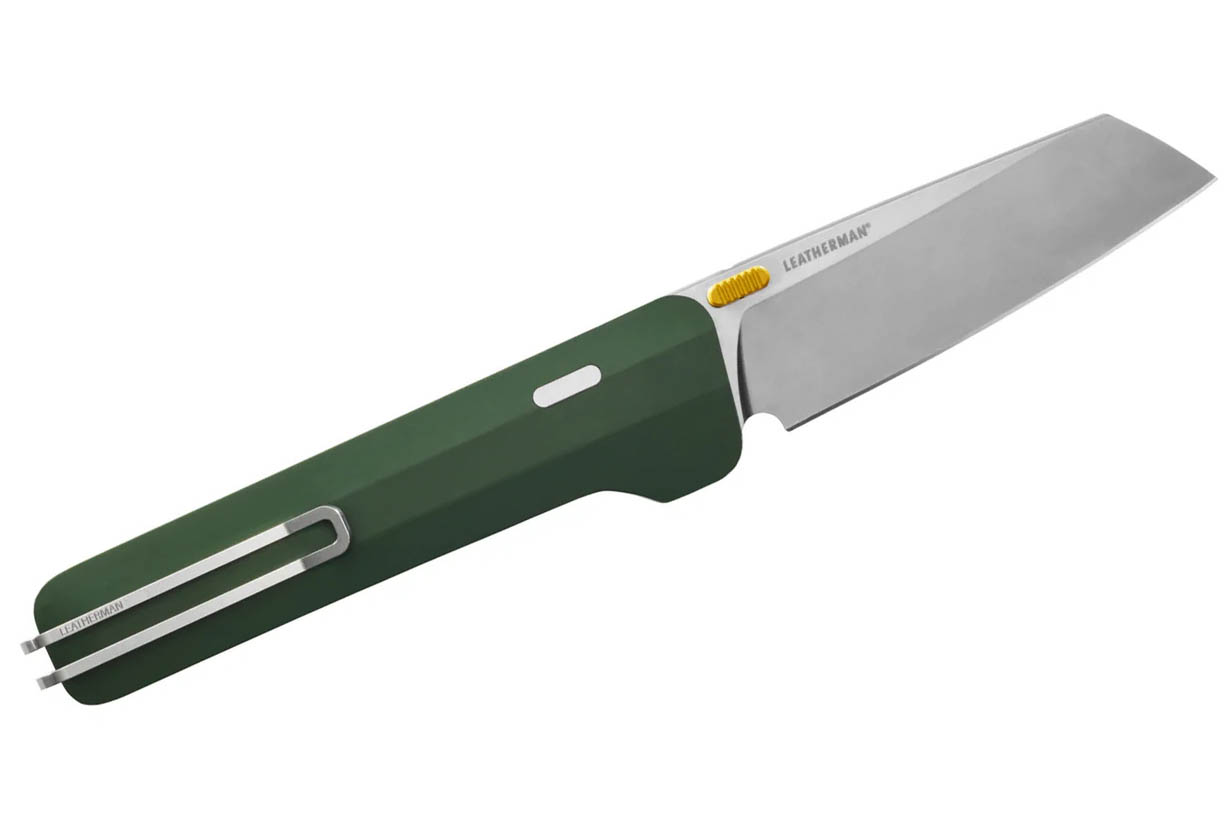
Leatherman has been synonymous with practical, affordable pocket knives and multitools. With the introduction of the Glider ($300) and a few other knives, Gerber jumped into the highly competitive premium knife space. The execution was excellent, and this is one tough, yet versatile knife.
As one of the heaviest knives on this list, the Glider isn’t a great option for those who prefer minimalism over practicality. One of the first things you’ll notice when you pick up this industrial-feeling knife is the heft of the Cerakoted aluminum handle and MagnaCut, 3″ Sheepsfoot blade. Where the knife lacks in weight savings, it makes up for it with a durable, rock-steady, fixed-blade knife feel.
After 2 months of testing without sharpening, Sean McCoy found it maintained a very sharp edge under regular, hard use. The wide blade, while unique for an EDC, is great at a variety of tasks, from spreading peanut butter and cutting vegetables to whittling and opening packages. The patented compression wedge lock is solid, and there is no blade play in this folder. It’s stout and built for hard work.
It’s not perfect, and the thumb stud opening is good, not great. It tends to hang up when halfway open. In hand, it’s also not the most ergonomic knife, and the metal, angular handle can dig into your hand a little while making hard, aggressive cuts.
People may also find it annoying that, over time, the Cerakote finish will wear off. However, in our opinion, that gives the Glider a unique character and a cool, industrial look.
Blade steel
S45VN (others available)
Lock type
Compression lock
Pros
- Compression lock
- Slice-y blade
- Tons of aftermarket upgrades
Cons
- Weird blade-to-handle ratio
Tester’s note: If you had to choose one folding knife to do everything — one knife to carry in your pocket for every trip and task — what would it be? After more than five years and 250 systematic knife reviews, I’ve landed on the same blade as many others: the Spyderco Para Military 2.
Buy me if: You want a single pocket knife for everything from light EDC tasks to camping, trades, and military use. Just be mindful of the thin tip, which can snap off relatively easily.
The Spyderco Para Military 2 (starting at $209) was the premium pocket knife of the mid-2000s. It is still in production today, which makes it a timeless classic in the modern era. It feels like just yesterday that it was the knife you had to have. Yeah. You’re getting old.
But timeless classics are classics for a reason. Every once in a while, a brand stumbles on something that works and runs with it. That’s the case with this knife. In 2015, tester Anthony Sculumbrine labeled it as the “Best Do-It-All Pocket Knife,” and 10 years later, there’s still a case to be made for that statement.
The large thumbhole on the blade, while creating an unusual blade-handle ratio, is synonymous with Spyderco knives and creates an irresistible, “have to fiddle with” feel. It makes one-handed operation a breeze, and the compression lock is rock solid.
While the Benchmade Bugout can start to flex under pressure, the 3.44″ blade on the PM2 is built to handle tougher tasks, like cutting glued linoleum and thick tree branches. Yet it’s still thin enough to work as a passable kitchen knife in a bind.
With this knife being around so long, it’s hard to nail down an exact price. There are a ridiculous number of options available, from S45VN steel with a G10 handle for around 200 bucks to a Maxamet version that often fetches over $400. Whichever you choose, though, you can trust the Spyderco Para Military 2 to be a lifelong companion.
Pros
- Excellent steel
- Acute Wharncliffe tip
- Small but very capable
Cons
- The handle may be too small for bigger hands
- Expensive, especially for its size
Tester’s note: I also put the edge to use making feather sticks and wood chips, a generally handy application for firestarting. Even after going ham on a hard piece of very dry plum wood, the blade remained extremely sharp.
Buy me if you want a small yet very tough pocket knife with a lightning-fast automatic-opening mechanism.
The Benchmade Auto Immunity ($325) was designed to meet or exceed knife laws requiring automatic knives to have blades under 2.5 inches to be legally carried. It’s also made from one of the best knife steels around. What it lacks in size, it makes up for in capability.
The steel we’re talking about here is one of the few ultra-premium, super steels: M4. On its own, M4 has very good corrosion and abrasion resistance. With the added Cerakoting found here on the Auto Immunity, it might be the best knife steel on the planet. It also holds a serious edge for a prolonged period.
This is good because, like S90V, it’s a beast to sharpen. Don’t worry, when the time comes, you can take advantage of Benchmade’s Lifesharp Guarantee, which lets them resharpen it for free.
In terms of overall size, some people might find the Auto Immunity a little small for more demanding tasks like kindling prep. However, due to its Wharncliffe-style blade, it’ll excel in precision tasks like carving, coring, and food prep.
In fact, after a couple of months of carrying and using it, our tester, Sean McCoy, didn’t even notice that it was an undersized knife. He stated, “It both carries and performs better than the venerable Bugout at a very similar weight. It has a much better and stiffer handle than the Bugout, and locks up stronger.”
The only thing keeping the Benchmade Auto Immunity from being closer to the top of this list is the fact that it’s going to run you $325 bones. But we couldn’t leave it off the list for proud pricing.
Carry
Right or left, tip up, deep carry
Pros
- Flipper-style opening mechanism with a ball-bearing assist
- Overall hand feel and knife control
- Wirestripper jimping and hex bit driver
- MagnaCut, titanium, and Micarta combo
Cons
- Thumb stud opening is a bear
- Wirecutter doesn’t do 12 AWG wire, which is more common in households in the USA
Tester’s note: While driving home with a fresh pizza for the kids and me with the windows down, the rush of wind lifted the pizza box open and began lifting up the ‘za. I had to think fast. So I pulled out the 4.0 and stabbed it into the box lid and one of the sides, essentially creating the first-ever pizza box lid lock.
Buy this if: You want a remarkably smooth, large tactical knife with extras like a glass breaker, driver, and wire stripper.
GearJunkie contributor Nick LeFort was a big fan of the show MacGyver growing up. The main character, and the show’s namesake, was always getting himself into bad situations and making contraptions to get out of them. The one tool he carried with him was a Swiss Army Knife. Now, the DPx Gear HEST/F 4.0 ($275) doesn’t offer the same variety of tools as a SAK as the Victorinox Huntsman, but it is built to get you out of a hostile environment.
The HEST/F 4.0 is a knife that could be used and abused without having to worry about it getting wet, dirty, twisted, turned, torqued, or yelled at in an aggressive tone. With a 3/16-inch-thick MagnaCut drop point blade, titanium frame, and Micarta handle scale, all of which contribute to that. The flipper-style opening and caged ball bearings around the pivot are just an added benefit.
Aside from being a beefy knife that can pierce, cut, slice, shave, chop, and pry, the HEST/F 4.0 comes with a few other features that heighten its tactical ability. Built into the butt of the knife are both a glass breaker and a ¼-bit driver. Additionally, the spine jimping is sized for stripping electrical wire.
There’s also a notch on the spine in front of the thumb stud that’s designed to be a cap lifter and a means to lift a pot off a fire. To be the Best Tactical Pocket Knife on this list, you need to be ready for war. In making the HEST/F 4.0 (as well as its three predecessors), DPx Gear understood the assignment.
Pocket Knives Comparison Chart
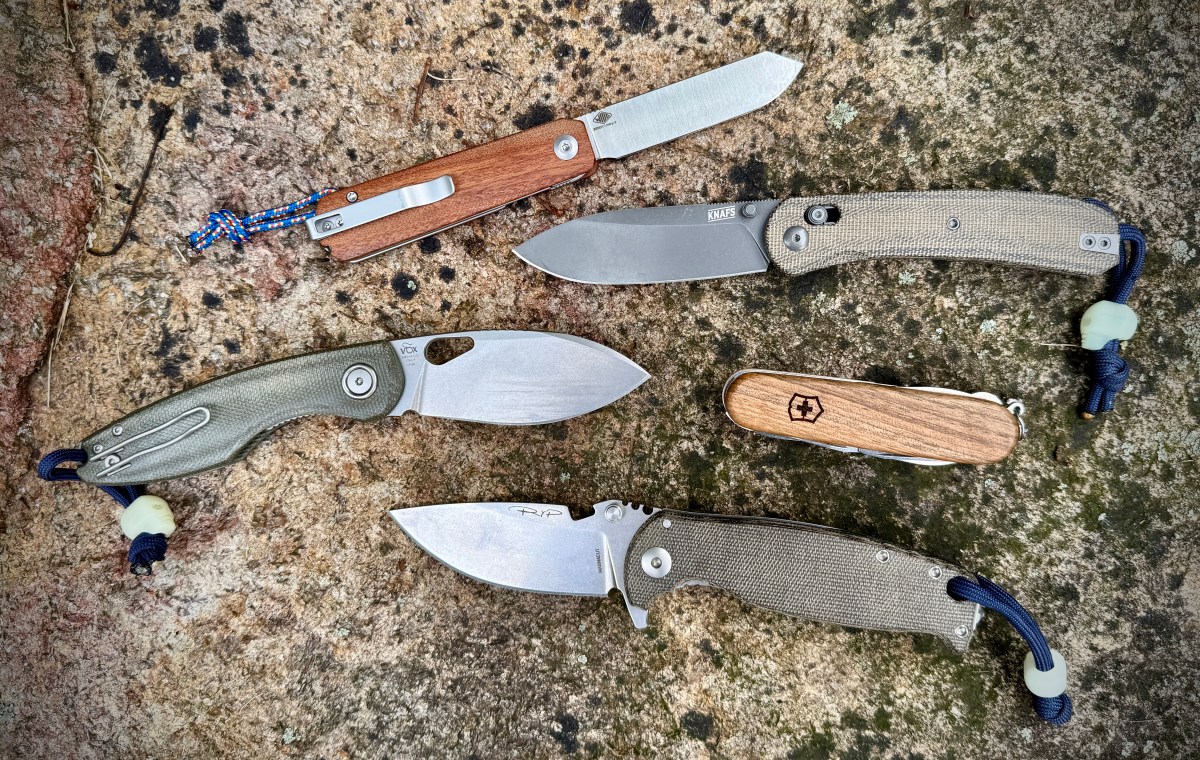
How We Tested the Best Pocket Knives
Out of all of the things we test around GearJunkie, pocket knives seem to get easier and easier every year — because everyone wants one. Suffice it to say, the knives we’ve recommended on this list weren’t just tested at a desk or in some random workshop in the Midwest; they were used, abused, loved, and carried for extended periods.
For this update, we enlisted our resident knife testers, Nick LeFort and Sean McCoy, to take the reins and determine which knives were worthy of this list. LeFort spent the fall and winter testing a variety of knives in his day-to-day life, on adventures, and across all conditions. LeFort believes that the best way to see what a knife can do is to rely on it in real life. McCoy agrees and uses knives daily while hiking, hunting, camping, and living much of his life in the mountains near Summit County, Colorado.
So, What Did They Do?
Where you can find YouTube and the internet peppered with people cutting rope and cardboard in their garage, you’re more apt to find LeFort or McCoy out in the woods, down by a river, or wherever their adventures take them. Testing isn’t just a 9-to-5 job; these knives are part of their lives.
Of course, we also factor in scientific bench testing. We weigh each knife to verify its actual weight. We then perform tests cutting cardboard and rope to measure the edge retention. Finally, we re-sharpen knives to learn how hard it is to restore them to razor-sharp condition, using a Wicked Edge professional-grade knife sharpener.
The bottom line is that our approach to testing is to make sure a product and its parts perform as expected in the field. With marketing being what it is, it’s easy to buy into the hype. We look at that hype and see if it’s all just talk or the real deal.
Buyer’s Guide: How to Choose a Pocket Knife
Knife Steel
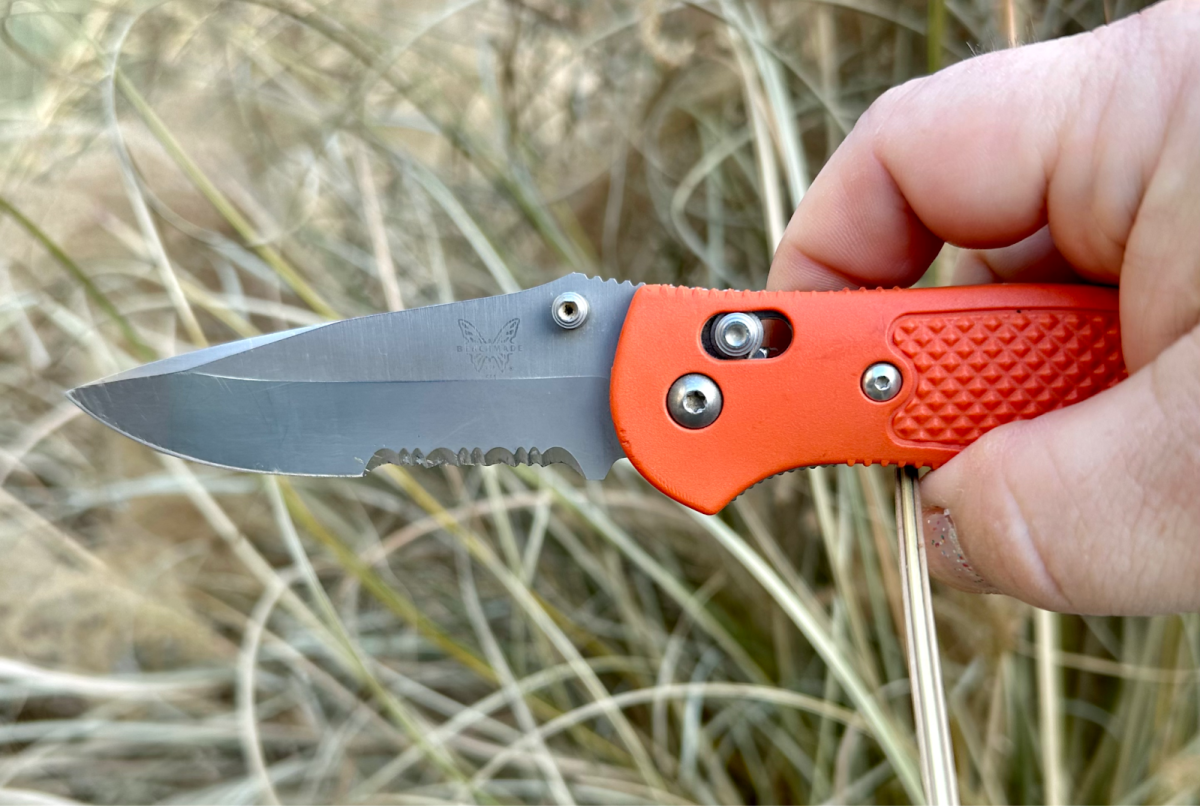
The variety of knife blade steel and handle materials is pretty impressive. But where the handle materials seem to have stabilized, new steel is coming out every year. In the 11 selections above, there are eight different knife steels. The only steel in multiple selections is Magnacut, which is a fantastic, if expensive, steel. We recommend considering each steel on a case-by-case basis. But they should still meet or exceed the following requirements:
Corrosion Resistance
The last thing you want is your knife turning orange on you out in the field. Especially if you’re planning on using it to prepare food. All of the steel mentioned in this guide either has exceptional corrosion resistance or has been coated to eliminate the occurrence of rust.
Abrasion Resistance
Some people consider this property to be more form than function. But in all reality, if your blade can easily get scraped up that can lead to chipping, which then could lead to blade failure.
Edge Retention/Ease of Resharpening
No matter what knife you carry, the worst knife you could carry is a dull one. That being said, you want to look for knife steels that either excel in edge retention or can be easily resharpened.
You can learn more about specific knife steels here.
Handle Material
When it comes down to handle material it’s all about grip. Ergonomics play a part in this as well, as you could have great handle material in a weird shape that will cause fatigue. In the end, you won’t want to use the knife and you’ll have wasted your money. These are some of the more preferred materials on the market today:
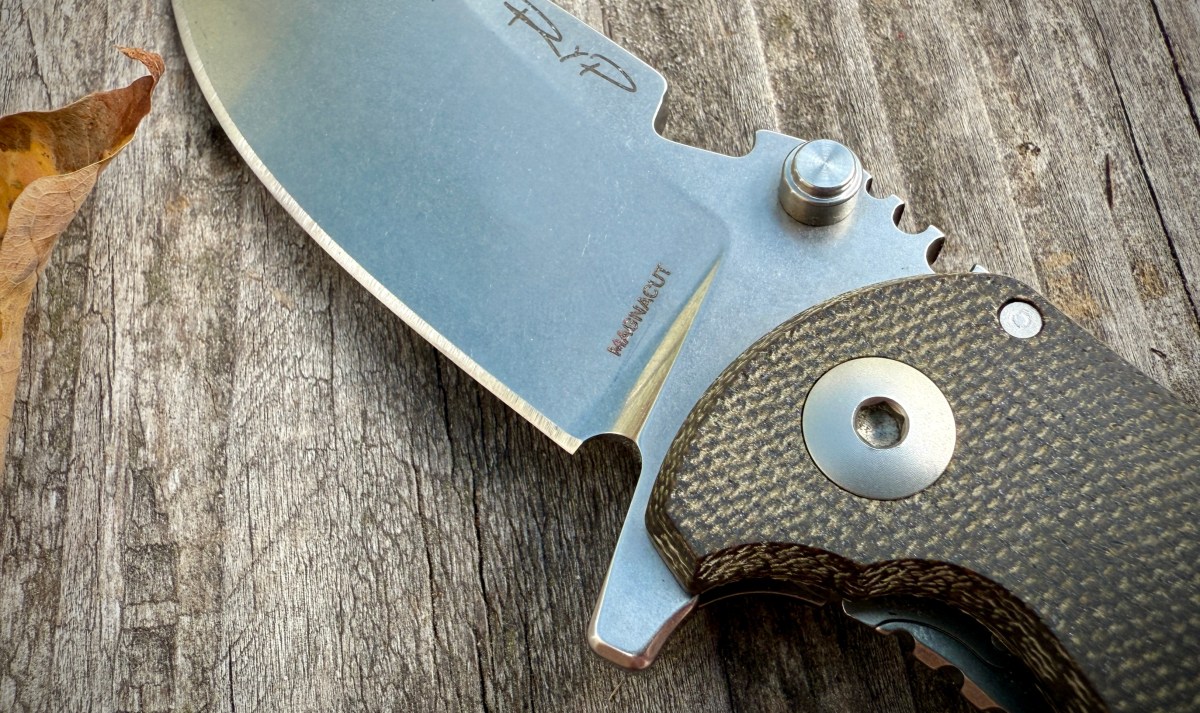
G10 & Micarta
G10 and Micarta are both extremely strong materials. Both excel in grip whether your hands are wet or dry, which is why those two materials are so popular with EDC, Survival, Tactical, and Bushcraft-style knives.
Nylon & Plastic
Nylon and plastic also make for great handle materials because they’re durable and lightweight. They’re also generally textured. It’s this texturing and styling that increases the grip on a knife with these materials.
Note: Nylon and plastic handle scales carry a litany of names. Some of the more popular names are: FRN/Zytel (Fiber Reinforced Nylon), GRN (Glass Reinforced Nylon), GFN (Glass Filled Nylon), and Grivory (Injection Molded).
Carbon Fiber
A lot of folks think carbon fiber is just pretty to look at, but in all reality, this woven material is lightweight and strong. Depending on its composition, it could be the perfect balance between strength, weight, and durability. You can bet your bippy you’ll pay more for a knife with carbon fiber, but it’s worth it.
Aluminum & Titanium
Both aluminum and titanium are incredibly strong and lightweight, making them ideal for knife handle scales. But where aluminum has become relegated to budget knives, titanium is usually saved for premium and ultra-premium knives. The only drawback to both of these materials is that they can be slippery when wet.
Ease of Use
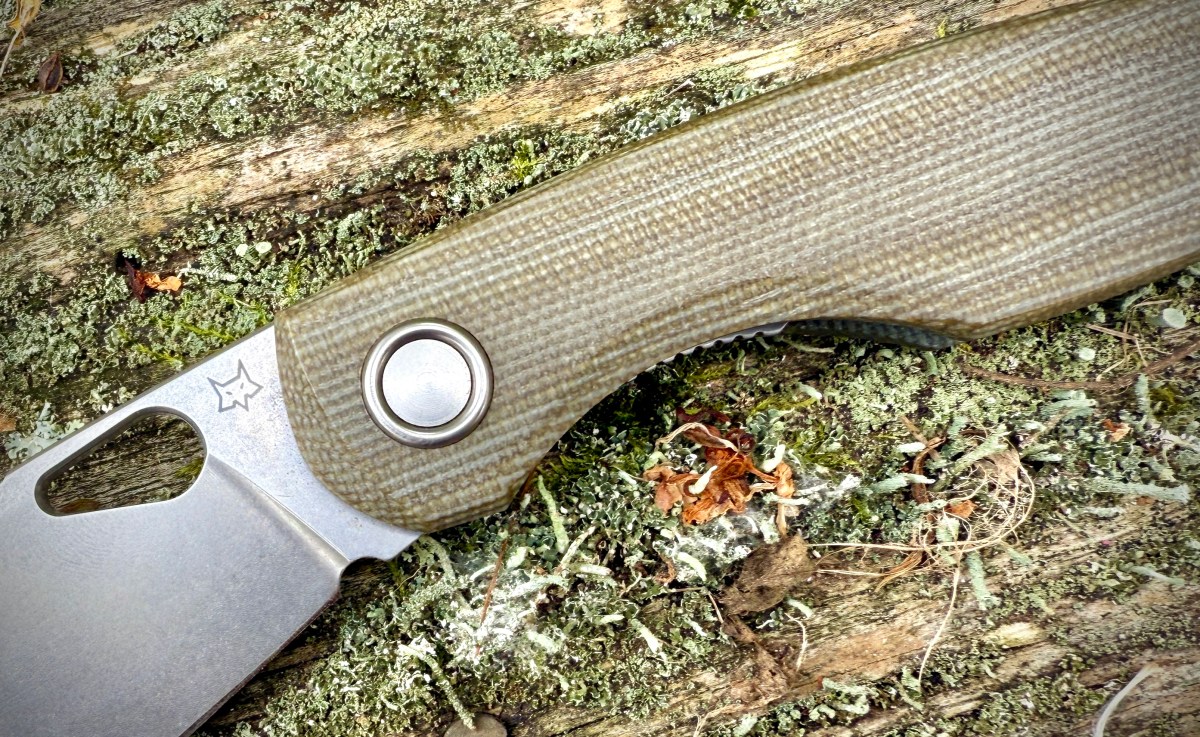
Ease of use is a big deal when considering what knife is right for you. It can come in many forms from ergonomics, to lock design, to the hardware used to keep the knife together and in good functioning order. All in all, the last thing you want to do is struggle with or be uncomfortable using your knife.
Accessibility
Aside from how a knife functions, your ability to access it also affects its reliability. After all, if you can’t reach it when you need it, then why carry it at all? The right knife for you will be easy to carry in your pocket or on your belt.
Ergonomics
A good knife will feel right in your hand. From the shape of the handle scales to the overall thickness and even texturing, ergonomics can be the difference between you being confident with your knife or leaving it in your drawer at home. When you consider a knife, put it in your hand and give it a good squeeze. Then, push down hard on a hard surface. If everything feels right, that’s your next knife.
Lock Mechanism
Without fail, you will find yourself in a position where you need to rely on the lock on your knife more than you expected.
Some of the more common lock types are liner/frame locks that use a bar that indexes into the back of the blade. There are also button-style locks that use a steel barrel to keep the blade engaged. However, the most popular lock type is the crossbar lock, which also uses a steel bar to hold the knife in place. Origially called the Axis lock under patent by Benchmade, it is now broadly available after that patent’s expiration.
In my experience, I have never seen a crossbar-style lock mechanism fail without external force, causing a major disruption in how the knife functions — like a truck running it over.
Pocket Clip
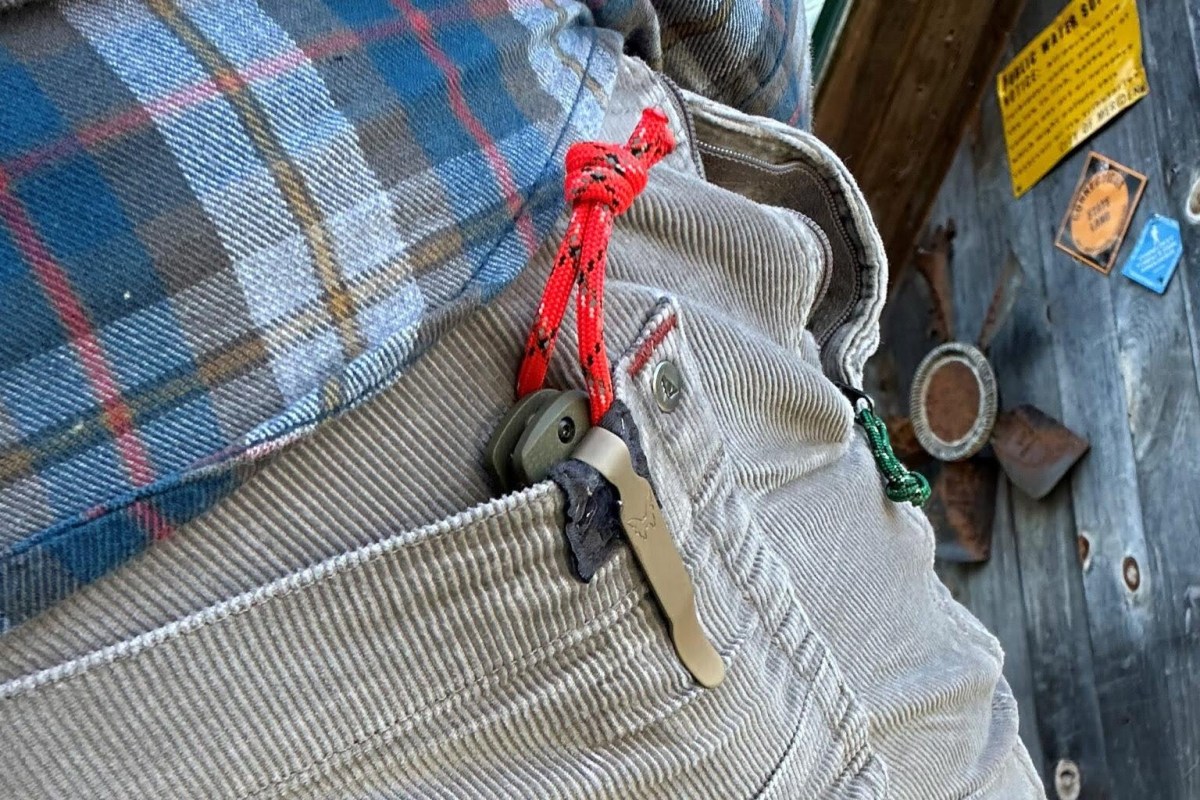
The right pocket clip will keep your knife in place in your pocket and will be easy to insert and remove. Generally, pocket clips are steel or titanium, designed to retain their shape, and be around half the length of the knife when they are closed.
However, wire pocket clips can deform over time. There are also shorter pocket clips that, depending on the size of the knife, can cause it to float around in your pocket or even come out of your pocket.
All the knives with clips included in this guide have excellent, functional clips. Only the Victorinox Companion and Openal No. 8 do not have clips, and are intended to ride deep in a pocket or pack.
Ball Bearings
Ten years ago, you had to pay $300 for a knife with ball bearings, but now you can find them for under $100.
Ball bearings assist in the opening and closing of a knife. In fact, there are some knives out there that are so fluid in operation, due to ball bearings, that they’re just as fast, if not faster than an automatic knife. They’re also legal in more places than an auto.
Price & Value
Knife pricing isn’t as cut and dry as I think most of us would like it to be. Yes, just like with any other consumer good, factors like materials, design, and function all play into the final price of a knife. However, as we’ve recently seen with a desirable $10 knife from Walmart, there are many factors behind the scenes that determine what we pay at the store for a knife.
How much material a knife manufacturer buys has a major impact on the price you pay for a knife. Material prices, in general, will fluctuate based on how much of each item a brand purchases overall. We’ve most recently seen this with MagnaCut, which became a popular steel seemingly overnight. As more brands adopted it in their knives, the overall price of the steel itself went down.
Another major factor is the country of origin. Within the last decade, the quality of knives made by overseas brands like WE Knife, CIVIVI, and most recently, OKNIFE has improved beyond anything we could have imagined. However, the brand’s prices are still comparatively lower than similar knives made in North America.
This brings up the brand name factor. Knives from brands like Benchmade generally retail for more than similar knives from other brands. It’s not outside the realm of reason that you’re paying into the brand as much as you are the product. In the case of Benchmade, you’re also buying free sharpening for life as well as a pretty significant lifetime warranty.
With that said, we’re going to break knives down into the following three categories based on pricing in general. But, to be fair, in the production knife world, there are no clear and defining lines between Budget knives, Mid-tier knives, or Premium knives. The following is a generalization of what you can expect from each category.
Budget
You can expect to pay less than $100 for budget knives, which usually have more affordable materials. Does this make the knife any less useful? No. A budget knife should do everything you would expect it to. However, it may require more maintenance to keep it up and running. Knives like the CIVIVI Yonder ($67) that use Nitro-V are considered budget knives. Although many budget steels are stainless and will, therefore, stand up against moisture and stave off rust and corrosion, lower-end steels tend to require more sharpening to maintain a reliable edge.
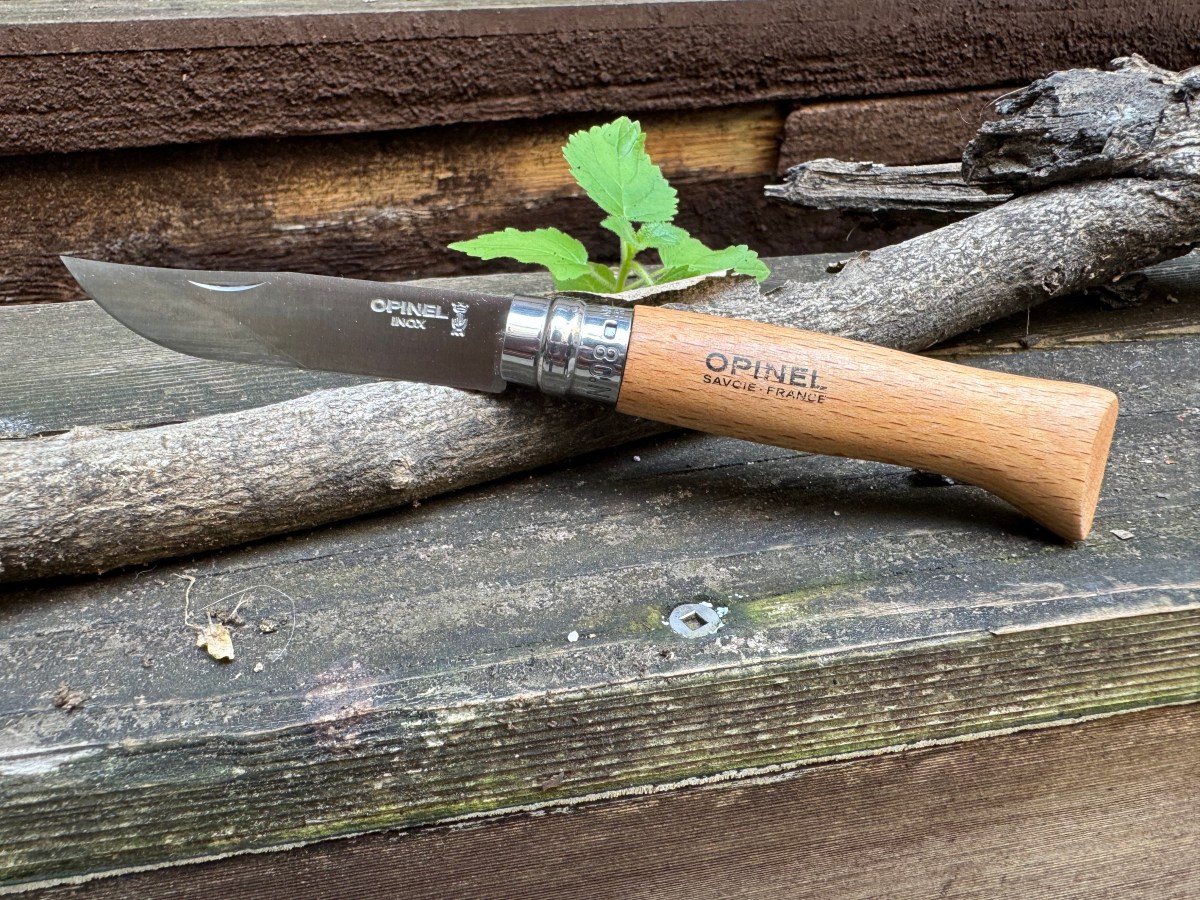
Similarly, the Opinel No.8 uses entirely serviceable steel and costs very little ($22 at the time of writing). It won’t hold an edge very long, so it requires regular sharpening. But it’s a great example of a wonderful knife available for very little money.
Mid-Tier
A majority of people carry mid-tier knives around. Ranging from $100 to $200, they may feature a range of steels like 154CM, M390, S35VN or even MagnaCut. All four of those steels can also be found on premium knives, due to their corrosion and abrasion-resistant properties, toughness, and edge retention. Mid-tier knives tend to have a more robust build than Budget knives.
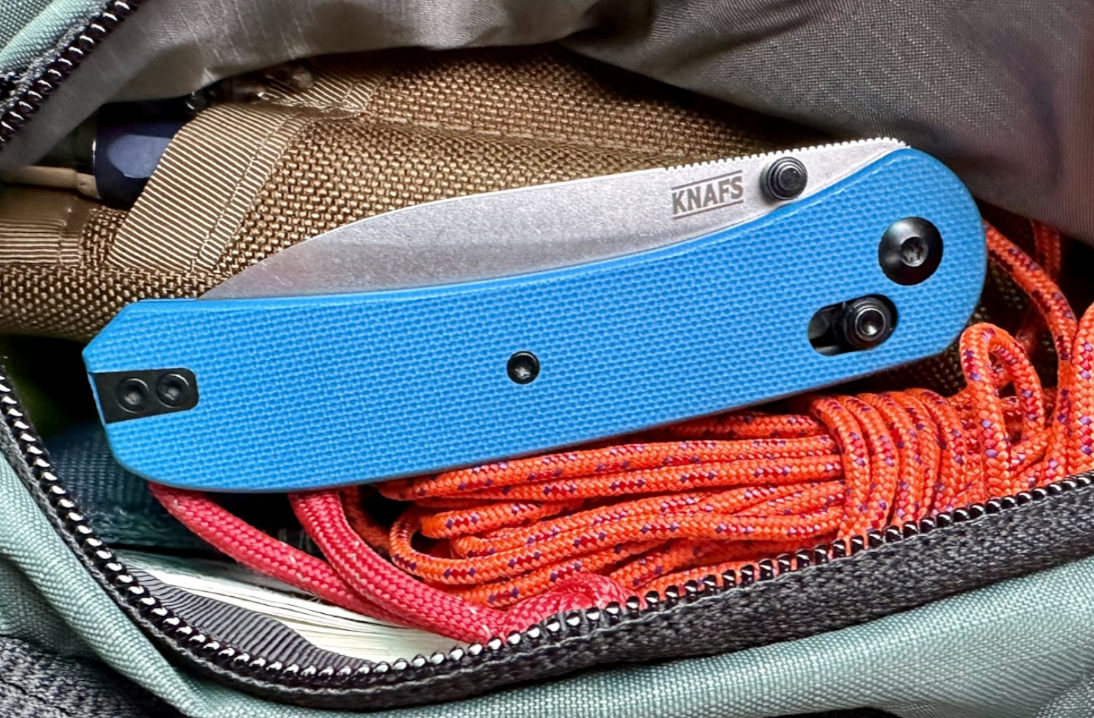
There may also be a heavier focus on ergonomics and knife weight. The Knafs Lander 2 ($134) is a great example of a mid-tier knife. It has S35VN steel, Micarta, G10, or carbon fiber handle scales, and a crossbar lock. These are all desirable materials and features at an easy-to-digest price
Premium
Premium knives are the cream of the crop and make up a small segment of the market. They may be priced higher due to the manufacturer or where the knife is made. They could also use new and innovative materials, or a combination of all three of these reasons.
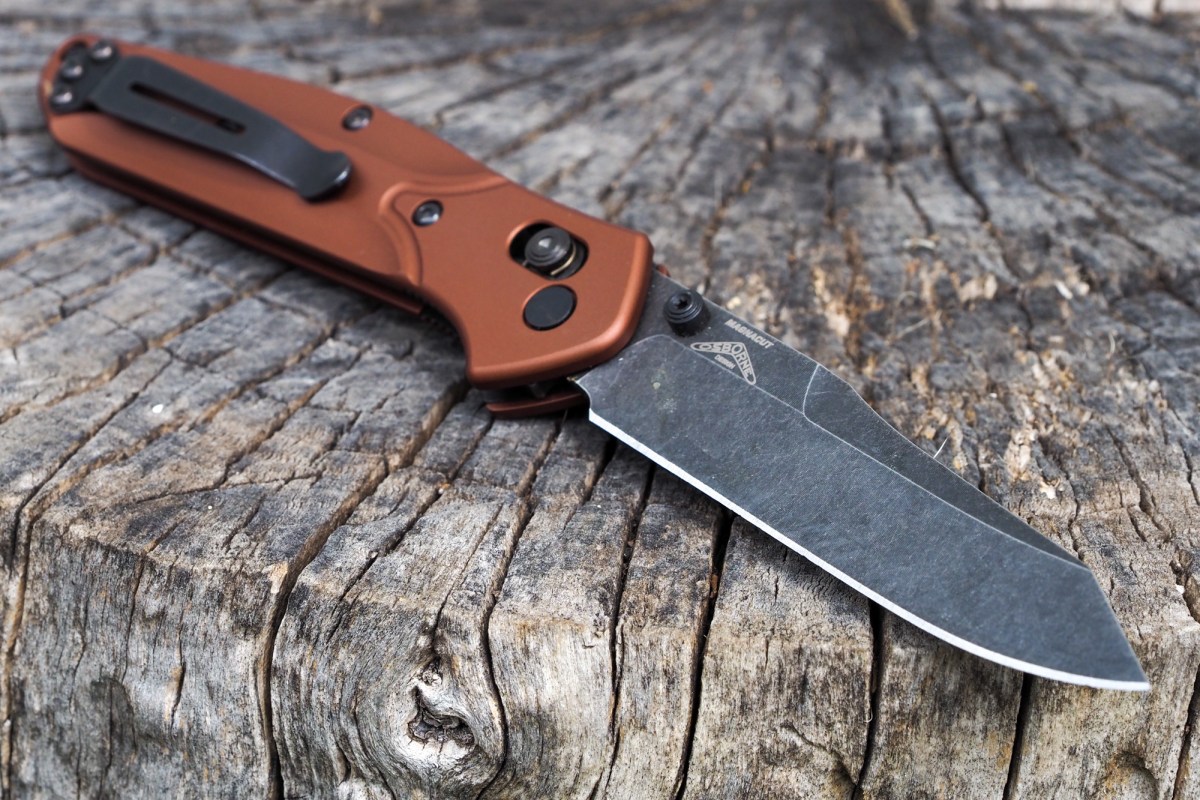
Another variable is availability. Some manufacturers make knives in smaller batches. Other knives are custom. In these instances, you can expect to pay more as well. The Benchmade Osborne, for example, is made in Portland with high-quality components like Magnacut steel and aluminum handle scales. With flawless fit and finishing, it commands a hefty price.
Where many people instantly think of Benchmade as the prime example of premium, there’s also DPx Gear, a smaller, boutique-style brand. It offers production knives like the HEST/F 4.0 ($275), which is hand-made from premium materials. So there’s a hint of exclusivity here.
Frequently Asked Questions
From opening packages to slicing up food, pocket knives offer a wealth of utility. Rather than using your fingernails, a car key, or half of a pair of scissors, pocket knives are a natural piece for people with a lot of tasks on their hands. This is especially true for outdoor enthusiasts, who deal with materials like rope, wood, and canvas all the time.
One reason you won’t see on this list is self-defense. Despite what some industry marketing material would lead you to believe, carrying a pocket knife doesn’t turn you into a commando or modern-day gladiator.
Unless you’re a trained weapons expert, you’re just as likely to injure yourself as any would-be attacker. If you feel the need to carry something for protection, you’re far better off with a can of pepper spray. Pocket knives are best treated as tools — not weapons.
Although there’s no right answer that fits everyone and their needs, a folding knife with an overall length of 8-8.5” with a blade length of 3-3.5” is ideal. At these lengths, you can expect the knife to be balanced, able to complete most daily tasks and be carried comfortably.
That said, we always recommend you test fit the knife to make sure it fits your hand and you feel safe and confident using it. Beyond that, keep in mind that each state, and even cities, have specific laws and regulations regarding knives. Make sure to read up on your local laws before making a purchase.
Plain edge blades are generally one continuous edge and they can be great for cutting, chopping, shaving, and slicing.
Generally, a serrated blade is a combination of a plain edge and serrations, usually towards the back of the blade near the pivot. The benefit of serrations on a blade is that it can be used for sawing through limbs and rope.
Overall, when choosing between a blade with a plain edge and one with serrations you need to take into consideration if you really need it. Serrations take up space on a blade edge and are more complicated to sharpen.
Your knife is only going to benefit you if it’s in good working order. With a fixed-blade knife, maintenance is generally focused on keeping the blade edge sharp and free of knicks or chips as this can lead to failure. With a folding knife, it can get a little more complicated as there are moving parts that need to be maintained to make sure the knife is safe to use for years to come.
Here are some basic tips that you should get into a routine of doing to make sure your knife is reliable and ready for your next adventure.
Make sure it’s sharp!
A dull knife isn’t any good to you. In fact, a dull knife can be dangerous. Thankfully, most knives on the market have steels that you can easily sharpen with the right sharpener and a little practice. That said, if you ever have any questions about the blade steel on your knife and how to sharpen it, we recommend contacting the manufacturer.
Pro Tip: Some knife manufacturers, like Benchmade, offer free knife sharpening for life.
Keep it clean and lubricated!
Water, dirt, and debris can all lead to your knife failing on you. Make sure to wipe your blade down and that the handle cavity is dry and free of debris.
It’s perfectly fine to wash down your blade with dish soap and water, making sure to wipe it down and let it air dry. We also recommend coating your blade with any type of food-grade lubricant.
Additionally, you want to make sure that the lock mechanism and pivot are free of debris and in working order as well. These can be cleaned with a Q-tip soaked in rubbing alcohol, or canned air. You should always re-lubricate these areas after cleaning your knife.
If the knife manufacturer recommends a specific lubricant, it’s always best to use that.
There was a time when we would have told you no, but as more and more automatic knives arrive in the market, they can be.
Though they tend to be more expensive and can be a hassle to maintain, the stigma surrounding automatic knives is legality. Generally speaking, automatic knives are relegated to military and law enforcement personnel. Depending on where you live and where you plan on carrying an automatic knife, as a civilian you could be breaking the law.
That said, we recommend you check your local laws and regulations before carrying an automatic knife.
Read the full article here
18 Comments
The cost guidance is better than expected. If they deliver, the stock could rerate.
Good point. Watching costs and grades closely.
Good point. Watching costs and grades closely.
The cost guidance is better than expected. If they deliver, the stock could rerate.
I like the balance sheet here—less leverage than peers.
Exploration results look promising, but permitting will be the key risk.
Good point. Watching costs and grades closely.
Silver leverage is strong here; beta cuts both ways though.
Good point. Watching costs and grades closely.
Production mix shifting toward Tactical & Survival might help margins if metals stay firm.
Good point. Watching costs and grades closely.
Nice to see insider buying—usually a good signal in this space.
Nice to see insider buying—usually a good signal in this space.
Nice to see insider buying—usually a good signal in this space.
Nice to see insider buying—usually a good signal in this space.
Good point. Watching costs and grades closely.
Uranium names keep pushing higher—supply still tight into 2026.
Good point. Watching costs and grades closely.