

An open-deck Viking ship with no engine is scheduled to leave Roskilde, Denmark, on June 1, 2027, bound for Pensacola, Florida. The vessel will carry 25 men and women, including 17 military veterans.
The Vinlandferth expedition will use a square sail and 18 oars to cross the North Atlantic before entering the St. Lawrence River, traversing the Great Lakes and descending through the Illinois and Mississippi rivers.
Organizers told Military.com they hope to complete the journey within 150 days, although harsh weather could make the Atlantic crossing alone take between 30 and 90 days.
The voyage combines experimental archaeology with a broader mission to support former service members. What began as a historical expedition has evolved into what Navy veteran Doug Cline, Vinlandferth’s vice president, called “an accidental veterans’ organization.”
“We started out as kind of a 10th century yacht club,” Cline said. “We turned into a mental health organization that wants to use education and experimental archaeology as a vehicle to help our brothers, sisters and community live better lives.”
Building an Old Ship With Modern Safety
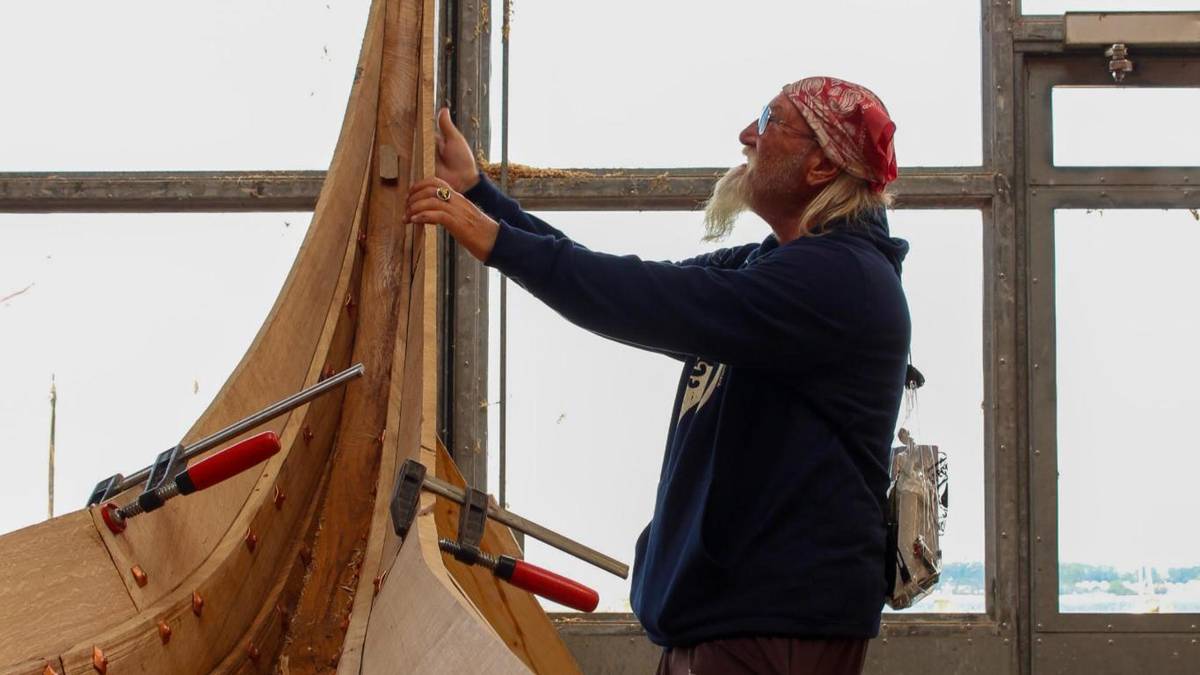
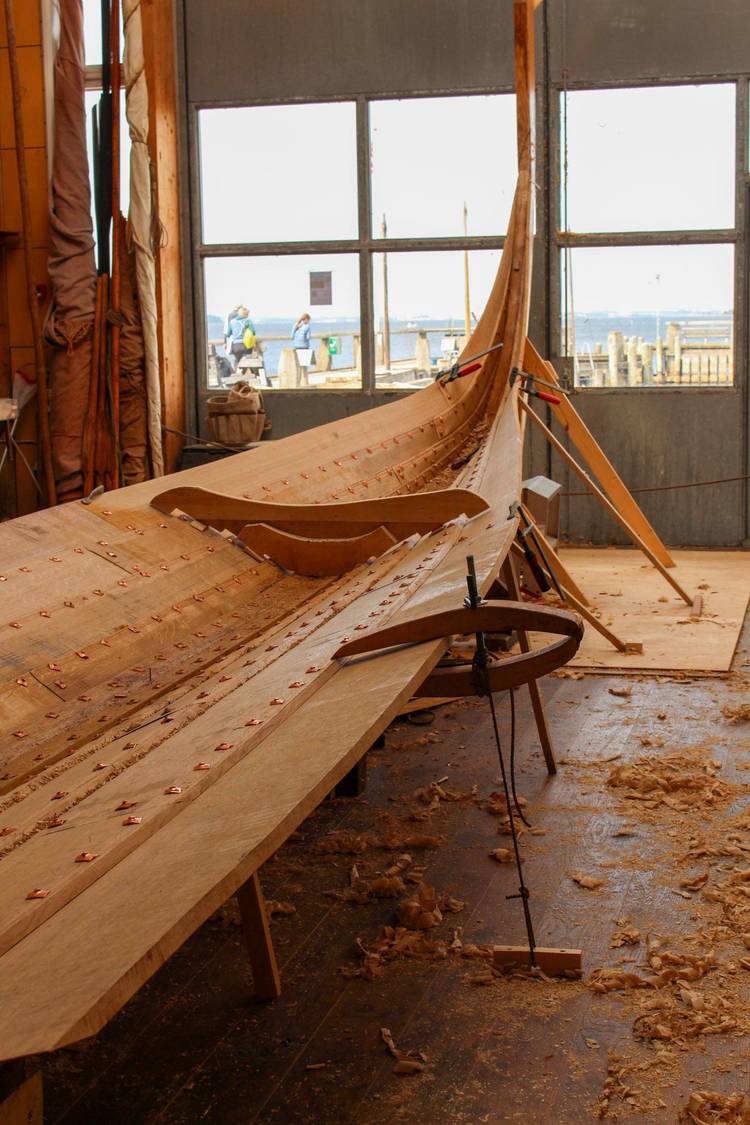
Vinlandferth is building a roughly 52-foot, Gokstad-inspired vessel using traditional Viking construction methods. Organizers described it as a hybrid design rather than an exact historical replica. Workers are constructing the vessel from oak at the Viking Ship Museum in Roskilde using clinker construction, a method where overlapping planks are fastened together.
The museum boatyard specializes in full-size reconstructions using historical methods to preserve Nordic clinker-building traditions. Vinlandferth’s builders are using some modern machinery to shorten construction time, but the vessel’s underlying structure remains traditional, Cline said.
The traditional construction will be paired with modern safety equipment and protocols. The crew plans to carry:
- Immersion suits
- Satellite communications
- Tracking equipment
- Modern medical supplies
- Equipment for producing drinking water
Support vessels will follow the ship, providing emergency assistance and moving supplies when necessary.
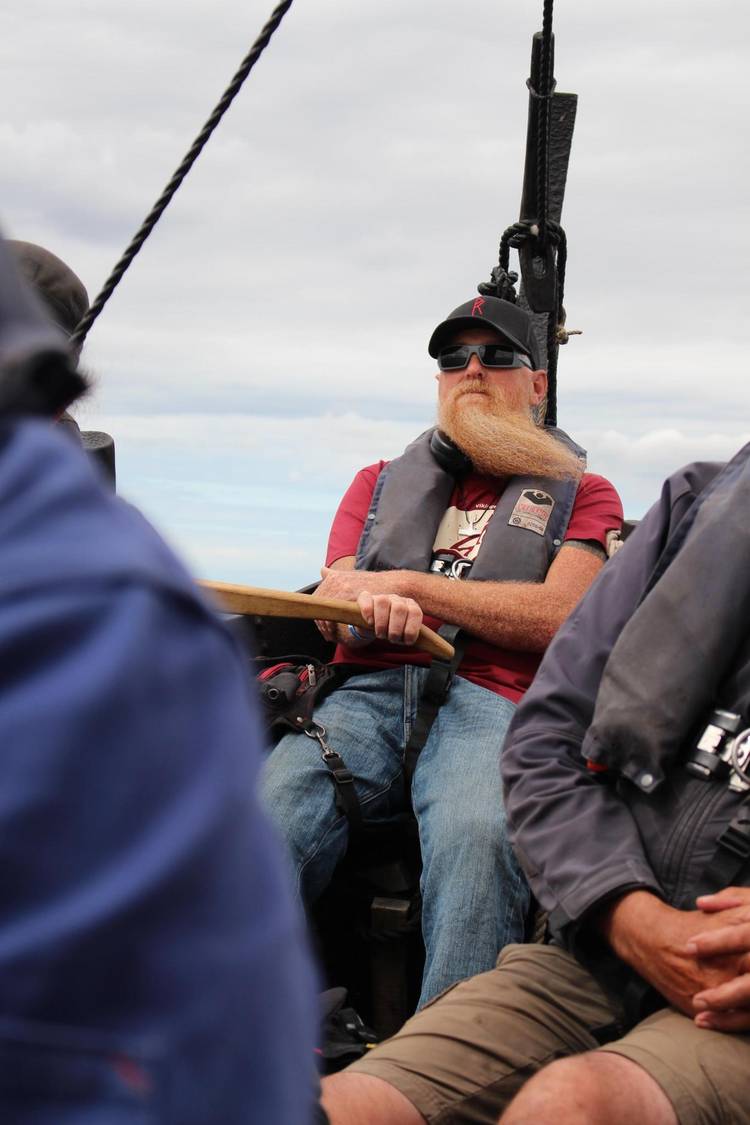
Crew members trained in Denmark during summer 2026, learning to handle the sail and oars aboard existing Viking ships. The organization’s crew roster includes Marine Corps, Navy, Coast Guard and Army veterans alongside experienced sailors, blacksmiths, mechanics, boatbuilders and survival specialists.
Organizers have selected the primary crew but said they still need at least 12 reserve members.
A Mission After the Uniform
Vinlandferth President W. Keith Alexander, a Marine veteran and historian, originally envisioned bringing a Viking ship to Pensacola and developing a working medieval village. The veteran focus expanded as organizers recruited people accustomed to operating in teams and enduring difficult conditions.
“Veterans do better when we have a mission,” Cline said. “We’re so used to executing a mission that, when we don’t have one, we feel rudderless.”
Blade Handler, the organization’s fundraising and event development director, spent years recovering after a tornado lifted his vehicle and left him with a traumatic brain injury. He described Vinlandferth as his first major step back into public life.
“I really needed a reason to get up,” Handler said. The project gave him “a reason to get out of bed and put a suit back on.”
Marine veteran Amber Wisby similarly joined while adjusting to a disability that had ended her previous work. She initially became involved after her husband joined the crew, later assuming responsibility for communications and administrative work.
Their experiences reflect a documented crisis facing the veteran community. Data from the Department of Veterans Affairs shows that 6,398 veterans died by suicide in 2023. The underlying VA report identifies purpose, community and social support as protective factors that can reduce isolation.
Projects involving boats and outdoor challenges are an established model for veteran support programs. Programs like Heroes on the Water use kayak fishing alongside services supporting physical and mental rehabilitation.
Vinlandferth, however, has not published clinical outcomes or presented the expedition as a substitute for professional medical treatment. Organizers said the project’s current focus is practical: giving participants defined responsibilities, a team and work whose success depends entirely on them.
Ancient Route, Modern Law
The planned route generally follows the westward path of Norse expansion, with stops at:
- The Shetland Islands
- The Faroe Islands
- Iceland
- Greenland
The crew then intends to reach L’Anse aux Meadows in Newfoundland, which Parks Canada identifies as the first authenticated Norse site in North America and a possible location of Leif Erikson’s short-lived Vinland camp around A.D. 1000.
From there, the ship will proceed through Canadian and U.S. waterways to Chicago before turning south toward Pensacola.
Organizers hope Guinness World Records will recognize the expedition as the longest unpowered voyage by a clinker-built vessel, although that record claim has not yet been independently certified.
A previous Viking voyage demonstrates how modern regulation can disrupt even a historically inspired expedition. In 2016, the Norwegian replica Draken Harald Hårfagre incurred more than $134,370.90 in Great Lakes pilotage charges. This occurred after the U.S. Coast Guard classified it as a foreign commercial vessel because Norway had registered it as an oceangoing cargo ship.
Under federal law (46 U.S.C. Chapter 93), foreign vessels navigating designated Great Lakes routes must engage a registered U.S. or Canadian pilot.
Organizers have not yet publicly detailed whether the unpowered Vinlandferth vessel will be subject to these specific pilotage requirements or how they plan to navigate the regulations during their transit.
Vinlandferth is raising money to complete the ship, train the crew and carry out the voyage. Organizers say they still need approximately $2.25 million.
Donations can be made through the Vinlandferth support page. When the vessel reaches Pensacola, Vinlandferth plans to offer rides and begin developing its Viking village.
The ship is taking shape, but Vinlandferth must still raise money, complete training and secure approvals across several countries. As Cline put it, “We’re crazy, but we’re not stupid.”
Read the full article here
33 Comments
Production mix shifting toward USA might help margins if metals stay firm.
Exploration results look promising, but permitting will be the key risk.
Interesting update on 17 Veterans Will Sail an Engineless Viking Ship From Denmark to Pensacola. Curious how the grades will trend next quarter.
Good point. Watching costs and grades closely.
Good point. Watching costs and grades closely.
If AISC keeps dropping, this becomes investable for me.
Good point. Watching costs and grades closely.
Production mix shifting toward USA might help margins if metals stay firm.
The cost guidance is better than expected. If they deliver, the stock could rerate.
Good point. Watching costs and grades closely.
Good point. Watching costs and grades closely.
I like the balance sheet here—less leverage than peers.
The cost guidance is better than expected. If they deliver, the stock could rerate.
Good point. Watching costs and grades closely.
Good point. Watching costs and grades closely.
Uranium names keep pushing higher—supply still tight into 2026.
Good point. Watching costs and grades closely.
Good point. Watching costs and grades closely.
Silver leverage is strong here; beta cuts both ways though.
Good point. Watching costs and grades closely.
Exploration results look promising, but permitting will be the key risk.
Interesting update on 17 Veterans Will Sail an Engineless Viking Ship From Denmark to Pensacola. Curious how the grades will trend next quarter.
Production mix shifting toward USA might help margins if metals stay firm.
Good point. Watching costs and grades closely.
Nice to see insider buying—usually a good signal in this space.
Good point. Watching costs and grades closely.
The cost guidance is better than expected. If they deliver, the stock could rerate.
Good point. Watching costs and grades closely.
I like the balance sheet here—less leverage than peers.
Good point. Watching costs and grades closely.
Good point. Watching costs and grades closely.
Interesting update on 17 Veterans Will Sail an Engineless Viking Ship From Denmark to Pensacola. Curious how the grades will trend next quarter.
Good point. Watching costs and grades closely.