

A young boy watches his city disappear in an atomic explosion. An Israeli veteran struggles to remember what happened during his military service in Lebanon. An elderly British couple follows government instructions for surviving nuclear war, unaware that their precautions will do almost nothing to protect them.
These are scenes from animated movies, though there’s very little about them that’s suitable for a relaxing family movie night.
War movies have traditionally relied on elaborate battle sequences, practical effects and large casts to bring military history to the screen. But animation offers filmmakers another way to tell these stories, particularly when dealing with experiences that are difficult to recreate or memories that don’t fit neatly into a conventional narrative.
Some of these films are based on the experiences of actual survivors. Others use fictional characters to explore the consequences of historical conflicts, from World War II and the Cold War to Afghanistan’s decades of violence.
With In This Corner of the World celebrating its 10th anniversary on Nov. 12, 2026, and When the Wind Blows turning 40 this year, it’s a good time to revisit some of the most affecting animated war movies ever made. Here are nine films that demonstrate just how powerful animation can be when telling stories about war.
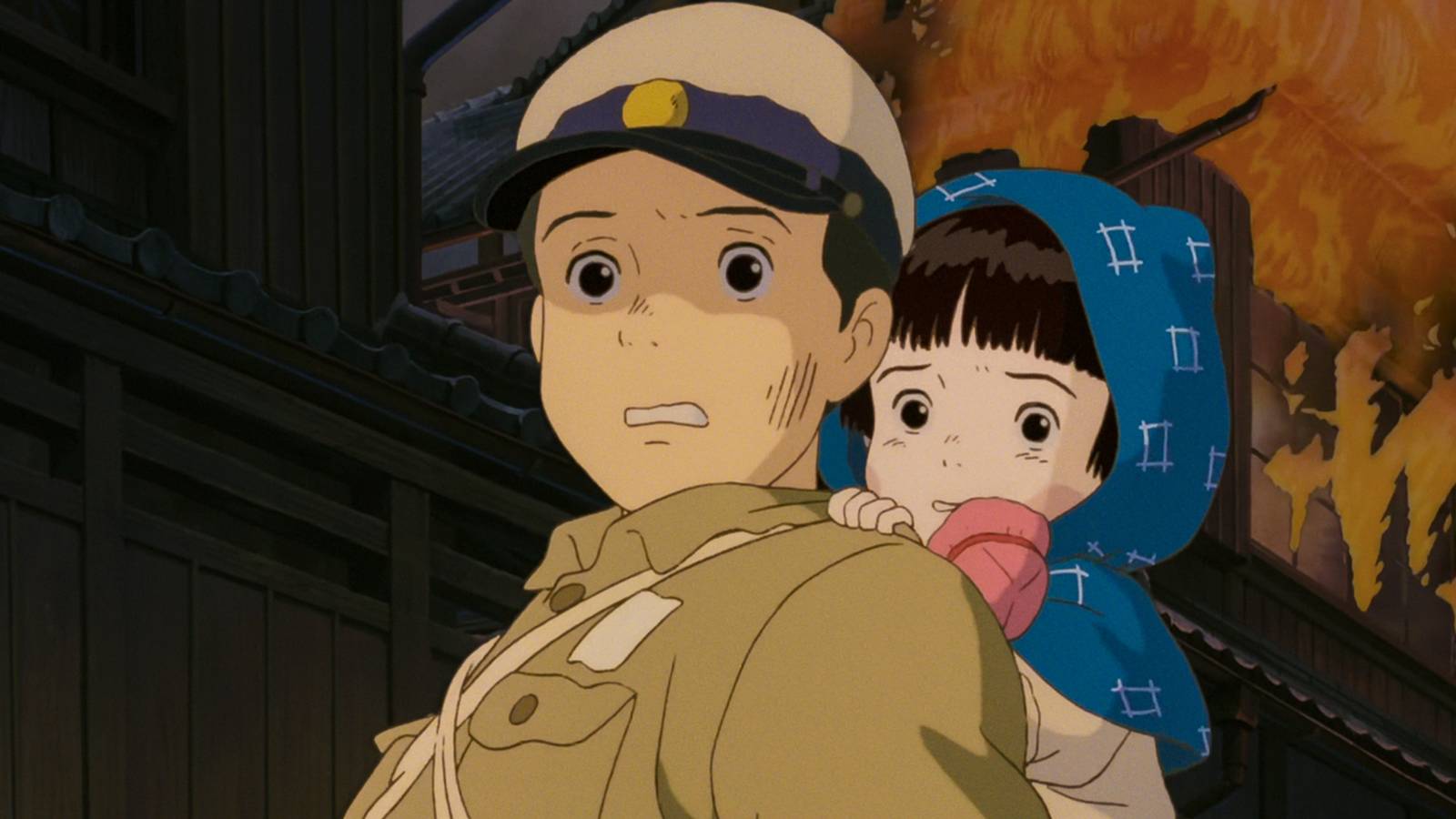
1. ‘Grave of the Fireflies’ (1988)
Anyone who believes animated movies are exclusively children’s entertainment should probably start with Isao Takahata’s Grave of the Fireflies. They should also prepare for a thoroughly miserable evening.
Produced by Studio Ghibli and adapted from Akiyuki Nosaka’s semi-autobiographical short story, the film follows siblings Seita and Setsuko as they struggle to survive the final months of World War II in Japan.
After American incendiary bombing destroys their home in Kobe and leaves their mother fatally injured, the children are forced to depend on relatives and eventually fend for themselves.
Food becomes increasingly scarce. The country’s infrastructure is collapsing, and the adults around them have limited resources or sympathy to spare. Takahata never needs to show a major battle to communicate the devastation of war. The most painful moments come from watching Seita attempt to protect his younger sister from starvation, illness and circumstances neither child can control.
The animation makes their ordinary childhood moments especially heartbreaking. A tin of fruit drops, a makeshift shelter and a collection of fireflies become reminders of everything the children have lost. Based partly on Nosaka’s childhood experiences during the bombing of Kobe, Grave of the Fireflies remains one of Studio Ghibli’s most devastating achievements.
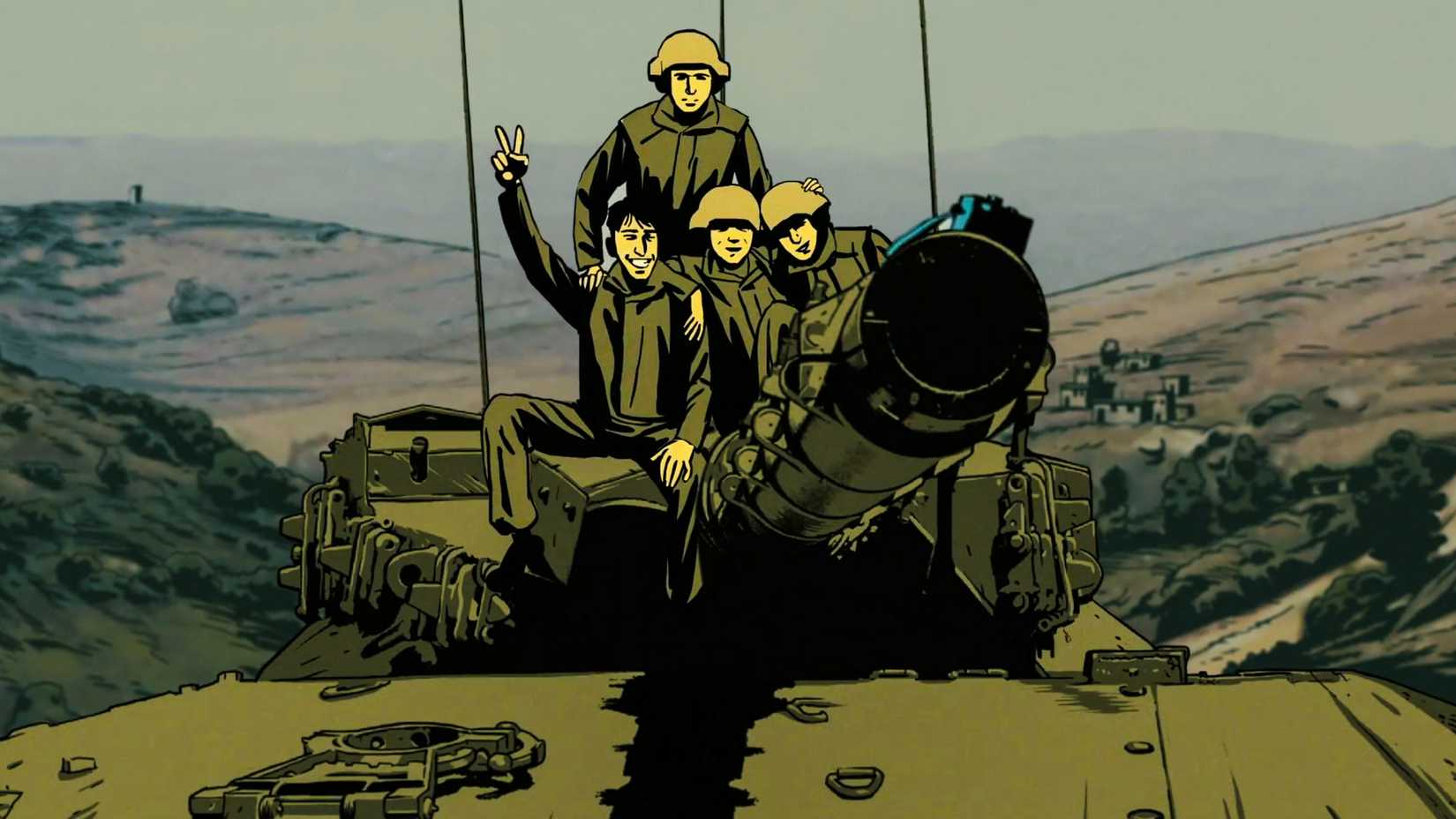
2. ‘Waltz with Bashir’ (2008)
Israeli filmmaker Ari Folman served during the 1982 Lebanon War, but years later, he discovered that significant portions of his military experiences had become difficult to remember. His attempt to reconstruct those memories became Waltz with Bashir, an animated documentary unlike most war films.
The story begins when an old friend describes recurring nightmares connected to his service in Lebanon. Folman realizes he has similarly fragmented memories and begins interviewing former comrades in an attempt to understand what happened.
Their recollections unfold through surreal animation, including dreamlike images of soldiers emerging from the sea and scenes that shift between recognizable events and distorted memories.
As Folman’s investigation progresses, the film moves toward the 1982 Sabra and Shatila massacre, when Lebanese Christian militiamen killed Palestinian civilians in refugee camps in Beirut.
The film examines Folman’s memories of his presence in Lebanon and questions surrounding responsibility for the violence.
Its final moments abandon animation for archival footage, confronting viewers with images of the actual aftermath.
The transition makes the documentary’s exploration of memory particularly unsettling. Folman uses animation to recreate experiences he struggles to recall, then ends with historical images that cannot be dismissed as a dream.
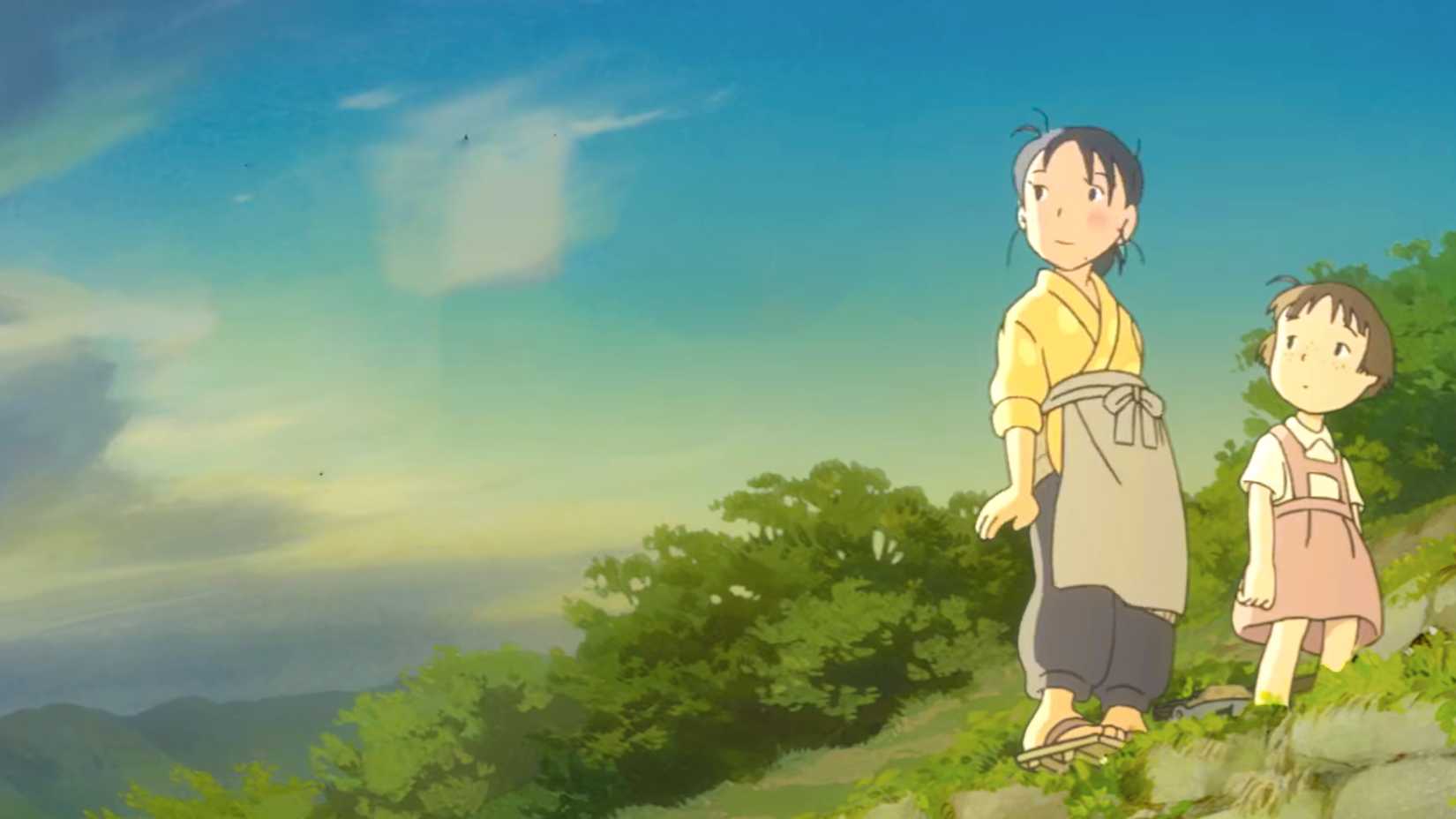
Suzu and Harumi spend time together in In This Corner of the World (2016). Directed by Sunao Katabuchi, the film portrays the everyday experiences of Japanese civilians living near the naval base at Kure during World War II (MAPPA / GENCO / In This Corner of the World Production Committee).
3. ‘In This Corner of the World’ (2016)
Most World War II movies concentrate on soldiers, battles or military operations. In This Corner of the World spends much of its running time following a young woman learning to navigate married life. That makes the arrival of war increasingly difficult to watch.
Directed by Sunao Katabuchi and adapted from Fumiyo Kouno’s manga, the film follows Suzu Urano, a young woman who moves to Kure, Japan, after marrying a naval civilian employee.
Kure was home to one of Japan’s most important naval bases, and the growing demands of the Pacific War gradually transform daily life in the city. Food rationing becomes an increasingly difficult problem. Air raid warnings interrupt ordinary routines, and military activity becomes impossible to ignore.
Suzu responds by trying to preserve some sense of normality through cooking, drawing and caring for her new family.
The film’s soft watercolor-like animation makes these everyday moments particularly appealing, which only increases the impact when the war reaches her neighborhood.
What separates In This Corner of the World from many other WWII films is its attention to the ordinary people living near major military installations. Released in Japan on Nov. 12, 2016, the movie celebrates its 10th anniversary this year, making it an especially timely selection for a Veterans Day watchlist.
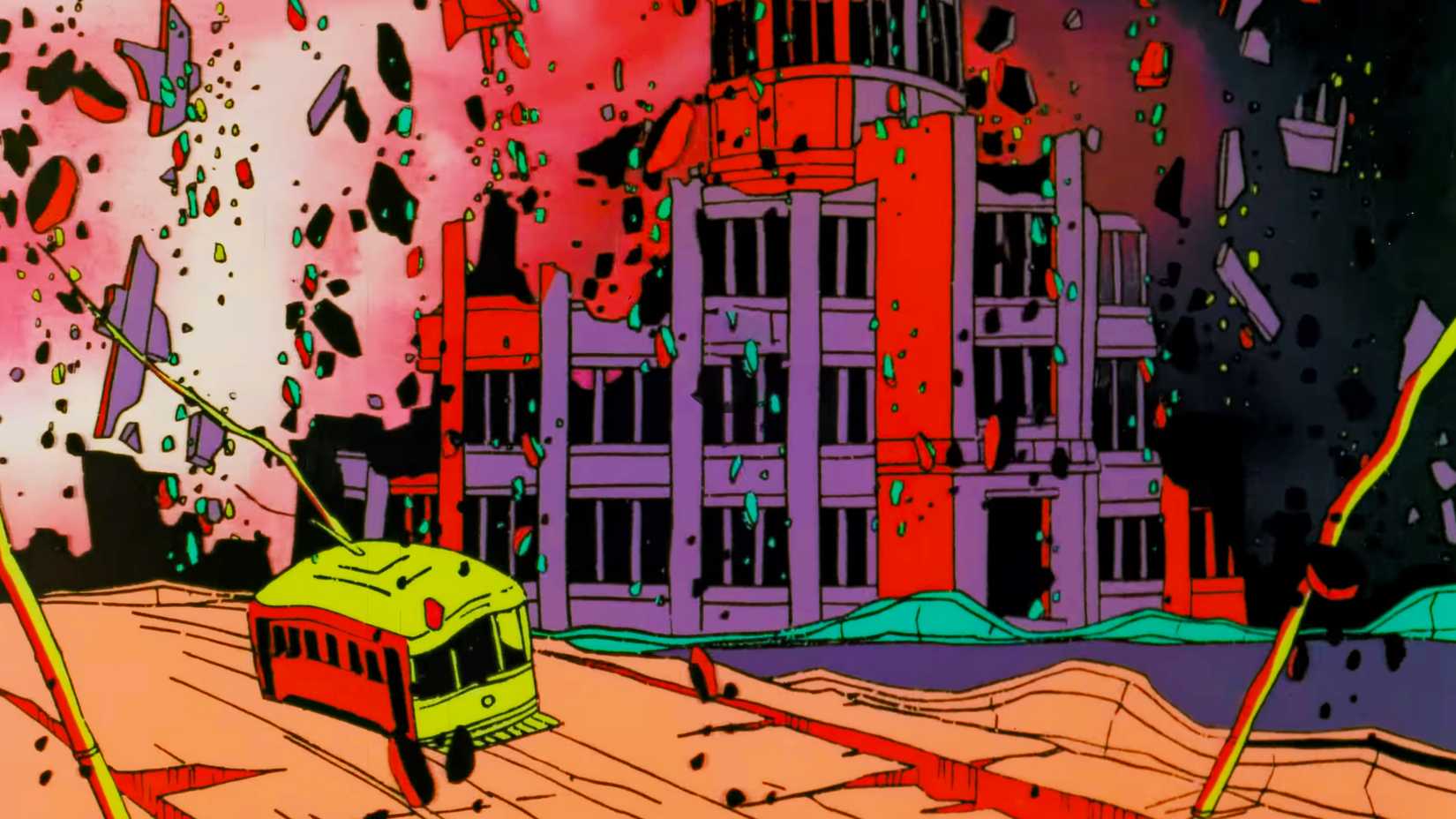
The destruction of Hiroshima is depicted in Barefoot Gen (1983). Directed by Mori Masaki, the film includes graphic representations of the Aug. 6, 1945, atomic bombing and the suffering experienced by survivors. (Gen Productions / Madhouse. Film screenshot).
Few animated movies depict the physical devastation of warfare as explicitly as Barefoot Gen. Directed by Mori Masaki and adapted from Keiji Nakazawa’s manga, the film follows Gen Nakaoka, a young boy living in Hiroshima during the closing months of World War II.
Gen’s family struggles with food shortages and the increasingly desperate conditions of wartime Japan, but their circumstances become catastrophic on Aug. 6, 1945. That morning, an American B-29 drops an atomic bomb on Hiroshima. The sequence depicting the explosion is among the most disturbing in animated film history.
The bomb’s flash is followed by graphic images of people suffering catastrophic injuries as the city is consumed by fire. Gen survives, but much of his family does not. The film then follows his efforts to find food, shelter and safety in a devastated city where survivors have little understanding of the radiation exposure they have experienced.
Nakazawa survived the actual atomic bombing as a child, and his manga drew heavily from those experiences. The result is an unusually personal account of nuclear warfare that refuses to look away from the suffering of civilians.
For viewers familiar with live-action films about the Manhattan Project or the decisions leading to Hiroshima, Barefoot Gen offers a perspective from the people who experienced the bombing on the ground.
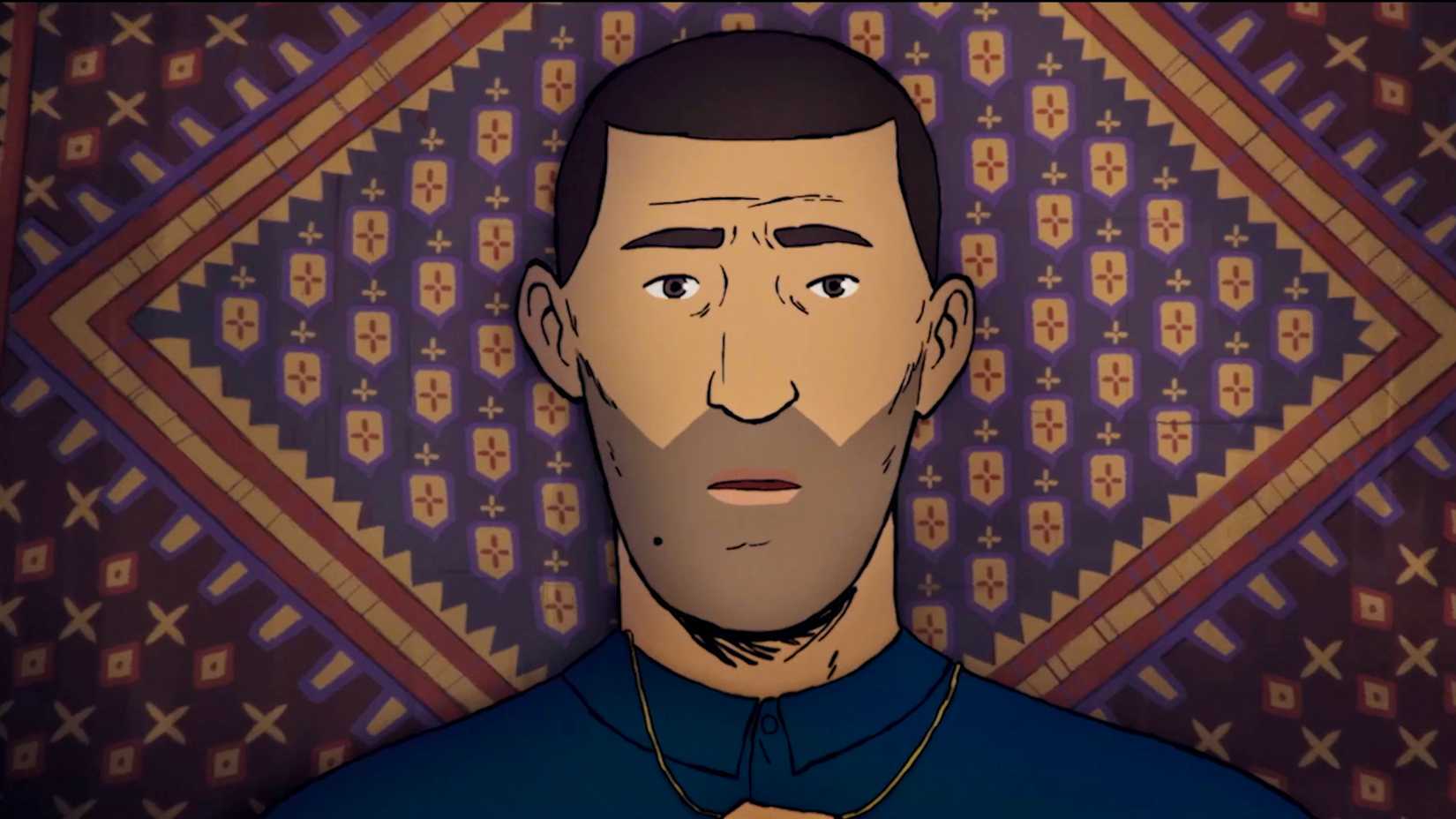
The animated documentary Flee (2021) tells the story of Amin Nawabi, an Afghan refugee recounting his family’s escape from conflict and his experiences building a new life in Denmark. The film received three Academy Award nominations (Final Cut for Real / Sun Creature Studio / Vivement Lundi!).
5. ‘Flee’ (2021)
Director Jonas Poher Rasmussen’s Flee demonstrates how animation can make it possible to tell a story that might otherwise remain hidden. The documentary follows Amin Nawabi, an Afghan refugee living in Denmark who has spent much of his adult life concealing details of his past.
As Amin prepares to marry his partner, he begins recounting his childhood in Afghanistan and his family’s attempts to escape the country during years of conflict and political upheaval. His story takes viewers through dangerous border crossings, separation from loved ones and the uncertainty of living without a secure place to call home.
Rasmussen uses animation partly to protect Amin’s identity, allowing him to recount deeply personal experiences without placing himself and others directly before a documentary camera.
The approach also allows the filmmakers to reconstruct childhood memories and moments for which no recordings exist. Unlike a conventional battlefield documentary, Flee concentrates on what happens to families caught in conflicts they have little power to influence.
The film received three Academy Award nominations, becoming the first movie nominated for Best Animated Feature, Best Documentary Feature and Best International Feature at the same ceremony. Its success demonstrated that animated documentaries could reach audiences well beyond traditional animation enthusiasts.
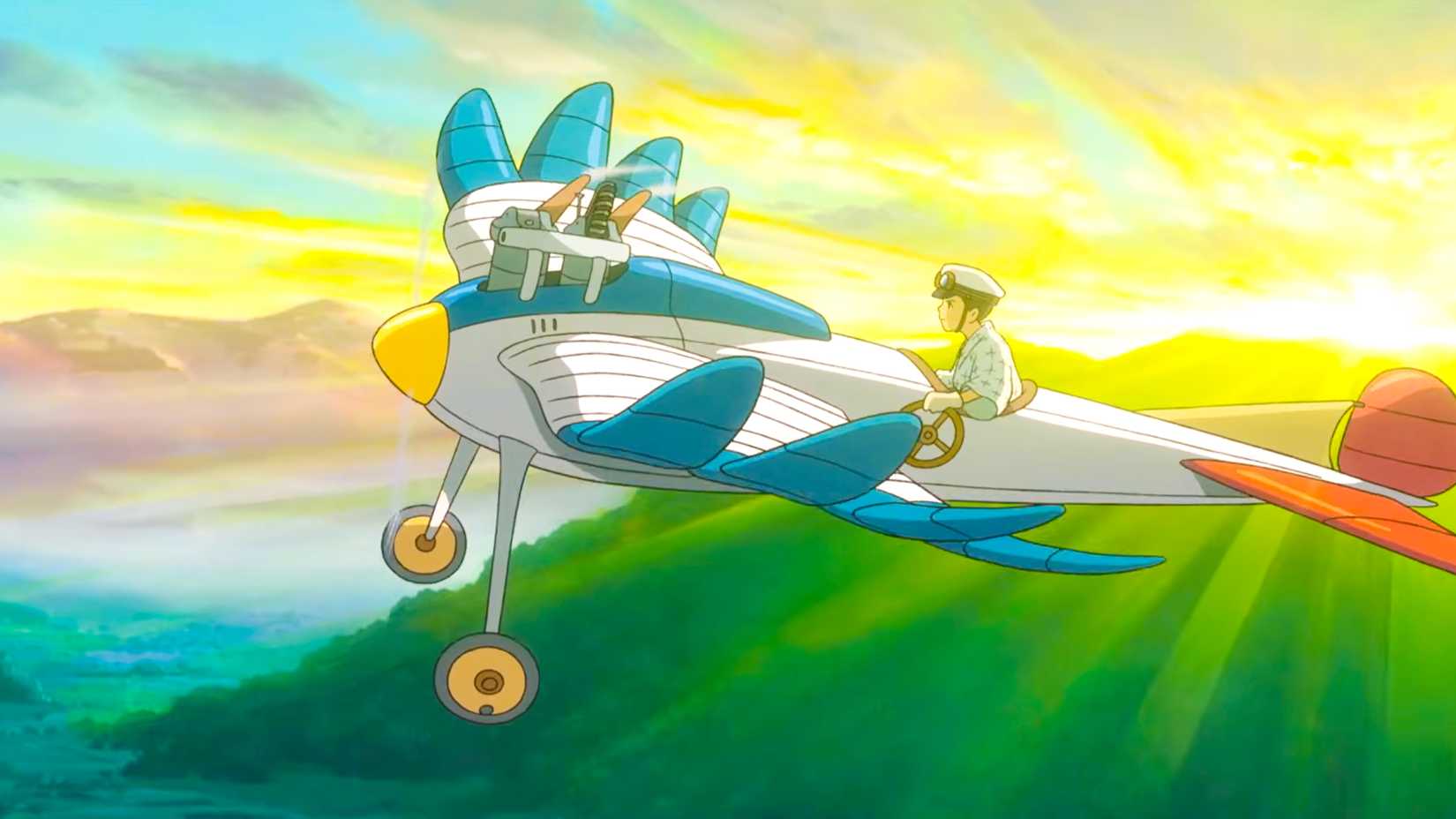
An imaginative aircraft takes flight in Hayao Miyazaki’s The Wind Rises (2013). The Studio Ghibli film offers a fictionalized portrayal of Japanese engineer Jiro Horikoshi, whose work contributed to the development of the Mitsubishi A6M Zero fighter used during World War II (Studio Ghibli).
6. ‘The Wind Rises’ (2013)
Hayao Miyazaki has spent much of his career creating fantastical worlds filled with extraordinary flying machines. With The Wind Rises, he turned his attention toward a real aircraft designer whose work helped shape World War II.
The film presents a fictionalized account of Jiro Horikoshi, the Japanese engineer associated with the design of the Mitsubishi A6M Zero fighter. As a young man, Jiro dreams of becoming a pilot but discovers that his poor eyesight will prevent him from flying.
Instead, he devotes his life to designing aircraft, eventually becoming an engineer during a period of rapid Japanese military expansion.
Miyazaki depicts Jiro’s fascination with aviation through elaborate dream sequences, where airplanes become expressions of beauty, ambition and imagination. But the historical setting creates an unavoidable problem. The aircraft Jiro dreams of building are ultimately intended for military use, and the Zero becomes one of the most recognizable Japanese combat aircraft of the Pacific War.
The film also explores Jiro’s personal life, particularly his relationship with Nahoko, a young woman suffering from tuberculosis.
Although the movie takes considerable liberties with the real engineer’s biography, its questions about technological achievement and military responsibility give it unusual depth. For military aviation enthusiasts, The Wind Rises provides a fascinating look at the people who designed the aircraft that would eventually fight over the Pacific.
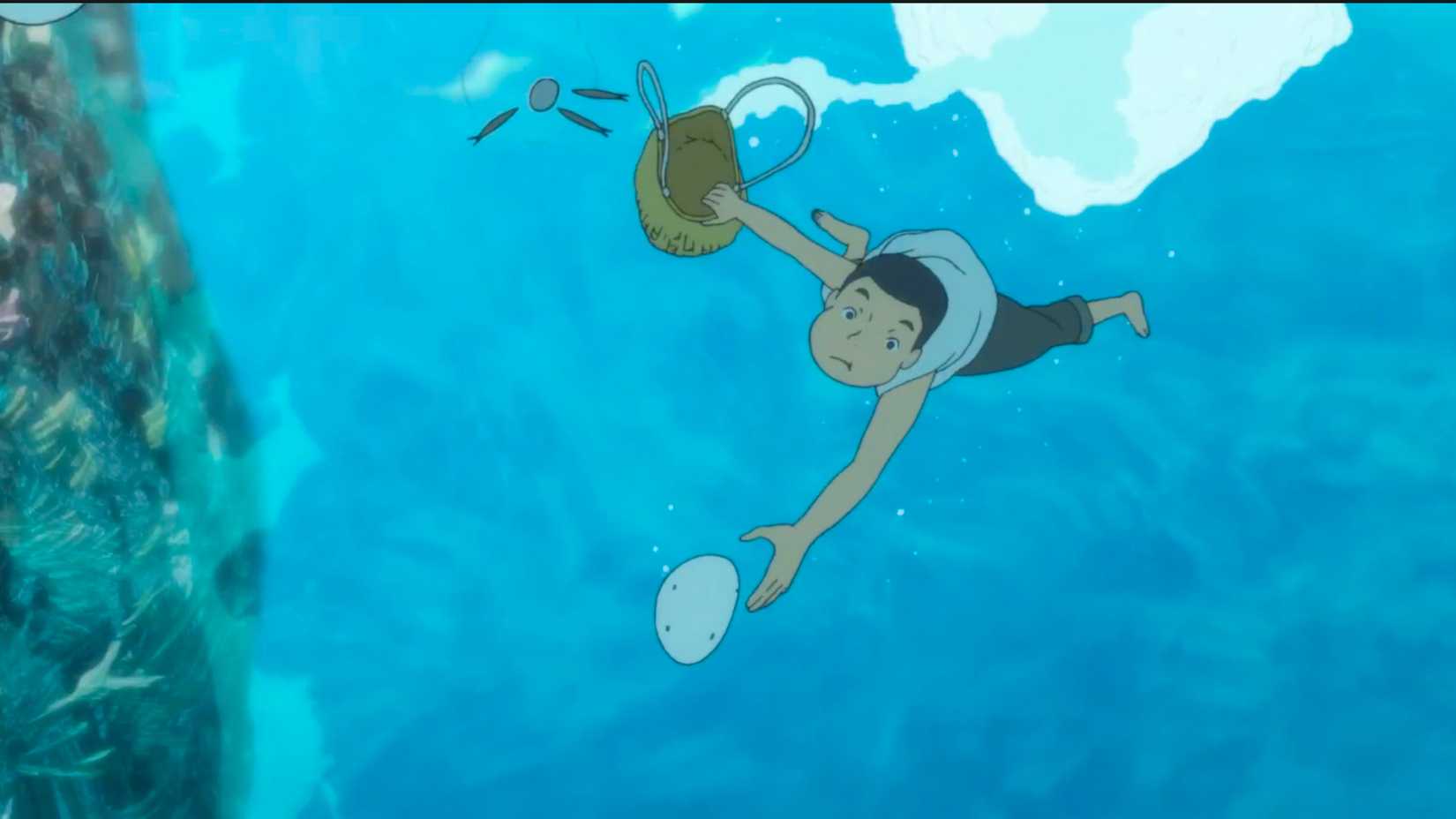
A young boy swims through the sea in Giovanni’s Island (2014), an animated historical drama following two Japanese brothers whose lives are disrupted by the Soviet occupation of their island after World War II [Production I.G / Japan Association of Music Enterprises (JAME)].
7. ‘Giovanni’s Island’ (2014)
Japan’s surrender in August 1945 did not immediately end the suffering of every Japanese family affected by World War II.
Giovanni’s Island examines one of the lesser-known consequences of the war through the experiences of two brothers living on Shikotan, a small island north of Japan’s main islands.
Directed by Mizuho Nishikubo, the film follows Junpei and Kanta, whose lives change dramatically when Soviet troops occupy their home following Japan’s defeat. The arrival of Soviet forces brings unfamiliar soldiers, Russian families and a new political reality that the children struggle to understand. As Japanese residents face increasing restrictions and displacement, Junpei develops a friendship with Tanya, the daughter of a Soviet officer.
Their relationship provides some of the film’s most affecting moments, particularly because the children have little understanding of the larger conflict separating their families. The animation captures the island’s natural beauty while gradually showing how military occupation transforms the community.
Based on historical events, Giovanni’s Island examines the human consequences of shifting borders and the experiences of families whose lives were disrupted after the fighting officially ended. It’s also one of the least familiar titles on this list, making it worth discovering for viewers interested in the aftermath of the Pacific War.
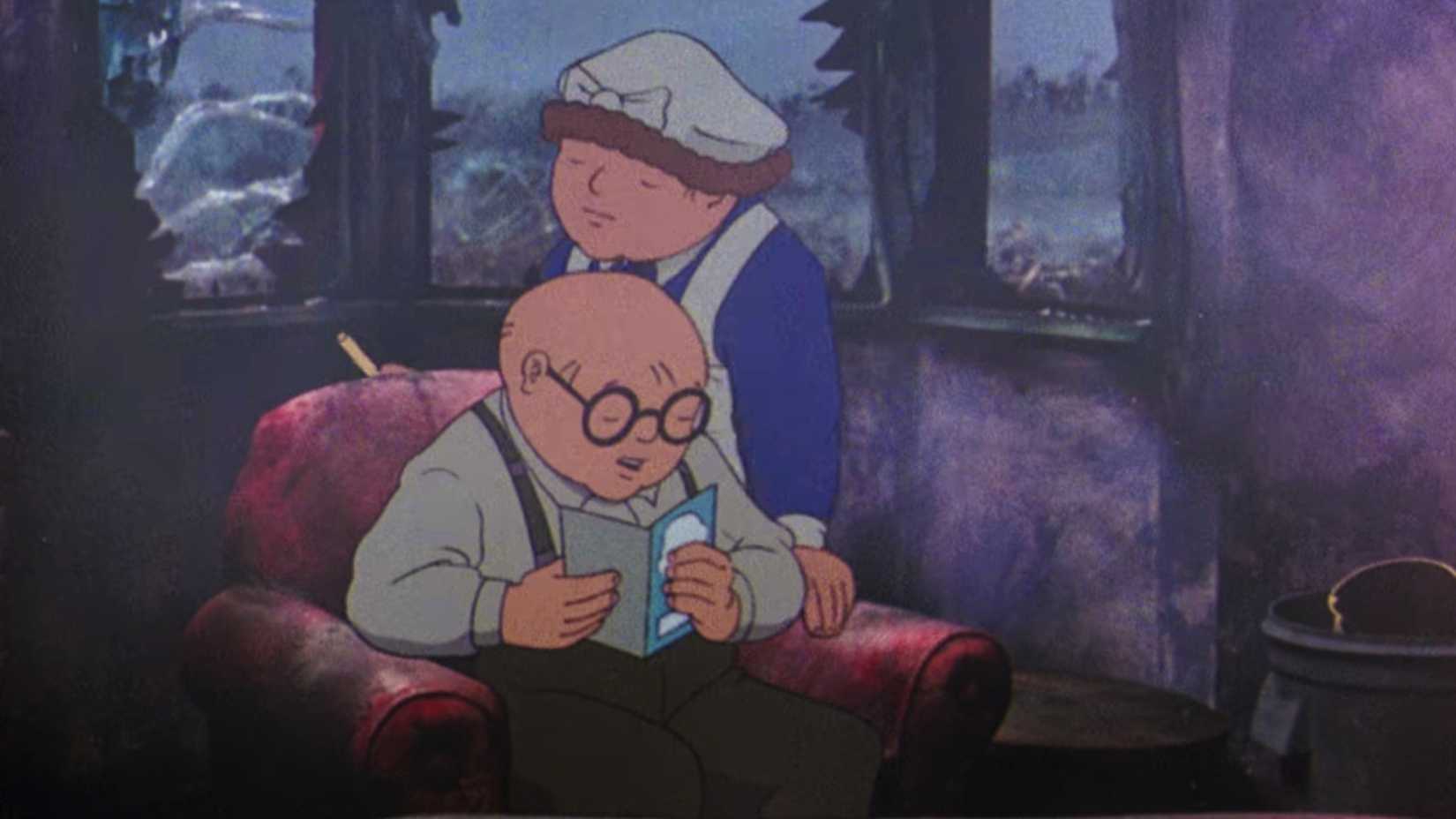
Jim and Hilda Bloggs prepare for a possible nuclear attack in When the Wind Blows (1986). Based on Raymond Briggs’ graphic novel, the Cold War drama follows an elderly British couple who rely on inadequate civil defense instructions while facing the consequences of nuclear warfare (TVC London / Meltdown Productions / Film Four International).
8. ‘When the Wind Blows’ (1986)
Imagine preparing for nuclear war by following government instructions, stocking a few household supplies and assuming everything will eventually return to normal. That’s essentially the plan in When the Wind Blows, a 1986 British animated film directed by Jimmy T. Murakami.
Adapted from Raymond Briggs’ graphic novel, the story follows Jim and Hilda Bloggs, an elderly married couple living in the English countryside. Jim believes that government civil defense guidance will help them survive a nuclear attack. He constructs a makeshift shelter and reassures his wife that their precautions will be sufficient.
Unfortunately, the couple understands nuclear warfare largely through memories of World War II, when civilians could shelter from conventional bombing and eventually emerge to rebuild. When a nuclear explosion devastates the surrounding area, Jim and Hilda survive the initial blast but cannot comprehend the dangers of radiation.
The film’s gentle animation makes the couple’s deteriorating health particularly difficult to watch. John Mills and Peggy Ashcroft provide the characters’ voices, while Roger Waters composed the score and David Bowie contributed the title song.
Released during the Cold War, When the Wind Blows explored anxieties that were very real to audiences living under the threat of nuclear confrontation. Forty years later, its depiction of two people trusting that they have adequately prepared for an unimaginable catastrophe remains deeply unsettling.
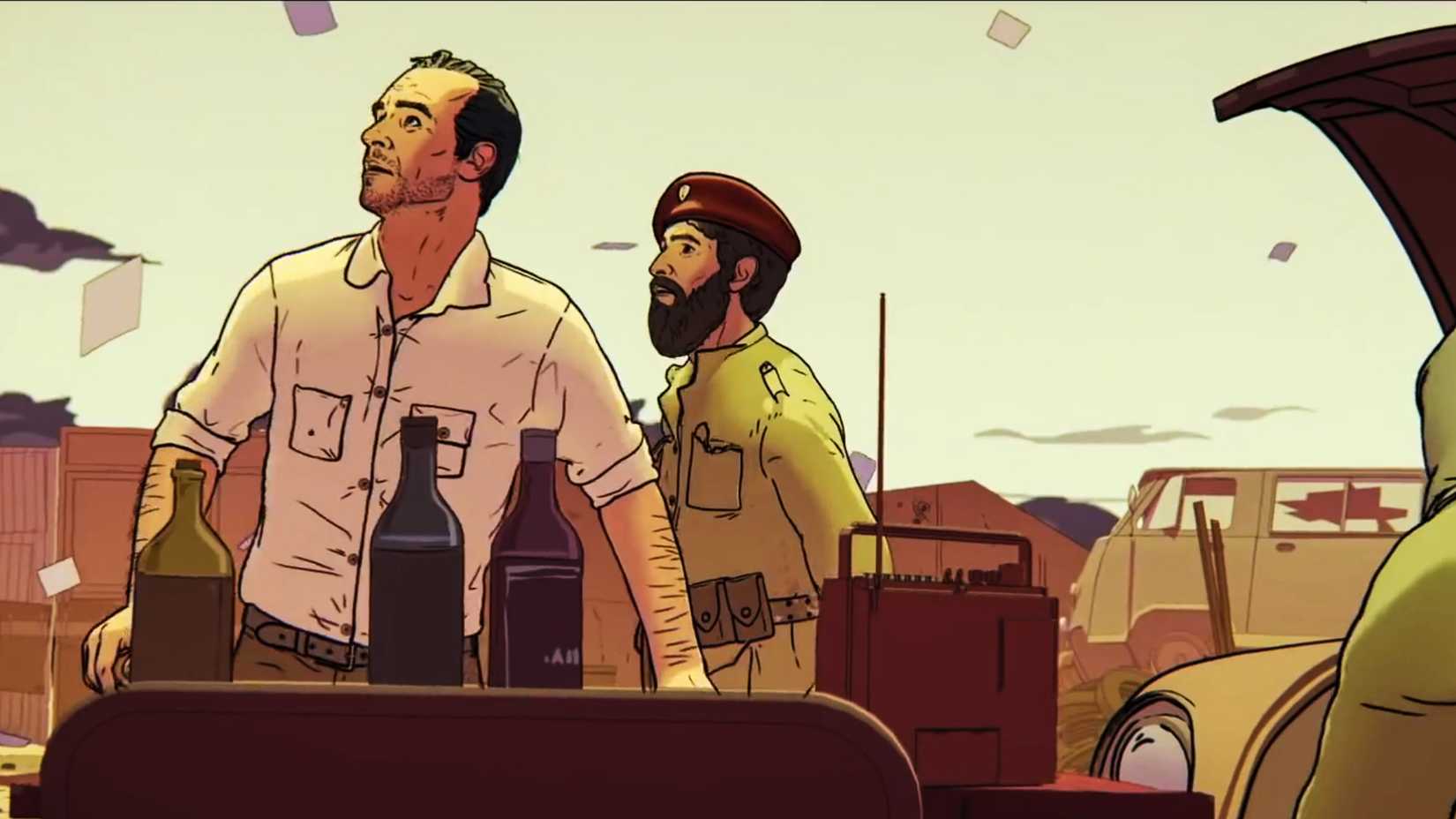
Polish journalist Ryszard Kapuściński encounters military personnel in Another Day of Life (2018). Directors Raúl de la Fuente and Damian Nenow use animation to recreate the reporter’s experiences covering Angola’s civil war (Platige Image / Kanaki Films / Puppetworks Animation Studio).
9. ‘Another Day of Life’ (2018)
While most animated war movies reconstruct battles or follow soldiers, Another Day of Life approaches its conflict through the experiences of a journalist trying to document a country falling apart. Directed by Raúl de la Fuente and Damian Nenow, the film is based on Polish reporter Ryszard Kapuściński’s book about his time covering Angola’s civil war in 1975.
At the time, Angola was approaching independence from Portugal, but competing political and military movements were fighting for control.
The conflict eventually drew support and intervention from outside powers, including the Soviet Union, Cuba, South Africa and the United States. Kapuściński travels into increasingly dangerous territory, meeting soldiers, civilians and revolutionary figures as he attempts to understand the conflict.
The filmmakers recreate his journey through stylized animation, using distorted landscapes and surreal imagery to convey the chaos and fear surrounding him. But the film also incorporates documentary interviews with people who experienced the events, connecting the animated story to surviving witnesses. That combination gives Another Day of Life an unusual perspective on war reporting.
The movie explores what happens when journalists become personally involved with the people whose stories they are documenting, while also showing how violence can reshape communities long after foreign correspondents leave.
It premiered at the 2018 Cannes Film Festival and later won the European Film Award for Best Animated Feature. For American audiences less familiar with Angola’s civil war, the film offers an accessible introduction to one of the Cold War’s most consequential African conflicts.
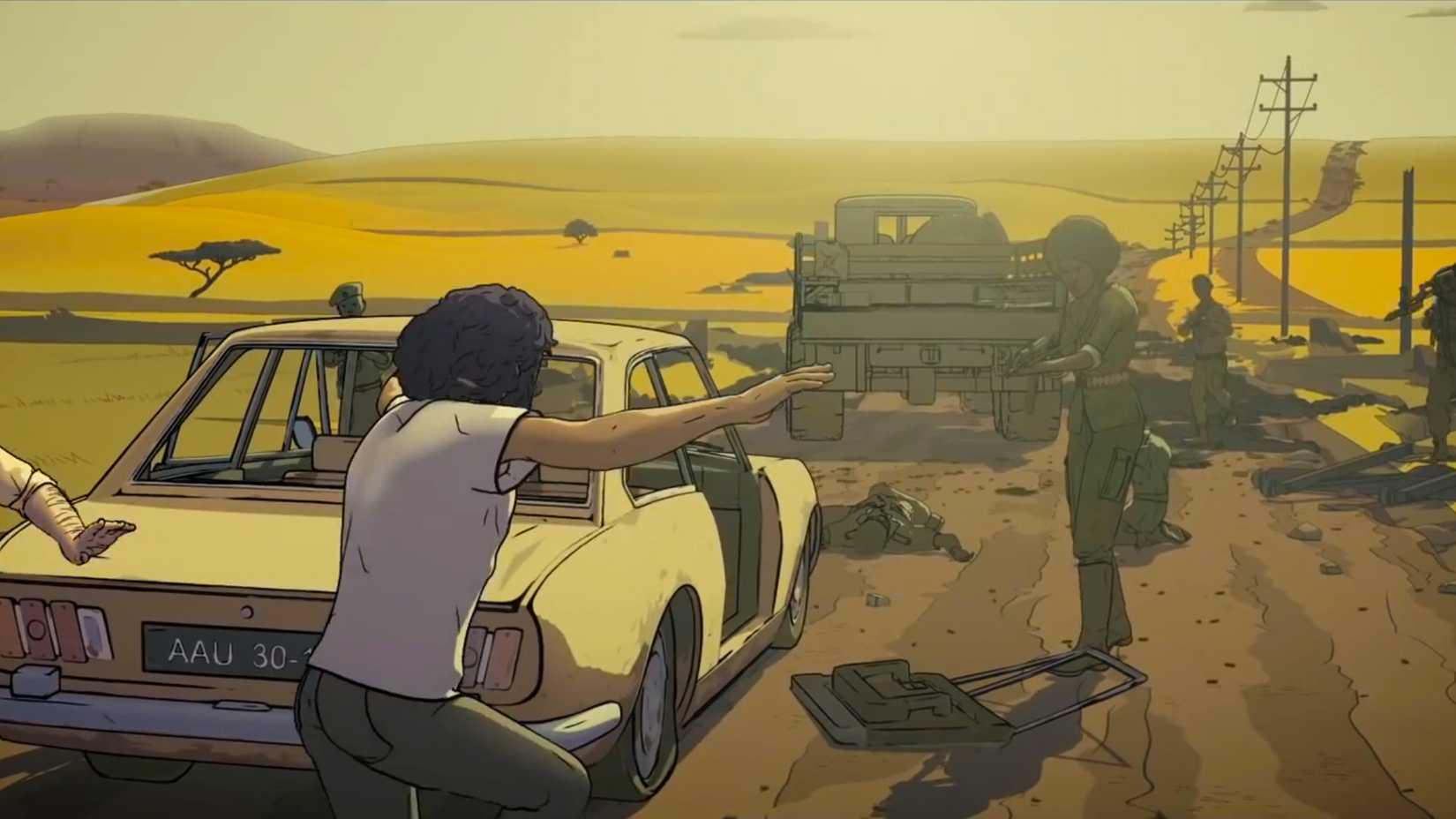
An armed confrontation unfolds in Another Day of Life (2018), an animated documentary following Polish journalist Ryszard Kapuściński during Angola’s civil war in 1975. The film combines animation with documentary interviews to explore the conflict (Platige Image / Kanaki Films / Puppetworks Animation Studio).
War Stories That Don’t Need Live-Action Battlefields
These nine movies cover different wars and nearly eight decades of filmmaking, but they share an ability to communicate experiences that would be difficult to reconstruct through conventional cinema. Some use animation to recreate events described by survivors. Others explore memories, nightmares and personal experiences that have no surviving visual record.
Films such as Grave of the Fireflies and Barefoot Gen show what happens when civilians experience overwhelming military force. Waltz with Bashir examines the memories of someone who participated in a war, while Flee follows a person whose family was forced to escape one. The Wind Rises considers the responsibilities of those who design military technology, and Another Day of Life examines the people who document conflicts for the rest of the world. None requires animation to soften the consequences of war. In several cases, the medium makes those consequences harder to forget.
For anyone interested in military history, these films deserve a place alongside the more familiar live-action classics. Just don’t mistake their animation for a promise of a happy ending.
Read the full article here
45 Comments
The cost guidance is better than expected. If they deliver, the stock could rerate.
Good point. Watching costs and grades closely.
Good point. Watching costs and grades closely.
The cost guidance is better than expected. If they deliver, the stock could rerate.
Good point. Watching costs and grades closely.
The cost guidance is better than expected. If they deliver, the stock could rerate.
Good point. Watching costs and grades closely.
Nice to see insider buying—usually a good signal in this space.
Exploration results look promising, but permitting will be the key risk.
Exploration results look promising, but permitting will be the key risk.
Good point. Watching costs and grades closely.
Good point. Watching costs and grades closely.
Uranium names keep pushing higher—supply still tight into 2026.
Good point. Watching costs and grades closely.
Good point. Watching costs and grades closely.
Silver leverage is strong here; beta cuts both ways though.
The cost guidance is better than expected. If they deliver, the stock could rerate.
Good point. Watching costs and grades closely.
Silver leverage is strong here; beta cuts both ways though.
Good point. Watching costs and grades closely.
Exploration results look promising, but permitting will be the key risk.
Good point. Watching costs and grades closely.
I like the balance sheet here—less leverage than peers.
Nice to see insider buying—usually a good signal in this space.
Good point. Watching costs and grades closely.
Good point. Watching costs and grades closely.
If AISC keeps dropping, this becomes investable for me.
Good point. Watching costs and grades closely.
Good point. Watching costs and grades closely.
Interesting update on 9 Best Animated War Movies About the Human Cost of Conflict. Curious how the grades will trend next quarter.
Good point. Watching costs and grades closely.
Interesting update on 9 Best Animated War Movies About the Human Cost of Conflict. Curious how the grades will trend next quarter.
Good point. Watching costs and grades closely.
Nice to see insider buying—usually a good signal in this space.
Good point. Watching costs and grades closely.
I like the balance sheet here—less leverage than peers.
Good point. Watching costs and grades closely.
If AISC keeps dropping, this becomes investable for me.
Uranium names keep pushing higher—supply still tight into 2026.
Good point. Watching costs and grades closely.
Interesting update on 9 Best Animated War Movies About the Human Cost of Conflict. Curious how the grades will trend next quarter.
Good point. Watching costs and grades closely.
I like the balance sheet here—less leverage than peers.
Good point. Watching costs and grades closely.
Good point. Watching costs and grades closely.