

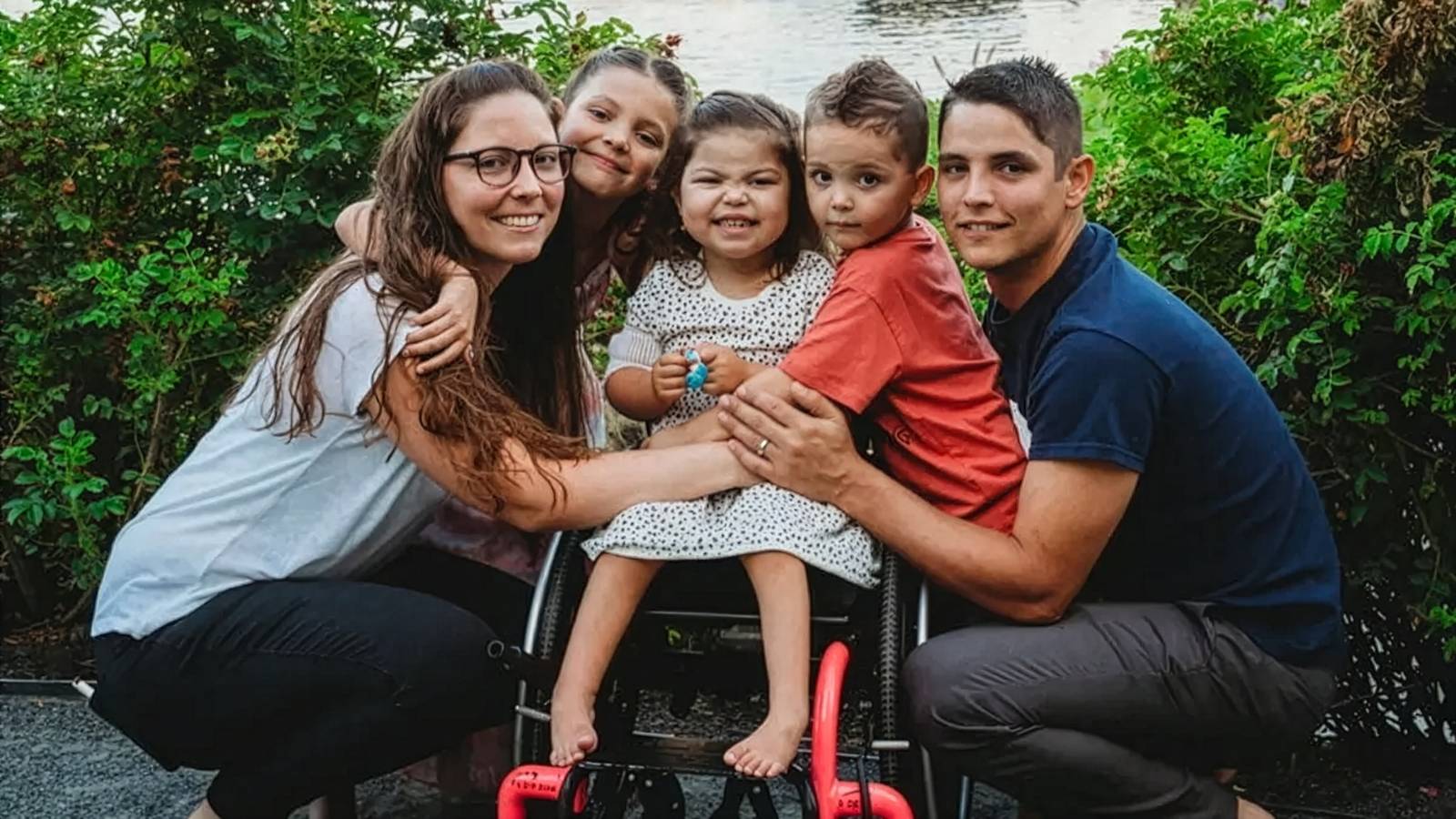
The family of a U.S. Air Force member has waited more than six months for an appeal of a denied malpractice claim involving their disabled daughter that stems from her birth a dozen years ago. They told Military.com that the service has not at all responded, prompting a new lawsuit.
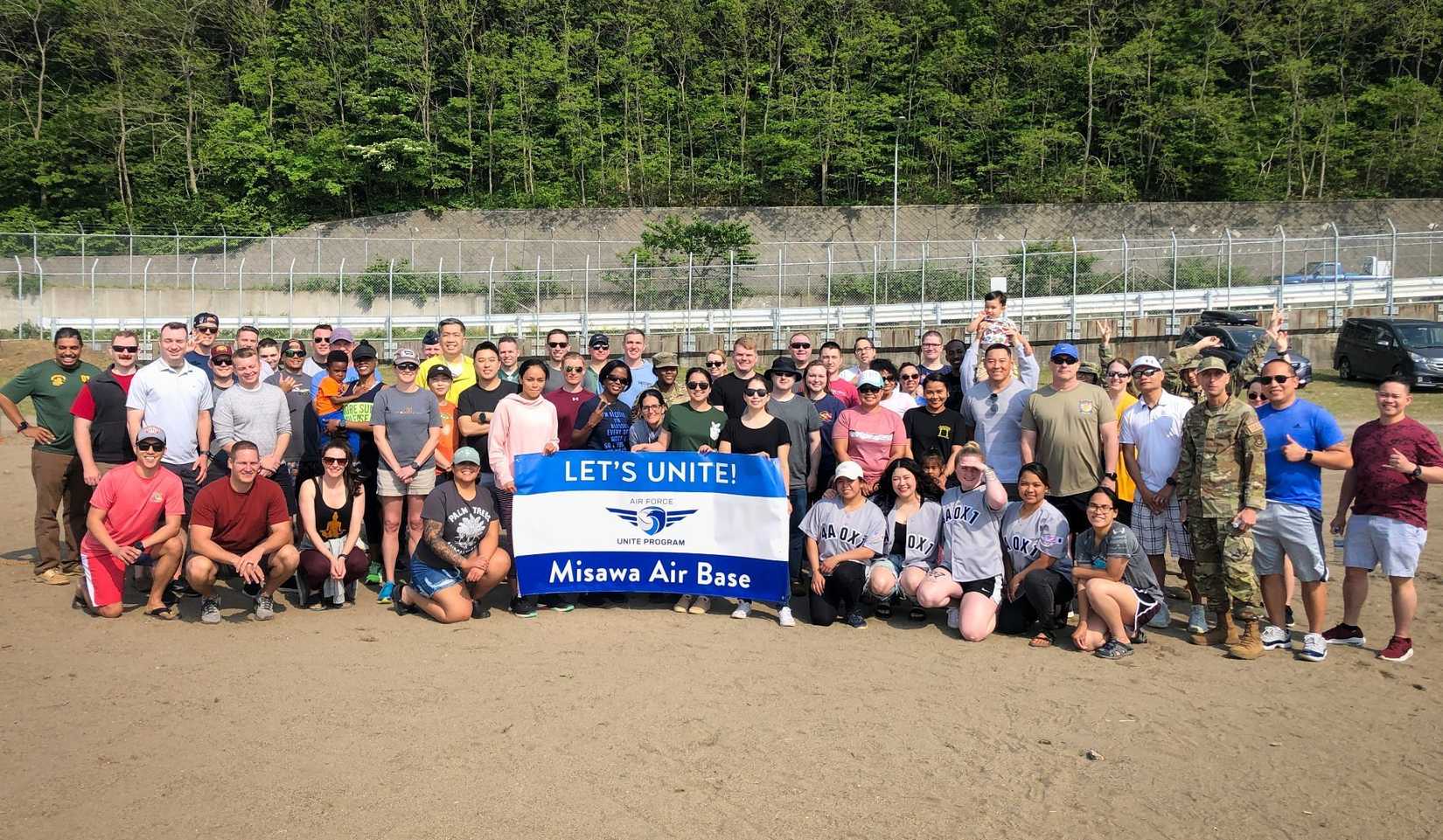
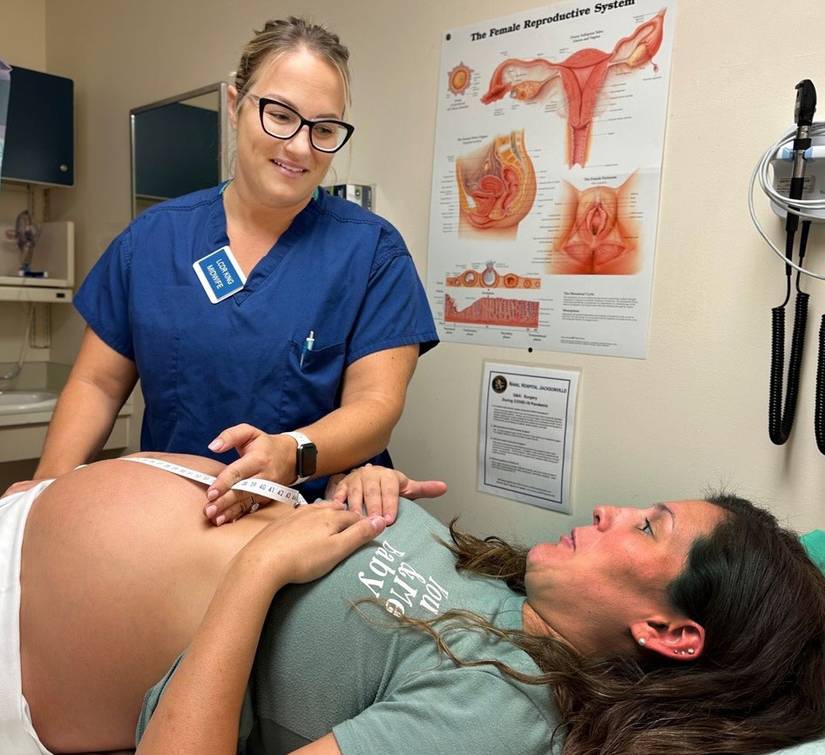
Brandon and Kyla Walker, of Galveston County, Texas, had Kira in 2013 at Misawa Air Base in Japan, where Brandon was stationed with the U.S. Navy. During Kyla’s C-section, an Air Force obstetrician purportedly took about 6 1/2 minutes to deliver her after her oxygen supply was cut off.
Soon to be 13 years old, Kira—who has an older sister and younger brother—has never walked. She also has kidney and heart complications.
But since Kira was born overseas, the family couldn’t take the claim to court. The Air Force decided the matter under the Military Claims Act, offering them $225,000. However, that total for a lifetime of care would have drastically been minimized to roughly $130,000 following Medicaid liens and fees.
Also, since K.W. is a minor, the Air Force required a state judge to approve the deal. A Galveston County judge rejected it in March as not in her best interest, and two days later the Air Force denied the claim entirely.
In October, they sued the Air Force in federal court in Washington over how the military handled their claim.
How Case Evolved From a Dozen Years Ago to Today
Soon after Kira’s birth, both Brandon and Kyla realized that there were medical errors that were made “that should not have happened,” their attorney, Lee Thweatt, told Military.com.
The parents at the time consulted with lawyers who were in California who were actually former Marines who Thweatt himself knew from the Marine Corps. A claim at the time was filed under the Military Claims Act around 2015, or about two years after Kira’s birth.
“They filed a claim with the Air Force because it was an Air Force doctor who committed the medical negligence to malpractice at issue,” Thweatt said. “The gist of it is, their daughter was deprived of oxygen for too long during the birth process.
“She should have had a C-section to get her out of the birth canal quicker, and there were signs during the birth that would indicate to a reasonable practitioner that he should have acted sooner than he did, and he didn’t.”
Instead, Kira suffered a hypoxic brain injury. She’s in a wheelchair now and requires a lifetime of medical care.
“I mean, just this week when I was on a Zoom call, [Kira] had trouble remembering her own birthday,” he said. “I saw that myself. Her parents are always going to have to be there for her to provide for her needs.
“So, it’s a very serious injury, and it’s the kind of injury that if it had occurred at a military base inside the United States, rather than outside or overseas, they would have the ability to go file a claim under the Federal Tort Claims Act, which is a different law than the Military Claims Act.”
Differences in Legal Leverage: Torts vs. Military Claims
The major difference between torts and military claims is that if one files a claim under the Federal Tort Claims Act, and there is disagreement with the settlement proposal from the government agency that’s handling the case, individuals have the ability to go to federal court, file a lawsuit, and have a federal judge hear the merits of the case.
Military.com previously reported on tort claim cases involving purported sexual assault by military doctors, for example.
As Thweatt explained, under the Military Claims Act you just file the claim. The form, an SF-95, is exactly the same and the government agency at issue makes a determination about what the case is worth but there’s no way to challenge it in court.

In the Walkers’ case, the Air Force offered $225,000 for a permanently brain-injured child. But if this was a Federal Tort Claims Act, Thweatt said, the settlement would be “worth well north of $10 million.”
“There’s settlement histories,” he said. “Those are public. I have a colleague in Austin who just resolved a very similar hypoxic brain injury case, and it’s footnoted in our filed lawsuit, for $11 million. The only difference is the availability of the federal courts to put the government to its burden.
“The Walkers don’t have that, and so that’s what this lawsuit is about. It’s challenging the constitutionality of the Military Claims Act because access to federal courts should not depend upon where you’re born if you are a U.S. citizen. Brandon was serving in the Navy at the time; his family didn’t have a choice where he was serving.”
Thweatt, who had two of his sons born at Camp Pendleton when he was in the Marines, hypothetically could have gone that legal route should something have occurred affecting his son’s health.
The Walkers, therefore, are stuck in essentially “a take-or-leave-it proposition.” Thweatt, who has a Galveston law office, spoke of how even a local attorney found the $225,000 settlement “wildly inappropriate.”
“The medical negligence is clear, and he told the judge, ‘I don’t think that this case should be approved.’ And she said, ‘I agree,'” Thweatt said. “And so she didn’t approve it. And once it was disapproved, we went back to the Air Force, told them that, and filed an administrative appeal of their decision.
“That was back in April 2026 of this year, and we have not heard anything in response from the Air Force.”
Military.com contacted Misawa Air Base and also never received a response.
How Brandon and Kyla Have Dealt With the Last 13 Years
Brandon Walker, who was honorably discharged from the Navy, and his wife have received medical care for their daughter in a number of different states, including California, North Carolina and then Texas. That care is funded in part by Medicaid and Medicare, whose liens have the legal expectation of being reimbursed.
Kyla Walker told Military.com that looking back at Kira’s birth, it was initially a “shock” compounded by a language barrier while being in Japan.
“It was a lot going on, and we weren’t really fully understanding how detrimental it was to her,” Kyla said. “[Kira] was obviously in the NICU and not doing well. We were just trying to understand what that meant and where things were going to go from there.
“And then she was essentially medevaced to California after that, and then that hospital is kind of where we really understood how sick she was. She was in kidney failure, and all these other things that were also happening. We weren’t sure if she would get better. At that point, we were sure that sometimes, from a kid injury you can heal, and she wasn’t going to.”
Kira spent more than three months in the NICU. Brendan and Kyla had to take classes to learn how to do dialysis at home. Since Kira had a G-tube, or gastrostomy tube, she couldn’t eat by mouth. Her parents had to learn how to use that pump and make all of her feedings, requiring specialized milk because the kidneys don’t work.
Kira was on more than 15 medications, and they had to learn all of them.
“You can’t accidentally give her the wrong med or the wrong time or the wrong amount,” Kyla said. “So, it was a lot of training to make sure we were capable of caring for her before she was able to go home. My older daughter would have been 1 or 2 when Kira was born, and all of our cars, all of our things were still in Japan. We had no family with us because we were sent to California.
“It was really, really stressful and difficult, just kind of being thrown into a brand-new situation. I think we were just overwhelmed and just trying to do our best.”
Brandon left the service to avoid potential long deployments so he could help take care of Kira. Kyla has remained a stay-at-home mom to have to deal with Kira’s constant needs, while Brandon has had different jobs to help pay off medical debts.
Even with all that’s happened, Kyla said neither she nor her husband have any ill will toward the military itself. They view the service side differently from this legal challenge.
“We are hopeful, and I hope that this process also helps other families because I’m sure there are other families,” Kyla said. “I hope there are not, but I’m sure they are out there.
“Struggling for so long with [Kira] and what she’s gone through in our family, it really changed our path, and I hope that there’s an avenue for us and for other families.”
Read the full article here
20 Comments
Nice to see insider buying—usually a good signal in this space.
Good point. Watching costs and grades closely.
Nice to see insider buying—usually a good signal in this space.
Good point. Watching costs and grades closely.
If AISC keeps dropping, this becomes investable for me.
Exploration results look promising, but permitting will be the key risk.
Good point. Watching costs and grades closely.
Good point. Watching costs and grades closely.
Interesting update on Air Force Sued in Malpractice Case Involving Baby Born With Permanent Brain Injury. Curious how the grades will trend next quarter.
If AISC keeps dropping, this becomes investable for me.
Silver leverage is strong here; beta cuts both ways though.
Good point. Watching costs and grades closely.
Production mix shifting toward USA might help margins if metals stay firm.
Uranium names keep pushing higher—supply still tight into 2026.
Good point. Watching costs and grades closely.
The cost guidance is better than expected. If they deliver, the stock could rerate.
Good point. Watching costs and grades closely.
Good point. Watching costs and grades closely.
Silver leverage is strong here; beta cuts both ways though.
Good point. Watching costs and grades closely.