


Five Army and Navy reservists who also work as federal civilian employees have accused the U.S. government of failing to pay them wages they say they are owed, filing a legal complaint that seeks to recover compensation withheld despite a 2025 Supreme Court ruling in reservists’ favor.
The five current and former employees of the Defense Department, Justice Department and Department of Veterans Affairs are reservists , Shea Matthew Gibbons, Lacy Jaudon, Bryce Miller, John Mezzanotte and Shahara Timbrook.
The complaint, Jaudon v. Department of Defense, was filed Sept. 23 with the Merit Systems Protection Board, an independent agency that hears federal employees’ workplace disputes.
They are seeking what is known as reservist differential pay. Their complaint asks to be treated as a class covering others in the same position, according to Bloomberg Law and Stars and Stripes, which reviewed the filing.
What is Differential Pay?
Differential pay addresses a gap that can open when a federal civilian employee is called to active military duty.
If the employee’s military pay is lower than the civilian salary, the government generally must make up the difference so the employee does not lose income for serving. That guidance is provided under a law Congress passed in March 2009 called the reservist differential pay statute.
It is not a bonus or a second paycheck; rather, it covers the shortfall between the two rates. The reservists say their agencies did not pay it.
According to reports, Mezzanotte, an assistant U.S. attorney, served on active duty and had his request for the pay denied in August, while the others claim they went without the differential during qualifying periods of service stretching back years.
Supreme Court’s Ruling
The complaint builds on a 5-4 split decision on April 30, 2025, in Feliciano v. Department of Transportation.
The Court ruled that federal employees called to active duty during a national emergency are entitled to differential pay, rejecting the government’s narrower argument that a reservist had to prove a substantive connection between the service and a specific emergency.
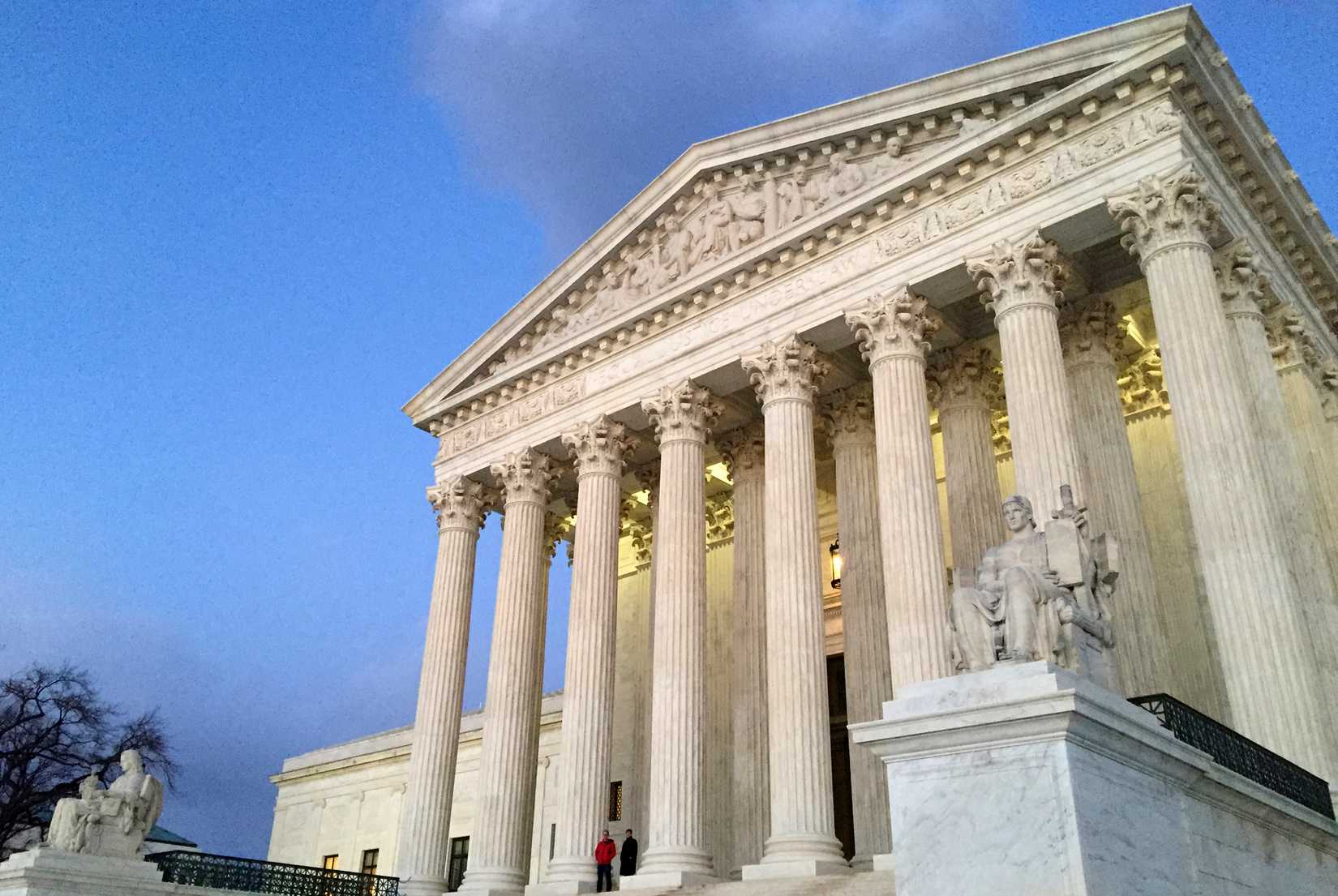
That case involved Nick Feliciano, an air traffic controller with the Federal Aviation Administration, and a Coast Guard reservist who was denied pay.
Writing for the majority, SCOTUS Justice Neil Gorsuch said the service and the national emergency need only overlap in time. The court noted that tens of thousands of federal civilian employees serve as reservists.
“The Supreme Court could not have been clearer: these men and women earned this pay, and the law requires the government to make them whole,” said Andrew Tutt of Trial Lawyers for Justice, who represents the reservists.
A Guidance Gripe
More than a year after that ruling, the Office of Personnel Management’s public guidance still reflects the interpretation the court rejected.
The agency’s website currently states that qualifying active duty does not include voluntary active duty under a provision of law known as Section 12301(d). This is the same category of service at issue in the Feliciano case.
Section 5538 directs OPM, in consultation with the Defense Department, to write the regulations needed to carry it out. That guidance has not been updated to reflect the ruling.

In August, Army reservist and VA attorney Marcus Colicelli filed a separate lawsuit seeking to force OPM to issue new regulations. Federal News Network reported that 15 months after the decision, the guidance remained unchanged.
The Office of Personnel Management did not respond to a request for comment from Military.com on why its guidance still reflects the earlier interpretation, or when it would be updated.
Reservists Chose The Forum
This complaint is not the only case pushing the issue.
In Platero v. United States, the U.S. Court of Federal Claims certified a class in March covering reservists denied differential pay, but a six-year statute of limitations has limited that case to claims dating to May 2019.
The reservists argue that the Merit Systems Protection Board can reach further back.
Their complaint contends that because it is brought under the Uniformed Services Employment and Reemployment Rights Act, which they say carries no filing deadline, the board can address unpaid compensation dating to the differential-pay law’s creation in 2009.
Whether the board accepts that argument remains undecided.
The board has a set period to decide whether to hear the matter as a class. Tutt has said the named reservists are likely owed a few thousand dollars each, though there is no public estimate of how much the government might owe in total.
Read the full article here
38 Comments
The cost guidance is better than expected. If they deliver, the stock could rerate.
I like the balance sheet here—less leverage than peers.
Good point. Watching costs and grades closely.
Nice to see insider buying—usually a good signal in this space.
Good point. Watching costs and grades closely.
Exploration results look promising, but permitting will be the key risk.
Good point. Watching costs and grades closely.
Nice to see insider buying—usually a good signal in this space.
Good point. Watching costs and grades closely.
Good point. Watching costs and grades closely.
Nice to see insider buying—usually a good signal in this space.
The cost guidance is better than expected. If they deliver, the stock could rerate.
Good point. Watching costs and grades closely.
Interesting update on Army and Navy Reservists Accuse Government of Withholding Pay Owed to Federal Employees. Curious how the grades will trend next quarter.
Good point. Watching costs and grades closely.
Interesting update on Army and Navy Reservists Accuse Government of Withholding Pay Owed to Federal Employees. Curious how the grades will trend next quarter.
Good point. Watching costs and grades closely.
Good point. Watching costs and grades closely.
Uranium names keep pushing higher—supply still tight into 2026.
Good point. Watching costs and grades closely.
Uranium names keep pushing higher—supply still tight into 2026.
Uranium names keep pushing higher—supply still tight into 2026.
Good point. Watching costs and grades closely.
Good point. Watching costs and grades closely.
Production mix shifting toward USA might help margins if metals stay firm.
Good point. Watching costs and grades closely.
I like the balance sheet here—less leverage than peers.
Good point. Watching costs and grades closely.
Production mix shifting toward USA might help margins if metals stay firm.
Interesting update on Army and Navy Reservists Accuse Government of Withholding Pay Owed to Federal Employees. Curious how the grades will trend next quarter.
Good point. Watching costs and grades closely.
The cost guidance is better than expected. If they deliver, the stock could rerate.
Uranium names keep pushing higher—supply still tight into 2026.
Good point. Watching costs and grades closely.
Good point. Watching costs and grades closely.
The cost guidance is better than expected. If they deliver, the stock could rerate.
Good point. Watching costs and grades closely.
If AISC keeps dropping, this becomes investable for me.