


WASHINGTON — Some major Army software programs take six to eight months to establish an initial working capability, senior officials said Tuesday, describing delays the service hopes to reduce through a new system for evaluating commercial software. The Army, however, cannot yet say how much money or manpower the changes will save.
Acting Army Chief Information Officer Gabriele “Gabe” Chiulli announced at an Oct. 13 press roundtable during the Association of the United States Army’s annual meeting in Washington that Project Gatekeeper will launch Oct. 23.
The platform will let commercial developers submit code for cybersecurity screening even without an Army contract or a program manager sponsoring them.
Chiulli described the current process as a patchwork of procedures that can leave companies struggling to get software evaluated without already having access to military networks.
The Army has resorted to “weird janky things” to move software into its systems, he said. At times, officials could not readily determine how code had been transferred.
Under previous arrangements, companies often had to establish access to government infrastructure and learn Army security practices before they could demonstrate a product.
Officials said some program offices were reluctant to consider vendors that did not already have an Authority to Operate, effectively favoring companies with existing government relationships.
The initiative follows a broader Army effort to cut acquisition red tape and bring commercial technology to soldiers faster, which military leaders outlined earlier this year.
Gatekeeper is intended to replace those arrangements with a standardized testing process that lets developers identify vulnerabilities and correct them before moving software toward use on Army networks.
At launch, Gatekeeper will still require a Common Access Card, or CAC, the military credential that outside developers have often needed to work on government systems.
Chiulli said the Army has sometimes issued those cards to entire teams of civilian developers simply to allow them to transfer software.
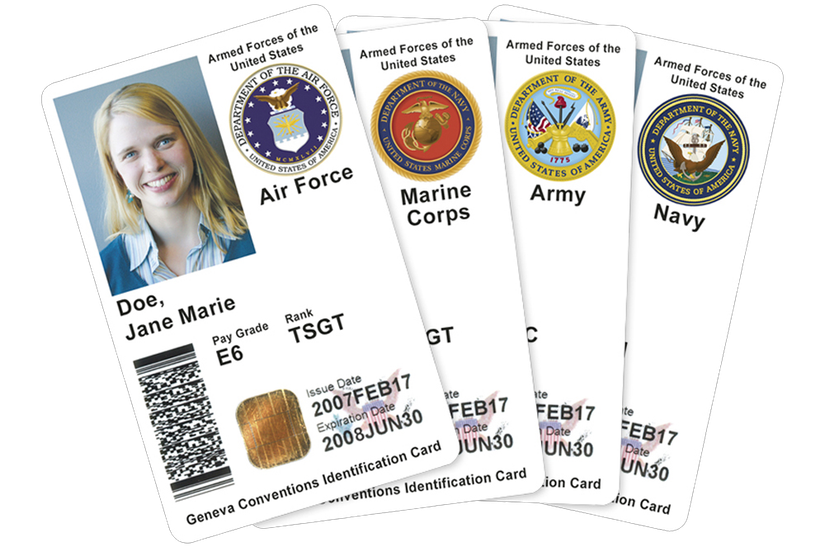
“Sometimes companies have a hundred developers in the back end that are not necessarily going to have CAC cards,” Chiulli said. “And sometimes we give all those people CAC cards simply so that they can do it and commit to us.”
David Wright, a chief engineer at the Army Software and Innovation Center, said the service expects to integrate the General Services Administration’s Login.gov system by mid-November. That would make Gatekeeper accessible to commercial developers without military credentials.
Officials estimated that 40 to 50 companies are already encountering obstacles Gatekeeper is designed to address. The Army has also worked with defense startups through its xTech program, supporting projects involving AI-enabled sensors, predictive maintenance and other emerging technologies.
The platform will provide an isolated environment, separated from operational Army networks, where developers can upload software for conventional cybersecurity screening and an AI-assisted review.
Officials said companies could receive feedback within minutes, correct identified problems and resubmit their code. The system uses established Army software security pipelines, including tools already used by other military services. Passing the scans would not, by itself, grant final authorization to operate on military networks.
Savings and Security Questions Remain
During the roundtable, Military.com asked how much money and manpower the Army expects to save by reducing the need to issue CACs to civilian developers.
“I don’t know what that number is,” Chiulli said, declining to offer an arbitrary estimate.
Wright said the workload is spread among numerous program offices, making it difficult to calculate the time spent arranging credentials for outside contractors.
“I know that subjectively it feels like the answer is a lot,” Wright said.

David M. Markowitz, the Army’s deputy chief information officer and chief data and analytics officer, said some major software programs can take six to eight months before developers have an initial working capability. He added that larger programs can cost millions of dollars per month.
Those expenses reflect broader software development efforts, not the specific cost of issuing CACs. Officials did not provide an estimate of Gatekeeper’s potential savings.
The Army is also working through how it will protect companies’ proprietary code, particularly when they submit software before securing government contracts. Wright described nondisclosure agreements and controls to keep different vendors’ code separate, but said some arrangements remain unresolved.
Officials maintained that faster access would not reduce cybersecurity standards. The effort comes amid broader Pentagon investments in cybersecurity and moves toward more consistent security requirements for defense contractors under the fiscal 2026 defense legislation.
Whether Gatekeeper delivers the promised efficiencies will become clearer after the wider commercial rollout, which the Army is targeting for November.
Read the full article here
28 Comments
Uranium names keep pushing higher—supply still tight into 2026.
Good point. Watching costs and grades closely.
Silver leverage is strong here; beta cuts both ways though.
Silver leverage is strong here; beta cuts both ways though.
Good point. Watching costs and grades closely.
Exploration results look promising, but permitting will be the key risk.
Good point. Watching costs and grades closely.
Good point. Watching costs and grades closely.
Production mix shifting toward USA might help margins if metals stay firm.
Nice to see insider buying—usually a good signal in this space.
Good point. Watching costs and grades closely.
Good point. Watching costs and grades closely.
The cost guidance is better than expected. If they deliver, the stock could rerate.
If AISC keeps dropping, this becomes investable for me.
Good point. Watching costs and grades closely.
Good point. Watching costs and grades closely.
The cost guidance is better than expected. If they deliver, the stock could rerate.
I like the balance sheet here—less leverage than peers.
Good point. Watching costs and grades closely.
I like the balance sheet here—less leverage than peers.
Exploration results look promising, but permitting will be the key risk.
Good point. Watching costs and grades closely.
The cost guidance is better than expected. If they deliver, the stock could rerate.
Good point. Watching costs and grades closely.
Good point. Watching costs and grades closely.
Interesting update on Army Project Gatekeeper Launches Oct. 23 for Software Testing. Curious how the grades will trend next quarter.
Good point. Watching costs and grades closely.
Good point. Watching costs and grades closely.