
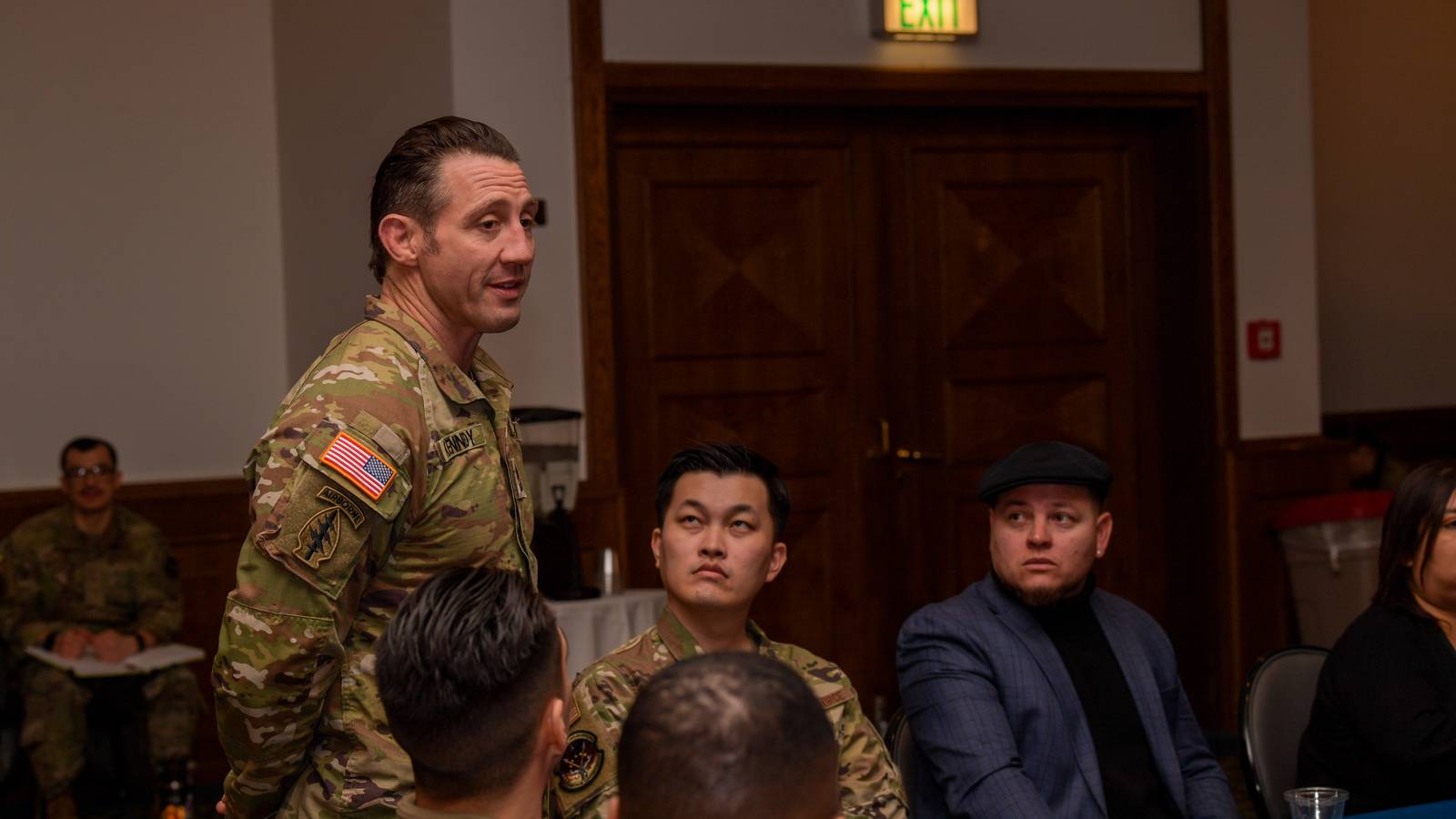
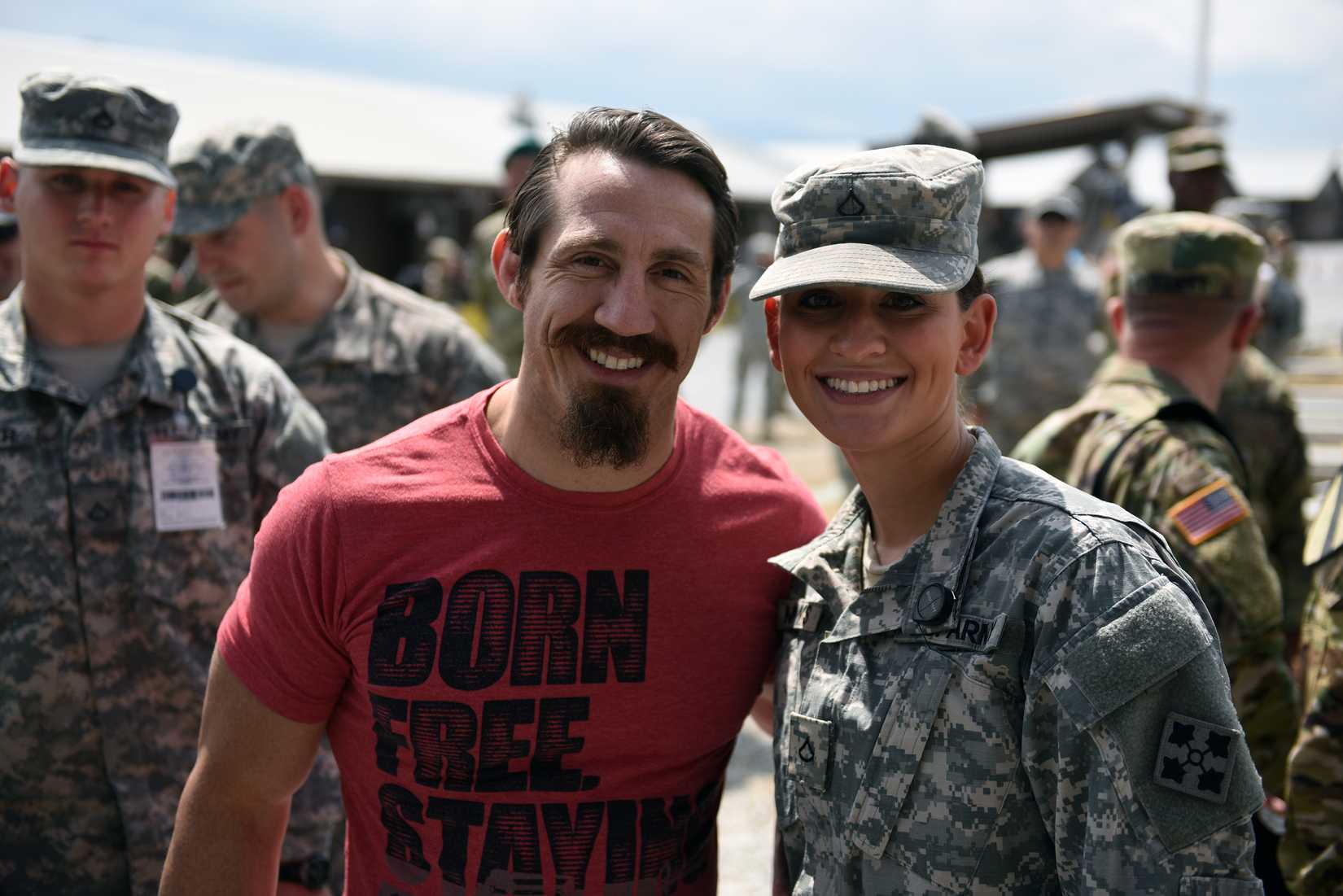
Tim Kennedy, a U.S. Army Special Forces veteran and former UFC fighter, was reportedly shot three times in the leg in a September ambush in eastern Congo that killed and wounded at least 20 people.
Kennedy, 47, survived the Sept. 17 attack in South Kivu province and was evacuated through Burundi and Johannesburg to Walter Reed National Military Medical Center outside Washington, according to Reuters, which spoke with roughly 10 people with direct knowledge of the ambush or who were briefed on its outcome. Military.com could not independently verify the Reuters report.
The dead included at least seven Congolese and a former member of New Zealand’s special forces, sources told the outlet, meaning at least eight people were reportedly killed. A Congolese security source said villagers were likely among the casualties.
The New Zealand Herald, citing war correspondent Robert Young Pelton, identified the New Zealander as Justin Conaglen—a former lance corporal in that country’s elite Special Air Service who left its military in August.
New Zealand’s defense force has acknowledged helping his family with arrangements.
Nobody connected to Kennedy has publicly detailed his condition.
The closest thing to official word came from Rep. Derrick Van Orden, a Wisconsin Republican and former Navy SEAL, who wrote on social media that he had spoken with Kennedy.
“That means he is not dead and that means I am thankful,” Van Orden wrote.
The Pentagon, the State Department, Rep. Derrick Van Orden, and Walter Reed did not immediately respond to Military.com’s requests for comment.
From Guarding Minerals, to a Battlefield Loss
The team worked for the private security firm founded by Erik Prince, creator of Blackwater.
Kennedy was working with Vectus Global, Prince’s security company, when the team was reportedly ambushed while traveling between locations.
What began as a minerals job moved steadily closer to the front lines. Prince reached an agreement with Congo’s government in April 2025 to improve collection of the country’s mineral revenues.
Sources said at the time that there were no plans to send contractors into active conflict zones.
By early 2026, his forces had deployed to the city of Uvira after Washington helped broker a deal for Rwanda-backed rebels to withdraw from it.
Kennedy’s exact role remains unclear. Public records do not clarify his military status.
His own characterizations of his combat record came under Army investigation last year, as Military.com reported, when he was still serving part-time as a master sergeant in a Maryland National Guard special operations detachment.
Whether he still held that status remains an unanswered question.
Rwanda’s Military Blamed, But No Confirmation
Kennedy, a father of four with millions of social media followers and a popular podcast, never announced the trip.
In late August, weeks before the ambush, he posted about time with his son, writing that they had “incredible conversations about what being a man means and what sacrifice really looks like.”
Vectus Global declined to comment to Reuters, as did the U.S. State Department. Kennedy’s parents did not respond to the outlet.
No government has said who carried out the ambush. Two sources told Reuters the attack was the work of the Rwandan military.
A third source with direct knowledge said its sophistication suggested Rwandan forces were involved.
A source in Congo’s government offered one theory of how the team was found, saying Rwandan forces may have tracked a surveillance drone back to its location.
Rwanda denies backing the M23 rebels who control parts of mineral-rich eastern Congo, though the United Nations and Western governments have stated they exercise command and control over the group.
Read the full article here
27 Comments
Exploration results look promising, but permitting will be the key risk.
Good point. Watching costs and grades closely.
Good point. Watching costs and grades closely.
Exploration results look promising, but permitting will be the key risk.
I like the balance sheet here—less leverage than peers.
Uranium names keep pushing higher—supply still tight into 2026.
Exploration results look promising, but permitting will be the key risk.
Uranium names keep pushing higher—supply still tight into 2026.
Nice to see insider buying—usually a good signal in this space.
Uranium names keep pushing higher—supply still tight into 2026.
Good point. Watching costs and grades closely.
The cost guidance is better than expected. If they deliver, the stock could rerate.
I like the balance sheet here—less leverage than peers.
Good point. Watching costs and grades closely.
Interesting update on Army Special Forces Veteran, Ex-UFC Fighter Tim Kennedy Shot 3 Times in Congo Ambush: Report. Curious how the grades will trend next quarter.
Good point. Watching costs and grades closely.
Good point. Watching costs and grades closely.
If AISC keeps dropping, this becomes investable for me.
Good point. Watching costs and grades closely.
If AISC keeps dropping, this becomes investable for me.
Good point. Watching costs and grades closely.
Good point. Watching costs and grades closely.
Production mix shifting toward USA might help margins if metals stay firm.
Good point. Watching costs and grades closely.
Exploration results look promising, but permitting will be the key risk.
Nice to see insider buying—usually a good signal in this space.
Good point. Watching costs and grades closely.