

The fire support from artillery was supposed to protect them. Instead, these shells were landing among the soldiers already surrounded by the German enemy.
On Oct. 4, 1918, Maj. Charles Whittlesey’s command was trapped in a wooded ravine in France’s Argonne Forest. Enemy attacks had cut the soldiers off from reinforcements, and their supplies were disappearing. Now their own artillery was adding to the casualties.
Whittlesey had to tell the higher-ups at headquarters that their guns were hitting the wrong troops. His idea to get the message out: release the pigeon. “Our own artillery is dropping a barrage directly on us,” the message read. “For heaven’s sake, stop it.”
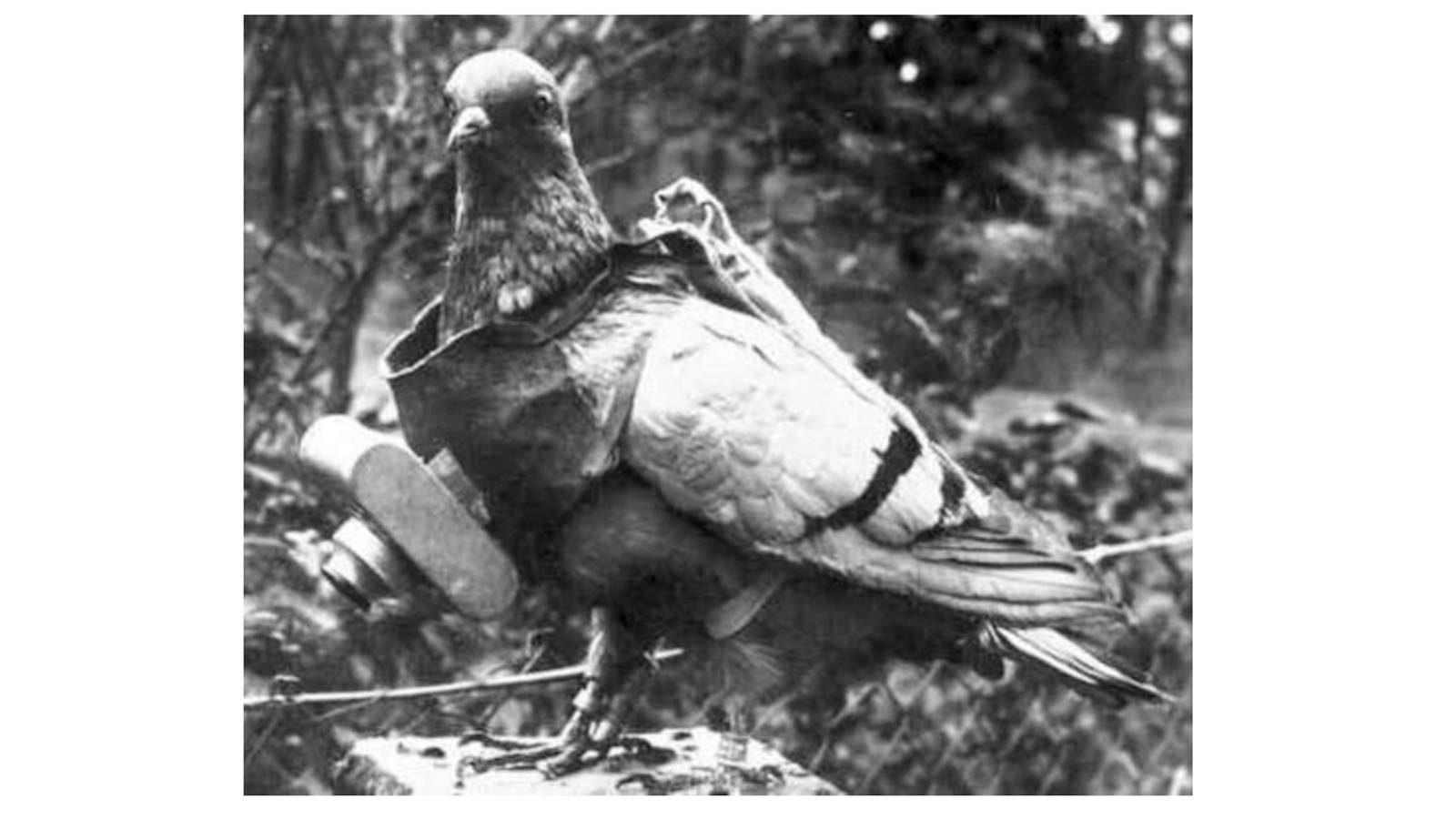
The bird that saved the battalion had a name, Cher Ami, and it became the most famous feathered troop of the American forces in World War I. The soldiers’ ordeal was larger than a single flight, and this familiar version of the pigeon still raises questions today.
Watch Out, It’s a Trap
Two days earlier, Whittlesey’s troops had pushed into the Argonne during the Meuse-Argonne Offensive. Their mission required them to advance through heavily defended terrain and hold their objective.
They moved ahead while neighboring Allied forces failed to keep pace. What appeared to be progress left the Americans exposed, with German troops able to move behind them and sever their connection to the main force.
The trapped force drew soldiers from several units of the 77th Division. Despite its nickname, the Lost Battalion was a composite force instead of one intact battalion.
Whittlesey, the commander of the 1st Battalion, 308th Infantry Regiment, took charge as the senior officer on the scene. The men fortified their position with the backdrop of the Charlevaux Ravine, occupying a position that earned the famous moniker “the Pocket.”
German machine guns and mortars battered them. Attempts to restore contact brought further casualties. Food, water and medical supplies became increasingly scarce, while wounded men accumulated inside the perimeter. The Americans could send messages outward, but receiving instructions was another problem. Whittlesey continued holding his position under orders that prohibited retreat.
A Message With Nowhere Else to Go
World War I happened over a century ago. Communication on the battlefield depended on vulnerable connections. Soldiers had to carry messages on foot, and that could be interrupted by artillery fire. Shellfire could cut telephone lines, so contact with headquarters was often spotty in the chaos of combat.
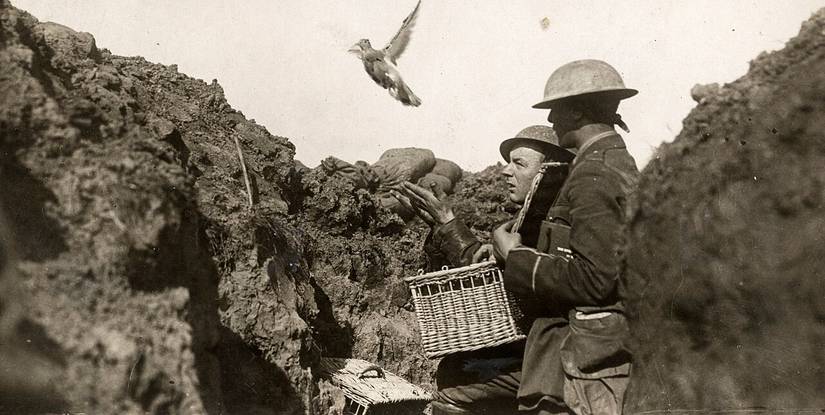
Homing pigeons were a creative alternative. The birds would be released by troops on the front lines, and they flew toward established lofts, carrying written messages on small pieces of paper.
The Smithsonian describes their usefulness when wired communications and troops on foot could no longer reliably bring messages back and forth.
For Whittlesey’s men, that capability became critical when American artillery began striking their position. The shells were meant as a protective barrage for the surrounded troops, but an error in map coordinates put them on top of the Americans instead. Whittlesey dispatched a pigeon with his location and an urgent demand to stop firing.
The message mattered because American commanders were trying to help, but unreliable communication turned the artillery meant to protect the men into a threat.
Where Cher Ami’s Story Meets Uncertainty
The familiar account identifies the messenger as Cher Ami, French for “dear friend,” and describes a wounded bird reaching headquarters despite severe injuries. However, the Smithsonian’s historical review says military records cannot conclusively establish which pigeon delivered the crucial Oct. 4 message.
The Smithsonian’s account says the shelling had stopped before the pigeon left the loft. The message did reach the necessary people and gave the commanders the precise coordinates for the proper adjustments.
That is a little different from the popular historic take, which is that the pigeon completely saved the troops. The pigeon did help, but how much remains uncertain.
The message did not end the siege. American aircraft attempted to locate the soldiers and deliver supplies, but getting food and ammunition into the small, surrounded position proved difficult.
On Oct. 6, pilot 1st Lt. Harold Goettler and observer 2nd Lt. Erwin Bleckley flew a dangerous mission to identify the Americans’ location. Both died and later received the Medal of Honor.
While fighting for their lives in the Pocket, the soldiers resisted the German assaults, including flamethrower attacks. The conditions deteriorated as the battle went on, and the wounded stayed on the battlefield without proper care.
A German demand for the battalion to surrender failed as well. Although later accounts state that the Germans received a valiant negative response, the National Archives say that the message probably never reached the men.
Relief finally arrived Oct. 7, after American pressure forced German troops to withdraw. The Army’s 2008 account records that only 194 soldiers could walk out the following afternoon. Others were wounded, sick, dead, missing or captured.
The message from the pigeon remains the most memorable piece of history. Doubts about which bird carried the message, and how much it changed the outcome, have not dimmed the story.
Read the full article here
48 Comments
Exploration results look promising, but permitting will be the key risk.
Good point. Watching costs and grades closely.
If AISC keeps dropping, this becomes investable for me.
If AISC keeps dropping, this becomes investable for me.
Good point. Watching costs and grades closely.
Uranium names keep pushing higher—supply still tight into 2026.
Uranium names keep pushing higher—supply still tight into 2026.
Good point. Watching costs and grades closely.
Uranium names keep pushing higher—supply still tight into 2026.
Good point. Watching costs and grades closely.
Exploration results look promising, but permitting will be the key risk.
Good point. Watching costs and grades closely.
Uranium names keep pushing higher—supply still tight into 2026.
Good point. Watching costs and grades closely.
Good point. Watching costs and grades closely.
Interesting update on Cher Ami and the Lost Battalion: WWI’s Famous Pigeon Rescue. Curious how the grades will trend next quarter.
Good point. Watching costs and grades closely.
Good point. Watching costs and grades closely.
Nice to see insider buying—usually a good signal in this space.
Interesting update on Cher Ami and the Lost Battalion: WWI’s Famous Pigeon Rescue. Curious how the grades will trend next quarter.
Good point. Watching costs and grades closely.
Silver leverage is strong here; beta cuts both ways though.
Interesting update on Cher Ami and the Lost Battalion: WWI’s Famous Pigeon Rescue. Curious how the grades will trend next quarter.
Silver leverage is strong here; beta cuts both ways though.
Good point. Watching costs and grades closely.
Uranium names keep pushing higher—supply still tight into 2026.
Good point. Watching costs and grades closely.
Good point. Watching costs and grades closely.
I like the balance sheet here—less leverage than peers.
Good point. Watching costs and grades closely.
Good point. Watching costs and grades closely.
The cost guidance is better than expected. If they deliver, the stock could rerate.
Interesting update on Cher Ami and the Lost Battalion: WWI’s Famous Pigeon Rescue. Curious how the grades will trend next quarter.
Good point. Watching costs and grades closely.
Good point. Watching costs and grades closely.
I like the balance sheet here—less leverage than peers.
The cost guidance is better than expected. If they deliver, the stock could rerate.
Silver leverage is strong here; beta cuts both ways though.
Good point. Watching costs and grades closely.
Good point. Watching costs and grades closely.
The cost guidance is better than expected. If they deliver, the stock could rerate.
Good point. Watching costs and grades closely.
Exploration results look promising, but permitting will be the key risk.
Good point. Watching costs and grades closely.
Production mix shifting toward USA might help margins if metals stay firm.
Good point. Watching costs and grades closely.
Good point. Watching costs and grades closely.
Production mix shifting toward USA might help margins if metals stay firm.