

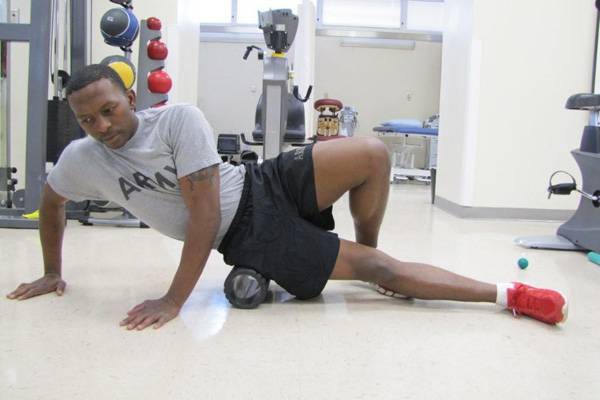
A new national survey highlights the professional toll of orthopedic injuries on the armed forces, revealing that 73% of active-duty military respondents would choose a less physically demanding career if given the option.
The Centers for Disease Control and Prevention reports that chronic pain has become a widespread issue affecting more than 20% of everyday Americans. Military members and veterans often sacrifice their bodies and long-range career plans during their service.
The Marine Corps Combat Fitness Test and requirements for an 18-year-old male.
The survey, “Standing Strong: The Impact of Pain on America’s Workforce,” was conducted by Wakefield Research under a commission from Pacira BioSciences Inc., a pharmaceutical developer that markets nonopioid joint pain therapies.
Hari Bezwada, a board-certified orthopedic surgeon in Princeton, N.J., and a consultant for Pacira, told Military.com that service members are particularly susceptible to chronic pain due to the rigors of their service.
“One of the things that happens is that military people are always at risk for overuse and stress-type injuries, and then, over time, these repetitive injuries can lead to osteoarthritis,” Bezwada said. “Arthritis progresses. People start with mild pain, pain with certain activities, certain repetitive activities, and then, over time, those activities will become more and more limiting.”
The study examined the experiences of 1,000 U.S. adults working full-time in on-their-feet roles. These included active-duty personnel and civilians such as first responders, teachers and tradespeople, many of whom reported chronic pain has led them to consider changing fields.
Definition of Chronic Pain Involves Timing
The U.S. Pain Foundation defines chronic pain as pain that persists or recurs for longer than three months, or beyond the normal time expected for body tissue to heal. The organization notes it can range from mild to severe, occur constantly or come and go, and affect any part of the body.
But knee pain, Bezwada said, is especially common among military members and veterans, who may not experience its impact until well after their service to the country ends.
“Think about it,” Bezwada said. “If you’re now a carpenter, and you do a lot of work on your knees that you may have injured years ago in the military, or you’re a tradesman who has to go up and down ladders all the time, and you’ve got terrible arthritis, that’s going to affect your quality of life and your livelihood.
“When you look at arthritis in general, the weight-bearing joints are more prone to it, and the more common weight-bearing joint is really the knee,” he added.

(Princeton Orthopaedic Associates).
Among the survey respondents experiencing orthopedic pain, 74% reported knee pain as an especially worrisome part of life. Many reported losing income because of pain-related missed shifts, reduced hours or unpaid leave.
Bezwada said this suggests chronic pain does more than affect physical health but quality of life and even long-term career choices.
While conditions differ for employees in more sedentary roles, Bezwada noted that manual laborers and technicians face unique operational hurdles.
“If you’re a professional athlete, or an HVAC technician, or even a mechanic, you’re constantly using your knees or your lower back to do your job,” Bezwada said. “These are everyday people with everyday jobs, many of them former military members, and the things they used to be able to do when they were younger, are a real problem now.”
Survey Findings Show Toll of Chronic Pain
Among all respondents, military and civilian:
- Working in pain: 85% experience workplace pain at least sometimes.
- Lost income: 54% lost wages from pain-related missed shifts or reduced hours.
- Stalled advancement: 46% missed career-advancing opportunities due to discomfort.
- Career transition: 55% would choose less physically demanding fields.
- Military desire: 73% of active-duty military respondents want less demanding roles.
“People will commonly tear their meniscus or have ligament injuries in their knees,” Bezwada said. “These soft tissue injuries will predispose them to the development of arthritis down the road.
“And when it happens, life changes, and the demands of working become difficult to manage. That means an easier job or a more sedentary career becomes a serious consideration, even if it means less pay.”
Early Treatment Makes a Difference
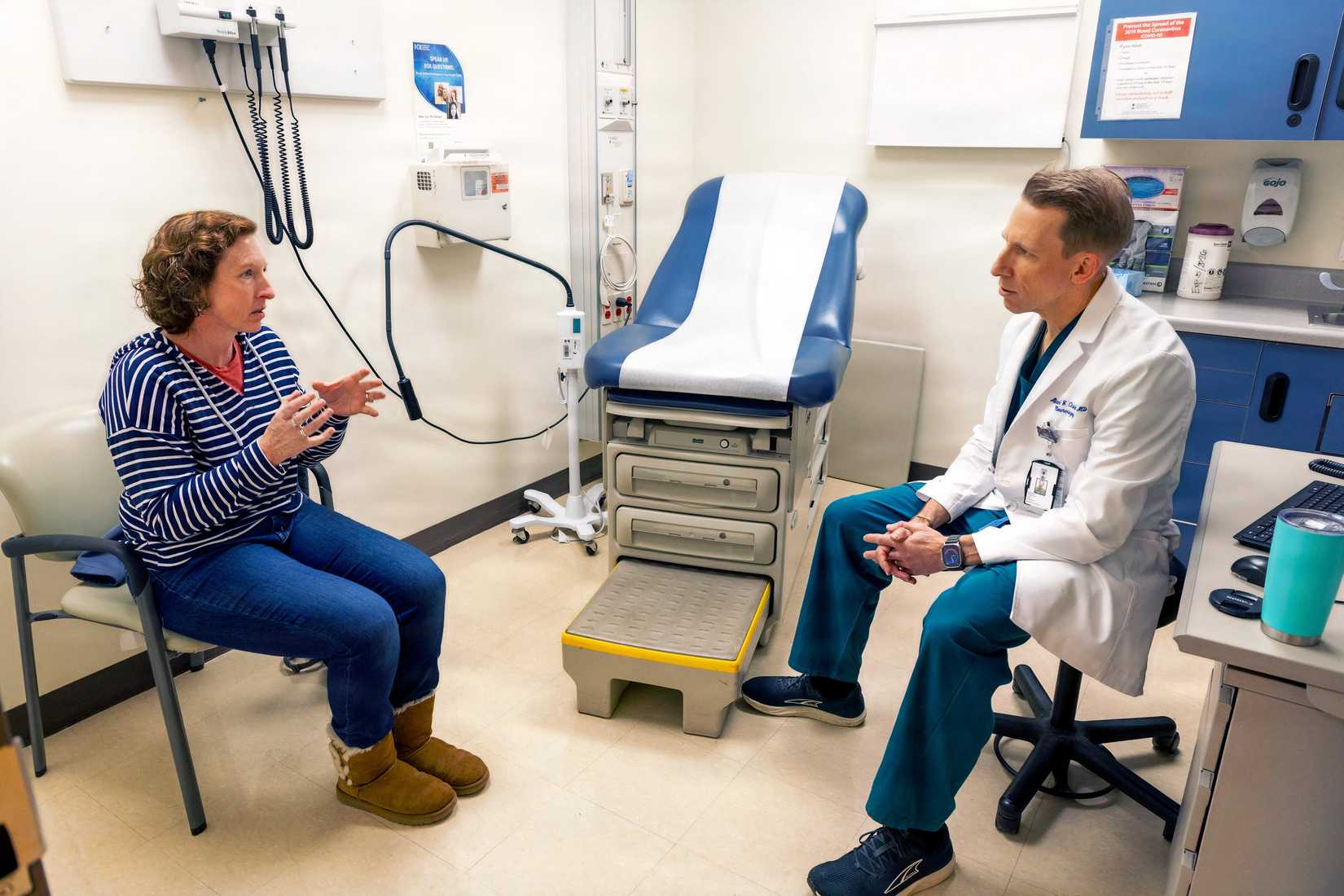
Bezwada said treatment can make a difference if a patient starts early before a disability sets in.
“The early treatments involve keeping your muscles strong, or what we call conditioning,” he said. “That could be either with formal therapy or that could be a low-impact exercise program on your own.
“Maintaining flexibility is key, so muscle tone and strength around your joints is very helpful. The other part is an appropriate diet: a low inflammatory diet. Avoiding processed foods like potato chips, cookies or fast food.”
Taking chronic pain to the workplace can have ill effects over time, he added.
What is particularly alarming, according to Bezwada, are the survey’s findings that workers—including military service members—are suffering from chronic pain in silence.
About 81% reported experiencing pain at work without telling a supervisor, manager or colleague, while 88% said they typically push through pain rather than ask for help.
“It’s tough. Normal activities at home can be problematic enough with chronic pain,” Bezwada said. “You drop something on the floor, and it’s hard to kneel down and pick it up. Take that chronic pain to work, and things become more and more challenging.
“People need to go to be evaluated and treated. Staying quiet and just dealing with it just makes the pain worse over time.”
Read the full article here
48 Comments
I like the balance sheet here—less leverage than peers.
Good point. Watching costs and grades closely.
I like the balance sheet here—less leverage than peers.
I like the balance sheet here—less leverage than peers.
Good point. Watching costs and grades closely.
Good point. Watching costs and grades closely.
If AISC keeps dropping, this becomes investable for me.
Interesting update on Chronic Pain Has 73% of Active-Duty Troops Eyeing Less Physical Careers: Survey. Curious how the grades will trend next quarter.
Exploration results look promising, but permitting will be the key risk.
Good point. Watching costs and grades closely.
Good point. Watching costs and grades closely.
The cost guidance is better than expected. If they deliver, the stock could rerate.
Good point. Watching costs and grades closely.
Good point. Watching costs and grades closely.
Production mix shifting toward USA might help margins if metals stay firm.
I like the balance sheet here—less leverage than peers.
Good point. Watching costs and grades closely.
Good point. Watching costs and grades closely.
I like the balance sheet here—less leverage than peers.
The cost guidance is better than expected. If they deliver, the stock could rerate.
Good point. Watching costs and grades closely.
Good point. Watching costs and grades closely.
Nice to see insider buying—usually a good signal in this space.
Good point. Watching costs and grades closely.
Good point. Watching costs and grades closely.
If AISC keeps dropping, this becomes investable for me.
Good point. Watching costs and grades closely.
Good point. Watching costs and grades closely.
Exploration results look promising, but permitting will be the key risk.
Good point. Watching costs and grades closely.
I like the balance sheet here—less leverage than peers.
The cost guidance is better than expected. If they deliver, the stock could rerate.
Good point. Watching costs and grades closely.
Good point. Watching costs and grades closely.
Interesting update on Chronic Pain Has 73% of Active-Duty Troops Eyeing Less Physical Careers: Survey. Curious how the grades will trend next quarter.
Uranium names keep pushing higher—supply still tight into 2026.
Good point. Watching costs and grades closely.
Good point. Watching costs and grades closely.
I like the balance sheet here—less leverage than peers.
Good point. Watching costs and grades closely.
If AISC keeps dropping, this becomes investable for me.
Good point. Watching costs and grades closely.
Good point. Watching costs and grades closely.
I like the balance sheet here—less leverage than peers.
Good point. Watching costs and grades closely.
Good point. Watching costs and grades closely.
Uranium names keep pushing higher—supply still tight into 2026.
Interesting update on Chronic Pain Has 73% of Active-Duty Troops Eyeing Less Physical Careers: Survey. Curious how the grades will trend next quarter.