

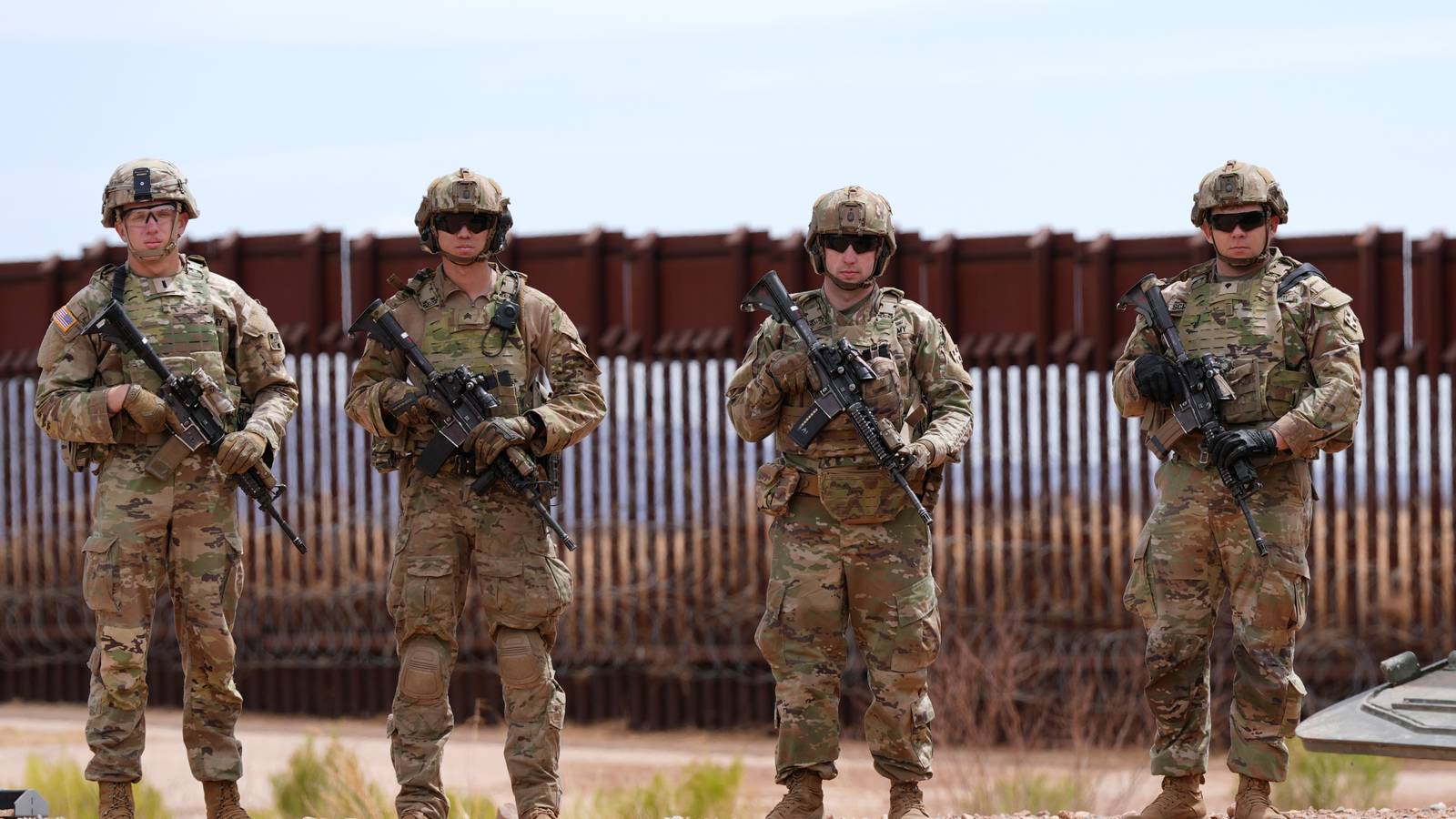
Defense Secretary Pete Hegseth has reportedly loaned the military’s so-called “heat ray” to the Department of Homeland Security (DHS), handing civilian law enforcement a crowd-control weapon the Pentagon developed two decades ago.
The memo, signed by Hegseth last month and obtained by CNN, authorized a “temporary loan” of one Active Denial System for seven months starting in September. The system was originally sent to Afghanistan and brought home without ever being used in combat.
The memo says the system “shall not be operated by DoW (Department of War) personnel,” leaving DHS solely responsible for employing the weapon and for developing the tactics, techniques and procedures governing its use.
DHS can ask to keep the system longer when the loan ends.
Former CNN correspondent Jim Acosta first reported the leaked memo Oct. 8 on his independent platform. CNN published additional details Tuesday, reporting that internal discussions have centered on using the system to disperse crowds at the southern border.
When contacted for comment by Military.com, a Pentagon spokesperson deferred comment to DHS.
A U.S. Customs and Border Protection spokesperson told Military.com the following: “CBP is continually evaluating new technology, especially technology that can save lives while simultaneously enhancing national security effectiveness.”
A Weapon the Military Shelved Without Firing
Built around an invisible beam of 95 GHz millimeter-wave energy, the Active Denial System has a range of more than half a mile, according to the military’s descriptions of the weapon.
The beam heats the surface of the skin, producing a burning sensation Pentagon officials have compared to opening a hot oven, along with an effect officials say lasts 10 to 15 minutes and creates a strong urge to move away.
During testing in 2007, an airman with the 820th Security Forces Group at Moody Air Force Base in Georgia suffered second-degree burns and was treated at a hospital, according to the Valdosta Daily Times.
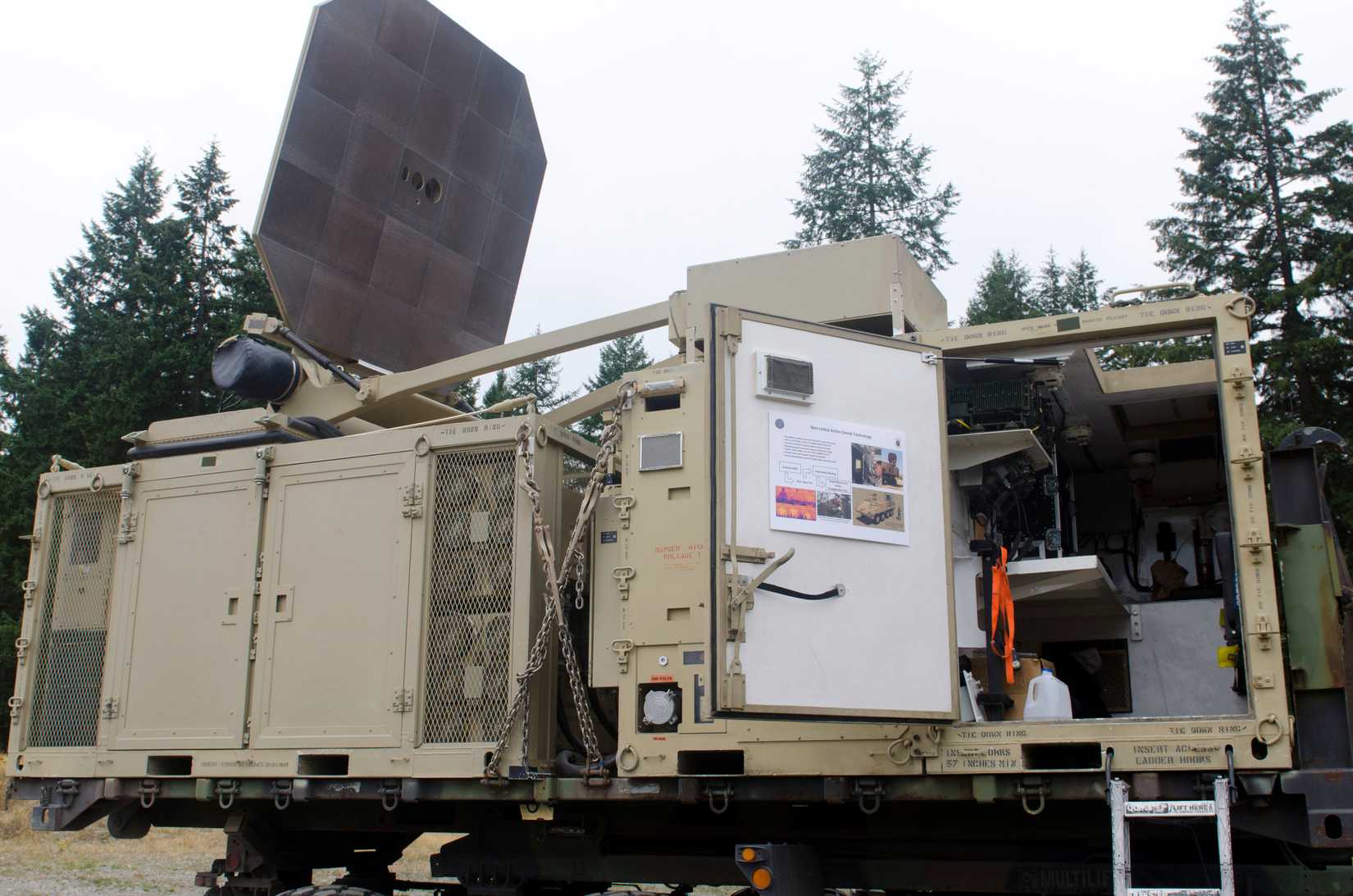
The military later deployed the system to Afghanistan but brought it home in 2010 without using it in combat, according to the BBC at the time. Officials considered it for crowd control at overseas detention facilities without employing it there.
It surfaced again in 2020. NPR reported that the Pentagon’s lead military police officer for the National Capital Region emailed the District of Columbia National Guard asking whether it had an Active Denial System available before federal forces cleared protesters near Lafayette Square.
A Guard major later told Congress the Guard had no such system.
DHS Asked Before and its Own Secretary Said No
CBP officials weighed using the system against migrants in 2018, but then-DHS Secretary Kirstjen Nielsen rejected the idea, according to CNN.
A former DHS official told the network the proposal raised concerns about treating immigrants and American citizens like enemy combatants.
Border Patrol’s El Centro sector in California evaluated the system several years ago under Rodney Scott, who now leads CBP. Those discussions focused on deterring river crossings or pushing people out of the water, according to CNN, and a former CBP official warned of drowning risks if people were driven toward the water.
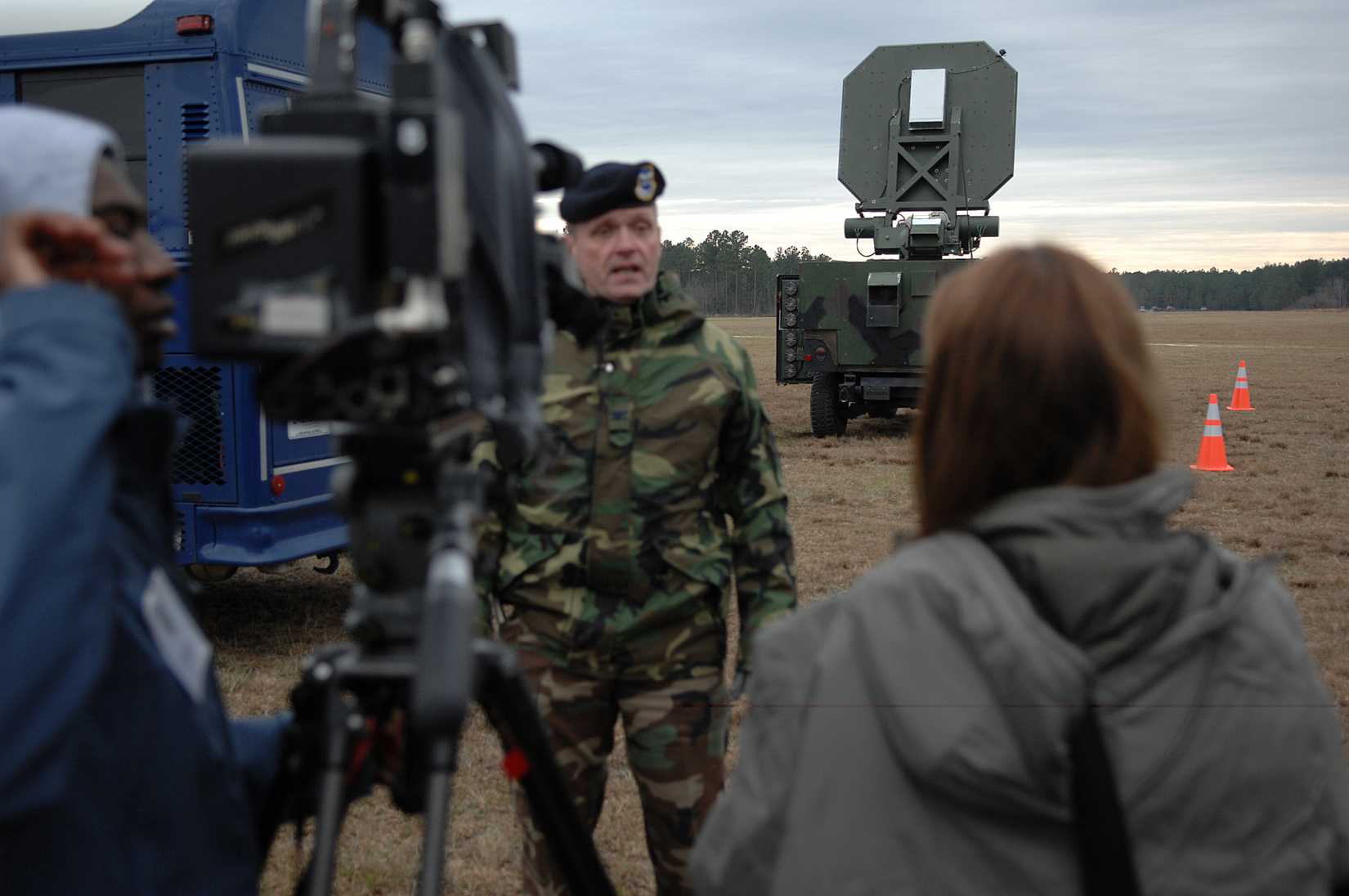
Air Force Col. John R. Decknick provides information to reporters during the Active Denial System advanced concept technology demonstration. Courtesy photo
Some Border Patrol agents doubt they need the tool at all, another former CBP official told CNN, with illegal crossings at low levels and staffing up.
A CBP spokesperson said the agency continually evaluates new technologies, especially those that improve operational effectiveness.
The memo does not say where or how the system would be tested or used, and the weapon has never been operationally deployed anywhere.
Federal law allows the defense secretary to make military equipment available to civilian law enforcement, and the memo’s bar on military operators tracks the laws that keep troops out of direct domestic enforcement.
The loan language does not, however, guarantee how the weapon could lawfully be used against people.
DHS regulations require officers to use the objectively reasonable level of force necessary based on the totality of the circumstances. Officials previously raised sovereign concerns about a beam that can reach across the border into Mexico, according to CNN.
The loan runs into next spring, with an extension available on request. No document made public so far explains where the system is, who would fire it, or under what rules of engagement it would be utilized.
Read the full article here
51 Comments
Exploration results look promising, but permitting will be the key risk.
Good point. Watching costs and grades closely.
Good point. Watching costs and grades closely.
If AISC keeps dropping, this becomes investable for me.
Production mix shifting toward USA might help margins if metals stay firm.
Interesting update on DOD Memo Greenlights DHS Use of Military ‘Heat Ray’ at US-Mexico Border. Curious how the grades will trend next quarter.
Good point. Watching costs and grades closely.
Good point. Watching costs and grades closely.
The cost guidance is better than expected. If they deliver, the stock could rerate.
Good point. Watching costs and grades closely.
If AISC keeps dropping, this becomes investable for me.
Good point. Watching costs and grades closely.
Production mix shifting toward USA might help margins if metals stay firm.
Uranium names keep pushing higher—supply still tight into 2026.
Good point. Watching costs and grades closely.
Uranium names keep pushing higher—supply still tight into 2026.
Good point. Watching costs and grades closely.
Good point. Watching costs and grades closely.
Silver leverage is strong here; beta cuts both ways though.
Silver leverage is strong here; beta cuts both ways though.
Good point. Watching costs and grades closely.
Silver leverage is strong here; beta cuts both ways though.
Good point. Watching costs and grades closely.
Good point. Watching costs and grades closely.
Nice to see insider buying—usually a good signal in this space.
Good point. Watching costs and grades closely.
The cost guidance is better than expected. If they deliver, the stock could rerate.
Good point. Watching costs and grades closely.
Good point. Watching costs and grades closely.
Uranium names keep pushing higher—supply still tight into 2026.
Good point. Watching costs and grades closely.
I like the balance sheet here—less leverage than peers.
If AISC keeps dropping, this becomes investable for me.
Good point. Watching costs and grades closely.
Production mix shifting toward USA might help margins if metals stay firm.
The cost guidance is better than expected. If they deliver, the stock could rerate.
Good point. Watching costs and grades closely.
Good point. Watching costs and grades closely.
The cost guidance is better than expected. If they deliver, the stock could rerate.
Good point. Watching costs and grades closely.
The cost guidance is better than expected. If they deliver, the stock could rerate.
Good point. Watching costs and grades closely.
Interesting update on DOD Memo Greenlights DHS Use of Military ‘Heat Ray’ at US-Mexico Border. Curious how the grades will trend next quarter.
Good point. Watching costs and grades closely.
Good point. Watching costs and grades closely.
Uranium names keep pushing higher—supply still tight into 2026.
Good point. Watching costs and grades closely.
Good point. Watching costs and grades closely.
Silver leverage is strong here; beta cuts both ways though.
Good point. Watching costs and grades closely.
Nice to see insider buying—usually a good signal in this space.