

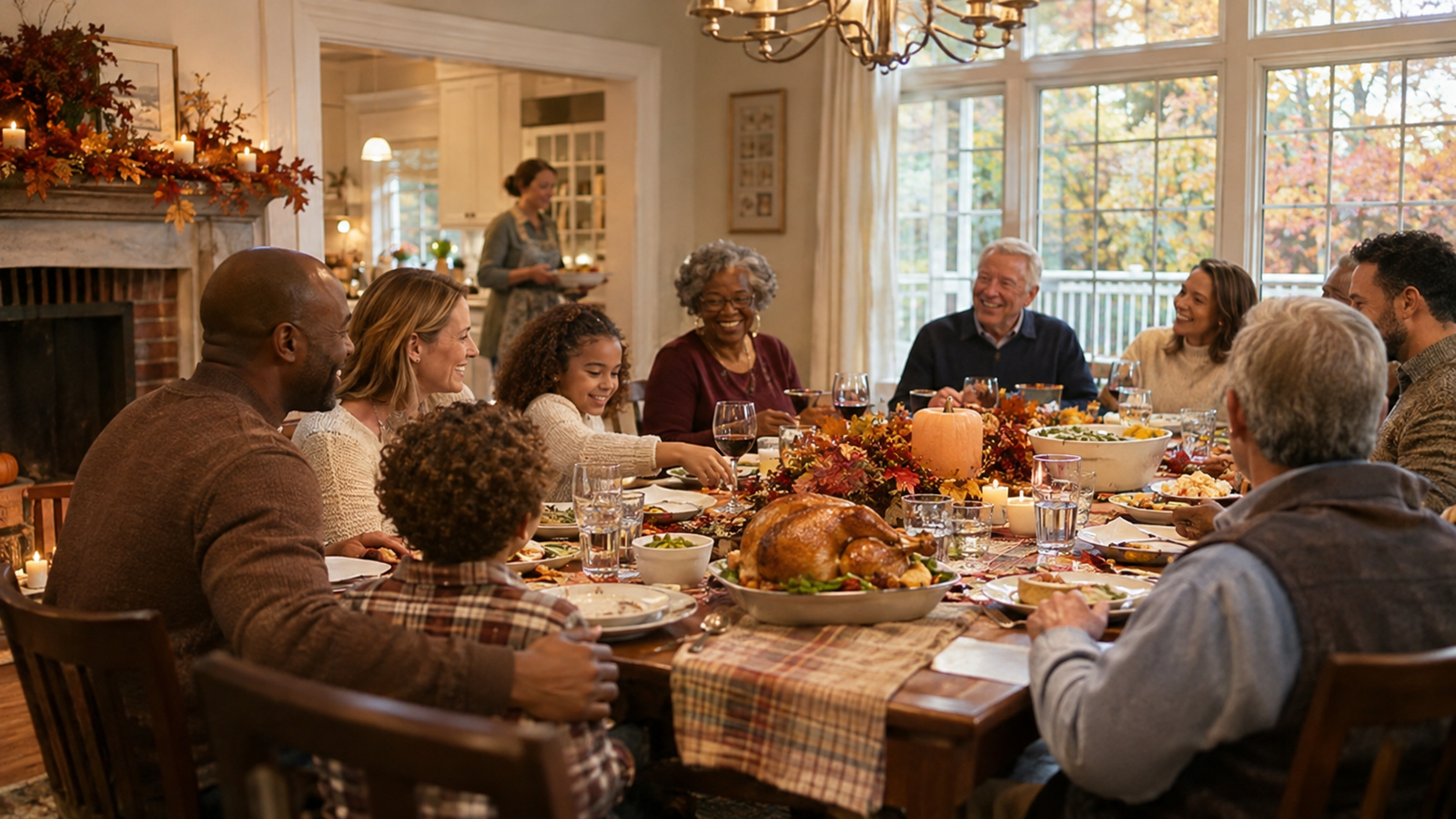
If you’re hosting family and friends this holiday season, it’s worth checking your homeowners or renters insurance before guests arrive. An icy step, a crowded kitchen, or a nervous dog can quickly turn a party into an insurance claim.
Most homeowners and renters policies cover guest injuries through personal liability coverage and medical payments coverage. Both have limits, and dog bites and alcohol can complicate a claim. Here’s how coverage works for common hosting accidents and when you might need more protection.
Personal Liability vs. Medical Payments Coverage
The liability section of a homeowners or renters insurance policy includes personal liability and medical payments coverage, and each one pays in a different situation. Medical payments coverage pays a guest’s smaller medical bills without anyone proving fault, which can settle a minor injury before it becomes a lawsuit. Neither coverage pays for injuries to you or other people who live in your household. Your own health coverage, such as TRICARE, handles those.
This table compares the two coverages.
|
Coverage |
What It Pays For |
Typical Limits |
Is Fault Required? |
|---|---|---|---|
|
Personal liability |
Injuries to guests or damage to their property when you’re legally responsible, plus legal defense costs |
$100,000 to $300,000 |
Yes |
|
Medical payments |
Smaller medical bills for guests hurt at your home or by your pet |
$1,000 to $5,000 per person |
No |
Common Holiday Hosting Accidents and How Coverage Applies
Crowded rooms, busy kitchens, and winter weather make a few types of accidents more likely during the holidays. Here’s which part of your policy usually applies to each one.
|
Accident |
Example |
Coverage That Usually Applies |
|---|---|---|
|
Slip and fall |
A guest slips on an icy walkway or a wet kitchen floor |
Medical payments for minor injuries; personal liability if the guest sues and you’re found responsible |
|
Child hurt on furniture |
A visiting child pulls over an unanchored bookshelf or falls down the stairs |
Medical payments for minor injuries; personal liability for a larger claim |
|
Kitchen burn |
A guest burns a hand while helping carry a hot pan |
Medical payments for minor injuries; personal liability if you’re found responsible |
|
Guest’s property damaged |
You spill red wine on a guest’s laptop |
Personal liability if you’re legally responsible |
If a guest gets hurt, these steps help protect your claim:
- Get medical help first: Call 911 for anything serious.
- Document what happened: Take photos of the area, write down what happened, and get names of any witnesses.
- Call your insurer promptly: Most policies require you to report an incident quickly, even if the guest hasn’t filed a claim yet.
Dog Bite Insurance and Breed Restrictions
If you have a dog, it’s important to know what happens if it bites someone, even if your dog is usually friendly. Insurers paid $1.86 billion in dog-related injury claims in 2025, with an average cost of $65,450 per claim, according to the Insurance Information Institute.
Standard homeowners and renters policies typically cover dog bites up to your policy’s liability limit. If a claim goes over that limit, you’re responsible for the rest. Coverage for your dog also depends on your insurer and your state. Here’s what can affect it:
- Breed lists: Some insurers still use breed lists when writing liability coverage, which can make it harder to get enough coverage depending on your dog’s breed.
- Bite history: Some insurers look at a dog’s bite history instead of its breed. A past bite can affect your coverage or your premium.
- State laws: New York and Nevada are among the states that limit insurers from deciding liability coverage based on a dog’s breed alone.
If you live in on-base housing, check the installation’s pet policy too, since its rules are separate from your insurance.
Host Liquor Liability When You Serve Alcohol

In some states, social host liability laws can hold you responsible if a guest you served alcohol to injures someone, even after the guest leaves your home. Here’s how these laws and your coverage work together:
- State laws vary widely: Some states hold hosts responsible only for serving minors. Others extend liability to serving adults who are visibly intoxicated, and some don’t hold social hosts liable at all.
- Serving minors carries the most risk: Giving alcohol to underage guests can bring civil claims and, in many states, criminal penalties.
- Your liability coverage may apply: Homeowners and renters liability coverage may help pay for a social host claim up to your limit. Coverage may not apply if you charge guests for drinks or admission, since that can count as a business activity.
For questions about how your policy handles alcohol-related claims, it’s best to contact your insurer or your state insurance department.
When an Umbrella Policy Makes Sense

A serious injury claim can go well past the liability limit on your homeowners or renters policy. An umbrella policy adds liability coverage on top of your home, renters, and car insurance, and it’s usually sold in $1 million increments. An umbrella policy may be worth considering if:
- You host often: Unit gatherings, hail and farewells, and holiday parties bring more people into your home.
- You have a dog, pool, or trampoline: Each one raises the chance of a guest injury.
- You have savings to protect: Home equity, savings, and your Thrift Savings Plan (TSP) balance could be at risk in a large judgment.
- You rent out a home after a PCS move: Tenant injury claims can exceed your landlord policy’s limit.
Holiday Hosting Safety Checklist
Run through this checklist a day or two before your guests arrive:
- Clear walkways and steps: Shovel and salt sidewalks, steps, and the driveway, and turn on outdoor lights before dark.
- Give your dog a quiet space: Keep your dog in a closed room or crate during the busiest parts of the party.
- Childproof for young guests: Anchor tall furniture, gate the stairs, and keep candles and hot dishes out of reach.
- Serve alcohol responsibly: Offer plenty of food and non-alcoholic drinks, stop serving anyone who seems intoxicated, never serve minors, and line up rides for guests who need them.
- Keep the kitchen clear: Limit how many people are near the stove and oven while you cook.
- Check your insurance coverage: Call your insurer to confirm your liability and medical payments limits, ask about any dog exclusions, and ask whether an umbrella policy makes sense.
FAQ
Q: Does Homeowners Insurance Cover a Guest Who Falls?
Yes, in most cases. Medical payments coverage can pay a guest’s smaller medical bills, no matter who was at fault. If the guest sues and you’re found responsible, personal liability coverage pays for their losses and your legal defense, up to your limit.
Q: Does Renters Insurance Include Liability Coverage?
Yes. Standard renters insurance policies include personal liability and medical payments coverage, so a guest’s injury in your apartment or rental home can be covered. Your landlord’s policy, or the housing company’s policy in privatized on-base housing, won’t pay for injuries you’re responsible for.
Q: Am I Liable If a Guest Drinks and Drives?
It depends on your state. Some states hold social hosts responsible for injuries caused by a guest they served, especially if the guest was a minor or visibly intoxicated. Your homeowners or renters liability coverage may help pay for a claim up to your limit, and an umbrella policy can add more protection.
Q: Are Dog Bites Covered by Homeowners Insurance?
Usually, yes. Homeowners and renters insurance typically cover dog bites through personal liability coverage and medical payments coverage. A dog bite may not be covered if your policy excludes your dog’s breed or your dog has a history of biting, so it’s a good idea to check your specific policy before a holiday gathering.
Read the full article here
31 Comments
Uranium names keep pushing higher—supply still tight into 2026.
Good point. Watching costs and grades closely.
Good point. Watching costs and grades closely.
Exploration results look promising, but permitting will be the key risk.
Good point. Watching costs and grades closely.
I like the balance sheet here—less leverage than peers.
Silver leverage is strong here; beta cuts both ways though.
Good point. Watching costs and grades closely.
The cost guidance is better than expected. If they deliver, the stock could rerate.
Uranium names keep pushing higher—supply still tight into 2026.
Good point. Watching costs and grades closely.
The cost guidance is better than expected. If they deliver, the stock could rerate.
I like the balance sheet here—less leverage than peers.
If AISC keeps dropping, this becomes investable for me.
The cost guidance is better than expected. If they deliver, the stock could rerate.
Uranium names keep pushing higher—supply still tight into 2026.
Good point. Watching costs and grades closely.
Nice to see insider buying—usually a good signal in this space.
Production mix shifting toward USA might help margins if metals stay firm.
Good point. Watching costs and grades closely.
Good point. Watching costs and grades closely.
Production mix shifting toward USA might help margins if metals stay firm.
Good point. Watching costs and grades closely.
Good point. Watching costs and grades closely.
Nice to see insider buying—usually a good signal in this space.
Good point. Watching costs and grades closely.
I like the balance sheet here—less leverage than peers.
Uranium names keep pushing higher—supply still tight into 2026.
Good point. Watching costs and grades closely.
Silver leverage is strong here; beta cuts both ways though.
Good point. Watching costs and grades closely.