

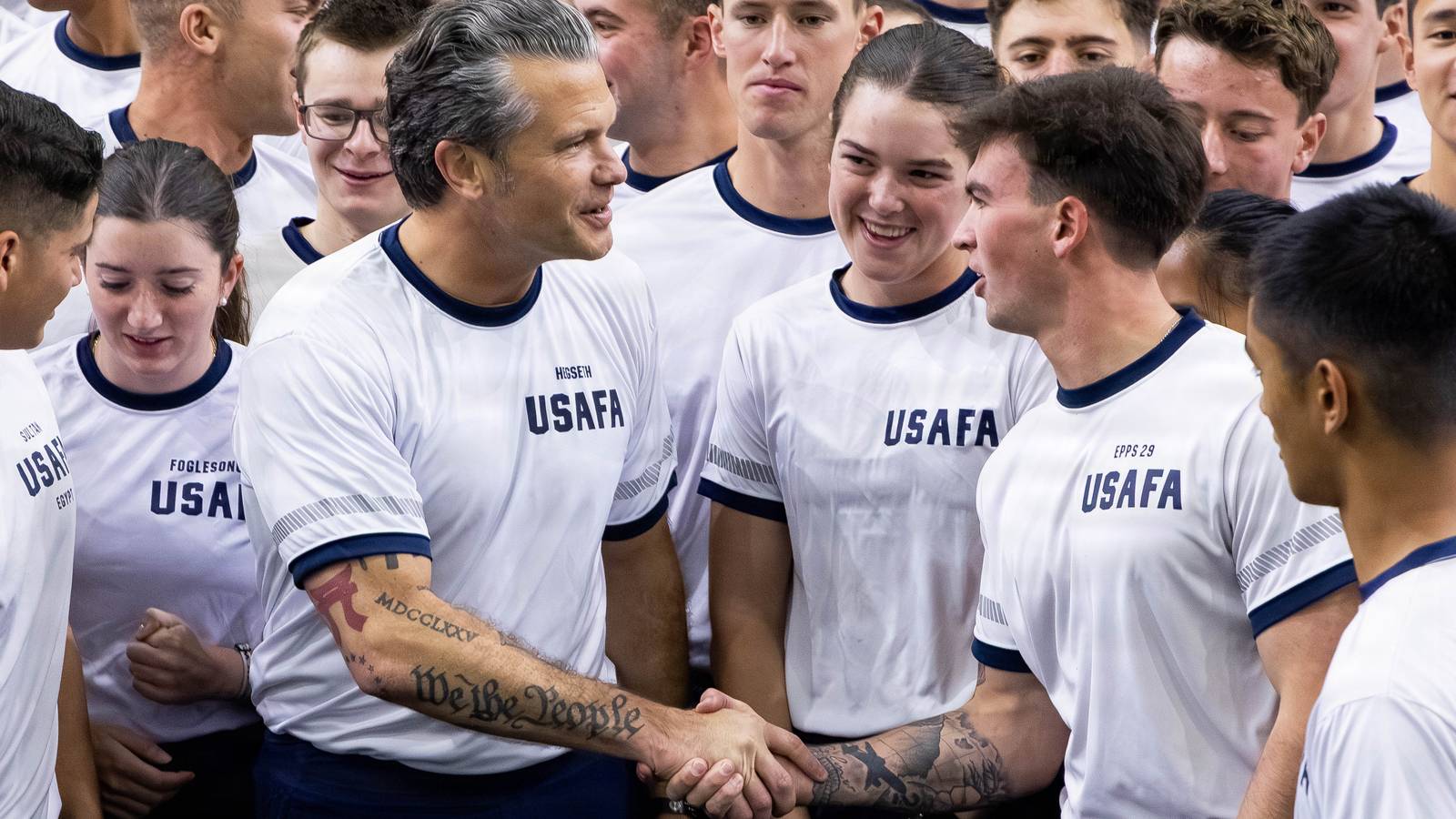
Defense Secretary Pete Hegseth has selected five colleges and universities for the revived military designation of “Distinguished Military College” under a new program called America’s Corps of Cadets, promising participating schools priority in officer commissioning.
The initial five-school cohort consists of Louisiana State University, Mississippi State University, Tuskegee University, Liberty University and Hillsdale College. Announced Sept. 30, America’s Corps of Cadets designates participating institutions as distinguished military colleges while they establish or expand their cadet organizations.
These schools are not becoming federal service academies. Hegseth’s announcement does not add them to the six senior military colleges named in federal law.
Hegseth presents the designation as a steppingstone toward senior military college status, but adding these institutions to the statutory list would require congressional action.
What the Designation Requires
Hegseth’s memorandum calls the designation a steppingstone toward the status of “Senior Military College.”
It also grants participating schools “Honor School” status, which Hegseth said provides priority in officer commissioning. Implementation was supposed to begin within 30 days, with responsibility shifting to the Pentagon’s personnel and readiness office within 120 days.
“Honor school” commonly refers today to secondary school military programs. For example, Marine Corps Junior Reserve Officers’ Training Corps rules award Naval Honor School status to the top 20% of units in each region based on inspections, enrollment, citizenship, academics and extracurricular activities.
However, the designation has also applied to colleges. A 1936 Senate debate identified Norwich University’s West Point nomination privileges, explaining that recognition rested on military proficiency assessed through annual inspections.
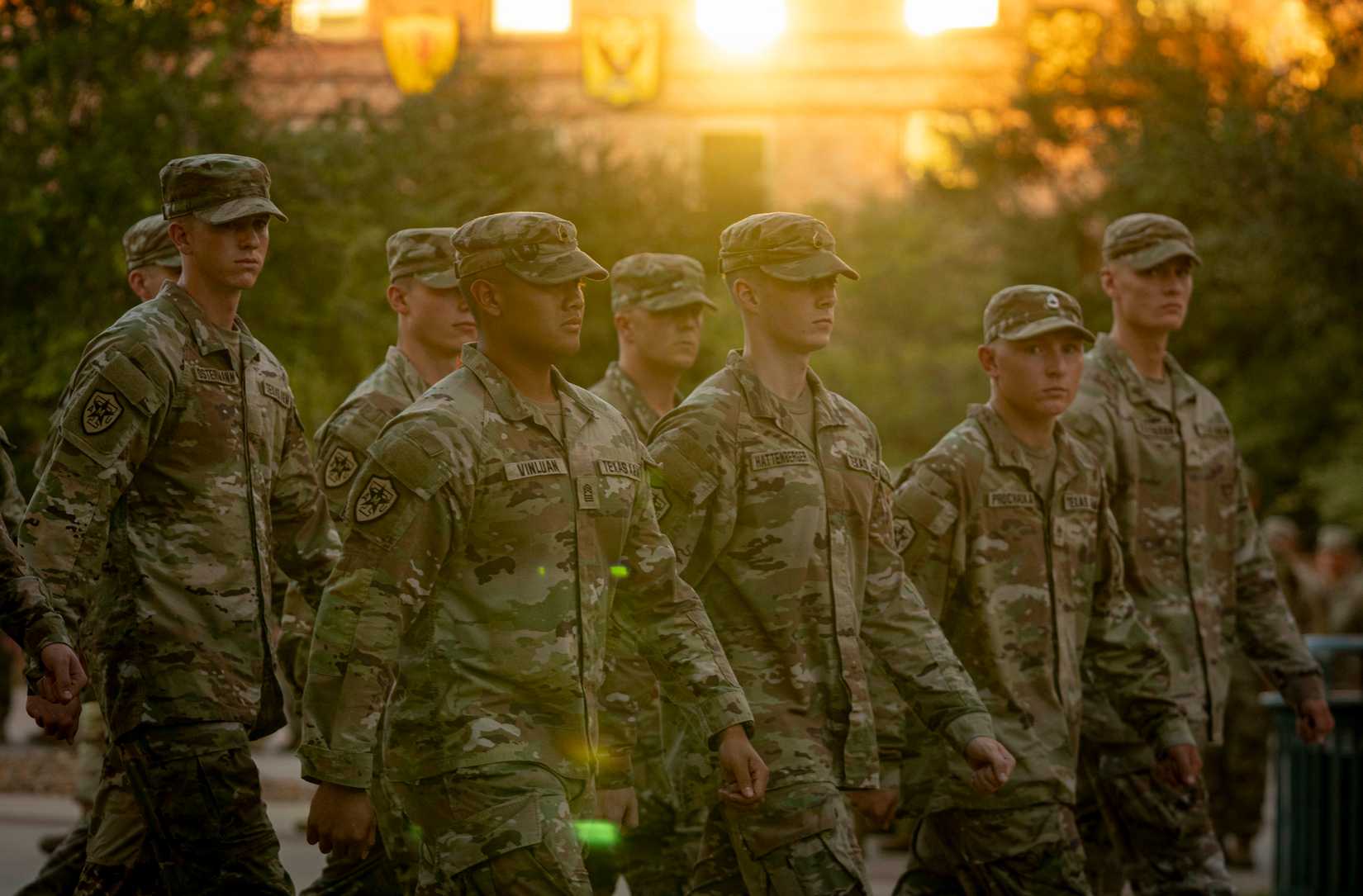
A 1916 law recognized the existing designation by reserving West Point cadetships for selected honor graduates. Current statutes authorize up to 20 appointments annually at each of West Point, the Naval Academy, and the Air Force Academy from a combined pool of honor-school graduates and the applicable ROTC members.
These provisions concern academy admission, not direct commissioning. The 1948 Army regulations permitted certain military-school honor graduates could be considered for Regular Army commissions if they met additional educational and military requirements.
Honor-school status alone did not guarantee a commission. Hegseth’s terminology therefore has historical precedent, but his memorandum does not explain the current authority or selection standards for its promised commissioning priority.
“America’s Corps of Cadets” calls for participating institutions to establish or expand their own corps of cadets, making military discipline and leadership development part of campus life. Hegseth says participating institutions must maintain high standards of cadet discipline, tactical instruction and military organization.

His memorandum does not spell out numerical performance thresholds, inspection procedures or how commissioning priority will operate.
Joining a cadet corps is not itself a commission. Under Army Cadet Command guidance, students at established senior military colleges must enroll in and complete Army Reserve Officers’ Training Corps to commission through that program.
Cadet life supplements the military training and requirements of ROTC programs.
LSU Revives an Existing Tradition
LSU’s military connection predates the new initiative.
Founded in 1860 as the Louisiana State Seminary of Learning and Military Academy, the university announced the reactivation of its corps in November 2025. Mandatory ROTC participation for male students ended in 1969, and its original corps was subsequently deactivated.
The restored program is voluntary and includes an ROTC pathway for students seeking military commissions and a civilian leadership pathway for those interested in fields such as intelligence, cybersecurity and public service.
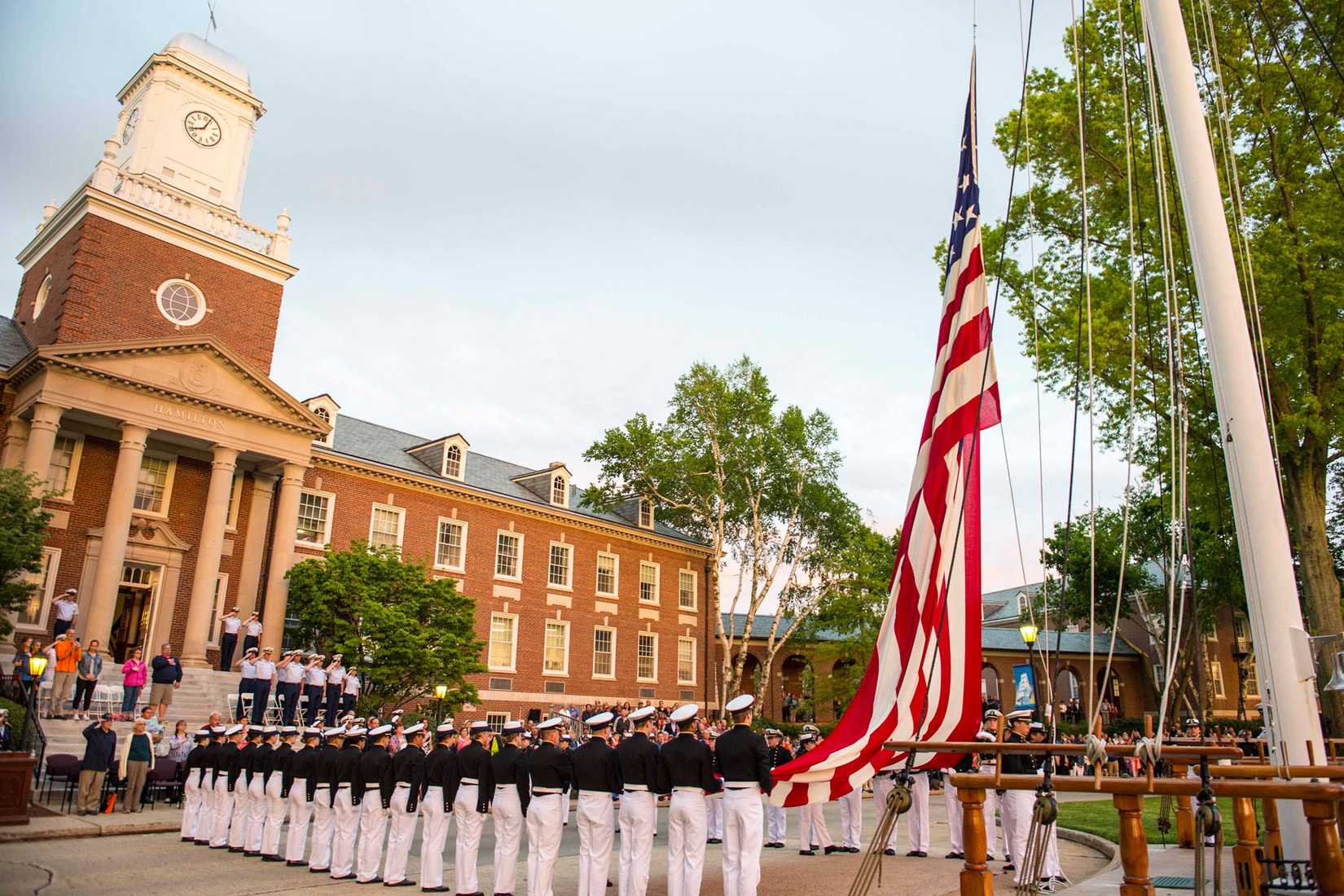
The designation builds on an effort already underway rather than creating military education from scratch. Other partners remain early in the planning process.
Liberty’s Oct. 6 announcement describes establishing a corps alongside its existing commissioning programs. At Hillsdale, the training and curriculum details remained undecided as of Oct. 8, according to history professor Paul Rahe.
A Designation Dating to the Early 1900s
The Army established the recognition system in 1903 to attract more college graduates into its officer ranks, rewarding strong military training programs with opportunities for selected graduates to receive Regular Army commissions.
The 1919 distinguished college list included the following:
- Agricultural and Mechanical College of Texas (Texas A&M University)
- Michigan Agricultural College (Michigan State University)
- Oregon Agricultural College (Oregon State University)
- Virginia Agricultural and Mechanical College and Polytechnic Institute (Virginia Tech)
- Cornell University
- Norwich University
- Pennsylvania Military College (Widener University)
- St. John’s College
- The Citadel
- University of California, Berkeley,
- University of Florida
- Virginia Military Institute
This historical classification was separate from the senior military college status now defined in federal law.
The War Department abolished the designation in 1928, replacing distinguished ratings with satisfactory or unsatisfactory assessments of ROTC units.
Congress Controls Senior Military College Status
Federal law provides an exact list of senior military colleges: Texas A&M University, Norwich University, Virginia Military Institute, The Citadel, Virginia Tech and the University of North Georgia.
Their status carries protections beyond a prestigious title. Under 10 U.S.C. 2111a, the Pentagon cannot terminate or reduce their ROTC units unless the college specifically requests it.
The same statute requires the Army to assign qualifying graduates to active duty if they want to serve, meet medical and physical requirements, and receive the professor of military science’s recommendation. That provision concerns Army active-duty assignments; it is not a blanket guarantee covering every student or military branch.
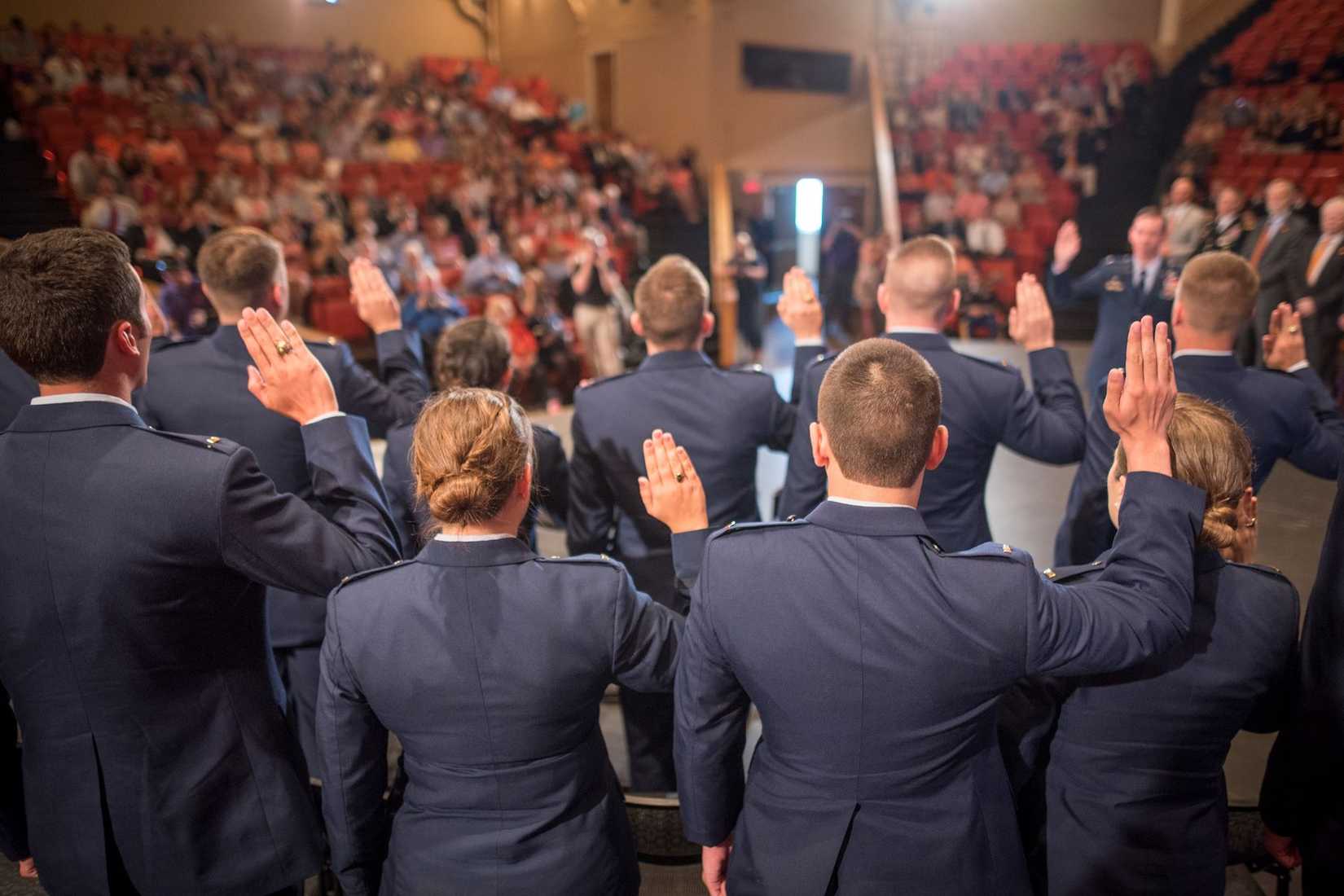
10 U.S.C. 2111a names the six senior military colleges individually in subsection (f). It does not authorize the defense secretary to add institutions to that list.
Hegseth’s separate designation does not extend those benefits to the five schools. Congress would need to change the law to include them.
The defense secretary presents the designation as a steppingstone toward senior military college status, but it creates no process for obtaining that status. Under current federal law, Congress would have to add the schools to the statutory list.
Establishing a corps of cadets or meeting Pentagon standards cannot substitute for that legislative action. The memorandum therefore promises a route to recognition that Hegseth cannot deliver on his own, without explaining how he intends to secure congressional approval.
Officer Development and Political Selection
The initiative follows Hegseth’s graduate education restrictions affecting several elite universities.
In his announcement speech, he disparaged Ivy League and liberal arts institutions as “anti-American, DEI-worshiping woke factories.”
More structured leadership training could give cadets additional practice supervising peers and accepting responsibility. But Hegseth’s political framing—despite boasting about having an apolitical military—leaves a separate question about whether schools are being judged on officer performance or ideological compatibility.
The military benefit will depend on the programs’ instructors, training, graduates and service needs.
The Pentagon has yet to explain how commissioning priority would benefit students, or how it intends to secure the congressional approval needed to turn its promised pathway into senior military college status.
Read the full article here
36 Comments
Silver leverage is strong here; beta cuts both ways though.
The cost guidance is better than expected. If they deliver, the stock could rerate.
I like the balance sheet here—less leverage than peers.
Good point. Watching costs and grades closely.
Exploration results look promising, but permitting will be the key risk.
Good point. Watching costs and grades closely.
If AISC keeps dropping, this becomes investable for me.
Good point. Watching costs and grades closely.
I like the balance sheet here—less leverage than peers.
Good point. Watching costs and grades closely.
Exploration results look promising, but permitting will be the key risk.
Good point. Watching costs and grades closely.
Good point. Watching costs and grades closely.
Silver leverage is strong here; beta cuts both ways though.
Production mix shifting toward USA might help margins if metals stay firm.
Good point. Watching costs and grades closely.
Interesting update on Five Military Colleges Announced Under Hegseth’s New ‘America’s Corps of Cadets’ Program. Curious how the grades will trend next quarter.
Good point. Watching costs and grades closely.
Nice to see insider buying—usually a good signal in this space.
Interesting update on Five Military Colleges Announced Under Hegseth’s New ‘America’s Corps of Cadets’ Program. Curious how the grades will trend next quarter.
Good point. Watching costs and grades closely.
Silver leverage is strong here; beta cuts both ways though.
Good point. Watching costs and grades closely.
Nice to see insider buying—usually a good signal in this space.
Production mix shifting toward USA might help margins if metals stay firm.
The cost guidance is better than expected. If they deliver, the stock could rerate.
Good point. Watching costs and grades closely.
Good point. Watching costs and grades closely.
Uranium names keep pushing higher—supply still tight into 2026.
Good point. Watching costs and grades closely.
Good point. Watching costs and grades closely.
Interesting update on Five Military Colleges Announced Under Hegseth’s New ‘America’s Corps of Cadets’ Program. Curious how the grades will trend next quarter.
Good point. Watching costs and grades closely.
Silver leverage is strong here; beta cuts both ways though.
Good point. Watching costs and grades closely.
Good point. Watching costs and grades closely.