


Three watchdog groups asked a federal judge Monday to shut down Project Meridian, the Pentagon’s future-of-warfare study led by Elon Musk, Palmer Luckey and Newt Gingrich.
Citizens for Responsibility and Ethics in Washington, Public Citizen and the Project On Government Oversight filed the case in federal court in Washington, naming the department, Hegseth and Undersecretary of Defense for Research and Engineering Emil Michael.
Their lawsuit claims Defense Secretary Pete Hegseth built an illegal advisory committee out of people positioned to profit from its advice.
Military.com asked the Pentagon and MITRE about the lawsuit. Neither responded by press time.
Their complaint says the panel violates the Federal Advisory Committee Act, a 1972 transparency law. It requires outside advisory groups to file a charter, announce meetings publicly, keep records available, and carry a membership that is, in the law’s words, “fairly balanced.” No court has ruled on any of it.
All groups want the court to void the memo that created the panel, bar it from meeting or advising the department until it complies with the law, force the release of its records, and block the Pentagon from acting on any recommendations in the meantime.
A Panel Born in a SCIF
Hegseth commissioned Project Meridian in a Sept. 30 memo issued the day of his Quantico address to the military’s top officers.
Invoking operations Midnight Hammer, Absolute Resolve and Epic Fury, the memo warns that advances in artificial intelligence, autonomy, directed energy, robotics and biotechnology “will profoundly alter the character of warfare.” It directs Emil Michael to commission the study “through a partner organization” and orders findings delivered by Jan. 28, 2027.
It also tells the Joint Staff and every service to “be prepared to connect their future warfare efforts and research to Project Meridian.”
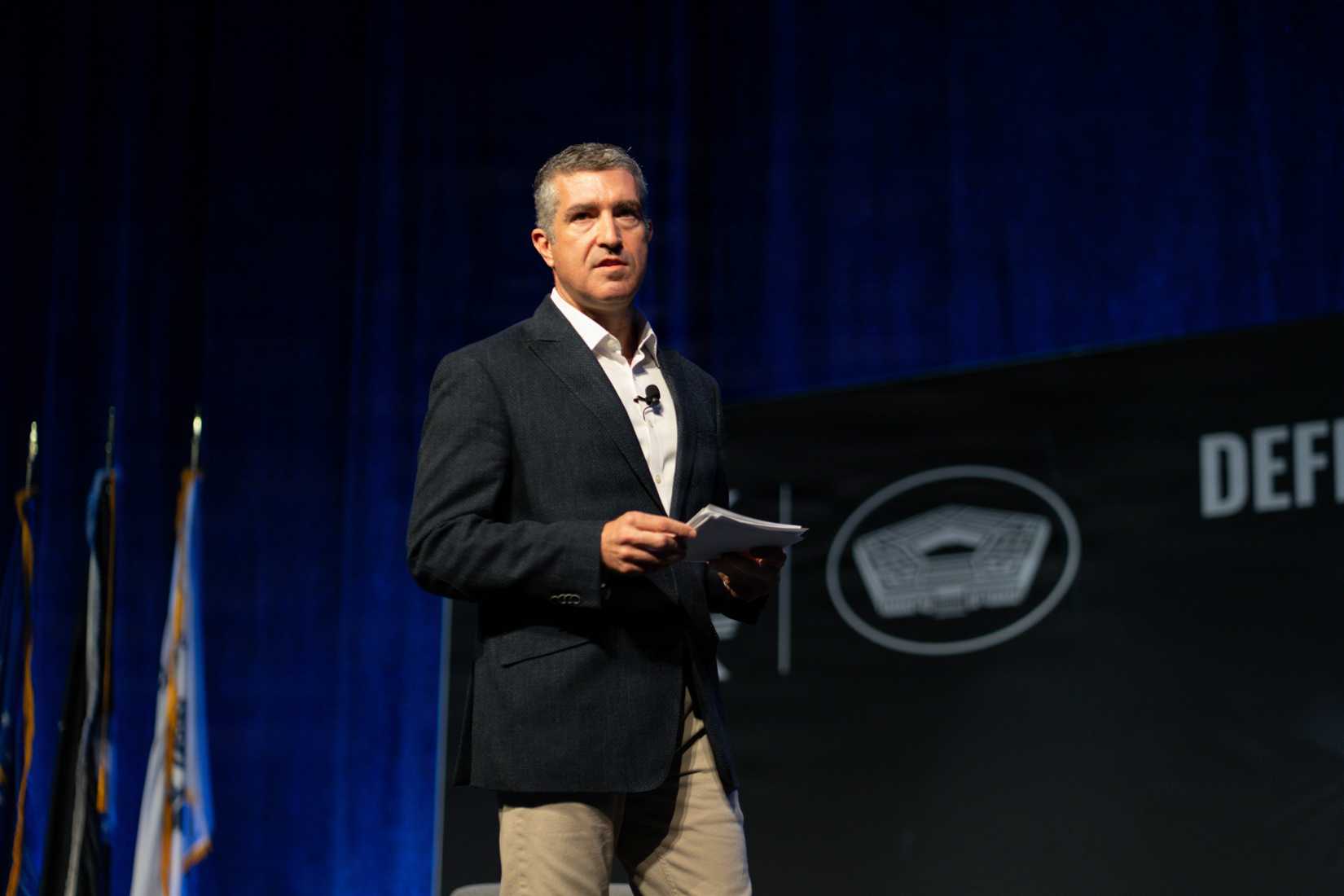
That partner organization is MITRE, the nonprofit research operator, whose experts will assess the technologies and produce a report expected to run up to 30 pages plus classified annexes.
The panel’s first gathering happened the day of the announcement, with Hegseth saying a meeting of “great Americans” and “a small group of us” was “happening in a SCIF,” the secure rooms used for classified discussions, such as by lawmakers debating war policy.
A second meeting followed Oct. 1 and included Sens. Tom Cotton and Tim Sheehy, whom Hegseth asked to serve as representatives on the project, according to a Cotton social media post cited in the complaint.
Neither meeting was announced or opened to the public, and no charter had been filed, the suit says.
Nineteen of 21 From the Private Sector
MITRE’s published roster lists three co-directors and 17 participants. The complaint counts 19 of the 21 people involved as private-sector figures, leaving Michael and Air Force Chief Scientist Victoria Coleman as the only government members.
Musk leads SpaceX, which has secured more than $8 billion in defense contracts in 2026 alone, according to NPR’s review of government announcements. Luckey co-founded the autonomous weapons maker Anduril.
Other participants include Oracle executive vice chair Safra Catz, Palantir co-founder Joe Lonsdale, Axon chief executive Rick Smith and executives or investors from Saronic, Hadrian, Agility Robotics, Stoke Space and a string of other defense and technology firms.

Those members hold financial interests in the same weapons and technologies the panel could recommend, the complaint alleges. It does not claim any member has steered a contract.
Pentagon officials have not said whether Musk and Luckey serve as special government employees, a status that would place them under federal criminal conflict-of-interest law.
Isabel Munilla, POGO’s interim executive director, said the government should not be outsourcing its vision for the future of warfare to “a panel dominated by individuals that stand to profit from it.”
The Pentagon Was Warned First
POGO put the department on notice before suing in an Oct. 29 letter to Hegseth, Michael, and the Pentagon’s advisory committee management officer.
The group asked that William Hartung, a defense budget and arms industry expert, or another adviser be seated to balance the roster. They wrote that without fair balance it was “obligated to take legal action.”
POGO sought an answer by Oct. 30, while the suit arrived four days after the letter with the seat still unfilled.

The complaint also argues the Pentagon never determined whether an existing committee could do the work, pointing to the department’s chartered Science, Technology and Innovation Board, which stood up this year under full advisory committee rules and covers overlapping ground.
One Meridian participant, Lookout co-founder John Hering, already sits on that board, according to the complaint’s citations.
The Pentagon’s Defense Already Exists
A possible Pentagon answer to the concerns already predates the lawsuit. MITRE “is responsible for the analysis and recommendations” and will apply “appropriate conflict-of-interest and information safeguards,” a department spokesperson told NPR in October.
MITRE has separately invited companies and individual experts to submit future-warfare ideas by Nov. 12, calling the effort “not a solicitation” that confers “no advantage” in any government competition.
Federal courts have refereed this kind of fight before, in a case veterans may remember.
In 2021, the D.C. Circuit revived a VoteVets lawsuit over the so-called Mar-a-Lago Council, three Trump associates who advised Department of Veterans Affairs leadership from Florida without any public process.
A group with “an organized structure, a fixed membership, and a specific purpose” can fall under the advisory committee law, the appeals court held, whether the government brings it together “by formal or informal means.”
Nothing in the new filing automatically pauses Project Meridian. The government’s response will come on the court’s standard clock while the panel’s Jan. 28 deadline keeps running.
Even if the judge intervenes, the report Hegseth ordered may arrive before any ruling on whether the group that wrote it was legal.
Read the full article here
49 Comments
Nice to see insider buying—usually a good signal in this space.
Good point. Watching costs and grades closely.
Exploration results look promising, but permitting will be the key risk.
Good point. Watching costs and grades closely.
Good point. Watching costs and grades closely.
Uranium names keep pushing higher—supply still tight into 2026.
Good point. Watching costs and grades closely.
Good point. Watching costs and grades closely.
Interesting update on Hegseth’s ‘Future of Warfare’ Panel Stacked With Contractors Who Stand to Profit: Lawsuit. Curious how the grades will trend next quarter.
If AISC keeps dropping, this becomes investable for me.
Good point. Watching costs and grades closely.
Exploration results look promising, but permitting will be the key risk.
Good point. Watching costs and grades closely.
Good point. Watching costs and grades closely.
The cost guidance is better than expected. If they deliver, the stock could rerate.
Good point. Watching costs and grades closely.
Production mix shifting toward USA might help margins if metals stay firm.
Good point. Watching costs and grades closely.
Good point. Watching costs and grades closely.
Silver leverage is strong here; beta cuts both ways though.
Good point. Watching costs and grades closely.
Good point. Watching costs and grades closely.
If AISC keeps dropping, this becomes investable for me.
Good point. Watching costs and grades closely.
Good point. Watching costs and grades closely.
I like the balance sheet here—less leverage than peers.
Good point. Watching costs and grades closely.
Silver leverage is strong here; beta cuts both ways though.
Good point. Watching costs and grades closely.
Silver leverage is strong here; beta cuts both ways though.
Good point. Watching costs and grades closely.
Good point. Watching costs and grades closely.
I like the balance sheet here—less leverage than peers.
Good point. Watching costs and grades closely.
Production mix shifting toward USA might help margins if metals stay firm.
Good point. Watching costs and grades closely.
Interesting update on Hegseth’s ‘Future of Warfare’ Panel Stacked With Contractors Who Stand to Profit: Lawsuit. Curious how the grades will trend next quarter.
Good point. Watching costs and grades closely.
Good point. Watching costs and grades closely.
Uranium names keep pushing higher—supply still tight into 2026.
I like the balance sheet here—less leverage than peers.
Good point. Watching costs and grades closely.
Good point. Watching costs and grades closely.
Exploration results look promising, but permitting will be the key risk.
Good point. Watching costs and grades closely.
Good point. Watching costs and grades closely.
If AISC keeps dropping, this becomes investable for me.
I like the balance sheet here—less leverage than peers.
Good point. Watching costs and grades closely.