

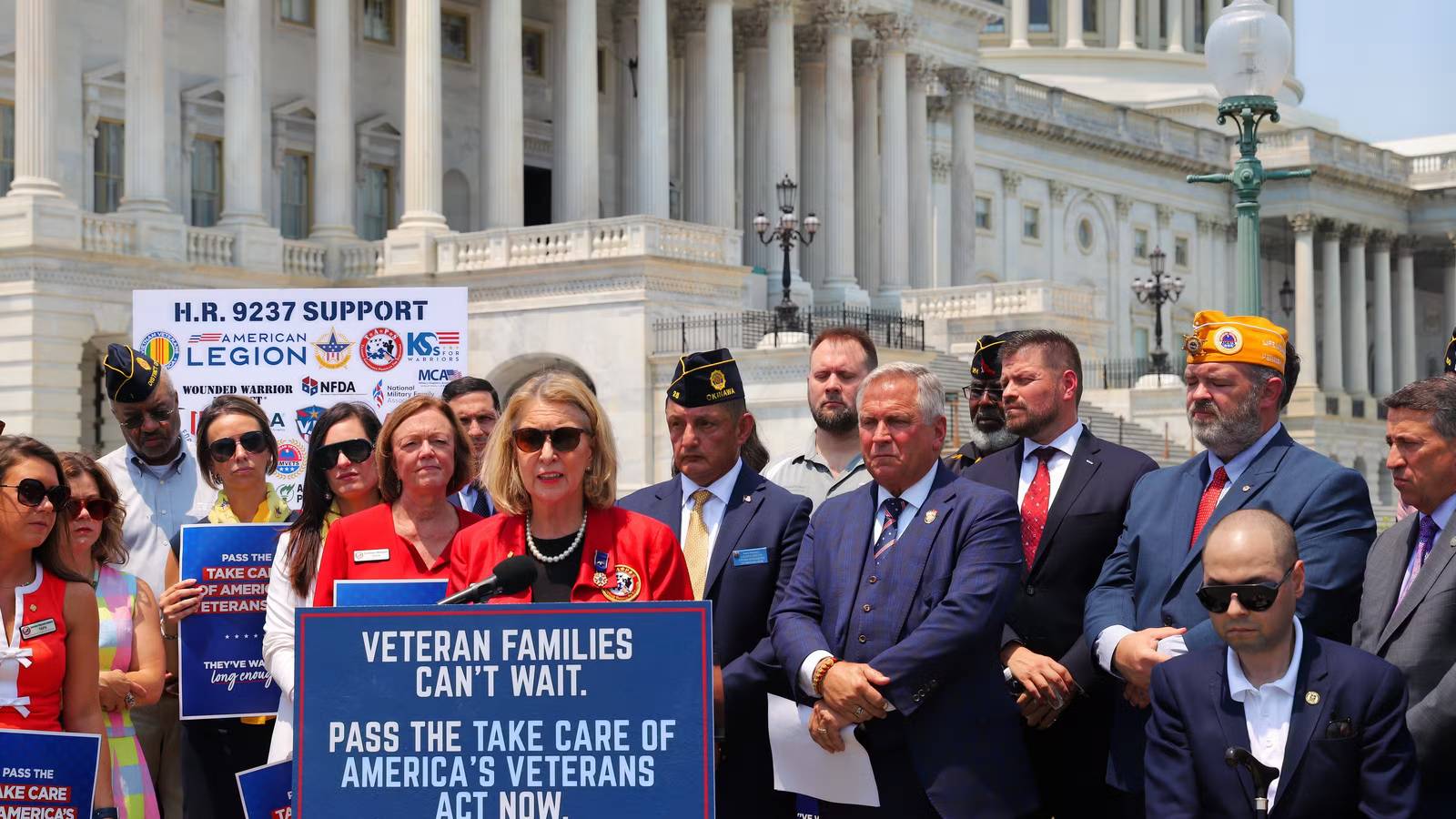
The House of Representatives passed the sweeping Take Care of America’s Veterans Act (TCAVA) on Veterans Day, advancing legislation that could expand benefits for millions of veterans and military families despite continuing opposition from major veterans organizations over proposed changes to disability compensation.
The legislation, H.R. 9237, passed by voice vote Wednesday at approximately 2:46 p.m. Eastern, according to the official House Clerk’s floor record. Because the measure passed by voice vote, individual lawmakers’ positions were not recorded.
The bill combines more than 60 veterans-related measures into a single package addressing retirement compensation, survivor benefits, caregiver assistance, health care access and improvements to the Department of Veterans Affairs.
Its passage marks a significant legislative step for House Veterans’ Affairs Committee Chairman Mike Bost, R-Ill., and Senate Veterans’ Affairs Committee Chairman Jerry Moran, R-Kan., who have championed the legislation as a way to advance long-standing veterans priorities.
However, the measure still requires Senate approval before it can be sent to President Donald Trump.
What the Veterans Benefits Package Would Provide
Among the legislation’s most significant provisions is the Major Richard Star Act, which would allow approximately 54,000 combat-injured military retirees to receive both their full military retirement pay and VA disability compensation.
Under current law, many medically retired service members with fewer than 20 years of service must have their retirement payments reduced when they receive VA disability compensation.
The Star Act would eliminate that restriction for eligible combat-injured retirees, addressing what advocates have long described as an inequity in the military retirement system.
Other provisions would increase certain benefits for surviving spouses, expand caregiver assistance, improve access to community health care and modernize portions of the VA benefits system.
The package also incorporates the Sharri Briley and Eric Edmundson Veterans Benefits Expansion Act, which would increase certain special monthly compensation payments for severely disabled veterans.
In announcing the legislation earlier this year, Bost described the package as an opportunity to address numerous veterans priorities through a single congressional effort.
Why Some Veterans Organizations Oppose the Bill
Despite broad support for many of its provisions, TCAVA has generated significant disagreement within the veterans community.
At the center of the controversy is Section 108, which would change how the VA evaluates certain service-connected disabilities, including tinnitus and obstructive sleep apnea.
The Veterans of Foreign Wars and Disabled American Veterans have argued that the changes could reduce disability compensation for some future claimants, effectively using savings from those benefits to help fund other provisions of the legislation.
The VFW urged lawmakers to reject TCAVA, arguing that improvements for current veterans should not come at the expense of future generations.
Existing disability compensation awards would generally be protected under the proposed changes, but veterans filing new claims or undergoing certain reevaluations could be affected.
DAV has also opposed the proposed compensation changes, citing a VA analysis estimating that the changes could affect up to 1.5 million veterans and reduce compensation payments by as much as $57 billion over 10 years.
Supporters of TCAVA maintain that the broader legislation would provide substantial benefits across the veterans community and that the package offers a practical path for advancing measures that have struggled to become law individually.
The disagreement has highlighted a fundamental question facing Congress: whether lawmakers should advance a comprehensive package containing both expanded benefits and compensation changes or pursue individual measures separately.
A Separate Fight Over the Major Richard Star Act
The House’s passage of TCAVA came on the same day lawmakers took a significant procedural step toward considering the Major Richard Star Act independently.
In a 245-175 vote Wednesday, the House approved a motion to discharge a resolution that would provide for consideration of the standalone legislation.
The vote represented a victory for supporters seeking to advance the Star Act without attaching it to TCAVA’s more controversial provisions.
However, the procedural action did not constitute final passage of the standalone bill. Further proceedings on the resolution were postponed after a voice vote, leaving its immediate future unresolved.
U.S. House of Representatives
For veterans organizations opposing TCAVA, the standalone approach would allow Congress to address concurrent receipt without also adopting the proposed disability compensation changes.
Supporters of the broader package argue that keeping the measures together provides a legislative vehicle for delivering numerous benefits simultaneously.
What Happens Next for Veterans?
With House passage secured, TCAVA now faces consideration in the Senate, where lawmakers will determine whether to advance the legislation in its current form or pursue changes.
Moran, who chairs the Senate Veterans’ Affairs Committee, has been a leading advocate for the comprehensive approach.
The Trump administration previously expressed support for several provisions of TCAVA, while also identifying concerns about certain aspects of the legislation that it wanted Congress to address.
Any Senate changes would require additional congressional action before the legislation could reach the president’s desk.
For veterans awaiting expanded retirement compensation, increased survivor benefits or additional caregiver support, Wednesday’s vote represents progress but does not immediately change eligibility or payments.
And for those concerned about the future of disability compensation, the debate surrounding Section 108 is far from over.
With the 119th Congress approaching its conclusion, lawmakers now face the challenge of determining which provisions can secure final approval before the legislative session ends.
Read the full article here
44 Comments
Interesting update on House Passes Sweeping TCAVA Veterans Benefits Bill Despite Disability Pay Concerns. Curious how the grades will trend next quarter.
Good point. Watching costs and grades closely.
Nice to see insider buying—usually a good signal in this space.
Good point. Watching costs and grades closely.
Good point. Watching costs and grades closely.
Production mix shifting toward USA might help margins if metals stay firm.
Nice to see insider buying—usually a good signal in this space.
Exploration results look promising, but permitting will be the key risk.
Good point. Watching costs and grades closely.
Exploration results look promising, but permitting will be the key risk.
Good point. Watching costs and grades closely.
The cost guidance is better than expected. If they deliver, the stock could rerate.
Good point. Watching costs and grades closely.
Nice to see insider buying—usually a good signal in this space.
Production mix shifting toward USA might help margins if metals stay firm.
Silver leverage is strong here; beta cuts both ways though.
Good point. Watching costs and grades closely.
Good point. Watching costs and grades closely.
If AISC keeps dropping, this becomes investable for me.
Good point. Watching costs and grades closely.
Good point. Watching costs and grades closely.
Exploration results look promising, but permitting will be the key risk.
Good point. Watching costs and grades closely.
Nice to see insider buying—usually a good signal in this space.
Good point. Watching costs and grades closely.
Good point. Watching costs and grades closely.
If AISC keeps dropping, this becomes investable for me.
Nice to see insider buying—usually a good signal in this space.
Good point. Watching costs and grades closely.
Good point. Watching costs and grades closely.
Interesting update on House Passes Sweeping TCAVA Veterans Benefits Bill Despite Disability Pay Concerns. Curious how the grades will trend next quarter.
Good point. Watching costs and grades closely.
Interesting update on House Passes Sweeping TCAVA Veterans Benefits Bill Despite Disability Pay Concerns. Curious how the grades will trend next quarter.
Production mix shifting toward USA might help margins if metals stay firm.
Good point. Watching costs and grades closely.
Good point. Watching costs and grades closely.
If AISC keeps dropping, this becomes investable for me.
Uranium names keep pushing higher—supply still tight into 2026.
Good point. Watching costs and grades closely.
Good point. Watching costs and grades closely.
Interesting update on House Passes Sweeping TCAVA Veterans Benefits Bill Despite Disability Pay Concerns. Curious how the grades will trend next quarter.
Nice to see insider buying—usually a good signal in this space.
Good point. Watching costs and grades closely.
Good point. Watching costs and grades closely.