

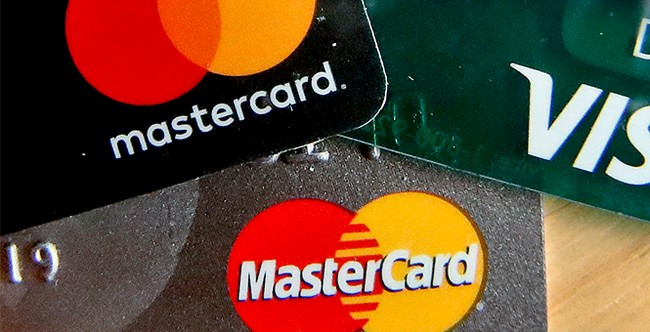
As it stands, there are already too many ways to figure out who has guns and who doesn’t. For all the guys worried about posting pictures of their guns online for fear the ATF will know who has what, I hate to break it to ya, they probably already have a way of knowing. Still, there’s no reason to make it easier on them, and when banks decided they should be in the know, that was a massive problem.
Especially when it was premised on such a shaky and, frankly, ridiculous idea. Buying guns is nothing like money laundering, after all, which proponents of such tracking claim would allow them to identify would-be mass shooters before they hurt anyone.
Since most mass killers just buy a gun or two, if they buy them at all, I don’t see how. Instead, it’s just a way to provide another level of monitoring on a constitutionally protected right. While the financial industry backed off on the idea, at least for a time, the threat is still there.
And the House just made a major step in addressing it.
Buying a rifle, ammunition, or gun safe should not place an American under special financial surveillance. Yet that is the premise behind the firearm-retailer merchant code that banks and gun-control activists have spent years trying to impose on lawful gun owners.
On July 14, the House passed H.R. 1181, the Protecting Privacy in Purchases Act, by a 221–201 vote. Five Democrats and one independent joined 215 Republicans in supporting the measure, while 200 Democrats and Republican Rep. Brian Fitzpatrick voted against it. NRA-ILA supported the legislation, which now moves to the Senate.
Rep. Riley Moore (R-W.Va.) sponsored the bill.
And let’s understand just how stupid the idea is, even beyond what I’ve already mentioned.
A Financial Label Created Specifically for Gun Stores
Merchant category codes are four-digit identifiers used to classify businesses. Gun stores were historically categorized alongside sporting-goods or general-merchandise retailers.
That changed in 2022 after banks and gun-control activists pushed the International Organization for Standardization to approve a separate code for firearm and ammunition retailers. The result was MCC 5723, a financial label for businesses whose primary sales involve firearms, ammunition, or related products.
The code does not reveal what a customer purchased. It generally identifies the merchant category and transaction amount. That limitation does not make the system harmless. It makes it indiscriminate.
A $2,000 gun-store charge could represent a rifle. It could also cover a safe, optic, training class, range membership, hunting equipment, or ammunition. MCC 5723 cannot tell the difference. It simply places every qualifying transaction into a gun-related category that can be searched, analyzed, and flagged.
“The implementation of Merchant Category Codes to surveil lawful purchases is nothing more than an ill-conceived attempt to create a de facto national firearms registry,” NRA-ILA Executive Director John Commerford warned.
And not a very good registry, since there’s literally no way to know what exactly is being purchased.
For example, let’s say your go-to gun store is a large outdoor retailer like Cabela’s or Bass Pro, but maybe more local. They have the MCC for a gun store since they sell guns. But, you and your family have really gotten into camping, so you buy a gun on Monday, but then you find out your tent got a rip in it when you packed it up for your last trip, so you go to get a new one on Wednesday. While you’re there, you decide to upgrade your camp stove, and it turns out that the air mattress cot you’ve wanted is on sale, so you grab that.
How does the bank recognize that Monday’s was a gun purchase and Wednesday’s is nothing of the sort? The answer is that it can’t. All they see are two big purchases at a business classified as a gun store in one week.
And if they’re thinking that’s something shady, they’re going to call the police, and then you get a knock on the door because you upgraded your tent a couple of days before a big trip.
It’s beyond stupid, and that’s what the anti-gunners actually want.
The House voting for it is big, but it’s far from over. The Senate is where the real fight is, because the filibuster—the very thing that kept a lot of gun control bills from becoming law during the Biden administration—is a weapon the Democrats will demonize right up until they decide to use it. Yet this isn’t a gun control measure. It’s a measure that keeps innocent people from being harassed by law enforcement because some dipstick banker who thinks a barrel shroud is the shoulder thingy that goes up decided you were up to something because you decided to take up fishing.
Everyone should be able to see the problem with these codes, and making damn sure they don’t become a thing is good for everyone. Unfortunately, real common sense is so rare it qualifies as a superpower, so expect a fight.
Editor’s Note: President Trump and Republicans across the country are doing everything they can to protect our Second Amendment rights and right to self-defense.
Help us continue to report on their efforts and legislative successes. Join Bearing Arms VIP and use promo code FIGHT to receive 60% off your membership.
Read the full article here
27 Comments
Exploration results look promising, but permitting will be the key risk.
Interesting update on House Votes to Block Financial Institutions Using Credit Cards to Track Gun Sales. Curious how the grades will trend next quarter.
Good point. Watching costs and grades closely.
Production mix shifting toward USA might help margins if metals stay firm.
Good point. Watching costs and grades closely.
Good point. Watching costs and grades closely.
If AISC keeps dropping, this becomes investable for me.
Good point. Watching costs and grades closely.
Good point. Watching costs and grades closely.
I like the balance sheet here—less leverage than peers.
Good point. Watching costs and grades closely.
Good point. Watching costs and grades closely.
The cost guidance is better than expected. If they deliver, the stock could rerate.
Good point. Watching costs and grades closely.
Good point. Watching costs and grades closely.
Exploration results look promising, but permitting will be the key risk.
Good point. Watching costs and grades closely.
The cost guidance is better than expected. If they deliver, the stock could rerate.
Good point. Watching costs and grades closely.
Silver leverage is strong here; beta cuts both ways though.
Good point. Watching costs and grades closely.
Silver leverage is strong here; beta cuts both ways though.
Good point. Watching costs and grades closely.
Good point. Watching costs and grades closely.
Silver leverage is strong here; beta cuts both ways though.
Good point. Watching costs and grades closely.
Good point. Watching costs and grades closely.