

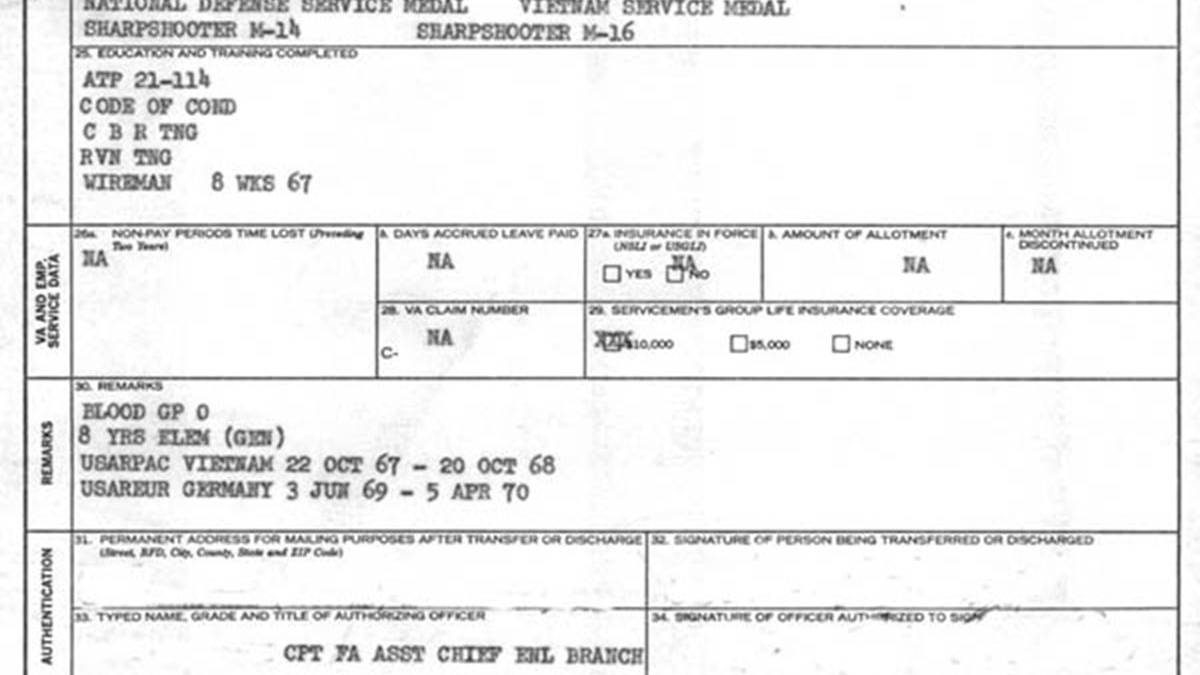
A DD-214, the official record of a service member’s discharge, follows veterans for the rest of their lives. It’s what employers ask for, what the Department of Veterans Affairs uses to determine benefits eligibility, and what shows up whenever a veteran needs to prove their service.
For an estimated 100,000 service members discharged for their sexual orientation between World War II and the 2011 repeal of Don’t Ask, Don’t Tell, that document often carried language, codes or a discharge characterization that permanently marked them for something that is no longer a bar to service at all.
Why This Still Matters Years After Repeal
Repealing Don’t Ask, Don’t Tell in 2011 didn’t automatically fix the paperwork of everyone discharged under it or under the outright bans on gay and lesbian service that preceded it going back to World War II. Correcting a DD-214 — whether to upgrade a less-than-honorable discharge, change the stated reason for separation, remove a reenlistment code that blocks rejoining the military or update a legal name for a transgender veteran — has required an affirmative application to one of two entities inside each service branch: a Discharge Review Board, for applications filed within 15 years of separation, or a Board for Correction of Military Records, for anyone outside that window.
Related: DD214: What You Need to Know
For years, almost nobody opted for the correction. CBS News reported that of the roughly 100,000 service members estimated to have been discharged for their sexual orientation, just over 1,300, about 1.3%, had successfully had their discharge upgraded before the Department of Defense took a more active role.
What Changed
The Pentagon moved from a purely reactive process to a proactive one starting Sept. 20, 2023, the 12th anniversary of the DADT repeal, when it announced it would identify veterans discharged during the 1994 to 2011 DADT period and, where an upgrade was warranted, submit those cases directly to the relevant correction board rather than waiting for the veteran to apply.
That review concluded in October 2024. Of the 851 cases the Military Department Review Boards proactively reviewed, 96.8% resulted in relief, according to the Defense Department’s announcement of the review’s completion. Overall, DoD reported that among the roughly 13,500 service members separated under DADT who served long enough to receive a merit-based characterization of service, more than 96% now hold an honorable discharge.
A separate and larger resolution followed a 2023 federal lawsuit filed by five veterans, backed by the Impact Fund, Legal Aid at Work, and the law firm King & Spalding, arguing that the existing correction process was unconstitutionally burdensome and opaque. In January 2025, the Department of Defense reached a settlement covering more than 30,000 LGBTQ+ veterans discharged under DADT, streamlining the process for removing references to sexual orientation from discharge paperwork and upgrading discharge status to honorable.
Who Still Needs to File Something Themselves
Despite the scale of the DADT-era review, veterans discharged under earlier, pre-DADT policies, meaning any service member separated for their sexual orientation before 1994, are not automatically covered by that proactive review and generally still need to file an application themselves.
DoD officials confirmed at the review’s 2023 announcement that the proactive review would not include the nearly 20,000 LGBTQ+ veterans discharged before DADT took effect.
A transgender veteran seeking a legal name change on their DD-214 to reflect their current identity is treated as a separate correction request from a discharge upgrade.
Related: All Services Now Issue Form DD214-1 to Departing Reservists
The application depends on how long ago the veteran was discharged. Veterans separated within the past 15 years file DD Form 293 with their branch’s Discharge Review Board. Veterans separated more than 15 years ago file DD Form 149 with their branch’s Board for Correction of Military Records, or the Board for Correction of Naval Records for Navy and Marine Corps veterans, a process governed by 10 U.S.C. 1552-1553 and DoD Instruction 1332.28. Both forms should be submitted along with a copy of the DD-214 and any supporting evidence, sent by certified mail to the review board for the specific branch, with a copy retained for the veteran’s own records.
What a Correction Unlocks
A discharge upgrade is not a symbolic gesture. A less-than-honorable discharge can block access to VA health care, disability compensation, the GI Bill, VA home loans and burial benefits, in addition to functioning as a red flag on civilian employment background checks.
Upgrading a discharge to honorable, removing coded language referencing sexual orientation from the narrative reason for separation, and correcting a reenlistment code that currently bars reentry into the military can restore eligibility for all of it. For transgender veterans specifically, a corrected DD-214 reflecting their current legal name resolves a document that otherwise has to be explained, or hidden, every time it’s requested.
Veterans pursuing a correction can find branch-specific mailing addresses and step-by-step guidance through the DoD Forms Management Program at esd.whs.mil or by contacting an accredited veterans service organization for free assistance preparing an application.
Stay on Top of Your Veteran Benefits
Military benefits are always changing. Keep up with everything from pay to health care by subscribing to Military.com, and get access to up-to-date pay charts and more with all the latest benefits delivered straight to your inbox.
Read the full article here
24 Comments
Exploration results look promising, but permitting will be the key risk.
Good point. Watching costs and grades closely.
Nice to see insider buying—usually a good signal in this space.
Good point. Watching costs and grades closely.
I like the balance sheet here—less leverage than peers.
Good point. Watching costs and grades closely.
Good point. Watching costs and grades closely.
Silver leverage is strong here; beta cuts both ways though.
The cost guidance is better than expected. If they deliver, the stock could rerate.
Good point. Watching costs and grades closely.
Good point. Watching costs and grades closely.
If AISC keeps dropping, this becomes investable for me.
Good point. Watching costs and grades closely.
I like the balance sheet here—less leverage than peers.
Interesting update on How to Fix a Discharge Record From ‘Don’t Ask, Don’t Tell’ or Earlier Policies. Curious how the grades will trend next quarter.
Exploration results look promising, but permitting will be the key risk.
Good point. Watching costs and grades closely.
Good point. Watching costs and grades closely.
Silver leverage is strong here; beta cuts both ways though.
Exploration results look promising, but permitting will be the key risk.
Production mix shifting toward USA might help margins if metals stay firm.
Good point. Watching costs and grades closely.
Good point. Watching costs and grades closely.
The cost guidance is better than expected. If they deliver, the stock could rerate.