

The threat to military bases is increasingly coming from weapons that are cheap, plentiful and difficult to stop in large numbers.
That problem came into unusually sharp focus in October, when the U.S. moved B-1 bombers out of RAF Fairford in Britain after intelligence indicated a possible Iranian drone attack against the base. British Prime Minister Andy Burnham later said a suspected plot involving the installation was “almost certainly” directed by Iran’s Islamic Revolutionary Guard Corps. Iran has denied involvement.
The episode illustrates a problem Asher Katz, co-founder and chief product officer of Austin-based defense company Traysar, raised in a recent interview with Military.com. Modern militaries have become superb at striking targets; keeping expensive aircraft, communications systems, ammunition and other critical infrastructure alive through a prolonged conflict presents a different challenge.
“We get very excited by new toys, like, ‘Oh, look at this plane, look at this drone,’” Katz said. “But anyone who really understands military doctrine realizes that survivability and the ability to continue, that’s what wins wars.”
The Surface Is Becoming Harder to Defend
The threat extends far beyond a single suspected Iranian operation. During the Army’s Scarlet Dragon 26-3 exercise at Fort Bragg in September, soldiers tested sensors, electronic warfare, command-and-control networks and air defenses against coordinated swarms of up to 100 drones.
The Army described the exercise as an attempt to pressure defensive networks with the scale and complexity forces could face in future combat.
The Pentagon is also confronting the cost and inventory side of that equation. Its Fiscal Year 2027 plans call for more than $30 billion for critical munitions—including Patriot and Terminal High Altitude Area Defense interceptors (THAAD)—after inventories came under significant strain during fighting with Iran. Patriot and THAAD stocks are among those facing the greatest pressure.
Katz argues that commanders should look more closely at passive protection alongside active defenses. Buried infrastructure and equipment do not require an interceptor for every incoming threat.
He repeatedly emphasized that putting assets underground is only one part of survivability planning. Dispersal, camouflage, hardening, netting and other comparatively simple measures may make more sense depending on the asset and threat.
“It’s not like, OK, let’s move everything underground,” Katz said. “Let’s put way more thought into survivability and our vulnerability as a force. Subterranean is just one component of it.”

The vulnerability of critical infrastructure remains visible in Ukraine. Russian missile and drone strikes on Oct. 14 damaged more than 25 power facilities and left roughly 600,000 people without electricity, according to Ukrainian officials.
Ukraine, meanwhile, has used long-range drones to attack Russian energy and computing infrastructure.
Why Militaries Keep Going Underground
Katz describes “subterra” warfare as the use of underground terrain for protection, concealment, movement and access.
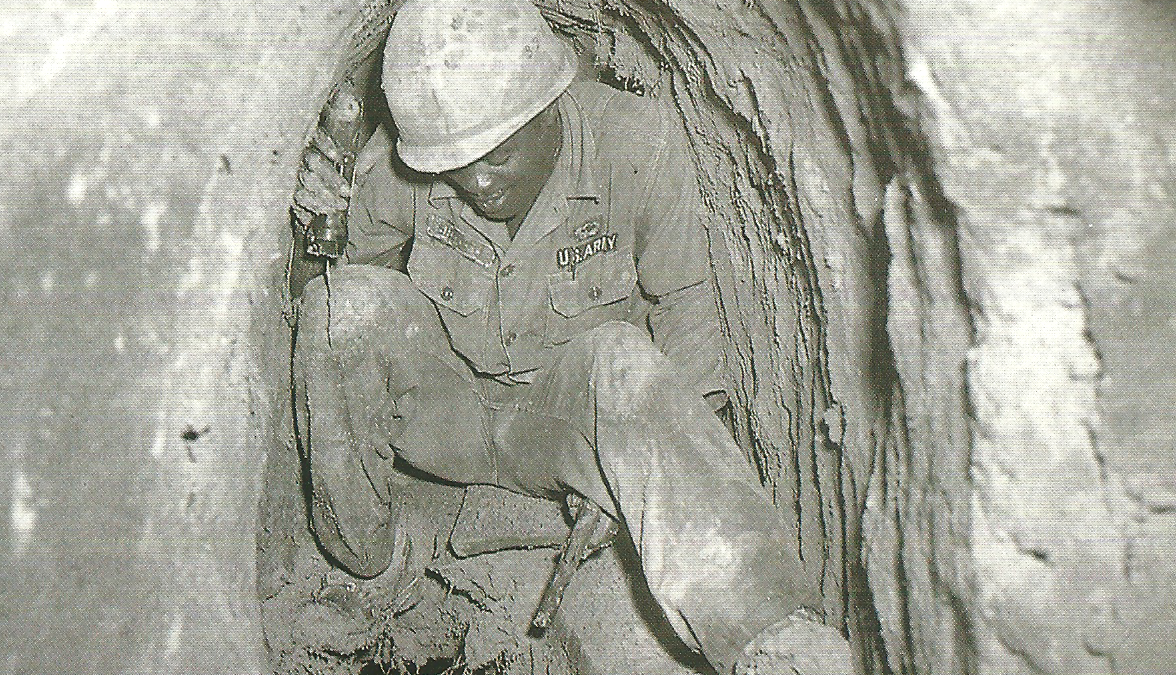
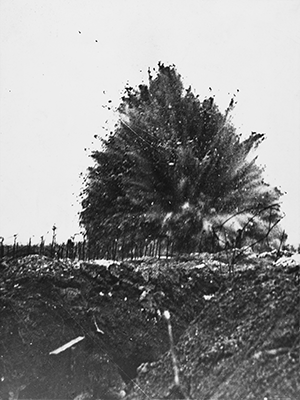
The terminology is Traysar’s, but the underlying tactics are centuries old. He traced their use from ancient siege warfare through World War I tunneling, Japanese underground defenses in World War II, Vietnam-era tunnel networks, and more recent systems built by ISIS and Hamas.
“Underground is not a new domain of warfare,” Katz said. “It’s a very, very ancient one. But it’s one that the advantages that it gives have never changed.”
The U.S. Army has reached similar conclusions about the growing relevance of subterranean infrastructure. A 2025 Army assessment of contemporary conflicts noted that underground spaces can protect defenders from fires, conceal movement, and allow forces to approach positions while avoiding increasingly persistent surveillance.
It highlighted Russian troops using roughly 15 kilometers of an inactive natural gas pipeline during operations near Sudzha in 2025.
The tactic has persisted. In September, Russian forces made additional attempts to infiltrate Ukrainian positions in Sumy Oblast through gas pipelines, according to the Institute for the Study of War. Ukrainian forces intercepted several of those attempts.
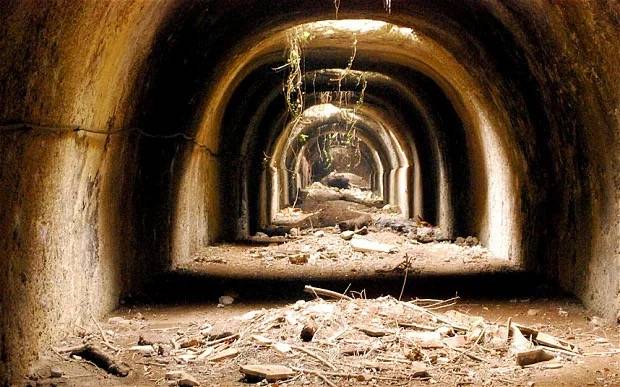
China has made underground protection a much larger strategic undertaking. The Defense Department’s 2024 China Military Power Report says the People’s Liberation Army maintains thousands of underground facilities protecting command and control, logistics, missile systems and other forces.
The Pentagon says China accelerated the program after studying U.S. and coalition air campaigns, including the 1991 Gulf War. China has also experimented with moving critical computing infrastructure beneath the sea.
A 24-megawatt underwater data center off Shanghai entered full operation around May 2026, using seawater for cooling and offshore wind for power. It has the capability to power around 20,000 homes. The project is commercial rather than military, but it reflects a broader willingness to move high-value infrastructure out of traditional aboveground facilities.
The strategic attraction is straightforward: A stronger military can dominate the skies and still struggle to destroy an opponent’s most important assets if those assets are buried, dispersed and difficult to locate.
Iran Is Testing What ‘Destroyed’ Really Means
Iran has turned that question into a current national security problem.
During the 2026 conflict, U.S. and Israeli forces repeatedly attacked entrances to Iran’s underground missile facilities. Satellite imagery later reviewed by CNN showed Iran had reopened at least 50 of 69 tunnel entrances examined across 18 missile bases, often using bulldozers, loaders and dump trucks to clear rubble and repair cratered roads.
The reporting suggested that blocking access had suppressed Iran’s missile operations without necessarily destroying the missiles stored deeper inside.
More recent imagery points to the same problem. In September, analysts identified extensive reconstruction at the buried Taleghan 2 facility at the Parchin military complex, including repairs to penetration holes left by bunker-buster strikes and additional concrete reinforcement.
In October, satellite imagery showed renewed activity and earth moving at Minzadayi, another Iranian complex containing underground structures that Israel struck earlier this year.
The uncertainty extends to Iran’s nuclear material. Physically securing enriched uranium stored in underground facilities could require a large ground force, heavy engineering equipment and potentially the construction of an airstrip to support the operation.
The United States has bunker-buster weapons designed specifically for hardened underground targets. The Air Force describes the GBU-57 Massive Ordnance Penetrator as a 30,000-pound, guided, earth-penetrating weapon designed to reach and destroy targets in hardened and deeply buried facilities.
The Air Force has also described it as a precision-guided, bunker-busting munition purpose-built for reinforced underground facilities and hardened mountain complexes.
Assessing the damage from those strikes presents a separate challenge. The Defense Threat Reduction Agency’s Hard Target Research and Analysis Center has used intelligence data and three- and four-dimensional modeling to characterize hard and deeply buried targets and conduct battle-damage assessments, including post-strike site visits in Iraq and Afghanistan.
“That’s the million-dollar question right now that we’re having with Iran,” Katz said. “We know we strike something, but it’s very hard for us to know how big of an effect was it. Did we actually succeed in taking it out?”
A Defense Industry Bet on ‘Survivability’
Traysar has an obvious commercial interest in that debate. The company develops autonomous underground systems and is advocating for greater military investment in the same domain.
Traysar has recently launched Terminus, a truck-mounted boring platform intended to place infrastructure underground, and announced a partnership with edge-computing company Armada to explore buried data centers, communications systems and command-and-control infrastructure.
The debate is ultimately broader than Traysar or any particular underground machine. Recent events at RAF Fairford, Iranian facilities, Ukraine and Army drone exercises point toward the same problem: a military that can deliver enormous firepower may still lose operational effectiveness if it cannot protect the systems that allow that firepower to continue.
“We have to start talking about survivability,” Katz said, “just like we’re talking about lethality.”
Read the full article here
32 Comments
If AISC keeps dropping, this becomes investable for me.
Nice to see insider buying—usually a good signal in this space.
Good point. Watching costs and grades closely.
Good point. Watching costs and grades closely.
The cost guidance is better than expected. If they deliver, the stock could rerate.
Nice to see insider buying—usually a good signal in this space.
Good point. Watching costs and grades closely.
Good point. Watching costs and grades closely.
Production mix shifting toward USA might help margins if metals stay firm.
Uranium names keep pushing higher—supply still tight into 2026.
Good point. Watching costs and grades closely.
Good point. Watching costs and grades closely.
Interesting update on Iran and Drone Swarms Are Driving a New Underground Warfare Race Based on ‘Survivability’. Curious how the grades will trend next quarter.
Good point. Watching costs and grades closely.
Good point. Watching costs and grades closely.
Interesting update on Iran and Drone Swarms Are Driving a New Underground Warfare Race Based on ‘Survivability’. Curious how the grades will trend next quarter.
Good point. Watching costs and grades closely.
I like the balance sheet here—less leverage than peers.
Good point. Watching costs and grades closely.
I like the balance sheet here—less leverage than peers.
Good point. Watching costs and grades closely.
If AISC keeps dropping, this becomes investable for me.
Good point. Watching costs and grades closely.
Good point. Watching costs and grades closely.
I like the balance sheet here—less leverage than peers.
Good point. Watching costs and grades closely.
Silver leverage is strong here; beta cuts both ways though.
Good point. Watching costs and grades closely.
I like the balance sheet here—less leverage than peers.
Good point. Watching costs and grades closely.
Good point. Watching costs and grades closely.
Exploration results look promising, but permitting will be the key risk.