

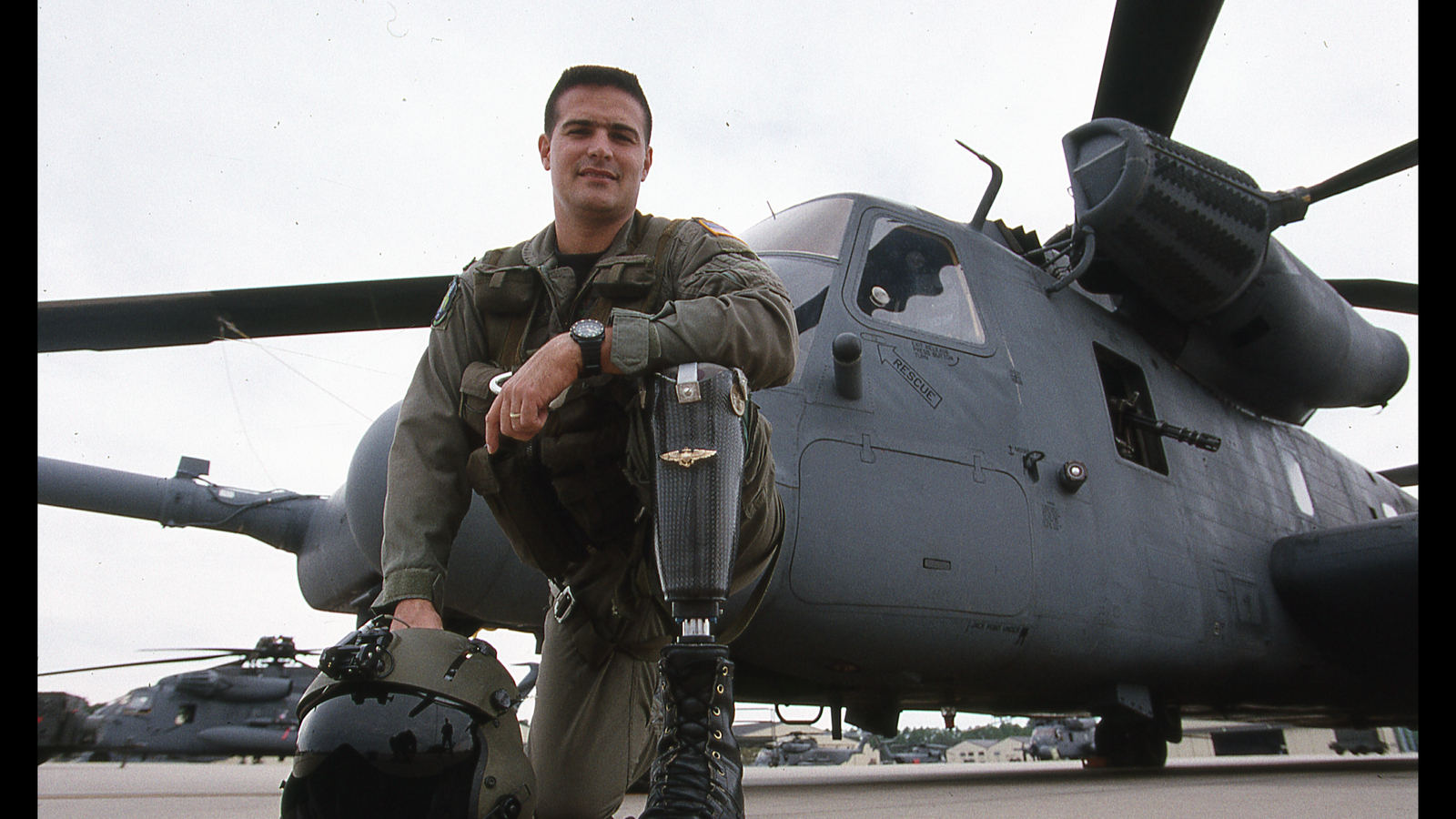
On Sept. 5, 1997, John Alvarez climbed back into the cockpit of a military helicopter.
The flight came less than a year after a helicopter crash in Ecuador nearly killed him, left his right leg severely damaged and ultimately cost him his lower left leg. But for Alvarez, four days made an enormous difference.
He had been grounded since Sept. 19, 1996. If he reached 365 consecutive days without returning to flight status, Alvarez believed he risked losing far more than a paycheck.
If you’re grounded for 365 consecutive days, you lose your qualification, you lose your flight pay, Alvarez told Military.com in a recent interview. To me, it was losing your identity.
Alvarez made it back in 361 days.
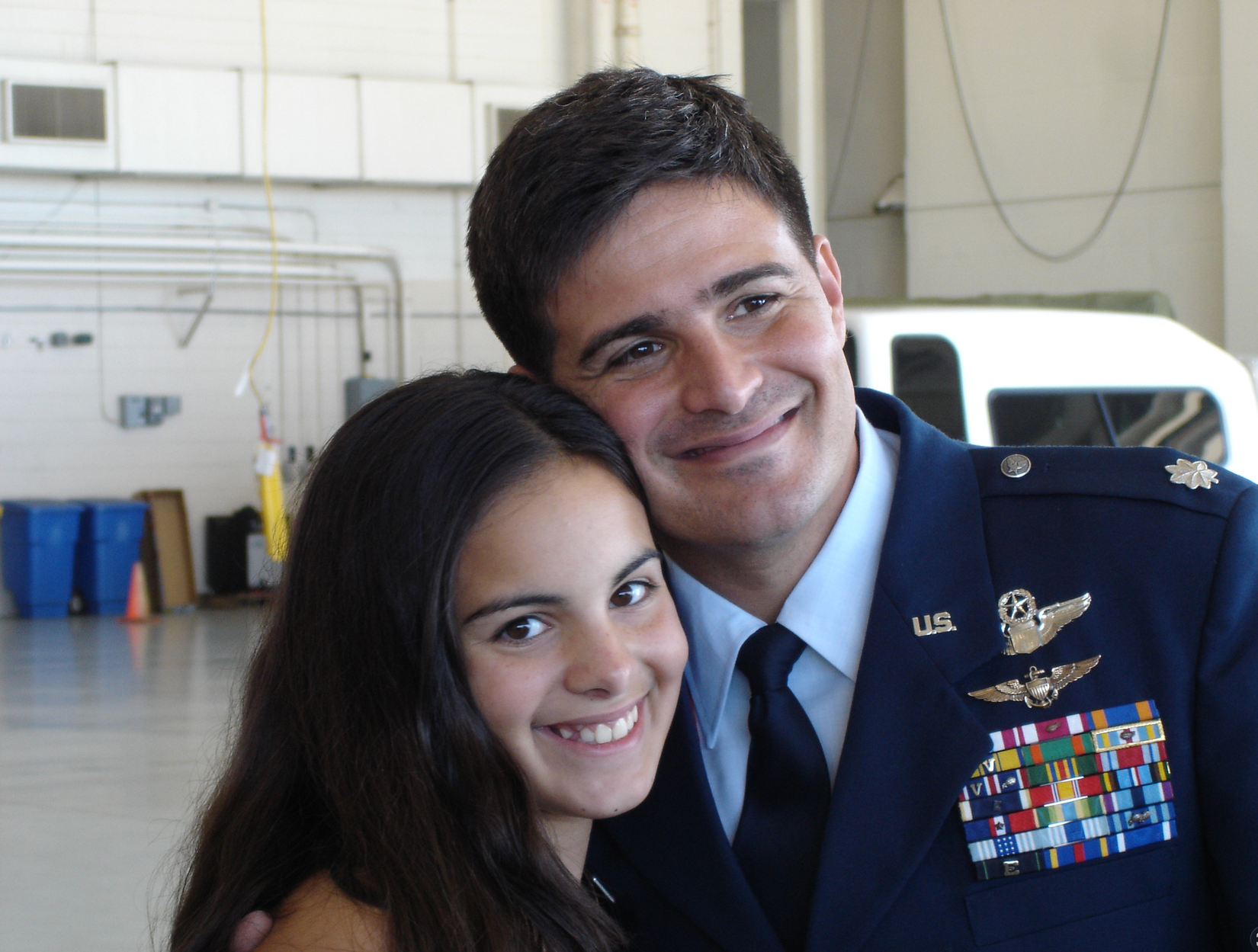
Nearly 30 years after the crash, the retired Air Force colonel sat down with Military.com alongside his daughter, Lisette Alvarez, to recount the accident, the recovery and the fight to convince military officials that losing a leg did not have to mean losing his place in a cockpit.
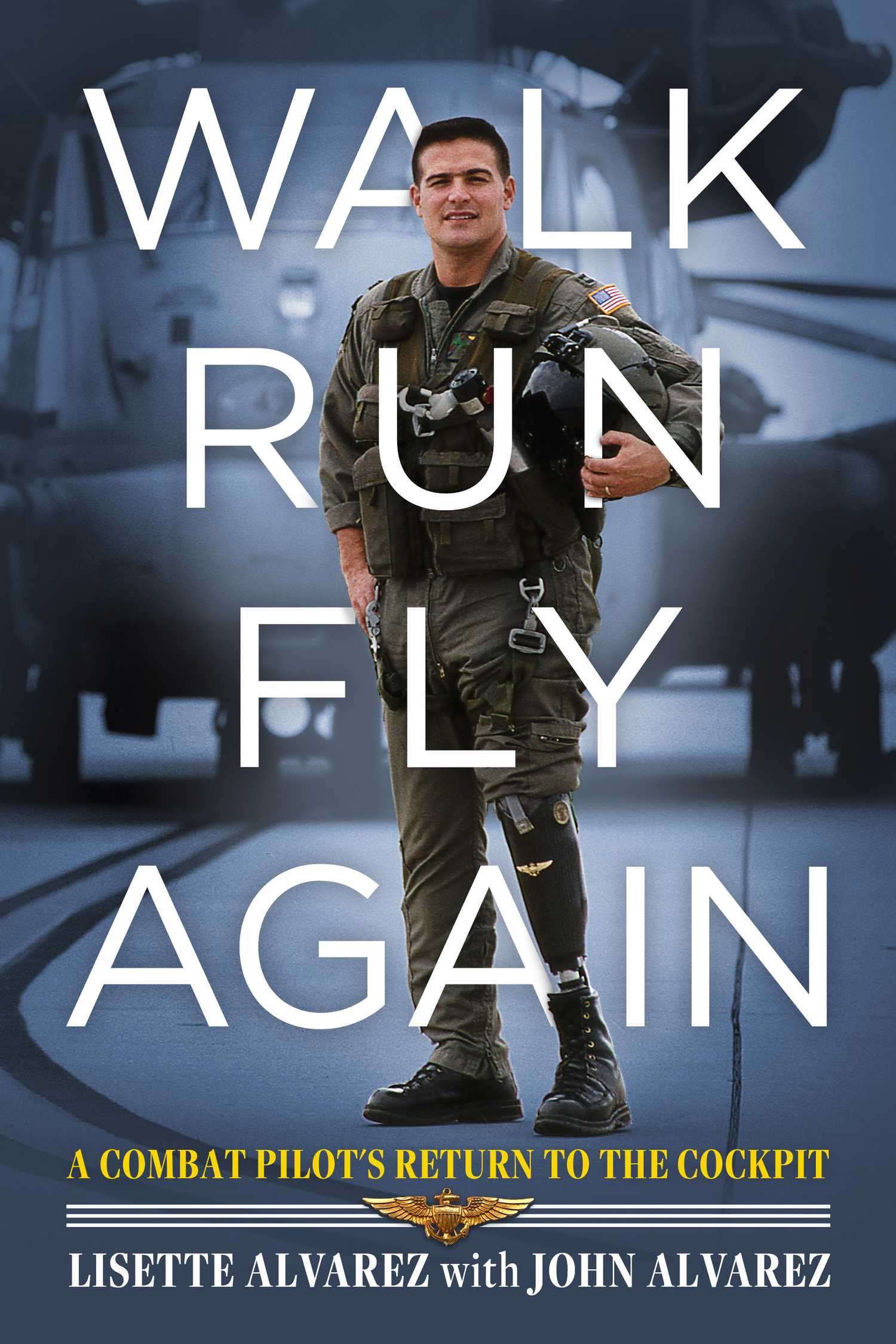
Their new book, “Walk, Run, Fly Again: A Combat Pilot’s Return to the Cockpit,” chronicles that journey. Lisette spent years interviewing her father, mother, rescuers and others who played a role in his survival and recovery.
But Alvarez’s return to flight began with a moment when he wasn’t sure he would survive at all.
‘You’re Gonna Die Here’
Alvarez was a Navy lieutenant and aviator on an exchange assignment with an Air Force special operations unit when he deployed to Ecuador in 1996.
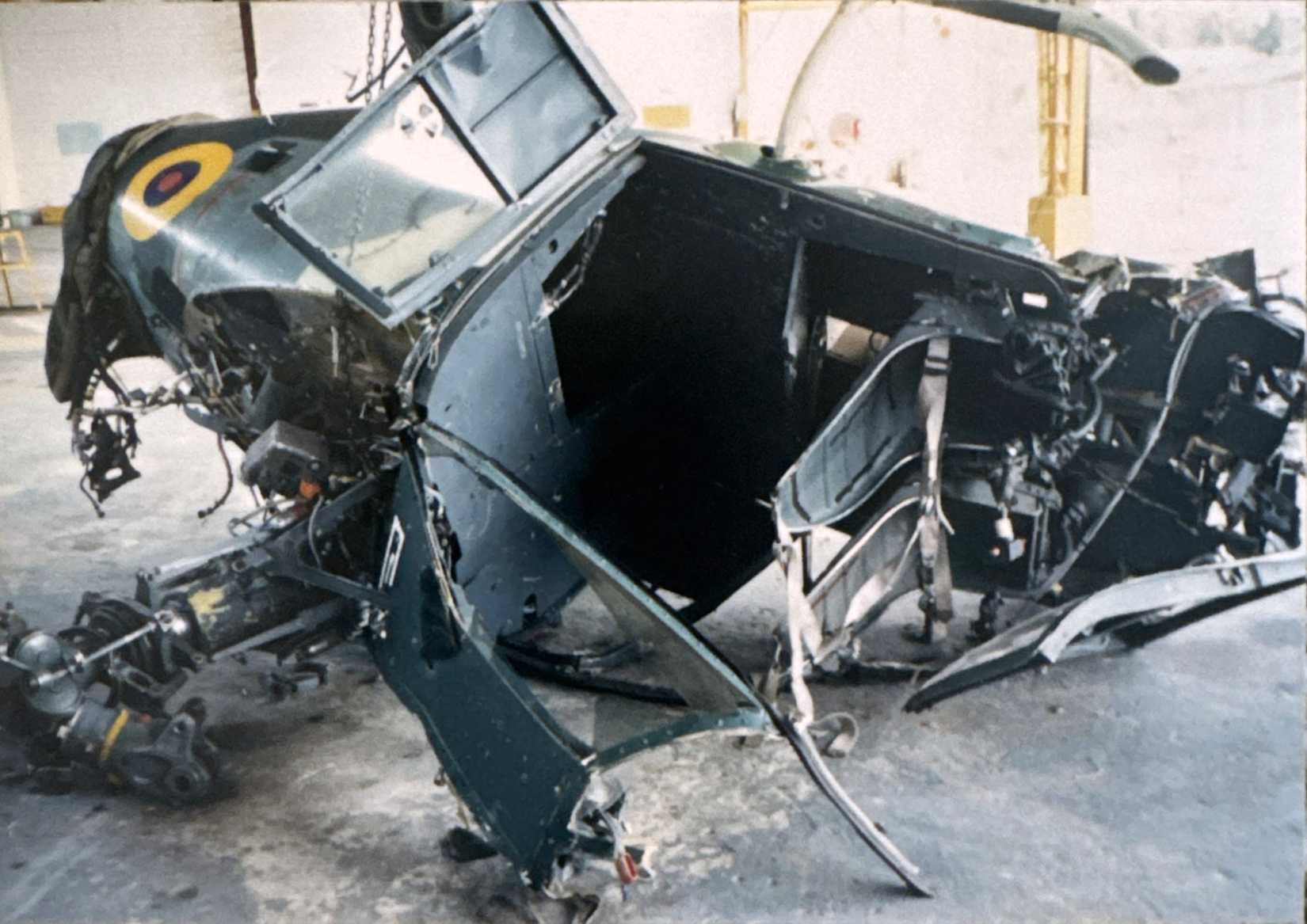
On Sept. 19, he was aboard a helicopter on a counter-narcotics mission when it crashed into a river. The pilot was killed, and Alvarez was thrown into the water with catastrophic injuries. He tried to fall back on his training.
He checked his medical kit. He tried his emergency radio. He mentally ran through the procedures he’d learned for surviving and making himself easier to rescue. Eventually, there was nothing left on the checklist.
“Everything’s done,” Alvarez told Military.com. “There’s this little other voice that comes in, like, ‘John, you’re gonna die here.'”
What frightened him wasn’t death itself, he said. It was who he would leave behind.
His daughter Lisette was 5. His younger daughter, Nicole, was 4. His wife, Shelley, was home waiting for him.
I wasn’t afraid of dying, Alvarez said. I was about to accept it, but my fear was leaving them. You know, what was going to happen to them?
He began praying aloud. “God, you can take my legs,” Alvarez recalled. “I can be a good husband. I can still be a good father.”
Alvarez survived the river and the rescue that followed. Doctors eventually amputated his left leg below the knee after efforts to save it failed. His right leg was also badly injured. Survival, however, was only the first fight.
‘You’re Gonna Fly Again’
At the hospital, Alvarez remembers being given a grim assessment. A doctor told him he was unlikely to walk normally again, might need a cane or crutch and could “forget about running.” Flying military aircraft again appeared out of the question.
“It was quite the sucker punch,” Alvarez said. Then his squadron commander showed up.
Alvarez was still in a hospital bed when the commander told him something radically different: He would recover, stay on active duty and fly again. Alvarez didn’t believe him.
“I was furious because I’m like, this guy’s blowing smoke,” Alvarez recalled.
At that point, returning to the cockpit wasn’t even a realistic goal in his mind. Alvarez had studied engineering. He began thinking about whether he could return to that field and how his family would manage financially.
But the possibility of flying again stayed with him.
His chaplain encouraged him to stop thinking about recovery as one enormous task and instead connect specific goals to dates that meant something to him. Alvarez and his wife came up with three.
He wanted to walk into his aunt’s house by Thanksgiving, in part so his parents and grandfather could see him walk and so he could dance again with his wife and daughters. He wanted to run by Lisette’s birthday on Feb. 22.
And he wanted to fly within a year of the crash.
He made that first goal.
Then he went after the next one.
Proving an Amputee Could Still Be a Pilot
The physical recovery was only part of what Alvarez had to overcome.
As he rehabilitated, he began searching for examples of other amputees who had remained in military service or tried to return to aviation.
He learned about Douglas Bader, the famed British World War II pilot who flew after losing both legs. He read “One Tough Marine,” about a Marine who returned to service after losing a leg. And he eventually learned about former Navy pilot Frank Ellis, a double amputee who decades earlier had fought to return to flying.
“Maybe I can go back to flying,” Alvarez remembered thinking. There were also people willing to help.
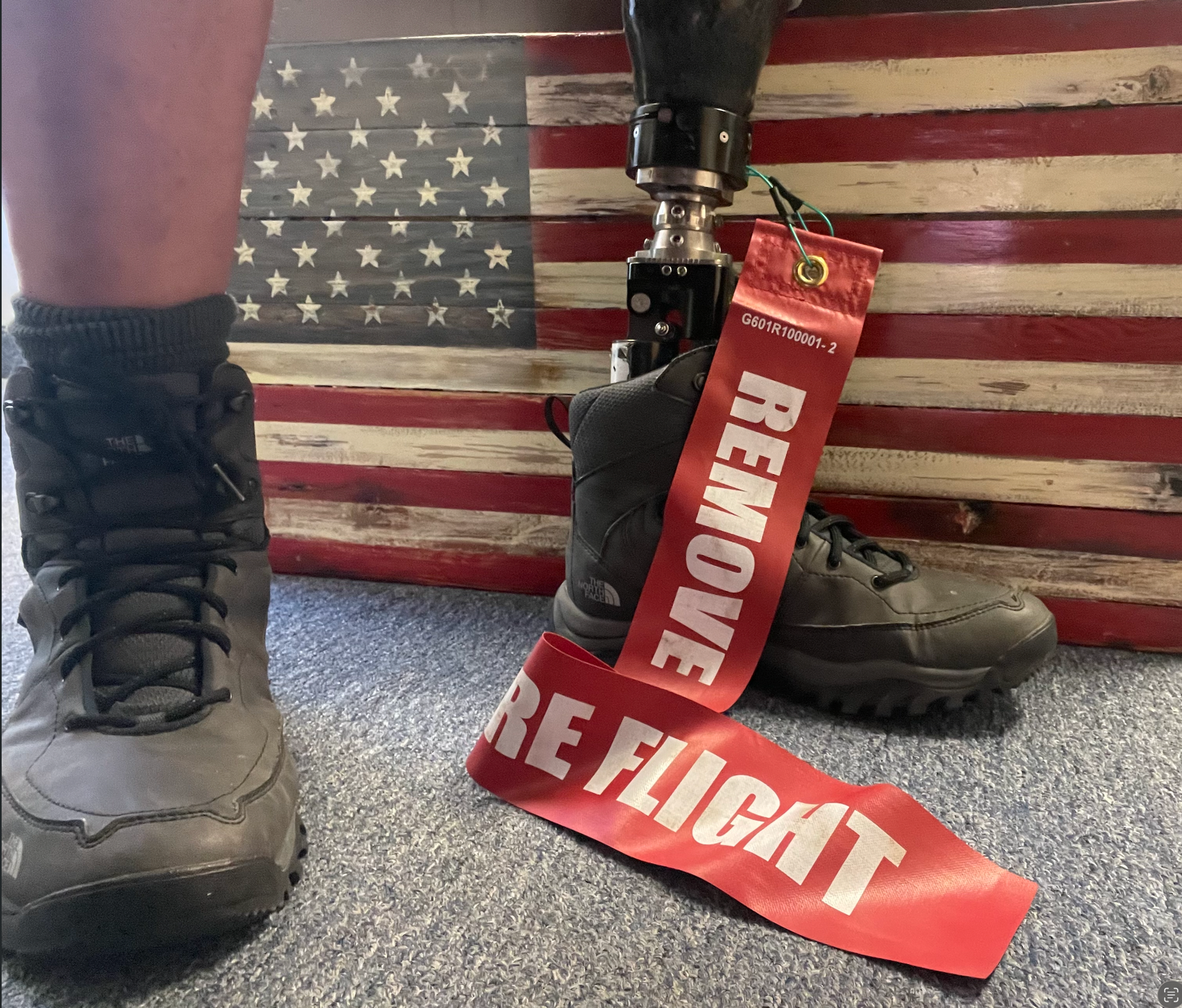
A Navy SEAL amputee contacted Alvarez and steered him toward prosthetic specialists who understood that his goal wasn’t simply to walk comfortably. He needed to demonstrate that a prosthetic leg would allow him to safely operate an aircraft and meet military standards.
The case ultimately required far more than Alvarez believing he could fly. He had to prove it.
His waiver package documented his medical recovery and his ability to perform the physical tasks required of an aviator, including getting out of an aircraft in an emergency.
By the spring of 1997, Alvarez said, he was physically ready.
I could have started flying May, he told Military.com. I was ready earlier. It’s just that I had to prove it.
Then came another obstacle: bureaucracy.
His case had to move through Navy and Air Force channels, with officials determining who had the authority to approve something few had encountered before. All the while, Sept. 19 was getting closer.
361 Days
For Alvarez, the deadline was personal as much as professional. Flying wasn’t simply his job. It had become part of how he understood himself.
As the one-year anniversary of the crash approached, he had already done the difficult work of rehabilitation and demonstrated that he could meet the physical demands of flying. But the final authorization remained outside his control.
The final answer arrived Sept. 4, 1997.
Alvarez said his commander received a phone call informing him that there was verbal approval for Alvarez to fly, with the paperwork to follow.
His commander didn’t waste time. “He put me on the flight schedule that very next day,” Alvarez said.
On Sept. 5, Alvarez was back in the cockpit. The decision came so quickly that Lisette, then 6, couldn’t even make it to the flight line. She was in school, and Shelley couldn’t get her out in time for the celebration afterward.
Yes, 361 days to my first military flight, Alvarez said. Four days to spare.
Months earlier, Alvarez and his wife had set three goals that once seemed almost impossible: walk by Thanksgiving (and dance), run by his daughter’s birthday and return to the cockpit within a year.
He had accomplished all three.
‘I Was Helped in the Shadows’
The Sept. 5 flight did not mark the end of Alvarez’s military aviation career. He continued serving and eventually transferred to the Air Force, retiring as a colonel.
His biography says he later flew and supported operations associated with Allied Force, the wars in Afghanistan and Iraq and other special operations missions.
But nearly three decades later, Alvarez talks about his return to flight less as an individual triumph than as something made possible by the people who refused to let his career end in a hospital bed.
That lesson took on new meaning after Sept. 11, 2001, as another generation of service members returned from war with catastrophic injuries.
Alvarez said he began quietly helping some of them navigate the same kind of process he had once faced.
We got other people back to flight status, Alvarez told Military.com. And again, because I was helped in the shadows too, right? A lot of the people who came out of the shadows to help me.
That may be the more lasting measure of what happened during those 361 days.
Alvarez fought to prove that losing a leg did not necessarily mean a military aviator’s career was over. Then, when others were injured after him, he had something that had been difficult to find during his own recovery: A precedent.
Read the full article here
31 Comments
Production mix shifting toward USA might help margins if metals stay firm.
Good point. Watching costs and grades closely.
Silver leverage is strong here; beta cuts both ways though.
Good point. Watching costs and grades closely.
If AISC keeps dropping, this becomes investable for me.
Good point. Watching costs and grades closely.
Production mix shifting toward USA might help margins if metals stay firm.
The cost guidance is better than expected. If they deliver, the stock could rerate.
Good point. Watching costs and grades closely.
Nice to see insider buying—usually a good signal in this space.
Good point. Watching costs and grades closely.
Good point. Watching costs and grades closely.
Interesting update on John Alvarez Returned to Military Flying 361 Days After Losing Leg. Curious how the grades will trend next quarter.
Good point. Watching costs and grades closely.
Good point. Watching costs and grades closely.
Silver leverage is strong here; beta cuts both ways though.
Good point. Watching costs and grades closely.
Uranium names keep pushing higher—supply still tight into 2026.
Good point. Watching costs and grades closely.
Good point. Watching costs and grades closely.
Interesting update on John Alvarez Returned to Military Flying 361 Days After Losing Leg. Curious how the grades will trend next quarter.
Good point. Watching costs and grades closely.
Good point. Watching costs and grades closely.
Production mix shifting toward USA might help margins if metals stay firm.
Good point. Watching costs and grades closely.
Nice to see insider buying—usually a good signal in this space.
Good point. Watching costs and grades closely.
Good point. Watching costs and grades closely.
The cost guidance is better than expected. If they deliver, the stock could rerate.
Nice to see insider buying—usually a good signal in this space.
Good point. Watching costs and grades closely.