

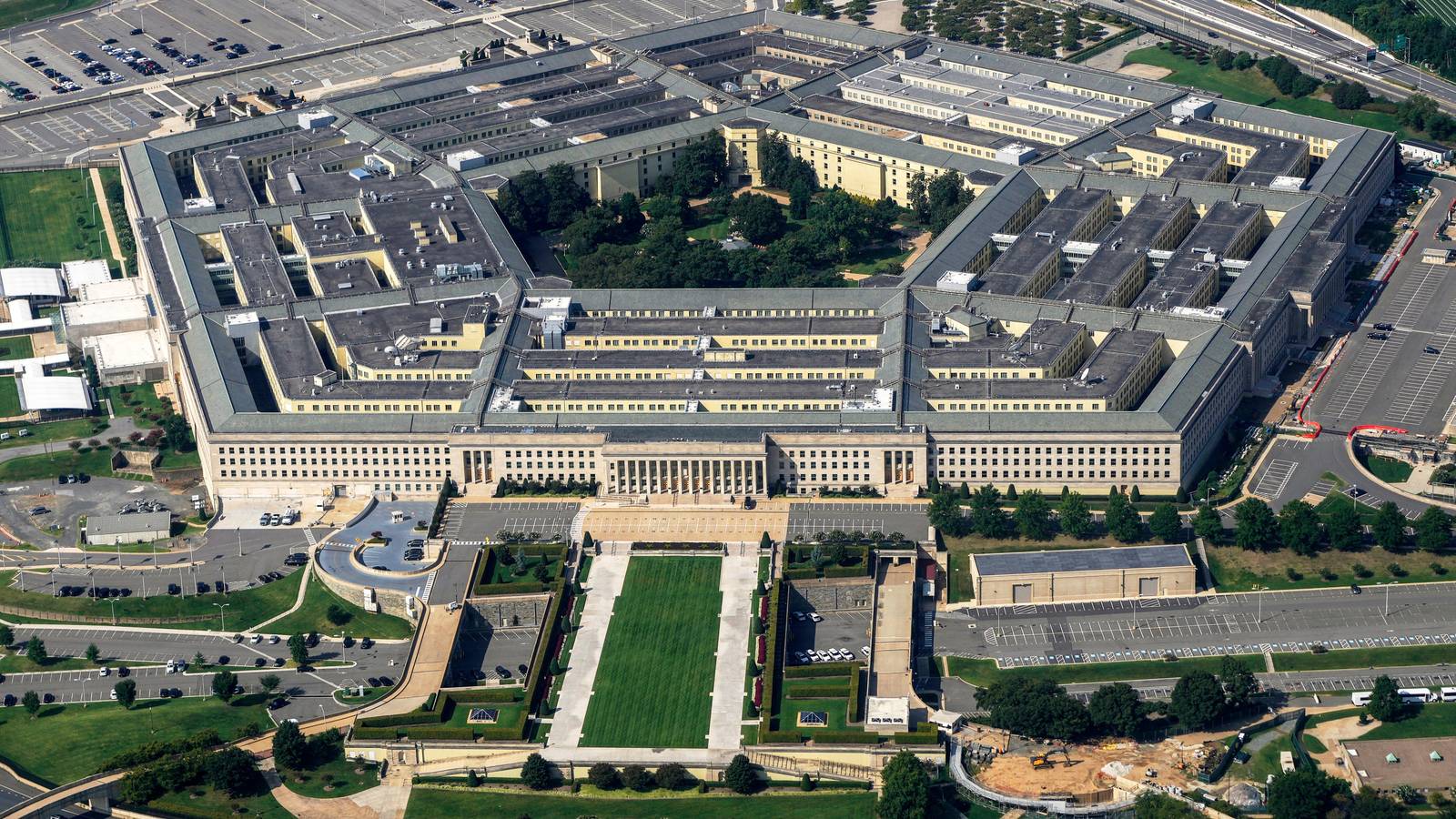
A federal judge has ordered the Defense Department to temporarily halt a requirement that journalists be accompanied by an official escort, another legal setback for the Trump administration’s efforts to restrict media access at the Pentagon. It was not immediately clear whether the order applied only to reporters from The New York Times, which filed the lawsuit, or to the entire press corps.
U.S. District Judge Paul L. Friedman in Washington said that policy violated the First Amendment. He issued a preliminary ruling Tuesday barring the requirement while the Times continues its protracted legal battle against the department’s restrictions.
While the order’s language suggested the judge’s decision was directed only at the Times, the escort policy itself applies to all journalists.
The newspaper in May sued the Defense Department for the second time in five months. The lawsuits have played into an escalating tension between the U.S. media and the Republican administration, both in the public arena and the courts.
The Times hailed Friedman’s ruling.
“Today’s well-reasoned decision reaffirms the First Amendment rights of the press to cover the Pentagon without restrictions designed to prevent the public from knowing what the military is doing,” said Charlie Stadtlander, a spokesperson. “The court recognized that the Pentagon’s hastily implemented new policy was a clear violation of the Constitution.”
Pentagon spokesman Sean Parnell posted on X late Tuesday that the department “strongly disagrees” with Friedman’s decision. “This ruling strips away reasonable security measures and will make it easier for sensitive and classified information to reach our adversaries.”
Parnell argued further that “unescorted access to the Pentagon allowed journalists to observe activity patterns and develop relationships that contributed to repeated unauthorized disclosures of operational plans and intelligence. The court’s order effectively restores that risky environment at a time when protecting our military’s secrets is more critical than ever.”
The Times first sued in December over rules imposed by Defense Secretary Pete Hegseth seeking to limit media access.
The escort policy was implemented in March after a ruling by Friedman that had struck down earlier restrictions. He said they violated the rights of Times reporter Julian E. Barnes and the paper.
The following month, the judge ruled that the interim policy violated his March order. But the escort policy remained in place when an appeals court stayed part of Friedman’s ruling while the government appealed. The appeals process is ongoing.
The Times and other outlets walked out of the Pentagon in October rather than agree to Hegseth’s restrictions. They continue to cover the U.S. military from outside the building. A new press corps approved by the department currently occupies the Pentagon space.
Read the full article here
51 Comments
Interesting update on Judge Orders Pentagon to Lift Policy that Journalists Be Accompanied by an Escort. Curious how the grades will trend next quarter.
Uranium names keep pushing higher—supply still tight into 2026.
Good point. Watching costs and grades closely.
Good point. Watching costs and grades closely.
Exploration results look promising, but permitting will be the key risk.
Good point. Watching costs and grades closely.
Good point. Watching costs and grades closely.
Production mix shifting toward USA might help margins if metals stay firm.
Good point. Watching costs and grades closely.
Good point. Watching costs and grades closely.
Uranium names keep pushing higher—supply still tight into 2026.
Good point. Watching costs and grades closely.
The cost guidance is better than expected. If they deliver, the stock could rerate.
Good point. Watching costs and grades closely.
Nice to see insider buying—usually a good signal in this space.
Good point. Watching costs and grades closely.
Good point. Watching costs and grades closely.
Silver leverage is strong here; beta cuts both ways though.
If AISC keeps dropping, this becomes investable for me.
Good point. Watching costs and grades closely.
I like the balance sheet here—less leverage than peers.
Good point. Watching costs and grades closely.
Good point. Watching costs and grades closely.
Exploration results look promising, but permitting will be the key risk.
I like the balance sheet here—less leverage than peers.
Good point. Watching costs and grades closely.
Silver leverage is strong here; beta cuts both ways though.
Good point. Watching costs and grades closely.
If AISC keeps dropping, this becomes investable for me.
Good point. Watching costs and grades closely.
Good point. Watching costs and grades closely.
Production mix shifting toward USA might help margins if metals stay firm.
Good point. Watching costs and grades closely.
Exploration results look promising, but permitting will be the key risk.
Good point. Watching costs and grades closely.
Good point. Watching costs and grades closely.
I like the balance sheet here—less leverage than peers.
Silver leverage is strong here; beta cuts both ways though.
Good point. Watching costs and grades closely.
Good point. Watching costs and grades closely.
Interesting update on Judge Orders Pentagon to Lift Policy that Journalists Be Accompanied by an Escort. Curious how the grades will trend next quarter.
Good point. Watching costs and grades closely.
Uranium names keep pushing higher—supply still tight into 2026.
Good point. Watching costs and grades closely.
I like the balance sheet here—less leverage than peers.
Silver leverage is strong here; beta cuts both ways though.
Good point. Watching costs and grades closely.
Good point. Watching costs and grades closely.
I like the balance sheet here—less leverage than peers.
Good point. Watching costs and grades closely.
Good point. Watching costs and grades closely.