

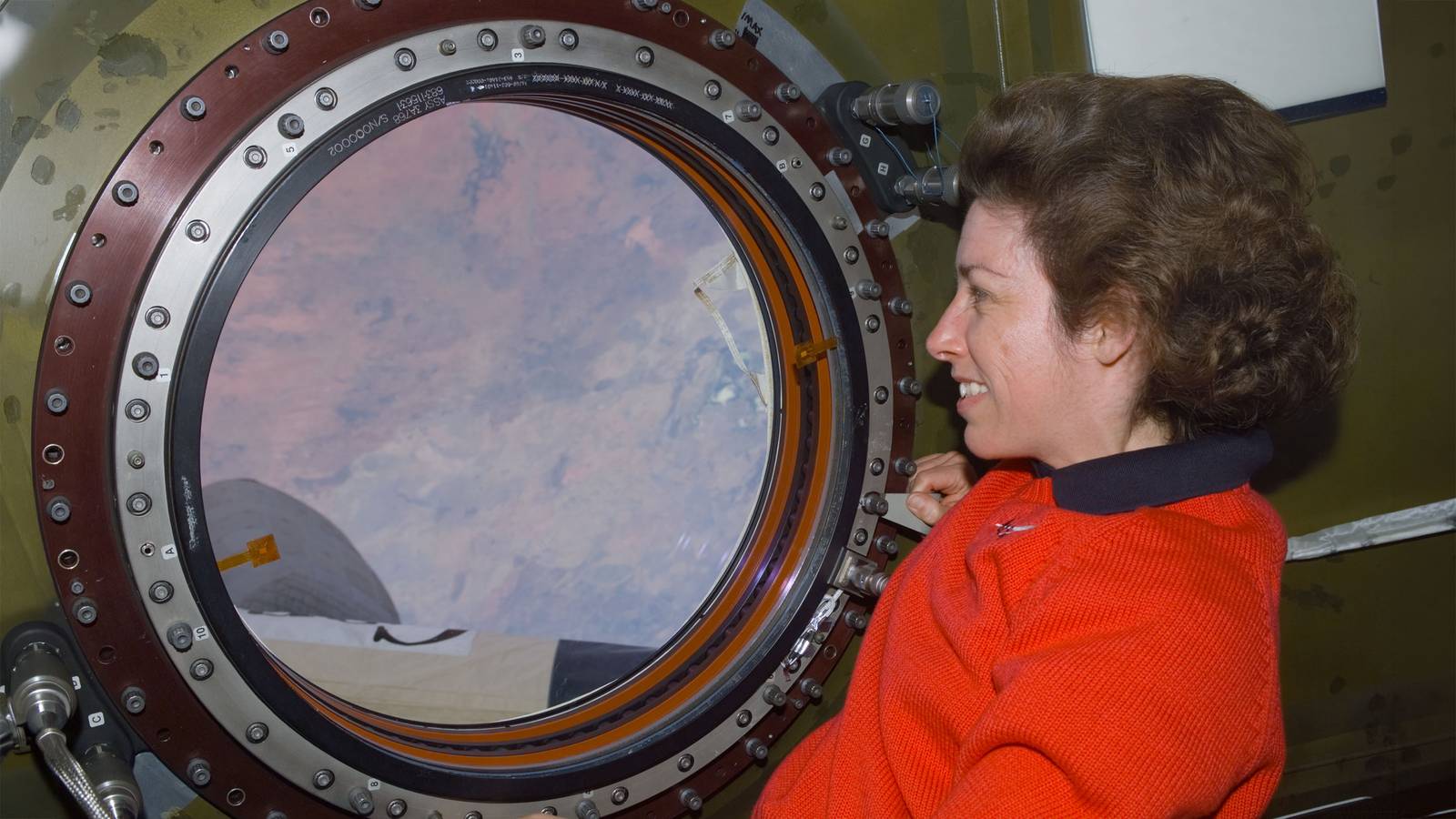
Ellen Ochoa has seen what few human beings ever have: a seemingly never-ending, vast universe from a perspective well beyond the world we call home. But on Earth, she and hundreds of her fellow NASA astronauts are pushing to preserve something else: democracy.
Ochoa, the first Hispanic woman in space, is one of more than 100 astronauts who earlier this year joined Astronauts For America (AFA)—a nonpartisan organization aiming to affirm their commitment to the U.S. Constitution and principles of American constitutional democracy. Tuesday’s midterm elections are one piece of that larger effort.
Their “pledge” includes supporting what they describe as the foundational ideals of the nation—including equality, liberty, the pursuit of happiness, freedom of religion, freedom of speech, freedom of the press, the consent of the governed, the rule of law, and the separation of powers—and the shared responsibility of citizens to help preserve them.
That recognition of common aspirations and preserving such principles requires participation, responsibility, and a willingness to work together across differences, they say.
For those like Ochoa, who has reaped the benefits of being an American, she feels a duty to protect the “guardrails of democracy” that extend to neighbors talking to one another—or politicians reaching more across the aisle in one of the most polarized eras in U.S. history.
“It’s really about supporting the values that we all took an oath to support when we went into government service, whether it was military or civilian,” Ochoa, speaking from her Boise, Idaho, home, told Military.com. “I take those rights and responsibilities very seriously.”
A Fight For Flight
Ochoa’s journey from childhood to space admittedly “wasn’t a straight line,” and she compares that personal growth to her advocacy towards voting and democracy.
“Of course, for a long time, women didn’t have the right to vote, and it wasn’t until they got the right to vote that we were able to make changes in this country so that careers opened up,” she said. “I was 11 when the Apollo 11 astronauts landed on the moon.
“But women weren’t allowed to be astronauts. There weren’t any astronauts of color. Nobody would have asked me at that point if I wanted to grow up and be an astronaut, or even a scientist, or an engineer, or a pilot.”
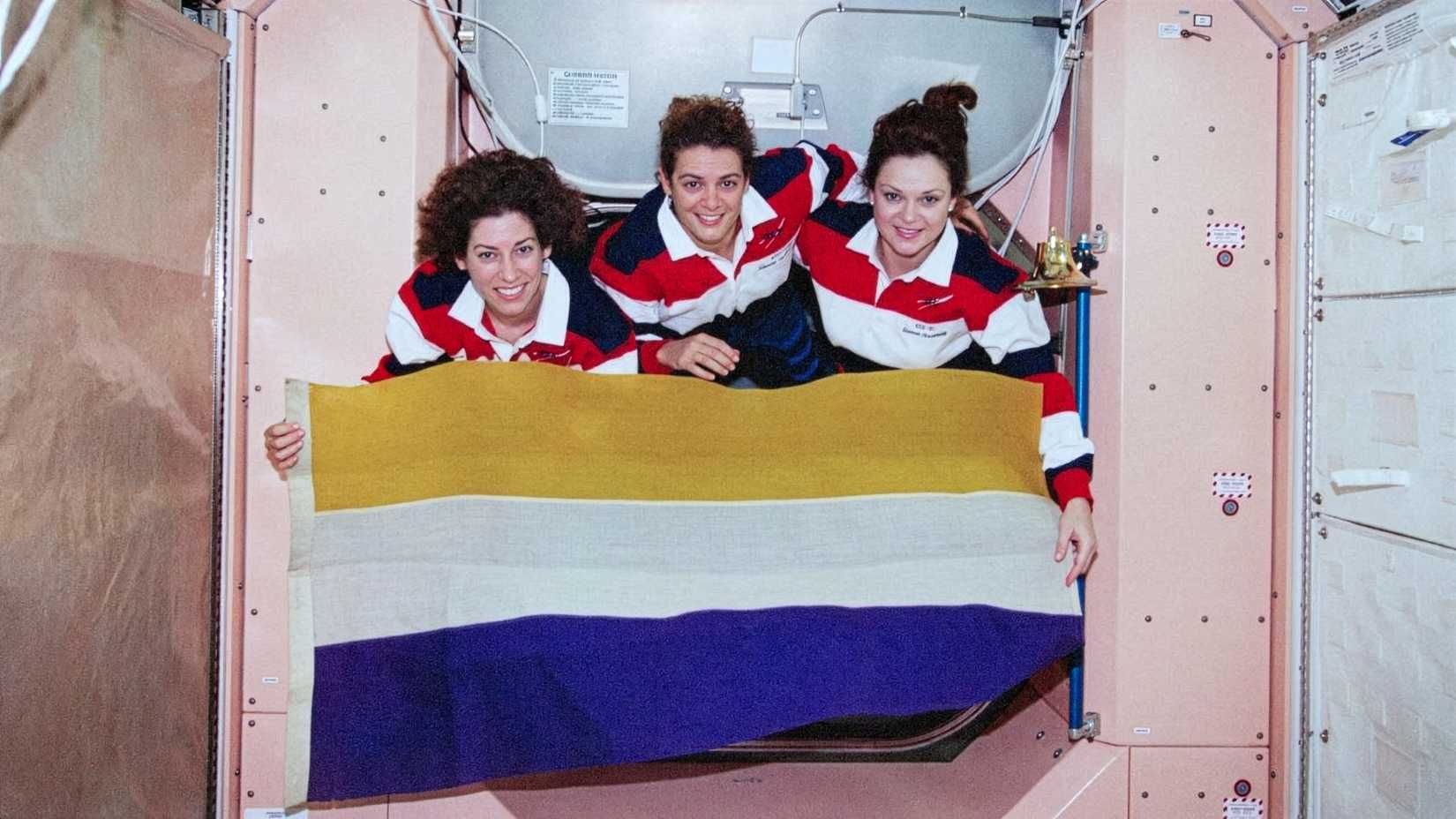
When in high school, Ochoa took biology but no other science classes. She went to college thinking she’d major in music or business, but she developed an affinity for math. Maybe most importantly, she was good at it and came to the realization that she could parlay her knowledge into a career path.
“Unfortunately, there was still a lot of, I would say, bias against women, and I’m also of a Hispanic background,” Ochoa said. “So when I went to talk to a professor in the electrical engineering department, it was clear he didn’t want me in there at all, and told me he didn’t think I’d be interested in what they did, and that it was a really difficult course of study.
“Fortunately, I talked to another professor in the physics department who was actually encouraging, and I ended up deciding to try physics and majored in it and minored in math. And probably less than a year after I changed my major to physics [was] when NASA selected the first group of astronauts that included women and astronauts of color.”

Ochoa, who later became director of the NASA Johnson Space Center in Houston, Texas, described herself and her career in space exploration as being “a product of people fighting for those rights.”
When Ochoa was selected in the astronaut class of 1990, there were four other women in my class—including three of whom were the first military women selected by NASA. During one mission, she flew with a Marine.
“They always talk about leadership [being] about two things: accomplishing the mission and taking care of your people,” she said. “And as I rose through the ranks … I always kept that in mind.”
Making History
Being the first Hispanic female astronaut in space is something nobody can ever take from Ochoa. But perhaps that fact wasn’t completely understood until she saw others like her.
“After I got back from my first mission, astronauts have the opportunity to go around and speak to groups,” she said. “Of course, a lot of them are schools. I got a lot of invitations from K-12 schools that had high Hispanic enrollments, and it was quite an experience realizing that this wasn’t just something that I had wanted to do and got to fulfill sort of a dream, but how much it meant to other people.
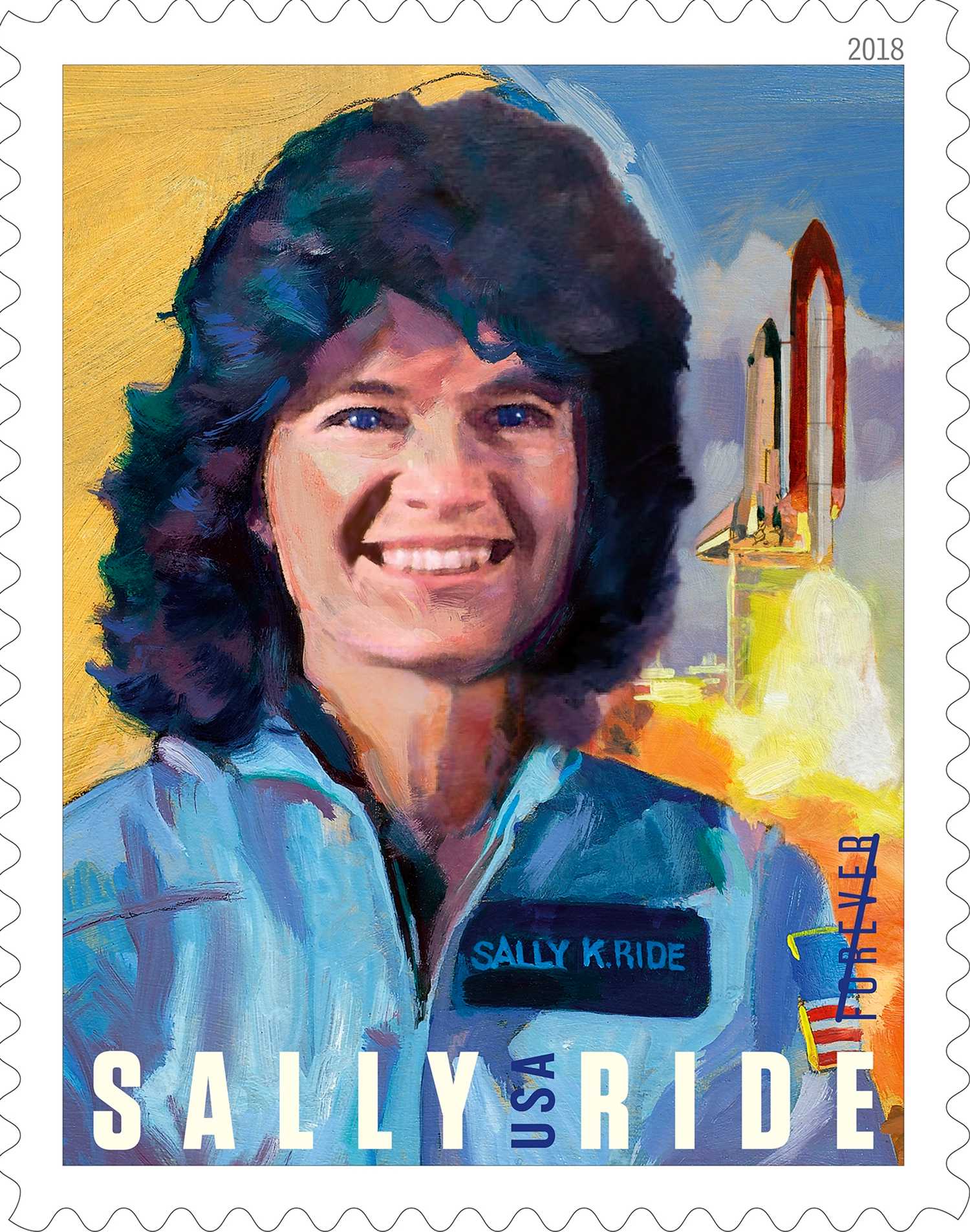
“I knew that when Sally Ride flew in space—at that point I was in the middle of my Ph.D. program—it was a huge milestone for an American woman in space. Realizing that same kind of inspiration she gave me, I had the opportunity to serve as that kind of inspiration for students and adults around the country.
More than 30 years later and still speaking to groups, that understanding has never wavered. And while separate from her work at NASA, she’s said making inroads and inspiring future generations has been just as rewarding.
Inspiring the Youth in a Different Way
Today, Ochoa and her astronaut cohorts at AFA travel the nation to meet with the younger members of American society.
That has included the “Vote For Freedom” college tour that encourages young Americans to register, vote, and become lifelong participants in our democracy. AFA stresses that such encouragement is offered to every eligible American to vote, “regardless of age, background or political beliefs.”
“The future of this country belongs to young people, and we want to encourage them to not only learn about the candidates’ positions on issues, but also hold them accountable to democratic principles and the tenets of the Constitution,” AFA says on its website.
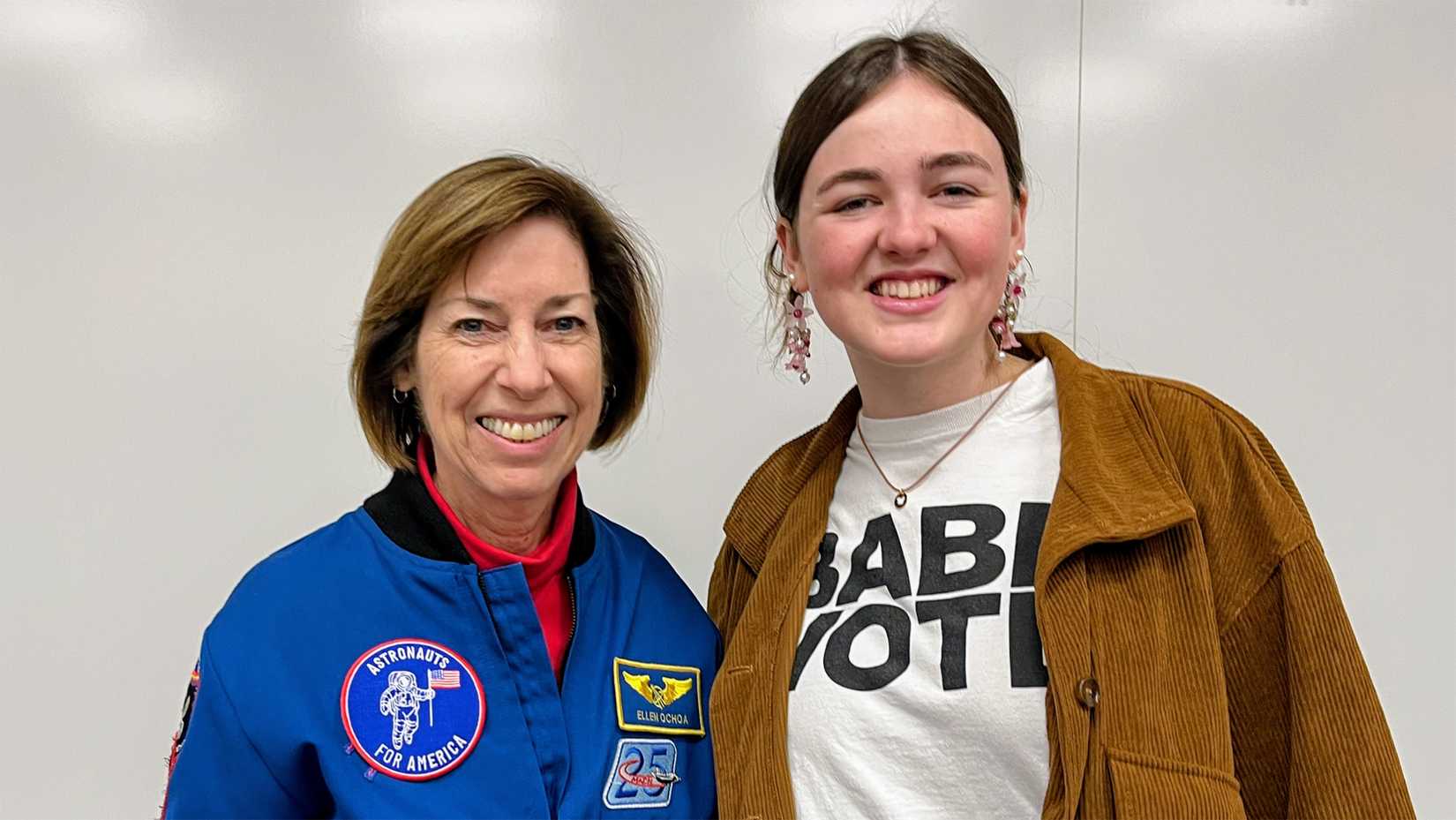
Upon first learning about AFA, Ochoa viewed it as an opportunity to bridge the gap in a divided country. It also allows her and others to shine a spotlight on things “a lot of us sort of used to take for granted, but we’ve been concerned over a number of years, really, that those things are not being supported in the way that they used to.”
The “Vote For Freedom” endeavor aims to meet those ages 18 to 35 where they are, as they routinely represent the lowest percentage of voters. The year 2026, for many of them, will be their first time ever casting a ballot.
A couple of main concerns she’s heard from young people on her own college tour in Boise, and from her astronaut allies, is whether one person’s vote “counts” or makes a difference. The other is overcoming potential barriers like registration or polling place procedures.
“I think that’s one of the things that we can really address as astronauts,” she said. “I think about it, NASA: If any one person there thinks that their work does not contribute to the success of the mission, then we’re in trouble. We actually need every single person at NASA really working to make sure our missions are successful, and even the smallest little thing can derail it.
“So, I certainly feel passionately and from firsthand experience that everyone needs to participate and to think to realize they have a voice in the success of the mission. What we’re saying is, right now, the mission is our country and supporting and defending the Constitution and the values inside of that.”
Read the full article here
35 Comments
Interesting update on NASA Astronaut Ellen Ochoa, the First Hispanic Woman in Space, is Getting Out the Vote. Curious how the grades will trend next quarter.
The cost guidance is better than expected. If they deliver, the stock could rerate.
Good point. Watching costs and grades closely.
Good point. Watching costs and grades closely.
Production mix shifting toward USA might help margins if metals stay firm.
Good point. Watching costs and grades closely.
Production mix shifting toward USA might help margins if metals stay firm.
Good point. Watching costs and grades closely.
Uranium names keep pushing higher—supply still tight into 2026.
Good point. Watching costs and grades closely.
Good point. Watching costs and grades closely.
If AISC keeps dropping, this becomes investable for me.
Good point. Watching costs and grades closely.
Good point. Watching costs and grades closely.
Production mix shifting toward USA might help margins if metals stay firm.
Production mix shifting toward USA might help margins if metals stay firm.
Good point. Watching costs and grades closely.
Good point. Watching costs and grades closely.
Exploration results look promising, but permitting will be the key risk.
Good point. Watching costs and grades closely.
Good point. Watching costs and grades closely.
I like the balance sheet here—less leverage than peers.
Uranium names keep pushing higher—supply still tight into 2026.
Exploration results look promising, but permitting will be the key risk.
If AISC keeps dropping, this becomes investable for me.
Good point. Watching costs and grades closely.
If AISC keeps dropping, this becomes investable for me.
I like the balance sheet here—less leverage than peers.
I like the balance sheet here—less leverage than peers.
Good point. Watching costs and grades closely.
Good point. Watching costs and grades closely.
The cost guidance is better than expected. If they deliver, the stock could rerate.
Exploration results look promising, but permitting will be the key risk.
Good point. Watching costs and grades closely.
Good point. Watching costs and grades closely.